Digital-only gaming consoles are systems where you buy games through an online store and play without using physical discs. For buyers, that means your monthly spending, your download time, and your storage management matter as much as raw speed.
The choice gets hard because digital-only models often trade away disc support and sometimes reduce storage. You may also face slower installs, fewer offline options, and a tighter fit for big modern games. Pick wrong, and you will end up paying for extra storage or living with constant storage cleanup.
If you want help across every console type, including disc-based options, see our Best Gaming Consoles.
Quick Overview
Our Top Picks
#1. Analogue 3D Console

Specifications
| Brand | Analogue |
|---|---|
| Form Factor | Home Console |
| Disc Drive | No Disc Drive |
| Max Video Resolution | 4K |
| Wireless Connectivity | Bluetooth LE, Dualband WiFi |
Pros
- Smooth, stable frame rates
- Reliable hardware, low noise
- Flexible connectivity and storage
Cons
- Digital-only
- Closed ecosystem
- Launch uncertainty
The Analogue 3D Console stands out in the digital-only category because it targets the one thing many buyers miss: smooth, stable play. It runs with consistent frame rates, stays quiet under load, and uses flexible connectivity and storage so you can tailor your setup without fighting the system. For a console where your games live mostly as downloads, that kind of day-to-day reliability matters more than flashy extras.
The trade-off is a closed, digital-first ecosystem, plus real-world launch uncertainty. This is best for people who already know which game sources they want to use and are willing to accept fewer guarantees than mainstream platforms. If you want broad library certainty and long-term support in a well-traveled store, you should treat it as a careful bet rather than a safe default.
#2. Valve Steam Deck OLED Handheld

Specifications
| Brand | VALVE |
|---|---|
| Form Factor | Handheld |
| Cpu | Zen 2, 4-core, 2.4-3.6 GHz |
| Memory | 16 GB LPDDR 5 |
| Internal Storage | 1 TB |
| Disc Drive | No Disc Drive |
| Wireless Connectivity | Wi-Fi 6E |
Pros
- Strong exclusives and variety
- Flexible connectivity and storage
- Reliable hardware, low noise
Cons
- Digital-only
- SteamOS friction
- Repair complexity
For digital-only buyers, the Valve Steam Deck OLED stands out as a handheld that turns your Steam library into a practical console experience. With 1 TB storage, Wi-Fi 6E, and quiet cooling, it supports long play sessions with strong day-to-day responsiveness. The OLED screen also makes handheld gaming feel more “console-like” at home, even when you are not docked. In the digital-only space, that matters because you want less friction when you jump between games and settings.
The main trade-off is that everything runs through SteamOS, so you must tolerate some setup and troubleshooting to get certain games running well. It is also not as service-friendly as big-brand consoles, since repairs can be more complex than consumer consoles. This is a great fit for people who live in PC-style game libraries and want one device for both casual sessions and more demanding titles, but it is less ideal for anyone who wants a simple, fixed console experience out of the box.
#3. Nintendo Switch OLED Handheld

Specifications
| Brand | Nintendo |
|---|---|
| Form Factor | Hybrid |
| Internal Storage | 64 GB |
| Disc Drive | No Disc Drive |
| Max Video Resolution | 1080p |
| Wireless Connectivity | Wi-Fi 5, Bluetooth 4.1 |
Pros
- Strong exclusives and variety
- Reliable hardware, low noise
- More portable
Cons
- Limited storage
- Digital-only
- Only 1080p
Nintendo Switch OLED Handheld stands out in the Digital-Only Gaming Consoles space because it uses Nintendo's store first, not discs, and still feels easy to live with day to day. The 7 inch OLED screen makes handheld play more satisfying, and the system stays quiet and dependable for long sessions. If you mainly buy games online, the hybrid design also helps you switch between couch play and true handheld without turning the whole setup into a project.
The main trade-off is storage. With 64 GB internal storage and no disc drive, you will likely add a microSD card for bigger libraries. It also tops out at 1080p output, so expectations should stay focused on smooth, portable gaming rather than high-end visuals.
#4. Microsoft Xbox Series S 512GB Console

Specifications
| Brand | Xbox |
|---|---|
| Form Factor | Home Console |
| Cpu | AMD Zen 2, 8-core |
| Internal Storage | 512 GB |
| Disc Drive | No Disc Drive |
| Max Video Resolution | 1440p |
| Wireless Connectivity | Wi-Fi 5 |
Pros
- Smooth, stable frame rates
- Faster CPU
- Quick boot times
Cons
- Digital-only
- Storage management friction
- Useful features, missing essentials
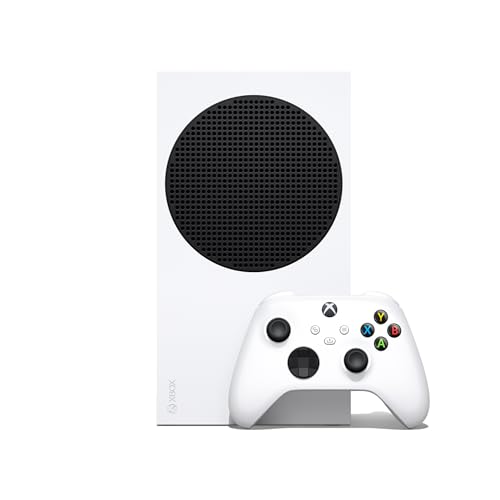
The Xbox Series S stands out in digital-only console circles because it keeps things simple and smooth. With quick boot times and stable frame rates, it feels responsive during daily play. The console tops out at 1440p output and targets a clean, steady experience for digital downloads. If you want a no-disc setup that still runs games with less drama, this is one of the more reliable options in the sub-category.
The main trade-off is storage. The built-in 512 GB space can fill fast once you start adding large games and updates, so you will likely manage installs more often or use external storage. It also leans harder into the digital ecosystem, so it fits best if you buy games on the store and stream your media through the living-room console. If you want to keep a large library locally without constantly moving things around, you may find the smaller drive limiting.
#5. Nintendo Switch Lite Gray Handheld

Specifications
| Brand | Nintendo |
|---|---|
| Form Factor | Handheld |
| Internal Storage | 32 GB |
| Max Video Resolution | 1080p |
Pros
- Strong exclusives and variety
- Competitive price, strong payoff
- More portable
Cons
- Useful features, missing essentials
- Limited storage
- Limited session stamina
The Nintendo Switch Lite Gray is notable in the Digital-Only Gaming Consoles space because it is a true handheld for people who want to live in the eShop. It leans into Nintendo's strong lineup and easy digital access, so you can jump into games without managing any disc library. For many buyers in this sub-category, that handheld-first design is the main point: play anywhere, download more games when you want, and keep things simple.
The trade-off is daily usefulness. You only get 32 GB of internal storage, so bigger digital libraries fill up fast unless you plan for extra space. Session length can also be a limiter for long play, based on reports of limited stamina compared with bulkier handhelds. This is best for travelers and handheld-only players who care more about convenience and Nintendo games than about storage headroom or extended uninterrupted sessions.
#6. Nintendo Switch Lite Blue Handheld

Specifications
| Brand | Nintendo |
|---|---|
| Form Factor | Handheld |
| Memory | 32 GB |
| Internal Storage | 32 GB |
Pros
- Competitive price, strong payoff
- Strong exclusives and variety
- More portable
Cons
- TV mode impossible
- Analog stick drift
- Useful features, missing essentials
The Nintendo Switch Lite Blue is notable in the Digital-Only Gaming Consoles space because it is the handheld-focused choice of Nintendo's Switch lineup. If you want a mostly digital library and play on the go, this model fits well. The built-in 32 GB storage keeps things simple for smaller downloads, while the lighter form makes long sessions away from a TV feel practical.
The trade-off is clear. TV mode is not usable, so it stays handheld only. It also has known downsides like analog stick drift, and the control set can feel limiting for players who want a more flexible setup. Choose it if your routine is travel, commutes, and couch time, and you can live without docked play.
#7. Hyperkin RetroN 1 Console

Specifications
| Brand | Hyperkin |
|---|---|
| Disc Drive | No Disc Drive |
| Max Video Resolution | 720p |
Pros
- Competitive price, strong payoff
Cons
- Digital-only
- Occasional hitches mid-game
- Only 1080p
The Hyperkin RetroN 1 stands out in the digital-only console space because it leans on nostalgia rather than an all-new, modern game library. It is notable as a simpler box for people who want classic-style play and do not care about discs. In this tier, that makes it feel different from typical streaming-first consoles, even if its output is limited to 1080p or lower.
The main trade-off is smoothness and visual ceiling. Expect occasional hitches mid-game, and performance targets top out at only 720p, so it may not satisfy players who want crisp, stable gameplay on a modern TV. This is best for casual sessions and for buyers who care more about the retro experience than current graphics or feature depth.
What to Look For
Digital Library Fit: Check whether the store has the games you already play, plus the ones you plan to buy next. For digital-only consoles, a thin catalog is a real limit because you cannot fall back to used physical discs.
Performance Consistency: Look for stable frame rates and fast app switching. If the system frequently drops performance, you will feel it more with digital games that need larger downloads and longer updates.
Storage Capacity and Expansion: Treat internal storage as your main bottleneck. Bigger internal drives reduce juggling. Also confirm you can add storage easily if supported, since digital libraries grow fast.
Wireless Connectivity: Digital-only ownership depends on reliable downloads. Prefer newer Wi-Fi standards and solid Bluetooth support for controllers and headsets to avoid sync and latency issues.
Everyday Features for Digital Use: Prioritize an efficient UI for browsing and managing downloads, plus strong account and family controls. These settings affect how smoothly you buy, download, and share games.
How We Picked
Products were identified through broad research across review sites and buyer forums, then filtered to only those that qualify as Digital-Only Gaming Consoles.
Scoring used the same objective pillar framework as the main Gaming Consoles post, allowing direct comparison of products within this sub-category.
Frequently Asked Questions
Do digital-only consoles need an internet connection to play games?
Most digital-only consoles can run games after download. However, some games require a sign-in or license check. You may also need internet for updates, patches, and new content. If you plan to play offline often, confirm offline play support for the games you want.
How much internal storage do I really need for a digital-only console?
Digital games and updates take more space over time. Many popular titles can easily grow past 50 GB, especially after patches. If you buy one game at a time, 512 GB may feel tight sooner. Look for a model with storage expansion support or plan to manage installs regularly.
Can I share a digital library with family members or friends?
Some digital-only platforms allow game sharing on the same account family, but rules vary. You may be able to play from the same library on another console, depending on settings. Check the platform rules for account sharing, primary console access, and how often you can switch. If you share often, choose a console with strong account tools.
When should I choose a disc-based gaming console instead of a digital-only one?
Choose a disc-based console if you want to buy used games or hunt for lower prices. Discs can also help when you have slow internet or limited data. If you care about collecting, disc versions are easier to resell or trade. For people who prefer one-click purchases and fast installs, digital-only usually fits better.
How do digital-only consoles compare to other consoles for value over time?
Digital-only consoles often cost less up front, but games can stay pricier. You may need a subscription or frequent sales to get good deals. Disc-based consoles can win on bargain hunting through used markets. If you play many new releases, digital-only is convenient. If you play a lot of back catalog games, disc-based value may be better.


