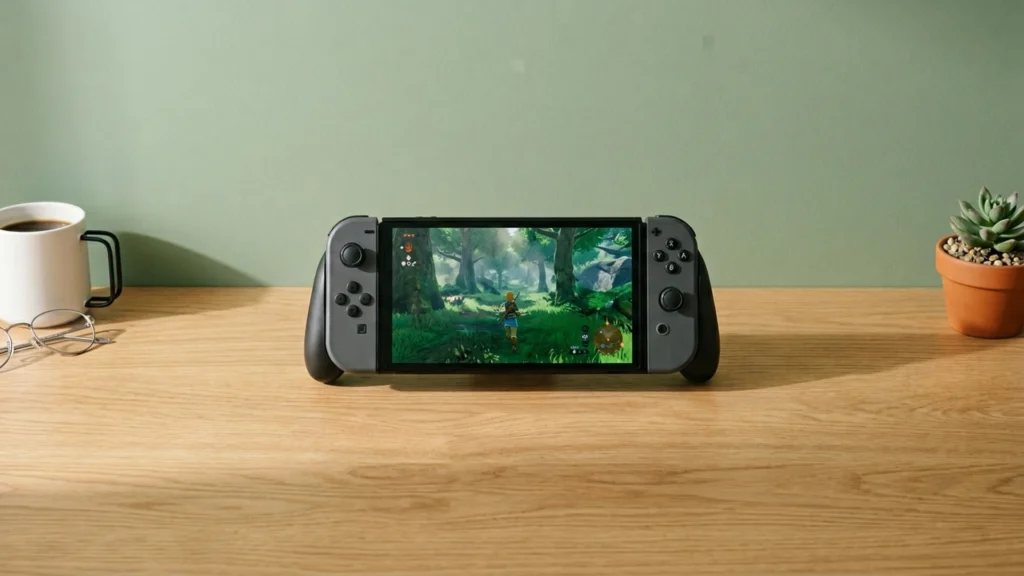
Nintendo Switch gaming consoles focus on one job: playing Nintendo games in handheld mode and, for most models, switching to TV play at home. Buyers here care about daily comfort, how well games run in real use, and whether the model fits their play style and library needs.
The choice gets hard because Switch models differ in screen, docking, and storage rather than raw horsepower. You also have to account for your game sources: physical cartridges, digital purchases, and whether you plan to add a subscription for online play.
To narrow it down across the full console market, use this sub-category guide alongside the broader rankings in the main post, since Nintendo Switch choices sit next to other platform options when you compare budgets and features. Looking for all types? See our Best Gaming Consoles.
Quick Overview
Our Top Picks
#1. Nintendo Switch OLED Handheld

Specifications
| Brand | Nintendo |
|---|---|
| Form Factor | Hybrid |
| Internal Storage | 64 GB |
| Disc Drive | No Disc Drive |
| Max Video Resolution | 1080p |
| Wireless Connectivity | Wi-Fi 5, Bluetooth 4.1 |
Pros
- Strong exclusives and variety
- Reliable hardware, low noise
- More portable
Cons
- Limited storage
- Digital-only
- Only 1080p
The Nintendo Switch OLED Handheld stands out in the Nintendo Switch console lineup by leaning hard into the handheld experience. Its OLED screen makes colors and contrast look more vivid than typical Switch displays, which helps when you are gaming in bed, on the couch, or away from a TV. It is also a reliable machine for this kind of play, with low noise and smooth day to day use. For people shopping within the Nintendo Switch handheld and hybrid crowd, this is the model that feels most satisfying when you are not docking.
The main trade-off is what you give up for that screen upgrade. Storage is limited at 64 GB, so you will likely manage downloads or add a memory option. Also, the display output tops out at 1080p, which is fine for Switch games but not a fit for players who expect higher resolution. This is best for anyone who plays mostly in handheld mode and wants the clearest screen experience without switching to a more powerful system.
#2. Nintendo Switch Lite Gray Handheld

Specifications
| Brand | Nintendo |
|---|---|
| Form Factor | Handheld |
| Internal Storage | 32 GB |
| Max Video Resolution | 1080p |
Pros
- Strong exclusives and variety
- Competitive price, strong payoff
- More portable
Cons
- Useful features, missing essentials
- Limited storage
- Limited session stamina
This Nintendo Switch Lite stands out in the Nintendo Switch lineup because it is built for single-player handheld life. No docking, no swapping Joy-Cons. That makes it easy to grab and play, and it keeps the experience simple when you want to play on the go. With 32 GB of storage and a solid library of Switch games, it is a strong match for people who mainly play portably and do not need TV mode.
The trade-off is real. You lose some everyday options that other Switch models can use, and the 32 GB internal storage fills up fast once you download games. Session stamina also matters here, since handheld play limits how long you will want to stay in heavier titles. This is best for younger players, commuters, and anyone who wants a lighter handheld that stays focused on portable gaming.
#3. Nintendo Switch 2 Handheld

Specifications
| Brand | Nintendo |
|---|---|
| Form Factor | Hybrid |
| Cpu | Custom processor made by NVIDIA |
| Internal Storage | 256 GB |
| Max Video Resolution | 4K |
| Wireless Connectivity | Wi-Fi 6, Bluetooth |
Pros
- Supports 4K
- Latest Wi-Fi
- More portable
Cons
- Limited storage
- Handheld throttling risk
What sets this Nintendo Switch 2 model apart in the Nintendo Switch Gaming Consoles space is its focus on portability with modern A/V support. It is a hybrid handheld that targets 4K output, paired with Wi-Fi 6 and Bluetooth for smoother wireless play and quick downloads. In everyday use, that combo matters if you bounce between handheld sessions and a TV setup without wanting to compromise on connection quality.
The main trade-off is storage. With 256 GB onboard, bigger games can eat space fast, so you may want to plan downloads carefully. There is also a handheld throttling risk for longer sessions, which can affect how consistently demanding games feel when you play away from the dock. This is best for players who value go-anywhere play and modern wireless, and who manage storage and session length with that in mind.
#4. Nintendo Switch Lite Blue Handheld

Specifications
| Brand | Nintendo |
|---|---|
| Form Factor | Handheld |
| Memory | 32 GB |
| Internal Storage | 32 GB |
Pros
- Competitive price, strong payoff
- Strong exclusives and variety
- More portable
Cons
- TV mode impossible
- Analog stick drift
- Useful features, missing essentials
Built for play on the go, the Nintendo Switch Lite Blue is the most handheld-focused option in the Nintendo Switch lineup. It trades TV mode for a lighter feel, so sessions work better during travel, commutes, or quick breaks at home. The core Switch library still matters here, especially handheld-friendly first-party games and classic handheld third-party picks.
The main trade-off is restraint. You cannot use it for TV mode, and the controls are fixed, so it has limited flexibility compared with the standard Switch. Also, analog stick drift is a real risk shared across many controllers, so it is worth thinking about long-term care if you put serious hours into action games.
What to Look For
Handheld to TV fit: If you want to play on your TV, pick a model that supports docking. If you only play on the go, a handheld-first model saves money and simplifies the setup.
Screen and everyday visibility: The OLED model has a sharper-looking panel for handheld play. If you play in varied lighting or for long sessions, screen quality matters more than spec sheets.
Game library strength: A Switch is only as good as the titles you will play. Focus on Nintendo exclusives you care about, plus major third-party games available on Switch, and whether you want digital ownership or physical cartridges.
Storage and expansion needs: Many Switch games take space fast, especially if you buy digitally. Check your planned library size and plan for extra storage if you expect to download games often.
Value for your model: Compare cost to what you actually get: handheld experience, TV capability, and the features you will use. The best pick is the one that matches your habits, not the highest tier nameplate.
How We Picked
Products were identified through broad research across review sites and buyer forums, then filtered to only those that qualify as Nintendo Switch gaming consoles. The final list includes the Switch OLED and Switch Lite variants, plus the newer Switch 2 model in this sub-category.
Scoring used the same objective pillar framework as the main Gaming Consoles post, allowing direct comparison of products within this sub-category. Performance, library, features, build quality, and value were weighted to match how real owners experience each Switch model day to day.
Frequently Asked Questions
What is the real difference between a Nintendo Switch handheld and a Switch with a TV dock?
A handheld version is meant for on the go play with the screen and controls built in. A docked setup uses a separate dock to output to your TV. Gameplay stays the same in many cases, but TV mode can feel more convenient for longer sessions.
Which Switch should I choose if I care most about the game library?
Most Switch models share the same core Nintendo library and major third party games. The biggest library differences come from your account, region, and whether you buy physical games or eShop downloads. Look for the exclusives and games you want first, then match the model to your play style.
How much storage do I need, and do I need an SD card?
Most Switch models ship with limited internal storage. If you plan to download games, updates, and DLC, you should budget for a microSD card. This also makes it easier to move your game library between models.
How do I improve performance and battery life during handheld play?
Keep the system well ventilated and avoid using it under a heavy cover. Lower brightness can help extend battery life. Also close games you are not using and keep software updated for smoother runs.
Should I switch to a different type of gaming console instead of a Nintendo Switch?
Choose a different console type if you want higher graphics power, faster load times, or 4K output. A Switch fits best if you value portability and flexible couch and handheld play. If you mostly play demanding, graphically intense games, other consoles may fit better.
How does Nintendo Switch compare to other gaming consoles for online play and subscriptions?
Nintendo Switch has online features and paid plans that unlock multiplayer and cloud saves. Other consoles often include larger ecosystems and more subscription bundles. If you already buy games in a specific store, compare where those games and saves live before switching.


