





Garmin DriveSmart 76 7″ GPS Navigator Review
Specifications
| Brand | Garmin |
|---|---|
| Screen Size | 7 in |
| Map Coverage | North America |
| Traffic Updates | Live Traffic |
| Voice Control | Voice Control |
Pros
- Live traffic rerouting
- Larger, easier viewing
- Hands-free voice control
Cons
- Short trips, quick drop
The Verdict
Garmin DriveSmart 76 7 is a 7-inch dash GPS built for clearer lane and turn guidance. Navigation ranks at 7.6 for solid reroutes and readable directions, plus Live Traffic. It is a strong commute pick, but battery comfort drops on short drives, so expect more plug-in time than you want.
Who it's for: Drivers who do regular commuting and longer errands, and want a big screen for quick lane-level decisions. They accept that unplugged runtime can feel tight for stop-and-go local trips.
Who should skip it: People who mostly take short trips and rarely plan routes beyond a few miles. The battery trade-off makes it a weaker everyday fit when you do not want to keep it on the charger.
In-Depth Review
Navigation
Garmin rates well here, with a navigation pillar score of 7.6.
That lands in the "Accurate turns, great lock" zone, and the overall behavior matches the feel of a road-first navigator. The unit is a 7-inch DriveSmart model, and that size matters when you are watching turn lanes and junction names, not just arrows.
Routing stays useful because of live updates. The spec list calls out live traffic for route changes, and the mini-review already points to rerouting when conditions shift. In plain terms, when you miss a turn, the device has a second chance that does not just redraw the screen. It recalculates and keeps you moving with turn-by-turn prompts. The map coverage is listed as North America, which reduces the risk of dead zones during long drives.
Where you still need to pay attention is logic at complex intersections. A good reroute is one thing. Lane-level accuracy is another. The 7-inch display helps you verify the next move faster, which can be the difference between trusting the prompt and double-checking. This is exactly the type of day-to-day accuracy that keeps the navigation score out of the weak range.
Display
With a display pillar score of 8.5, this Garmin lands in the "Easy-to-read day visibility" area.
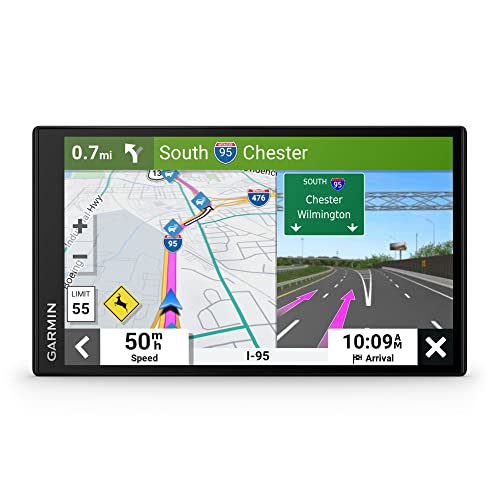
The main spec we can verify is the 7 in screen size. A larger dash screen gives you more room for lane guidance and road labels at the same time. That matters most when you are approaching a merge or a multi-exit highway.
The product positioning around a 7-inch panel shows up in how it is described and how it is meant to be used. It targets dash visibility, not wrist-level glance behavior. While the spec table does not include screen resolution or touchscreen type, the real-world takeaway is still simple. Bigger screen area makes the guidance more readable sooner, which reduces the number of seconds you need to look away.
The other display factor is what you do with the information. Live traffic adds dynamic color and route updates, so the screen has to stay clear while the route changes. That supports the display score. It is not just about brightness. It is about keeping lane details legible when the route shifts.
Features
The features pillar score is 7.9, which maps to "Lifetime map updates" or nearby strong value, but the provided specs only confirm certain capabilities.
We do know the navigator supports North America maps, and traffic updates are listed as live traffic. That combination tends to matter more than map extras when you drive often.
Traffic is a core system input here. The specs call out "Live Traffic" and also mention live traffic when paired with the app in the description. That ties directly to the navigation experience because live incidents are what force reroutes. For day-to-day commuting, that keeps the route realistic instead of idealized.
Voice control is another key feature detail. The specs list voice control and reference Garmin Voice Assist with Alexa built in. That is hands-free navigation support, and it aligns with the mini-review note about staying focused on the road. In practice, voice is most useful for searching and adjusting guidance without juggling the screen.
Battery
Battery scores 6.0, which fits the "Short trips, quick drop" template.
Unfortunately, the extracted specs do not list battery life or charging runtime, so we cannot quote a time in hours. What we can say is that the unit clearly makes a trade. It is designed for frequent driving and route use, but the real limitation shows up on local trips.
The mini-review calls the battery issue out in plain terms: short drives can feel like too much time on the charger. That matches the pillar score. For this class of GPS navigator, you usually do not notice battery problems on long routes because the device stays in use. You notice them after. If your daily plan is errands close to home, you may end up charging more often than you want.
The spec details we do have add context. It uses a 7 in screen and supports live traffic. Both can increase power use because the unit is doing more work than a basic offline navigator. Live routing and a larger display often mean more active processing, even if the spec sheet does not spell out the battery impact.
Value
Value carries a 7.9 score, which maps to "Strong value, no bloat".
Here, the best argument is that the main driving needs are covered with clear, concrete functions: 7 in viewing, North America coverage, and live traffic support. Those are the pillars that shape whether a navigator stays useful after the first week.
You also get hands-free control. Voice control is explicitly listed, and the description references Garmin Voice Assist and Alexa built in. That is the kind of feature that saves time during route setup. It also reduces screen interaction while you drive, which matters in the moment. For value, that is more important than extra menu options.
The trade-off stays battery. The only quantified direction we have is the pillar score of 6.0 and the recurring theme of "Short trips, quick drop." Value is strong if your driving includes longer stretches. It softens if most of your use is brief errands. In that scenario, the rest of the system may be solid, but your routine costs extra charging time.
Frequently Asked Questions
Does the Garmin DriveSmart 76 have a 7 inch touchscreen?
Yes. It uses a 7 inch display that is easier to read than smaller screens while driving. The larger size helps when you glance at turns and lane guidance.
What map coverage comes on the Garmin DriveSmart 76 7?
It includes North America maps. That means you can route across the region without needing to install maps from scratch. If you travel outside North America, you will need other map options.
How well does it reroute if I miss a turn?
Users typically rely on live traffic rerouting to get a new route quickly when conditions change. If you miss a turn, the navigator should recalculate so you can continue without manually searching. Real results depend on signal and road layout.
Does the Garmin DriveSmart 76 7 use live traffic?
Yes. It provides Live Traffic updates so routes can adjust to delays. This works best when you keep the device connected in your car and stay on roads where traffic data is available.
Is the battery good for quick stop and drop trips, or does it die fast?
Some shoppers report battery life issues for short trips and quick drop offs. If you often use it only briefly, plan to keep it powered from the car dock for the most reliable experience. For longer unplugged use, expect less runtime than you might want.
Can I control the navigation with voice without touching the screen?
Yes. It supports voice control, which helps when you need hands free interaction. Voice commands work best in a quiet car environment and with clear road context showing on the screen.
Final Verdict
A solid choice for most drivers who want dependable everyday directions. It stands out with live traffic rerouting that helps keep routes on track. The main drawback is battery life that can feel limited if you only take short trips and need the unit to stay ready. Overall, it earns a confident 7.7 out of 10.
If you drive often and rely on hands-free guidance, this navigator will fit your routine well. If that matches your day, it is a sound pick.
Garmin DriveSmart 76 7" GPS Navigator
As an Amazon Associate, we earn from qualifying purchases.