




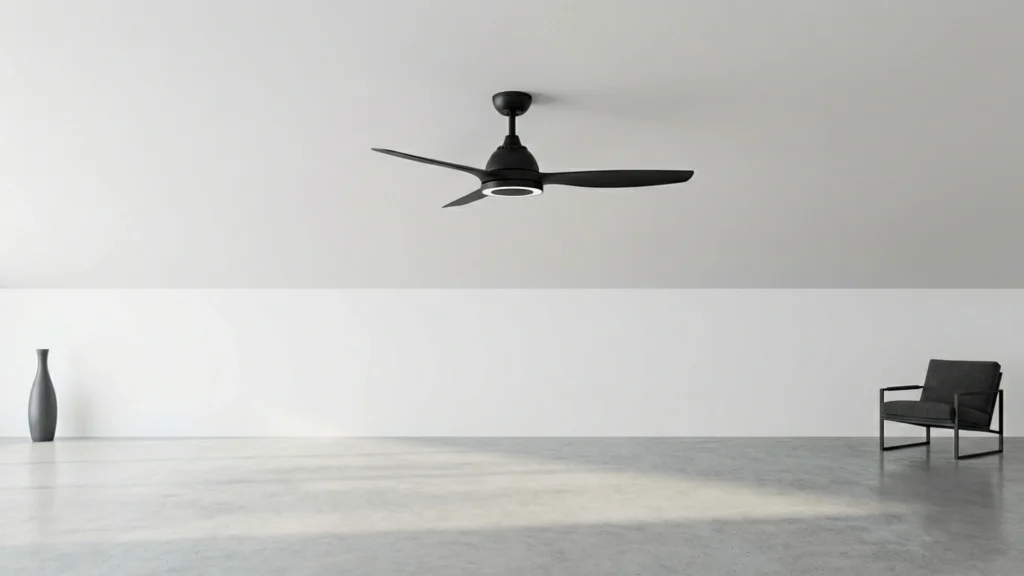
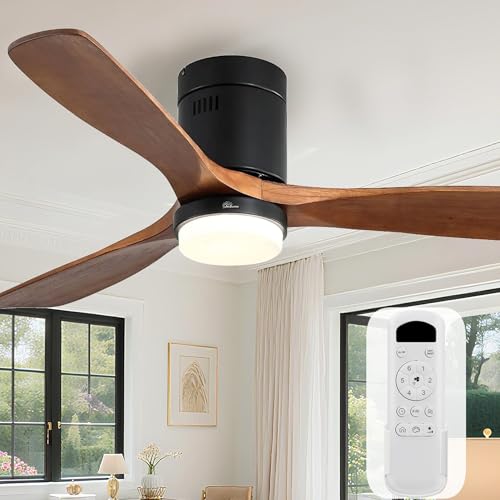
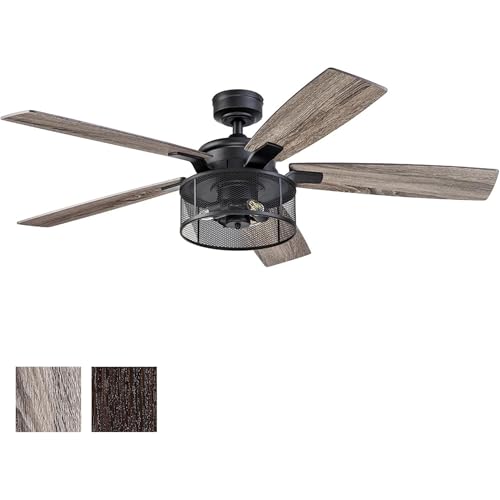
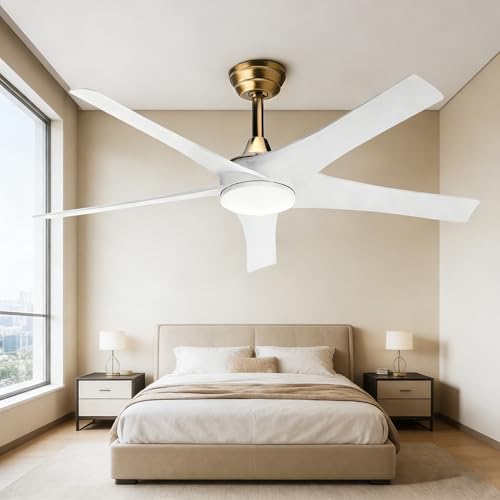
Ceiling fans with remote control include a handheld remote for speed and settings. For day to day use, that means you can change airflow without reaching for pull chains or wall switches. You still need real cooling performance, not just a fan that spins at any speed.
Picking the right model gets hard because remote controls add cost and sometimes add friction. Some remotes feel inconsistent at range. Some fans also run rough at higher speeds, even if the remote makes the settings easy. You also have to match the fan to your room size and ceiling height, or the airflow will not cover enough space.
If you want the full range of ceiling fan types beyond remotes, see our Best Ceiling Fans. If you want remote control specifically, keep reading for the checks that matter before you buy.
Quick Overview
Our Top Picks
#1. ZMISHIBO BJ52 52 in Ceiling Fan

Specifications
| Brand | ZMISHIBO |
|---|---|
| Mount Type | Flush Mount |
| Fan Diameter | 52 in |
| Motor Type | DC Motor |
| Airflow Cfm | 3057 CFM |
| Control Type | App Control, Remote Control |
Pros
- Reliable reverse mode
- Larger room coverage
- Remote or app control
- Warm-to-cool lighting
Cons
- App range uncertainty
- Remote distance unverified
This 52 in ZMISHIBO flush-mount ceiling fan stands out for its remote plus app control, paired with a warm-to-cool lighting option. In this remote-control fan category, that combination matters because you can adjust comfort and light from the couch, not just speed. The DC motor also gives solid airflow and includes a dependable reverse mode for year-round use.
The main thing to watch is control range. App range and remote distance were not fully confirmed, so it may be best if you plan to use the remote in the same room, close to the fan. It is also a good fit for larger rooms that need wider coverage, especially where flush mounting helps when ceiling height is limited.
#2. Sofucor 52144HTM 52 in Ceiling Fan

Specifications
| Brand | Sofucor |
|---|---|
| Mount Type | Flush Mount |
| Fan Diameter | 52 in |
| Blade Count | 3 Blades |
| Blade Pitch | 13° |
| Motor Type | DC Motor |
| Airflow Cfm | 5800 CFM |
| Speed Settings | 6 Speeds |
| Control Type | Remote Control |
Pros
- Remote convenience
- Dimmable LED light
Cons
- Loud fan noise
- Unreliable smart control
- Average controls, limited range
This Sofucor 52 in ceiling fan is a strong pick for the ceiling fans with remote control category because it pairs a handheld remote with a dimmable LED light. You can adjust fan speed across 6 settings and change the light brightness without walking to the fixture. In everyday use, that convenience stands out, especially for bedrooms and living rooms where you want control from the couch.
The main drawback is not the remote itself, but consistency. Reviews point to loud fan noise and smart control that can feel unreliable. The remote range also sounds limited, so plan to test it from your usual seating area. If quiet operation and dependable smart behavior matter most to you, this may feel frustrating. If you mainly want simple, in-room remote control plus a dimmable light, it fits the use case better.
#3. Honeywell 50614-01 52 in Ceiling Fan

Specifications
| Brand | Honeywell |
|---|---|
| Mount Type | Dual Mount |
| Fan Diameter | 52 in |
| Blade Count | 5 Blades |
| Airflow Cfm | 3376 CFM |
| Speed Settings | 3 Speeds |
| Control Type | Remote Control |
Pros
- Larger room coverage
- Balanced blade count
- Remote or app control
- Runs quietly (quiet motor)
Cons
- Tricky blade installation
- Setup-dependent performance
This 52 in Honeywell is a strong pick in the Ceiling Fans with Remote Control category because it targets bigger rooms while keeping the fan control simple. With a remote control plus three speed settings, it is easy to adjust airflow without walking to the ceiling. The fan stays quiet in daily use, and the five-blade design helps it move air more evenly across the room.
The main trade-off is installation. Blade setup can be fiddly, and performance depends on getting things aligned during setup. If you want a smooth, quiet fan you can run from the couch, this is a good fit, but plan time for careful assembly and balancing.
#4. YUHAO DY1256X-5B/52 52 in Ceiling Fan

Specifications
| Brand | YUHAO |
|---|---|
| Mount Type | Flush Mount |
| Fan Diameter | 52 in |
| Motor Type | DC Motor |
| Airflow Cfm | 4500 CFM |
| Speed Settings | 6 Speeds |
| Control Type | Remote Control |
Pros
- High airflow output
- Larger room coverage
- Multiple speed options
- Remote or app control
Cons
- Mostly solid construction
- Limited durability evidence
- Remote responsiveness unverified
This 52 in YUHAO ceiling fan stands out in the remote-control category thanks to its strong, room-filling airflow. With up to 6 speeds and a stated 4500 CFM airflow, it is built for noticeable cooling in larger spaces, not just small bedrooms. The included remote makes it easy to adjust the fan without getting off the couch, which matters most when you are using a fan for everyday comfort.
The trade-off is that build durability signals are limited. The fan feels mostly solid, but remote responsiveness has not been verified in consistent real-world testing here. If you want a larger, multi-speed fan that you can control from your seat, it is a good fit. If you expect proven long-term reliability or highly tested remote range, you may want to compare before buying.
#5. Jiff Cook F305-2026 52 in Ceiling Fan

Specifications
| Brand | Jiff Cook |
|---|---|
| Mount Type | Flush Mount |
| Fan Diameter | 52 in |
| Motor Type | DC Motor |
| Speed Settings | 6 Speeds |
| Control Type | Remote Control |
Pros
- Larger room coverage
- Multiple speed options
- Remote or app control
- Quiet operation
Cons
- Some balancing required
- Mostly solid construction
- Instruction confusion
The Jiff Cook F305-2026 52 in ceiling fan stands out because it pairs remote control with good coverage for larger rooms. With 6 speed settings and a DC motor, it gives you enough range for both light cooling and stronger airflow. It also stays quiet at typical settings, so you can run it during sleep or work without the fan dominating the room.
Still, expect some setup time. Some balancing may be needed to get smooth, wobble-free spin. The instructions can be confusing for first-time installers, so take your time with mounting and wiring. If you want a remote-controlled fan that moves air across a bigger space, this one fits well, as long as you are willing to fine-tune after installation.
#6. Hunter 59445 44 in Ceiling Fan

Specifications
| Brand | Hunter |
|---|---|
| Mount Type | Flush Mount |
| Fan Diameter | 44 in |
| Blade Count | 4 Blades |
| Control Type | Remote Control |
Pros
- Remote or app control
- Quiet motor hum
- Flush-mount ceiling fit
Cons
- Lighting issues such as flickering
- Light-module unreliability
- Service parts unavailability
The Hunter 59445 stands out in the ceiling fans with remote control category thanks to its quiet, low-key motor and its flush-mount look. The remote makes it easy to change fan speed without getting up, which matters when the fan sits close to the ceiling and is harder to reach. In day-to-day use, the airflow feels smooth rather than harsh, and the flush-mount design helps it look clean in rooms with lower ceilings.
The main trade-off is with the light system. Some buyers report flickering, and the light module can be less reliable than the fan itself. This model also depends on service support if something goes wrong with the lighting. If you want a remote-controlled ceiling fan for airflow first, and you are okay treating the light as a secondary concern, it can be a solid pick. If the light is a must-have, you may want to look elsewhere.
#7. Home Decorators Collection G493 72 in Ceiling Fan

Specifications
| Brand | Home Decorators Collection |
|---|---|
| Fan Diameter | 72 in |
| Motor Type | DC Motor |
| Speed Settings | 5 Speeds |
| Control Type | Remote Control |
Pros
- Rigid blades, low wobble
- Larger room coverage
- Multiple speed options
- Remote or app control
Cons
- Moderate, uneven airflow
- Light kit disappointment
This 72 in Home Decorators Collection fan is notable in the remote-control ceiling fan set because it pairs a true remote setup with solid build. The blades stay rigid and the fan shows low wobble in use, so the remote control feels practical rather than finicky. You also get 5 speeds, which helps you dial in comfort without always running at the highest setting.
The main downside is airflow. Reviewers describe the air movement as moderate and sometimes uneven between speeds. Also, the included light kit was a letdown for some buyers, so plan on treating this more like a fan first, especially if you care about consistent cooling across a wider room.
#8. ZMISHIBO OSX20 19.7 in Ceiling Fan

Specifications
| Brand | ZMISHIBO |
|---|---|
| Mount Type | Flush Mount |
| Fan Diameter | 19.7 in |
| Blade Count | 7 Blades |
| Motor Type | DC Motor |
| Speed Settings | 6 Speeds |
| Control Type | Remote Control, App Control |
Pros
- Premium feel, fair cost
- Space-saving design
- Useful fan-light combo
Cons
- Moderate, uneven airflow
- Some balancing required
- Noise at high speed
This flush-mount fan stands out in the remote-control ceiling fan space because it blends a 7-blade DC motor with a remote you can use day to day, plus an integrated fan-light setup. The design stays compact at 19.7 in, which makes it a practical fit for rooms where you do not have much drop. The remote control is the main reason it ranks here, since you can adjust speeds without getting on a chair or reaching for a pull chain.
The trade-off is airflow. Real-world cooling feels only moderate, and the airflow can feel uneven across the speed range. Some balancing work may be needed, and noise can show up at the highest setting. Choose it if you want a clean, close-to-ceiling look and convenient remote use more than strong, whisper-quiet breeze at top speed.
What to Look For
Remote Reliability: Test the remote setup in your mind before ordering. Look for reports of stable speed changes, no random button behavior, and enough remote range for your typical seat or bed location. If the fan does not respond consistently, convenience turns into frustration.
Airflow That Fits the Room: Choose airflow based on how far the fan needs to push air. Stronger airflow at multiple speeds helps you cool without running at the top setting all day. Pay attention to whether the fan keeps feeling steady as you step through lower and higher speeds.
Build Stability and Quiet Spin: Remote control does not help if the fan wobbles. Look for solid blade mounts and a motor that stays smooth at higher speeds. Quiet operation matters because many remote buyers use fans at night.
Motor and Speed Steps: More useful speed steps usually mean better comfort. You want enough range to move air on cooler nights and still cool enough on warm days. Also favor motor designs that feel consistent across speeds rather than “jumping” from one setting to the next.
Match the Mount Type to Your Ceiling: Your installation limits can decide the outcome. Select the mount type that matches your ceiling setup, such as Flush Mount or Downrod Mount. A mismatch can force awkward positioning, which reduces airflow coverage and can make balancing harder.
How We Picked
Products were identified through broad research across review sites and buyer forums, then filtered to only those that qualify as Ceiling Fans with Remote Control.
Scoring used the same objective pillar framework as the main Ceiling Fans post, allowing direct comparison of products within this sub-category. Priority went to airflow performance and steady operation, then build quality and installation practicality, with remote usability and overall value used as tie breakers between close options.
Frequently Asked Questions
Do remote-controlled ceiling fans need a wall switch to work?
Most remote ceiling fans still require a wall switch for power. Leave the wall switch on after installation. Then use the remote for speed and fan direction. Some models also pair a remote with a manual wall control.
What should I check if the remote does not control the fan?
First, replace the remote batteries and confirm the fan has power at the wall switch. Next, check that the receiver is fully seated and wired correctly at the fan body. Stand closer and try again. If it still fails, verify the fan code pairing if your model supports it.
How far does a remote usually work for a ceiling fan?
Remote range depends on the receiver and indoor layout. Many remotes work across a typical room from near the bed or couch. Walls and metal surfaces can reduce range. For best results, aim the remote toward the fan when you press buttons.
Are remote-controlled ceiling fans better than pull-chain or wall-control models?
They are more convenient when you cannot reach the fan. Remotes let you change speed and turn the fan on and off without standing up. Wall-control models can be just as easy, but you must stay near the switch. Choose based on how you use the room.
When should I choose a different type of ceiling fan instead?
Choose a pull-chain or wall-control fan if you want simpler controls and fewer electronics. Choose a smart app fan if you need schedules or voice control. Choose a larger blade span if you cover a bigger space. Remote-controlled fans fit well for bedrooms, living rooms, and hallways.
How do remote-controlled ceiling fans compare in quietness and airflow?
Remote control does not automatically mean quieter airflow. Quiet operation depends on the motor and blade balance more than the remote. Look for smooth low speed control for bedtime comfort. Strong airflow matters too, especially at the speeds you actually use.


