





How to Select the Best Upholstery Fabric
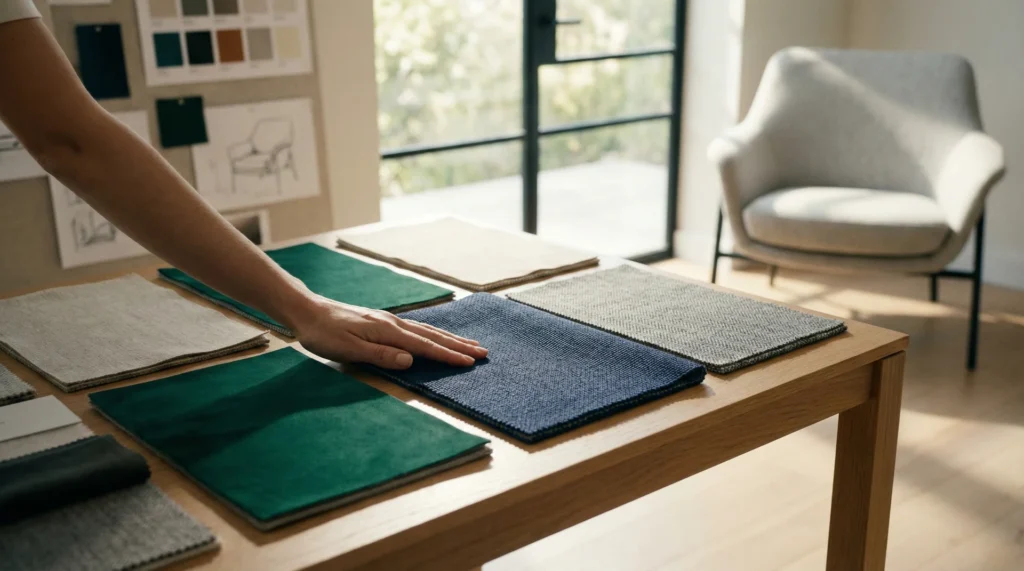
Choosing the right upholstery fabric for your furniture is one of the most significant investments you will make in your home’s interior design. It is not just about picking a color that looks good in the showroom; it is about finding a material that stands up to your lifestyle, feels comfortable against your skin, and retains its beauty for years to come. Whether you are reupholstering a family heirloom or buying a brand-new sectional, the fabric you choose will dictate the piece's longevity and ease of maintenance.
The process can feel overwhelming. With thousands of swatches ranging from velvet and linen to high-tech performance blends, how do you know which one is right for you? In this deep-dive, we will walk through the essential factors—from durability ratings to fiber content—to ensure you make a choice you will love for a lifetime.
Your Lifestyle: The Ultimate Litmus Test
Before you fall in love with a delicate silk or a moody dark velvet, you need to be honest about how the furniture will be used. A sofa in a formal living room that only sees guests twice a month can handle a much more delicate fabric than a sectional in a basement where kids and pets roam free. Your lifestyle is the most important filter through which all fabric choices must pass.
Homes with Pets and Children
If you have furry friends or little ones, durability and cleanability are non-negotiable. Pets bring claws, fur, and the occasional outdoor mess. Children bring spills, sticky fingers, and a tendency to treat the sofa like a trampoline. In these scenarios, look for fabrics with tight weaves. Loose weaves, like some linens or heavy tweeds, are magnets for pet claws and can snag easily. Microfiber is often a top choice here because it is difficult to snag and relatively easy to spot-clean.
Usage Frequency and Location
Consider the room's environment. Is the furniture placed in a sun-drenched sunroom? If so, UV resistance is vital to prevent fading. Is the piece in a high-traffic area? If it's the primary seat for movie nights, you need something that won't pill or thin out after a year of use. Assessing these factors early prevents the heartbreak of seeing a beautiful fabric degrade prematurely.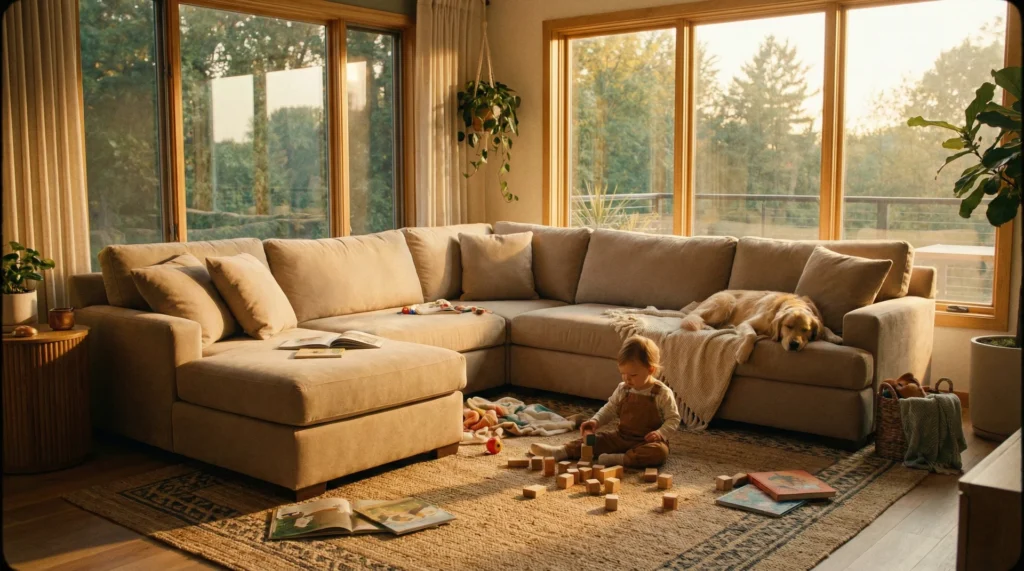
Deciphering Durability: The Double Rub Count
When browsing fabric samples, you might see a number followed by the term "double rubs." This refers to the Wyzenbeek or Martindale test, which measures a fabric's abrasion resistance. A machine rubs a piece of cotton duck or wool back and forth over the fabric until it shows signs of wear. Each back-and-forth motion is one "double rub."
- Residential Grade (15,000 double rubs): Suitable for occasional use furniture, like an accent chair in a bedroom.
- Heavy Duty (15,000 to 30,000 double rubs): The gold standard for family room sofas and frequently used furniture.
- Commercial Grade (30,000+ double rubs): Designed for high-traffic public spaces like hotels or offices, but excellent for high-energy households.
Don't assume that a thicker fabric is always more durable. A thin, tightly woven synthetic can often outperform a thick, loosely woven natural fiber in a rub test. Always check the specifications on the back of the swatch.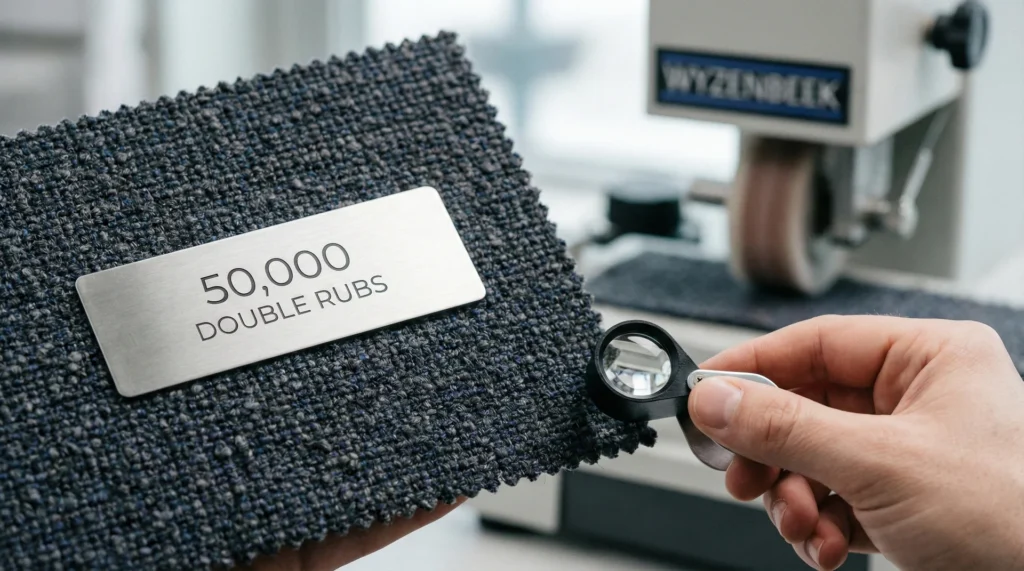
Natural Fibers: The Classic Choice
Natural fibers come from plants or animals and are prized for their soft hand-feel and breathable nature. However, they can be more susceptible to staining and sunlight damage than their synthetic counterparts.
Cotton: The Versatile Staple
Cotton is a natural fiber that provides good resistance to wear, fading, and pilling. It is often blended with other fibers to add strength. The downside? Pure cotton is susceptible to wrinkling and can absorb spills quickly, leading to stains if not treated with a protectant.
Linen: For Airy Elegance
Linen is best suited for formal living rooms or adult-only households. It has a beautiful, crisp texture and is naturally antimicrobial. However, linen wrinkles incredibly easily and can shrink if not professionally cleaned. It offers a sophisticated, "lived-in" look that many designers crave, but it requires a patient owner.
Wool: The Sturdy Option
Wool and wool blends are exceptionally durable and naturally resistant to pilling, fading, and wrinkling. Wool is also somewhat flame-retardant. While it can be expensive, its longevity makes it a great investment for a piece you plan to keep for decades.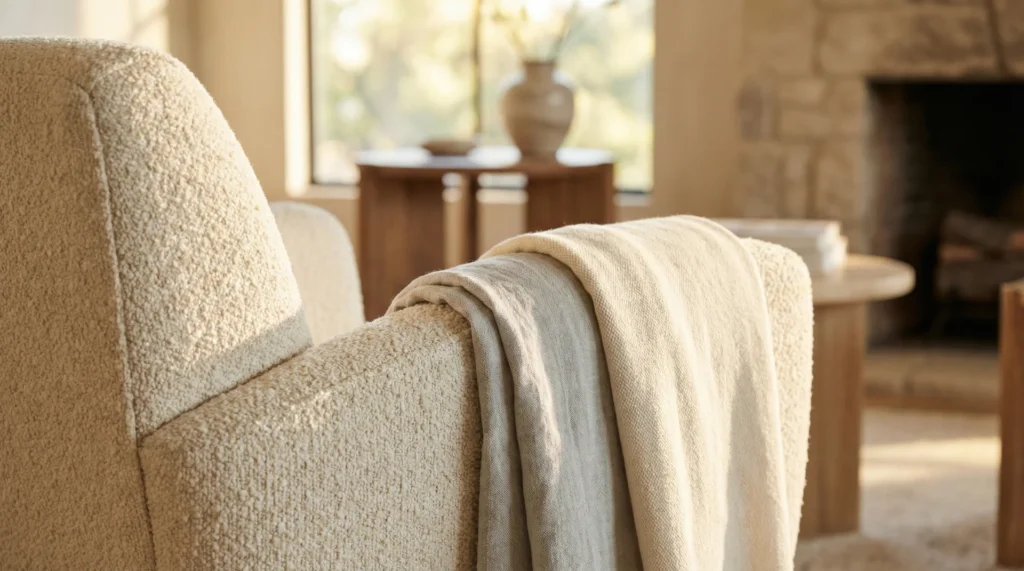
Synthetic Fibers: Built for Modern Life
Synthetic fibers are man-made and engineered to overcome the weaknesses of natural fibers. They are generally more affordable and offer superior stain resistance.
Polyester: The All-Rounder
Polyester is rarely used alone; it is usually blended with other fibers to add wrinkle resistance and durability. It is a workhorse in the upholstery world, easy to clean, and available in almost any texture imaginable.
Performance Fabrics: The Game Changer
In recent years, "performance fabrics" like Sunbrella, Crypton, and Revolution have revolutionized home design. Originally created for outdoor use or hospitals, these fabrics are now soft enough for the living room. They are engineered at the molecular level to repel liquids and resist odors and stains. If you want a white sofa but have a golden retriever, performance fabric is your only realistic path to happiness.
Color, Pattern, and Scale
Now for the fun part: aesthetics. The color and pattern of your fabric will define the room's mood. While it is tempting to go with a bold trend, remember that a sofa is a large-scale piece. Replacing fabric is much more expensive than replacing throw pillows.
Choosing the Right Hue
Neutral colors like grey, beige, or oatmeal are the safest bets for large pieces because they allow you to change your room's color scheme easily over time. However, don't be afraid of color if you truly love it. A deep navy or emerald green can act as a "neutral" while adding personality. Darker colors are better at hiding small marks, while very light colors will show every speck of dust.
Patterns and Texture
Large patterns can be stunning on a grand armchair but might feel overwhelming on a massive sectional. If you choose a pattern, ensure it is "railroaded" correctly so the design flows seamlessly across the cushions. Texture is also a visual element; a nubby bouclé adds warmth and dimension, while a smooth sateen feels cooler and more formal.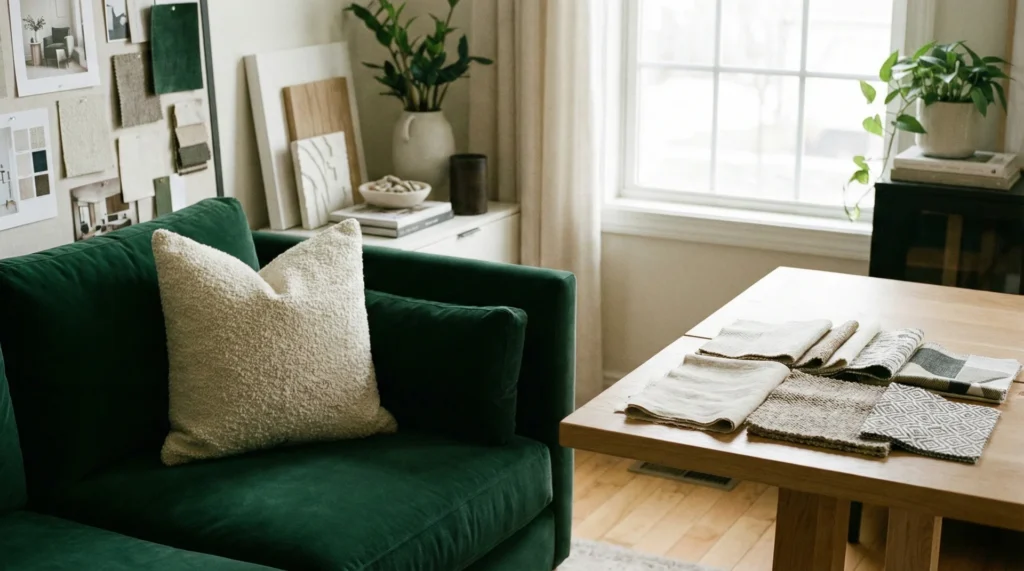
Maintenance: Understanding Cleaning Codes
Every upholstery fabric comes with a cleaning code that tells you how to treat spills. Ignoring these codes can lead to permanent water rings or fiber damage.
- W: Use water-based cleaners. This is the easiest to maintain.
- S: Use solvent-based cleaners (dry clean only). Water will stain these fabrics.
- WS: Can use either water-based or solvent-based cleaners.
- X: Vacuum only. No liquids of any kind. This is rare but important to note.
The Final Touch: Testing Your Swatch
Never buy a fabric based on a digital image or a tiny 2-inch square. Order a large swatch (at least 8x8 inches). Drape it over your existing furniture to see how the light hits it at different times of the day. Spill a little water on it. Rub it against your arm to see if it’s scratchy. If you still love it after 48 hours, you’ve found your winner.
Conclusion: Investing in Comfort
Selecting the best upholstery fabric is a balance of science and art. By considering your lifestyle, understanding the technical specs like double rubs, and choosing a fiber that matches your maintenance tolerance, you can create a home that is both beautiful and functional. Take your time, do your research, and don't be afraid to ask for help from a professional. Your future self—relaxing on a perfectly upholstered sofa—will thank you.