




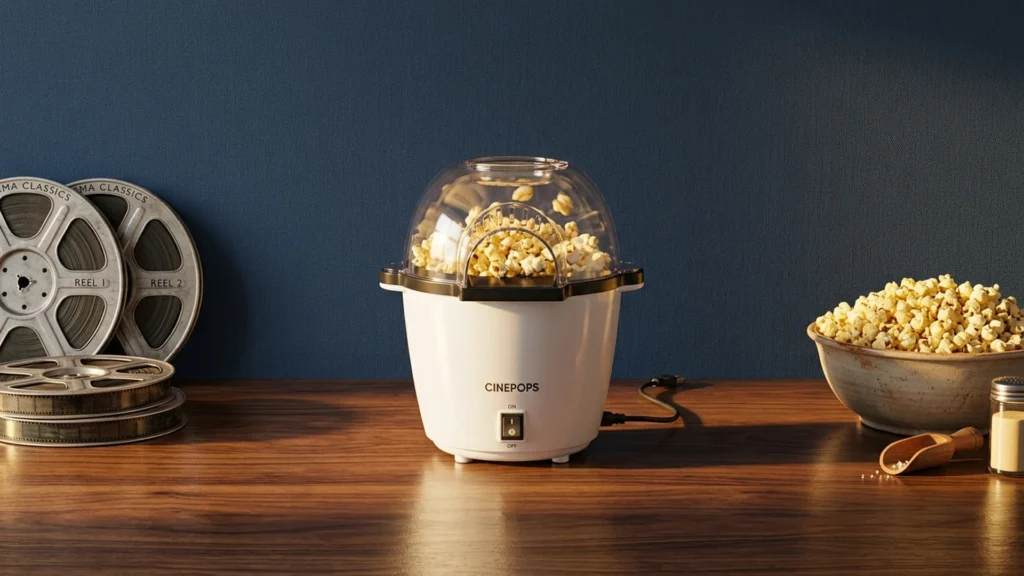
Popcorn makers turn kernels into hot, fluffy popcorn, usually with added oil, hot air, or heat from a stove. The category includes hot air poppers, kettle poppers, microwave poppers, and stovetop poppers. The best choice depends on how you want to cook, how often you make popcorn, and how much cleanup you will tolerate.
Picking one gets hard fast because specs are often misleading. Kernel capacity can be printed as an ideal number that still leaves you with under-popped kernels or a messy overflow. Wattage and power can look impressive, but popping speed also depends on airflow, heat control, and how evenly the chamber heats. Features that sound useful, like fancy control panels or extra parts, may not fix the real issues, like stalled cycles, scorching, or kernels that never fully pop.
This guide narrows the field with a simple goal: help you choose a popcorn maker that pops well for your use case. You will get clear criteria for performance, build quality, ease of use, capacity, and value, plus a transparent process for how each model was evaluated.
Quick Overview
Top Picks
Best Overall

Specifications
| Brand | Great Northern Popcorn |
|---|---|
| Type | Stovetop Popper |
| Heating Method | Stovetop |
| Material | Stainless Steel |
| Dimensions | 16.5 x 9.5 x 7 in |
| Weight | 2 lb |
Pros
- Even popping, minimal burns
- Easy loading and cleanup
- Durable metal build
Cons
- More hassle to use
- Manual attention required
- Longevity expectations
For a Best Overall stovetop popper, this one stands out for how consistently it pops with minimal scorching. The Great Northern Spinner keeps heat moving, so you get fewer burnt spots and a more even mix of kernels than many simple kettle-style setups.
In real use, it delivers strong popping results with a fluffy, steady texture and low leftover kernels. The stainless steel build feels solid, and the unit stays stable on the stove. Cleanup also tends to be straightforward, with easy loading and less mess than you might expect from a manual popper.
The trade-off is that it asks for more hands-on attention. You still need to watch and manage the process during popping, and long-term wear can be a concern for some owners. If you want reliable stovetop popping and do not mind standing by while it runs, this is a great match.
Best Microwave

Specifications
| Brand | Chef'n |
|---|---|
| Type | Microwave Popper |
| Heating Method | Microwave |
| Material | Silicone |
| Weight | 0.8 lb |
Pros
- Even popping, minimal burns
- Tight fit, stable bowl
- Easy loading and cleanup
Cons
- More hassle to use
- Time adjustments required
- Flavor finishing needed
This Chef'n PopTop is a solid pick for the Best Microwave slot because it focuses on consistent microwave popping, not stove stirring or hot-air airflow. The PopTop design helps the bowl stay tight and stable, which matters when you want fluffy popcorn instead of uneven results.
In real use, it delivers even popping with minimal burns. Users also like the tight fit and the stable silicone bowl, which keeps kernels heating more uniformly. Cleanup is straightforward, with easy loading and rinsing compared to messier popper styles.
The trade-off is that it takes a bit more babysitting. You may need time adjustments, and you might still want to finish with your preferred flavoring after it pops. If you want microwave popcorn that stays consistent and easy to clean, but you do not mind tweaking timing, this is for you.
Also ranked #1 in: Oil-Free Popcorn Makers
Best Glass Bowl

Specifications
| Brand | Ecolution |
|---|---|
| Type | Microwave Popper |
| Heating Method | Microwave |
| Material | Glass |
| Dimensions | 6 x 8 x 6 in |
| Weight | 1.2 lb |
Pros
- Even popping, minimal burns
- Tight fit, stable bowl
- Easy loading and cleanup
Cons
- Microwave preset conflicts
- Lid-seal wear risk
This microwave popper is a strong match for the Best Glass Bowl slot because it uses a tight-fitting glass bowl that stays stable while it heats. That glass construction helps keep the popcorn process more controlled than loose, bowl-style knockoffs.
In real use, it delivers even popping with minimal burns, so you get a lighter, more consistent texture. The fit is notably secure, which reduces wobble during cooking. Cleanup is also simple, since the bowl is easy to reach and rinse after each batch.
The main drawback is a bit of friction with the microwave preset, which can interfere with getting the timing just right. There is also some lid-seal wear risk over time. If you want consistently popped popcorn with a stable glass bowl and you can fine-tune microwave timing, this is the one to get.
Best for Small Spaces

Specifications
| Brand | DASH |
|---|---|
| Type | Hot Air Popper |
| Heating Method | Hot Air |
| Controls | One-Touch Button |
| Dimensions | 8.4 x 13.5 x 4.8 in |
| Weight | 0.8 lb |
Pros
- Even popping, minimal burns
- Easy loading and cleanup
- Consistent volume per run
Cons
- Limited performance metrics
- Build durability unclear
This hot air popper fits the Best for Small Spaces slot because it is a compact unit with one-button operation. The 8.4 x 13.5 x 4.8 in footprint makes it easy to store and pull out for quick snack runs.
In real use, it turns out evenly popped corn with minimal burnt spots. Users also report minimal scorching and consistent volume per run. Cleanup stays simple thanks to the easy loading and straightforward design.
One clear drawback is that build durability is not well defined from available info, so long-term wear is harder to gauge. If you want reliable hot air popping without taking up counter space or fussing with complicated steps, this is a good match.
Best Automatic Stirring

Specifications
| Brand | West Bend |
|---|---|
| Type | Stirring Popper |
| Heating Method | Oil |
| Dimensions | 9 x 11.4 x 13.5 in |
| Weight | 3.5 lb |
Pros
- Even popping, minimal burns
- Consistent volume per run
- Stirring automation
Cons
- Cleaning the popper is time-consuming
This stir-and-pop unit fits the Best Automatic Stirring slot because it handles the hard part for you. An internal stirring action keeps the hot oil moving while kernels cook, so you get fewer dry spots and less scorching than many hands-off kettles.
In real use, it delivers even popping and a steady volume per run. You also tend to see a low number of unpopped kernels, with a consistent texture from batch to batch. Build feels solid for the size, and the overall workflow is straightforward once you get the hang of loading and timing.
The main drawback is cleanup. Getting the popper fully clean can take more time than you want after movie-night. If you want a mostly hands-off electric popcorn maker that stirs automatically for more even results, this is the one to get.
Best Value

Specifications
| Brand | HOTPOP |
|---|---|
| Type | Microwave Popper |
| Heating Method | Microwave |
| Material | Silicone |
| Weight | 0.71 lb |
Pros
- Reliable value, strong features
- Consistent volume per run
- Easy loading and cleanup
Cons
- Hot-bowl burn risk
- Hand-safety inconvenience
- Manual timing dependence
This HOTPOP microwave popper fits the Best Value spot because it makes a lot of popcorn with a simple setup. The standout trait is the silicone hot-bowl design, which helps make consistent batches without complicated parts.
In real use, it tends to pop a solid, repeatable volume per run. It is also easy to load and clean, which matters for quick snack days. With a user-friendly process and dependable repeat results, it lands well for everyday performance and smooth handling.
The main downside is the hot-bowl burn risk during handling, plus a bit of hand-safety awkwardness when you move it. It also depends on manual timing, so you need to watch and adjust for your microwave. If you want straightforward microwave popping and easy cleanup, and you are okay managing the timing and heat handling, this is a good pick.
Best Single Serve

Specifications
| Brand | Joseph Joseph |
|---|---|
| Type | Microwave Popper |
| Heating Method | Microwave |
| Kernel Capacity | 1 oz |
| Material | Silicone |
| Dimensions | 5.7 x 4 x 4 in |
| Weight | 0.5 lb |
Pros
- Reliable value, strong features
- Compact countertop size
Cons
- Small batch capacity
- More hassle to use
This Joseph Joseph microwave popper fits the Best Single Serve slot because it is made for small, one-ounce batches. It is a compact silicone microwave pop maker that takes up little counter space and is designed for quick snacks.
In real use, it delivers steady popping with a mostly even result, reflected in its 7.9 performance score. Build quality is solid for the size, with a simple silicone chamber that feels stable during use. Cleanup stays fairly manageable, and ease of use scores well for a microwave style device.
The main trade-off is batch size, with its 1 oz kernel capacity limiting output. It can also feel a bit more work than expected, earning a lower ease-of-use score. If you want one-serve popcorn fast in the microwave and do not mind doing smaller batches, this is a good match.
What to Look For
Type: Match the popcorn maker type to your cooking style. Hot Air Poppers rely on airflow. Kettle and Stirring Poppers are built for more controlled heat and can use oil. Microwave Popppers are the fastest, but they depend heavily on your microwave’s power and the bowl design. Stovetop Poppers suit people who want close control but accept more hands-on cooking.
Heating Method: Hot Air usually gives lighter popcorn and tends to require less oil. Oil methods often improve flavor and help kernels pop more evenly, but they add mess and calories. Microwave methods can work well for quick batches, but they can leave cold spots unless the bowl design spreads heat well. Stovetop methods can pop very well when heat stays steady.
Kernel Capacity: Use kernel capacity as your batch size reality check. Choose a unit that fits your typical serving count without forcing you to overfill. If you often make popcorn for multiple people, a small capacity model will push you into extra batches, which cuts convenience and wastes time.
Power: For electric models, power helps predict how quickly the chamber heats. Compare watts within the same heating method type. Higher wattage does not guarantee better popping by itself, but very low power often struggles with even heating, especially for larger batch sizes.
Material: Look at the main material where heat and kernels contact. Stainless steel and aluminum usually handle heat changes better than basic plastics. Plastic can work, but focus on parts that take the most heat and whether they show discoloration or warping after repeated use.
Controls: Simple controls tend to be easier to live with. An On/Off switch is often enough for basic units. Rotary knobs or push buttons should be clear and repeatable, especially if the maker needs preheat time or has specific settings for batch size.
Dimensions:
Small kitchen footprint matters for storage and for counter use. Measure your available space and confirm the popcorn maker’s width, depth, and height fit with room to open lids or remove bowls. A compact unit that is hard to access during serving becomes annoying fast.How We Selected These Products
Products were discovered through broad web searches across review sites, buyer forums, and best-of lists, then grouped by type, heating method, and intended use. We did not start with a single publisher’s opinion, because popcorn performance is inconsistent across models.
Next, we read a large volume of real customer reviews to learn what buyers actually faced, like unpopped kernels, scorched batches, hard cleanup, and parts wearing out. We verified availability and key specs directly against Amazon listings. Then we scored each model across the pillar names from the framework, using an objective rubric tied to real outcomes, not feature checklists.
Final selection focused on distinct roles. A model that is best for quick microwave batches competes with other microwave options, while a stirring kettle model is judged against similar stovetop and oil-based designs. The goal was not to rank everything together, but to pick tools that make sense for different popcorn habits.
Frequently Asked Questions
Which type of popcorn maker works best for movie-night batches?
Pick a stovetop spinner or hot-oil stirring model for larger batches. The stirring designs help heat reach more kernels, so you get fewer half-pops. Great Northern Original Spinner Stovetop Popcorn Maker and West Bend Stir Crazy Hot Oil Popcorn Maker both fit this use case well.
What is the main difference between hot air poppers, microwave poppers, and hot oil poppers?
Hot air poppers use fast airflow, with no added oil. Microwave poppers rely on microwave energy and simple cup-and-lid cooking. Hot oil poppers use oil plus stirring, which can boost crispness but usually adds cleaning and oil handling.
How should I clean a popcorn maker after use?
Most hot air and microwave poppers are easier to clean because they avoid messy oil. Use the quick-care method in the manual, like wiping and rinsing parts that touch kernels. Stovetop and hot-oil models need more attention since oil residue can cling to the kettle and lid.
Is a higher price always better for Popcorn Makers?
No. In this category, the best overall pick also has a mid-range price, and the best value pick is one of the cheaper options. Higher prices can help with better materials or more even stirring, but they do not guarantee better popping every time.
Why do some microwave popcorn makers leave more unpopped kernels?
Microwave popping depends on microwave power and proper kernel measuring. If you use too many kernels or the microwave runs hot, some kernels may stall. Ecolution Micro-Pop Microwave Popcorn Maker and Chef'n PopTop Microwave Popcorn Maker tend to do well, but even they can leave a few unpopped kernels.
Do Popcorn Makers usually score higher for capacity or performance?
Capacity and performance both matter, but performance scores often drive the overall ranking. Models with even heating and consistent popping tend to rank at the top. Capacity helps, but a maker can still disappoint if it scorches or stalls during batches.


