Finding the right juicer can feel overwhelming — there are dozens of models, bold claims on the box, and an avalanche of conflicting reviews. We get it. That’s why our goal is to cut through the noise and give you straightforward, trustworthy guidance so you can pick a juicer that actually fits your kitchen and lifestyle. We don’t rely on ads or buzzwords; we lean on real-world data and careful comparison.
To build a list you can count on, we analyzed thousands of customer reviews across multiple retailers and cross-referenced those impressions with product specifications and feature sets. That means we look beyond star ratings: we identify recurring strengths and complaints, spot long-term durability issues, and weigh how a model performs in everyday tasks like cold-press extraction, pulp separation, noise level, and cleanup. Where possible, we also compare warranty terms and after-sales support to give you the full picture of ownership, not just that first week of great juice.
Our recommendations focus on value and reliability. We prioritize machines that consistently deliver high yield, are easy to maintain, and hold up over time — while still offering options across budgets and use cases. Every item on our list has been vetted with the same careful approach so you spend less time second-guessing and more time enjoying fresh, nutritious juice. If you want a machine that works as hard as you do, you’re in the right place.
Quick Overview
Top Picks
Best Overall

Specifications
| Brand | Ninja |
|---|---|
| Power | 150 Watts |
| Capacity | 24 Fluid Ounces |
| Dimensions | 12.11"D x 7.15"W x 15.93"H |
| Weight | 7.93 pounds |
Pros
Cons
The Ninja JC151 earns a Best Overall spot because it balances real-world performance with user-friendly design. Its low-speed auger and high-torque motor handle tougher ingredients without clogging, delivering steady, non-stop juicing while the anti-drip lever and included 24 oz. jug keep counters tidy. Total Pulp Control with two interchangeable filters is a practical touch — you can dial in texture quickly, and the one-touch Start/Stop plus Reverse program makes jams and cleanup far less frustrating.
Where it shines is ease: simple assembly, dishwasher-safe juice parts, and a compact footprint that fits under cabinets make this a daily-driver for busy kitchens. A few aspects are plainly average — the 150-watt motor suits home use but isn’t commercial-grade, the two basic programs are straightforward rather than advanced, and the juice jug size means larger batches need more refills. Overall, its dependable performance, thoughtful extras, and low-hassle maintenance justify the Best Overall ranking.
Best Premium Juicer

Specifications
| Brand | Hurom |
|---|---|
| Power | 150 Watts |
| Capacity | 18 Fluid Ounces |
| Dimensions | 10.3"D x 6.6"W x 18.5"H |
| Weight | 22.5 pounds |
Pros
Cons
The Hurom H400 feels like a thoughtful step up for anyone after a premium juicer. Its Easy Clean chamber with two-part auger and embedded strainer function really cuts down on the usual post-juice scrubbing, and the streamlined assembly means you’re spending less time fumbling with parts and more time juicing. The larger self-feeding hopper and inlet are practical — you can add more ingredients while it’s running — and the slow-squeeze auger consistently pulls a high yield with minimal pulp, which is exactly what you want from a top-tier masticating machine.
Design touches like the front gauge window are pleasant and useful, letting you monitor color and chamber volume at a glance. While it doesn’t reinvent every wheel — it offers the steady low-speed performance and compact footprint you’d expect at this level — the H400’s focus on easy maintenance, efficiency, and refined user experience is what earns it a spot among the best premium juicers.
Best Compact Juicer

Specifications
| Brand | Magic Bullet |
|---|---|
| Power | 400 Watts |
| Capacity | 16 Fluid Ounces |
| Dimensions | 7"D x 6"W x 11.5"H |
| Weight | 4.5 pounds |
Pros
Cons
The Magic Bullet Mini Juicer punches above its weight for a countertop-friendly machine. Its 400-watt motor pulls a surprising amount of juice from fruits and firmer veggies, and the roomy 2-inch feed chute means you’ll spend less time chopping and more time sipping. I also like the practical touches: dishwasher-safe attachments make cleanup painless, a silicone spout cap stops drips, and the included 16-oz cup with twist-on lid makes single-serve juices easy to grab-and-go. It’s compact enough to live on the counter or tuck away, and the one-year limited warranty adds a bit of reassurance.
That said, this is a compact centrifugal-style unit, so it won’t match the juice yield or nutrient retention of larger cold-press machines, especially with lots of leafy greens. The small cup size also means you may need multiple batches for family servings. For someone after quick, convenient daily juices without the bulk, though, it’s a solid and practical pick.
Best Centrifugal Juicer
Specifications
| Brand | Breville |
|---|---|
| Power | 1000 Watts |
| Capacity | 35 Fluid Ounces |
| Dimensions | 13.1"D x 12"W x 10.6"H |
| Weight | 10.7 pounds |
Pros
Cons
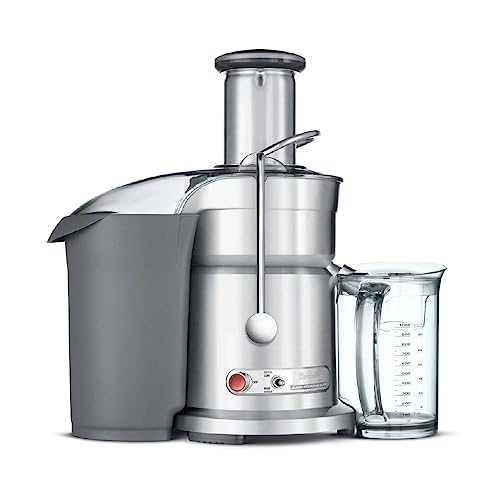
If you want a centrifugal juicer that feels built for serious daily use, the Breville 800 JEXL delivers. The 1000W motor and high-speed 13,000 RPM action make quick work of whole fruits and hard vegetables, and the titanium-reinforced disc plus Italian micro‑mesh filter really boost yield and clarity — Breville claims up to 30% more juice and the dense mesh (40,000 filtering pores) does produce smooth, pulp-free results. The extra-wide 3-inch chute cuts prep time, and the generous juice jug with froth separator plus the roomy pulp bin mean fewer interruptions during a big batch.
Cleanup and storage are also thoughtful: most components are dishwasher-safe, the pulp container detaches easily, and the cord wraps under the base. The two-speed control is practical for varying produce textures. Warranty and some storage features are standard for this class, but overall the combination of power, extraction quality, and convenience earns it a top spot among centrifugal juicers.
Best Masticating Juicer

Specifications
| Brand | Omega |
|---|---|
| Power | 150 Watts |
| Capacity | 16 Fluid Ounces |
| Dimensions | 9.14"D x 15.67"W x 9.49"H |
| Weight | 11.5 pounds |
Pros
Cons
This Omega vertical masticating juicer stands out where it matters: preserving nutrients and flavor. Running at a deliberate 43 RPM and using Slow Squeezing Technology, it minimizes heat and oxidation so juices taste fresher and last longer. The dual-edge auger with tight tolerances really boosts yield — you’ll get more juice and less pulp, and the result is smoother, nutrient-dense drinks even from leafy greens or soybeans for nut milks.
Practical touches add to its appeal. The no-drip tap is simple but smart, letting you close the spout to mix or remove the cup without a mess. The auto-cleaning feature helps keep the screen clear between runs, which cuts down on maintenance time.
That said, some aspects are pretty average: it’s not the fastest juicer for large batches and you’ll still need occasional full disassembly for a deep clean. Overall, its nutrient retention, high extraction rate, and convenient finishing touches make it a solid pick in the masticating category.
Best Citrus Juicer
Specifications
| Brand | VINCI |
|---|---|
| Power | 50 Watts |
| Capacity | 12 Fluid Ounces |
| Dimensions | 7"D x 8.5"W x 12.5"H |
| Weight | 4.31 pounds |
Pros
Cons
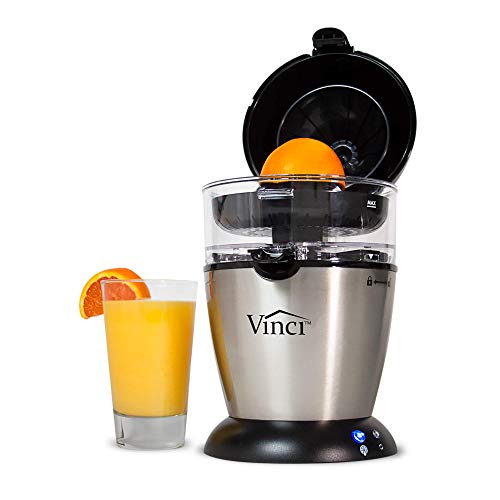
If you want an easy, no-fuss way to get fresh citrus juice, the Vinci Electric Citrus Juicer really delivers. The single-button automated press makes squeezing a breeze — far less effort than a handheld squeezer or manual press — and the two interchangeable pulp filters let you dial in texture for drinks, dressings, or cocktails. The BPA-free Tritan bowl feels sturdy and sanitary, and the 12-ounce reservoir is handy for quick single servings.
Cleanup is straightforward: the removable parts are top-rack dishwasher-safe, which is a small but meaningful convenience for daily use. It handles most citrus up to about 4.5 inches, so lemons, limes, oranges and even grapefruits are no problem. On the flip side, the 12-ounce capacity is modest if you routinely make large batches, and the description doesn’t highlight motor strength or noise levels. Overall, it’s a practical, user-friendly choice for anyone who wants fresh juice with minimal hassle.
Best Commercial Juicer

Specifications
| Brand | Robot Coupe |
|---|---|
| Power | 1080 Watts |
| Capacity | 220 Fluid Ounces |
| Dimensions | 21 x 9.25 x 19.75 inches |
| Weight | 16 Pounds |
Pros
Cons
If you need a workhorse for a busy juice bar or café, the Robot Coupe J80 makes a convincing case. Its 1,000-watt (1.25 hp) motor, magnetic safety switch and active ventilation mean it can handle continuous high-volume use without overheating, and the automatic feed lets you keep a steady production line going without constant babysitting.
Practical touches make it easy to integrate into a commercial workflow: the tall spout clears 6-3/8 inches so you can empty straight into a blender container, and the 2.5 mm grating disc with twin handles comes out tool-free for quick cleaning between shifts. Those features speed service and reduce downtime.
It’s clearly built for intensive use in cafés, restaurants and supermarkets, so durability is a strong point. On the flip side, it doesn’t try to be flashy—there’s no super-quiet casing or multifunction attachments—but for raw throughput and reliability it’s a solid, no-nonsense pick for commercial settings.
What To Look For
Picking the right juicer comes down to matching how you intend to use it with the machine’s strengths, from speed and convenience to yield and ease of care.
- Juicer type: Choose between centrifugal, masticating (slow), and triturating (twin-gear) models because each affects juice quality, yield, and the kinds of produce you can process effectively.
- Juice yield and nutrient retention: Look for machines that extract more liquid with less waste and operate at lower speeds if you want higher nutrient and enzyme preservation in delicate greens and herbs.
- Pulp control and consistency: Adjustable pulp settings or efficient automatic ejection matter if you prefer thicker smoothies, clearer juices, or want to repurpose dry pulp for recipes.
- Feed chute size and prep time: A wider chute reduces chopping and speeds up juicing, while a narrow feed requires more prep but can lead to a more compact machine.
- Motor power and speed (RPM): Higher-wattage motors handle tougher produce without stalling, while lower RPMs generally produce less heat and oxidation for longer-lasting juice.
- Ease of cleaning: Removable, simple-to-disassemble parts and dishwasher-safe components make daily use sustainable; intricate assemblies increase cleaning time and hassle.
- Build quality and materials: Stainless steel and BPA-free plastics are more durable and food-safe; check seals and bearings for longevity, especially in frequent-use kitchens.
- Noise and vibration: If you’ll use the juicer early morning or in open-plan spaces, quieter, low-vibration models are less disruptive and feel higher quality.
- Footprint and storage: Consider counter space and whether the unit can be disassembled or stored upright easily if kitchen real estate is limited.
- Warranty and after-sales support: Longer warranties and accessible customer service indicate confidence from the manufacturer and reduce long-term ownership risk.
Balance performance, convenience, and durability to find a juicer that fits your produce habits, kitchen space, and long-term expectations.
How We Select Our Products
Picking the juicers featured in this post wasn’t a rushed decision — it was a methodical, hands-on process built to separate hype from honest performance. We started by gathering a broad pool of contenders from best-seller lists, trusted brands, and reader recommendations. From there we applied a mix of objective measurements and real-world feedback to narrow the list.
Customer ratings and written reviews were our first filter: we looked beyond star counts to read thousands of comments across retailers and forums, flagging consistent praise or recurring problems. Then we compared key features side-by-side — motor power, feed-chute size, extraction method (centrifugal vs. masticating), pulp dryness, noise levels, and how easy each unit is to clean and store. Where possible we measured yield and pulp moisture ourselves to quantify performance rather than rely on specs alone.
Value-for-money played a major role. We balanced price against build quality, included accessories, warranty length, and long-term reliability signals (replacement part availability and brand support). Safety features, footprint, and user ergonomics were also considered — a great juicer shouldn’t be awkward to use or terrifying to clean.
To keep things fair, we used a weighted scoring system so no single factor dominated the outcome, and we removed any models with inconsistent quality or poor after-sales service. Finally, we double-checked our finalists with a short-term home test, making juices from soft fruits, leafy greens, and hard roots to ensure versatility.
Our goal throughout was simple: deliver recommendations you can trust. We’re careful, transparent, and constantly updating choices as new models and user feedback emerge.
Final Thoughts
Picking the right juicer does more than just make morning smoothies — it shapes how easily and enjoyably you can add fresh produce to your life. The biggest benefits are practical: the right machine preserves more nutrients and flavor, wastes less fruit and veg, and makes cleanup and daily use feel effortless. For someone who wants quick breakfasts, a fast centrifugal juicer is a time-saver; if you’re focused on leafy greens and nutrient-dense cold-pressed juices, a slow masticating model will extract more vitamins and yield richer results. Matching the technology to the task means you get better juice and actually end up using the appliance instead of letting it collect dust.
Lifestyle fit matters almost as much as performance. Consider how much counter space you have, how noisy you can tolerate, and whether you need something robust for heavy daily use or a compact unit for occasional weekend batches. Ease of assembly and dishwasher-safe parts can be the deciding factor if you dread cleanup; warranties and build quality matter when you want long-term value. Price is important, but the cheapest option isn’t always the most economical if it doesn’t meet your needs and gets abandoned.
Before you buy, think about what you’ll juice most often, how much time you’re willing to spend, and whether you want extras like pulp-ejection or smoothie capability. Read a few hands-on reviews, compare warranties, and, if possible, test a model in-store. Choosing thoughtfully means you’ll enjoy fresher, better-tasting juice more often — and that’s what makes the purchase worthwhile.