Transparency Note: This post contains affiliate links. As an Amazon Associate, we earn from qualifying purchases at no extra cost to you.
Choosing an electric grain mill means weighing motor power, grind control, and the limits on each grinding run. The listed motors range from 450 W to 3400 W, but a higher rating alone does not establish better flour or faster milling.
Control also varies: the Nutrimill Impact has a feed-rate knob with up to seven notches, while the VEVOR 3000W model lists adjustable thickness. The 2000g VEVOR and LEJIEYIN 750g models require rest periods between grinding intervals. All listed options need an outlet, so shoppers seeking hand-cranked operation may prefer the broader comparison.
For an electric mill buyer who wants a strong motor and some feed control, the Nutrimill Impact Grain Mill is a useful fit. Its listed 1200 W motor and feed-rate knob with up to seven notches give you two concrete points to weigh when choosing a powered mill. The notch count does not establish a particular flour texture or grinding speed.
Plan to use it near an electrical outlet; this model requires power, so it is not suited to milling where electricity is unavailable. If you want a higher listed motor rating and can work around rest periods, the VEVOR 2000g Grain Mill lists 3400 W and requires a 5–10-minute rest after five-minute runs.
One owner reports awkward loading and larger-batch inconvenience
One owner switched, citing a competitor’s more powerful motor
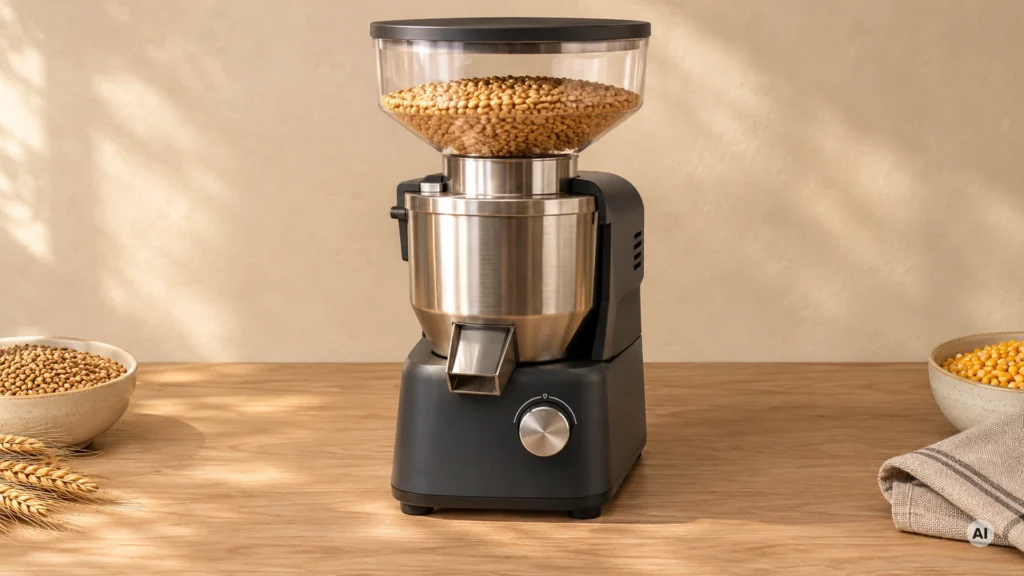
For an electric mill with a wide grind range, the Nutrimill Harvest uses natural corundum milling stones and adjusts from cracked grain to ultra-fine flour. Its 450 W motor is a published rating, not a measure of grinding speed. This Gold model is specified for non-oily grains, beans, and legumes, so it suits cooks who want stone milling and adjustable texture within that ingredient range.
One owner reports a mostly fine grind, but another found loading awkward and larger batches inconvenient. That makes batch size and loading worth considering if you mill often. If you prefer a feed-rate control and a higher listed motor rating, the Nutrimill Impact Grain Mill is listed at 1200 W with up to seven feed-rate notches; those specs describe a different adjustment approach, not proven faster grinding.
One user said their KitchenMill did not last as long as expected
For an electric mill buyer who wants to process several kinds of dry grain, the Kitchen Mill is listed for wheat, corn, rice, popcorn, beans, and legumes. Its listed 1000 W motor sets it between the 450 W NutriMill Harvest and higher-wattage options, but that number alone does not establish grinding speed or flour quality. A user called their KitchenMill “good,” though the available feedback does not confirm results for specific grains.
Plan to use it near an electrical outlet. One user also said their KitchenMill did not last as long as expected, but gave no details, so the report cannot indicate a typical lifespan or cause. Choose the Nutrimill Impact Grain Mill instead if a documented feed-rate knob matters to your choice; the Kitchen Mill's grind adjustment is not established in the available specifications.
For shoppers choosing an electric mill around motor power, the VEVOR 2000g Grain Mill is listed at 3400 W, the highest figure in this comparison. Its stated compatible foods include wheat, corn, barley, oats, rye, peas, soy, and coffee beans. That broad list may suit households milling several dry ingredients, though exact grind results have not been independently verified.
Plan for pauses: the stated operating guidance calls for a 5–10-minute rest after each five-minute run. If you want a powered mill with listed thickness adjustment instead, the VEVOR 3000W Grain Mill may better match that need; its 3000 W rating is lower, and the two models' specifications do not establish which grinds faster.
For electric milling, the VEVOR 3000W Grain Mill is notable for pairing a 3000 W motor with adjustable grind thickness. That gives shoppers a clear adjustment option when choosing a powered mill, though the rating alone does not establish speed or flour consistency. Its listed grain range includes wheat, rice, corn, sorghum, and soybeans.
It runs on electricity, so you will need an outlet where you plan to mill. If you want a stated operating limit to guide batch planning, the VEVOR 2000g Grain Mill lists five-minute runs followed by 5–10-minute rests; no such interval is established here for this model.
Requires 5–10-minute rests between grinding intervals
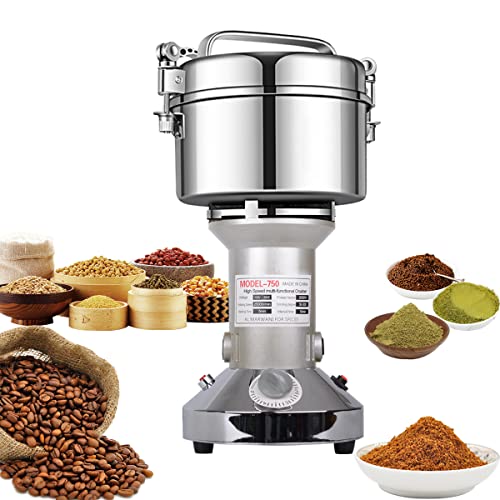
For electric milling across several dry grains, the LEJIEYIN 750g Grain Mill lists soy, corn, barley, rice, wheat, and mung beans as compatible. Its 2000 W motor and triple-blade mechanism suit shoppers comparing powered mills, though these specifications do not confirm grinding speed or flour texture.
Plan for short batches: the listed guidance calls for 5–10-minute rests between grinding intervals, and the mill is for dry ingredients only. If you need a listed capacity of 2000 g rather than 750 g, the VEVOR 2000g Grain Mill is a larger-capacity option; its listing specifies a 5–10-minute rest after every five minutes of operation.
What to Look For
Motor power: The listed ratings span 450 W for the Nutrimill Harvest to 3400 W for the VEVOR 2000g. Consider the power rating alongside your usual batch needs, but do not treat it alone as proof of speed or grind quality.
Grind control: The Nutrimill Impact uses a feed-rate knob with up to seven notches, and the VEVOR 3000W listing describes adjustable thickness. These options may matter if you want to change how the mill feeds or adjust thickness; some listed models have no settled adjustment specification.
Run limits: The VEVOR 2000g and LEJIEYIN 750g listings call for 5 to 10 minutes of rest between grinding intervals. That pause may matter when processing repeated batches. Check the stated operating limit before choosing a model for extended sessions.
Power access: Every listed mill is electric and requires an outlet. Choose among these models if powered operation suits your setup; compare with the main guide if you are considering manual mills instead.
We identified candidates through broad research across review sites and buyer forums, then filtered the results to products that qualify as electric grain mills. Product details and reported experiences were attributed to their available sources; this was desk research, not physical testing.
We scored the qualifying products with the same research-based pillar framework used in the main Grain Mills post. This keeps the comparisons consistent across performance, build quality, ease of use, versatility, and value, while the scores remain assessments rather than measured results.