





Why Cheese Fondue Turns Lumpy or Scorches—and How to Fix It
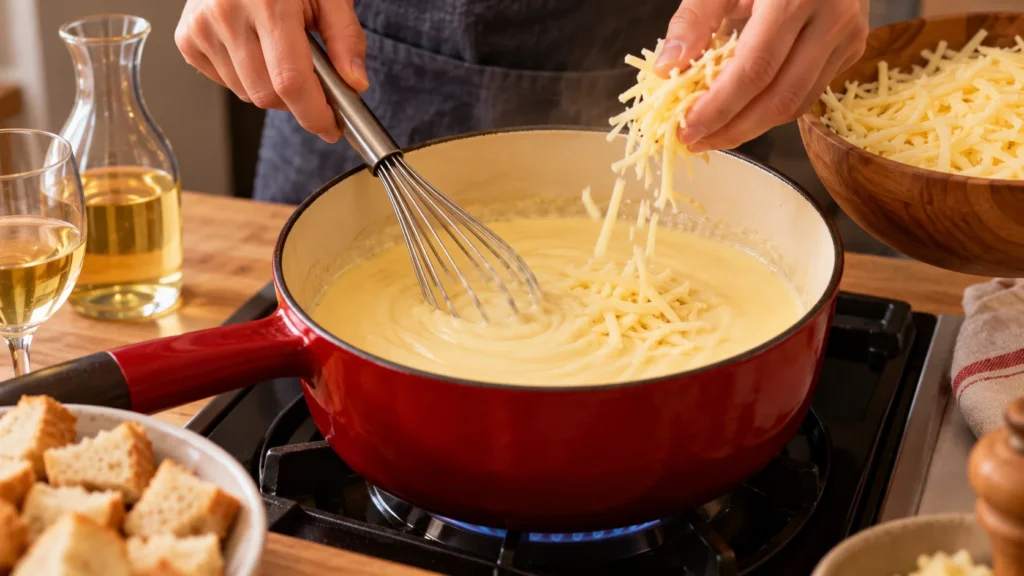
Grainy fondue, a greasy layer, or cheese stuck to the bottom usually points to a problem with heat, mixing or the balance of the cheese and liquid—not necessarily a ruined meal. The best response depends on what you see: lower the heat first, then make small adjustments rather than adding more cheese or liquid blindly.
Prevent problems before heating
Grate the cheese and toss it evenly with the recipe’s starch, if included. A classic method coats shredded Gruyère and Emmentaler with cornstarch before melting; the recipe explains that this helps the fondue stay smooth and stable. Follow your chosen recipe’s proportions rather than treating starch as a universal fix for every cheese blend. See the recipe and method at Once Upon a Chef.
Warm the wine or other liquid, then reduce the heat so it is hot but not boiling before adding cheese. Add the cheese in small handfuls, stirring each addition until mostly incorporated before adding the next. Pouring it all in at once can make the mixture seize or turn grainy. Keep stirring as it melts; once smooth, maintain only enough heat to keep it fluid. The recipe source gives this approach for its Gruyère-and-Emmentaler fondue; recipes with different ingredients may need different handling.
Choose a vessel appropriate to the cooking stage. The recipe source distinguishes stovetop-safe enameled cast iron from ceramic or stoneware serving pots, for which it advises cooking in a saucepan and transferring the fondue. Electric pots may be designed for cooking in the pot, but check the exact model’s manual. The fondue-set overview describes specific options, including a stovetop-compatible enameled cast-iron model; do not assume that applies to every pot. The linked fondue pot Top Picks can help with broad product selection, but it does not replace model-specific instructions.
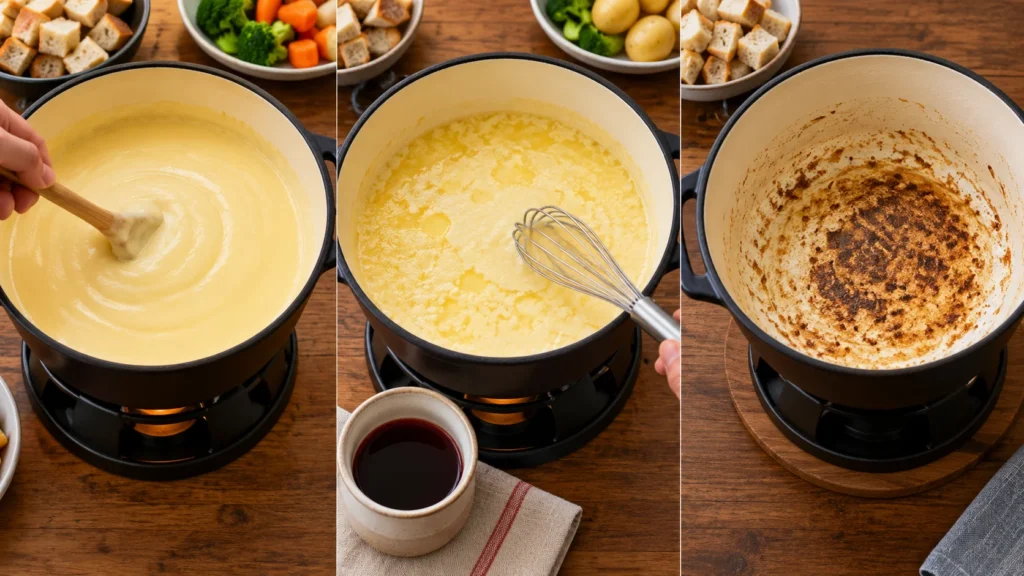
Diagnose the texture before you intervene
- Grainy or clumpy: Turn the heat down or briefly take the pot off the heat. Stir steadily. If the fondue remains too thick, whisk in a small splash of warm wine; the recipe source recommends this to loosen thick fondue.
- Greasy or separated: Stop heating and whisk gently. Check whether the fondue is boiling or has been kept too hot; return to very low heat only after it begins to come together. A small splash of warm wine may help loosen it, but add it gradually. This is a cautious adjustment, not a guarantee that a badly separated batch can be restored.
- Too thick to dip: Lower the heat and stir in a little warm wine. Add only enough to restore a fluid consistency; assess after each addition.
- Sticking or browning on the bottom: Move the pot off the heat and stir gently. Do not scrape burnt residue into the rest of the fondue.
- Burnt smell or bitter flavor: Stop serving from the pot. If the bottom is burnt, carefully transfer any unburnt fondue to a clean vessel without scraping the base. A burnt taste already mixed through cannot reliably be corrected.
These are cautious responses to warning signs, not a guarantee that every batch can be restored. If the cheese has become a firm mass or tastes burnt throughout, restarting may be the better option.
Rescue grainy or separated fondue
First remove the immediate cause: reduce the heat or lift the pot off its burner. Whisk gently and give the cheese a moment to respond. If it is still too thick, add warm wine a small splash at a time, whisking between additions. The cited recipe suggests warm wine to loosen thick fondue. For leftovers, it describes reheating in a small saucepan over low heat with wine, milk or cream to loosen the mixture. Those liquids are not interchangeable in every recipe, so use one that suits your recipe and flavor. The full recipe and reheating guidance provide the source’s specific method.
If the texture becomes too thin, the same recipe suggests whisking in a small handful of grated cheese. Add it gradually over low heat; a large addition at once can create a fresh lump. Stop as soon as the consistency is dip-friendly. Fondue changes as it cools, and recipes and cheeses vary, so make adjustments in small steps instead of chasing a fixed thickness.
If the cheese is scorched, separate salvageable fondue from the burnt bottom without scraping. A clean saucepan can be useful for continuing gently. If the burnt flavor has spread throughout, extra wine or cheese will not remove it.
Keep fondue smooth at the table
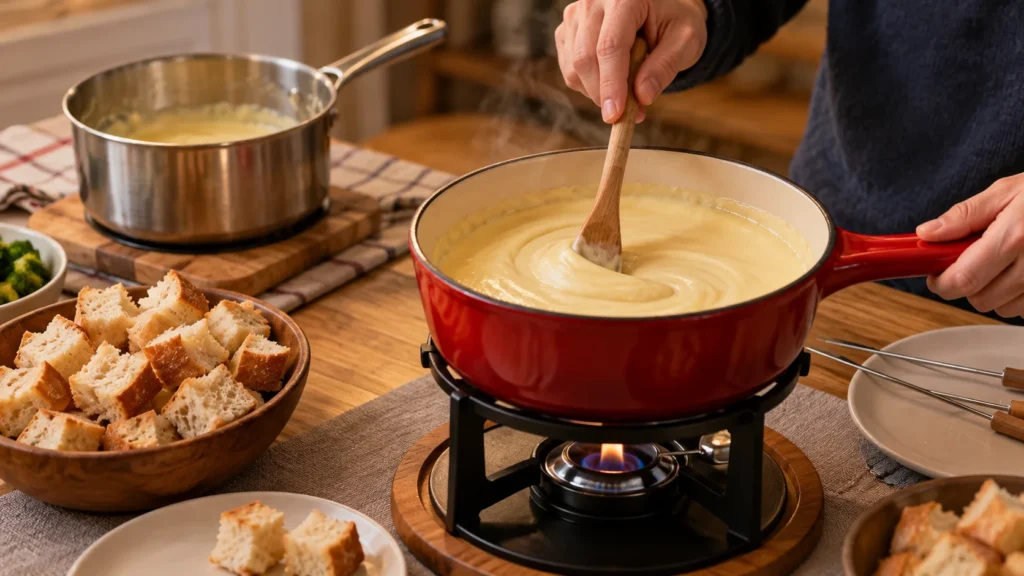
Use the lowest heat that keeps the fondue warm and fluid, not bubbling. Stir occasionally, including around the base, to limit sticking. The recipe source recommends a figure-eight stirring motion while guests dip; this helps keep the mixture moving and reduces sticking or scorching. Keep the pot stable and handle it carefully: the cooking vessel remains hot.
A burner or electric dial that seems low can still heat a particular pot too strongly. Watch the fondue itself rather than relying on a universal setting: if it bubbles vigorously, thickens rapidly or begins catching on the bottom, reduce heat promptly. Exact controls and safe use differ between models, so follow the manufacturer’s manual for your pot.
Illustrative example: correcting a thick pot
Situation: A pot made with Gruyère, Emmentaler, wine and cornstarch is too thick to dip, but it is not browned or burnt. Response: Turn the burner to its lowest setting, stir, then add a small splash of warm wine and whisk. Pause to assess before adding more. This uses the recipe’s suggested loosening method without assuming a fixed amount; the needed adjustment depends on the batch and how much it has thickened.
When this advice does not apply
Do not assume every cheese blend responds like a classic wine-and-Swiss-cheese fondue. Ingredients, proportions, cookware and heat sources vary. A serving-only ceramic pot should not be put directly on a stovetop unless its manufacturer explicitly permits it; the recipe source advises cooking in a saucepan and transferring to ceramic or stoneware. For an electric pot, check the manual before cooking or cleaning, and do not apply another model’s care instructions.
For a smoother start, prepare the cheese and liquid before heating, add cheese gradually, and make corrections slowly. If you’re still choosing equipment, use the Top Picks guide to compare fondue pots, then confirm the chosen pot’s permitted heat source in its own documentation.