




Skip to content

The 6 Best HVLP Electric Sprayers in 2026

October 8, 2026-By The Top Zone

Transparency Note: This post contains affiliate links. As an Amazon Associate, we earn from qualifying purchases at no extra cost to you.

HVLP electric sprayers use high-volume, low-pressure airflow to apply paint and finish materials with more control than high-pressure systems. Buyers usually need fine atomization, adjustable spray patterns, and steady output for furniture, trim, doors, or cabinets. Good preparation still matters, and some setups may need thinned material for an even finish.

Choosing one is difficult because finish quality, coverage speed, overspray, and comfort can pull in different directions. A split turbine design may make the spray gun easier to move, while a long hose improves reach but can tangle. Smaller tanks reduce carrying weight but require more refills. Adjustable patterns help control coverage, yet user reports still show that grip comfort, hose handling, and output consistency affect long sessions.

Our research-based scores focus on performance, power, build quality, ergonomics, and value. They are not results from physical testing by The Top Zone. Looking for all types? See our Best Electric Sprayers.

Quick Overview

Fuji Spray Semi-PRO 2 Electric Sprayer
#1 Fuji Spray Semi-PRO 2 Electric Sprayer
Wagner Control Spray Max Electric Sprayer
#2 Wagner Control Spray Max Electric Sprayer
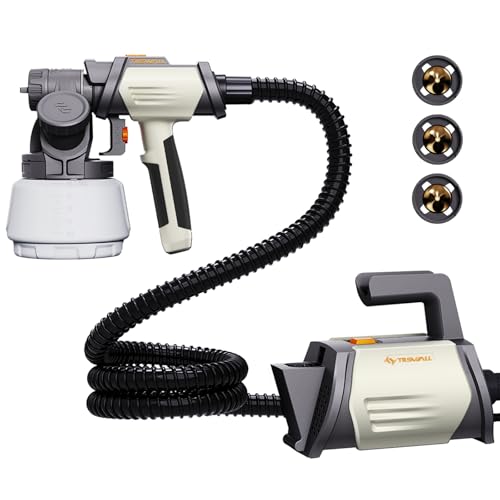
Tilswall Shark800 Electric Sprayer
#3 Tilswall Shark800 Electric Sprayer
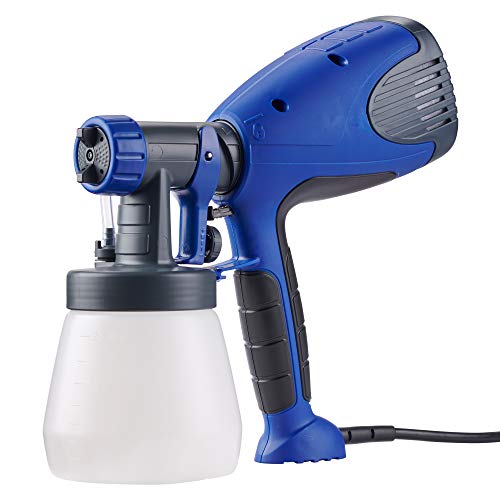
HomeRight Finish Max Electric Sprayer
#4 HomeRight Finish Max Electric Sprayer
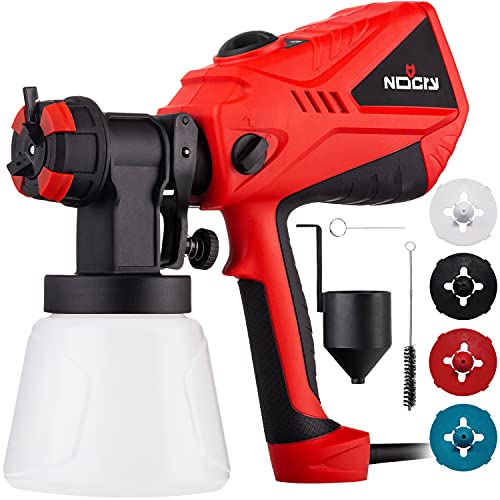
NoCry 1000ml Electric Sprayer
#5 NoCry 1000ml Electric Sprayer
HomeRight Quick Finish Electric Sprayer
#6 HomeRight Quick Finish Electric Sprayer

Our Top Picks

#1. Fuji Spray Semi-PRO 2 Electric Sprayer

Fuji Spray Semi-PRO 2 Electric Sprayer
Our Score 7.5 / 10 Score details
Performance7.6
Power7.1
Build Quality8.6
Ergonomics6.7
Value7.6
How we research & score
Tank Capacity400cc
Operating Pressure5.0 psi (rated)
Spray PatternFan
Hose Length25 ft
Weight25.2 lb
  • Long reach hose
  • Users report it works well for spraying urethane on wood work projects (including cabinets), producing good results when used for appropriate finishes

    For HVLP finish work, the Fuji Spray Semi-PRO 2 stands out with its rated 5.0 psi output and 25 ft hose. That long reach can help you work around cabinets and other wood projects without moving the turbine as often. Reported user experience also points to good results with urethane on cabinets and similar work. Its adjustable fan control suits broad, controlled passes, while finish choice and application technique still affect the result. Expect a 400cc gravity cup and a 25.2 lb unit, so plan refills and allow for some carrying weight during longer sessions.

    This sprayer fits finish-focused users who value reach and reported results on woodwork over compact handling. The 5.0 psi rating supports its HVLP role, but it is not evidence of a measured finish or overspray level. Choose an airless model instead when fast, high-pressure coverage matters more. Choose a cordless model when mobility and battery operation matter most.

    → Read full review

    #2. Wagner Control Spray Max Electric Sprayer

    Wagner Control Spray Max Electric Sprayer
    Our Score 7.4 / 10 Score details
    Performance7.9
    Power7.3
    Build Quality7
    Ergonomics6.9
    Value8
    How we research & score
    Power SourceCorded Electric
    Spray PatternRound/Horizontal/Vertical
    Hose Length20 ft
    Weight11.2 lb
    • Continuous corded power
    • Adjustable spray patterns and variable flow control let users customize paint output for different applications and projects
    • Common complaint is the hose setup tangling during large-room turns, but the balanced coverage usually wins people over.
    • A common complaint regarding this sprayer is the weight of the hand-held unit during long sessions.

    For HVLP work, the Wagner Control Spray Max stands out as a corded system with steady power and adjustable spray control. Its round, horizontal, and vertical patterns help match coverage to trim, furniture, and wider surfaces. Variable flow control lets you adjust paint output for different applications. The 20 ft hose gives useful reach, though it may tangle when turning across a large room.

    This is a reasonable fit for finish-focused projects that benefit from controlled application. The hand-held unit weighs 11.2 lb, so it may feel tiring during long sessions. Choose it when continuous corded power and pattern control matter more than cordless mobility or a lighter gun. Buyers focused mainly on cordless mobility should compare cordless models, while large-area work may suit an airless sprayer better.

    → Read full review

    #3. Tilswall Shark800 Electric Sprayer

    Tilswall Shark800 Electric Sprayer
    Our Score 7.1 / 10 Score details
    Performance7.3
    Power6.9
    Build Quality6.6
    Ergonomics6.9
    Value8.2
    How we research & score
    Tank Capacity1.3 gal
    Power SourceCorded Electric
    Spray Patternhorizontal oval, vertical oval, round
    Hose Length8.2 ft
    • Feature-rich and dependable
    • Continuous corded power
    • Split design is framed as an ergonomic improvement: the heavy motor/turbine unit is separate from the lightweight spray gun and connected by a hose, aiding maneuverability/comfort (pestpointer snippet)
    • Output fades under load
    • Minor fittings feel flimsy
    • Uncomfortable grip, awkward hose

    The Tilswall Shark800 stands out among HVLP electric sprayers with its split design. Its motor and turbine sit in a separate unit, while an 8.2 ft hose connects the lighter spray gun. That layout can make detail work easier than carrying the power unit at the gun. Three spray patterns, horizontal oval, vertical oval, and round, also help control coverage on different surfaces. However, the available evidence does not establish a specific operating pressure or independently verified finish result, so it should not be treated as a proven smooth-finish specialist.

    This corded model suits users who want steady access to mains power for doors, trim, furniture, or other finish jobs. The 1300 ml tank may reduce refill stops, but the split setup still has trade-offs: reported output fade under load, minor flimsy fittings, and an awkward hose and grip. Choose it when corded operation and pattern control matter more than portability. For faster coverage, compare an airless model; for work away from outlets, choose a cordless sprayer instead.

    #4. HomeRight Finish Max Electric Sprayer

    HomeRight Finish Max Electric Sprayer
    Our Score 7.0 / 10 Score details
    Performance7.2
    Power6.4
    Build Quality7.1
    Ergonomics6.6
    Value8.3
    How we research & score
    Spray PatternHorizontal, vertical, and round (3 spray patterns)
    Weight3.1 lb
    • Feature-rich and dependable
    • Users describe it as delivering even coverage and being faster than using a roller or brush for small/medium work
    • Variable flow/adjustable paint flow control is cited as improving customization and helping achieve better results
    • Output fades under load
    • Uncomfortable grip, awkward hose
    • One user painting cabinets reported the paint not atomizing correctly, resulting in orange peel, spit, and splatter (suggesting finish inconsistency for that scenario)

    For HVLP finish work, the HomeRight Finish Max stands out for adjustable paint flow and three spray patterns: horizontal, vertical, and round. That combination helps tailor coverage for furniture, trim, or broader panels. Users cited even coverage and faster work than a brush or roller on small and medium projects. However, those reports are third-party experiences, not our testing. The listed weight is 3.1 lb, which may make short jobs easier to handle.

    This sprayer suits DIYers who want flexible control for detail work rather than a high-pressure coverage tool. Results may depend on setup and coating choice. One cabinet-painting user reported poor atomization, orange peel, spit, and splatter, while other users described even coverage. Output can also fade under load, and reports mention an uncomfortable grip and awkward hose. Choose it when adjustable patterns matter most, but consider an airless model for faster large-area coverage or a cordless model when mobility and battery operation matter more.

    #5. NoCry 1000ml Electric Sprayer

    NoCry 1000ml Electric Sprayer
    Our Score 7.0 / 10 Score details
    Performance7
    Power7
    Build Quality7.2
    Ergonomics6.2
    Value8.3
    How we research & score
    Tank Capacity1000ml
    Battery Voltage100-130 V
    Flow Rate40.57 fl oz/min
    Spray Patternhorizontal flat jet, vertical flat jet and circular jet
    Weight3.5 lb
    • Feature-rich and dependable
    • Higher voltage performance
    • Adjustable flow rate and spray pattern settings are reported to provide strong control over paint application (though the cited review context appears to reference a different NoCry model)
    • Uncomfortable grip, awkward hose
    • Small tank capacity

    For HVLP buyers, the NoCry 1000ml Electric Sprayer stands out for its compact size and selectable spray patterns. Its 1000ml tank suits smaller painting jobs, while the listed horizontal flat jet, vertical flat jet, and circular jet settings can help match coverage to doors, trim, or furniture. However, the supplied specifications do not confirm HVLP operation, fine atomization, or a smoother finish. They also do not state whether paint thinning is required. Treat it as a versatile electric sprayer rather than a verified HVLP system.

    The 40.57 fl oz/min listed flow rate suggests quick delivery, but a high flow can make overspray control more important during finish work. At 3.5 lb, the unit is reasonably portable, though reported grip and hose comfort issues may limit longer sessions. Choose it for smaller projects where pattern choice matters. Pick a confirmed HVLP model when fine finish behavior and explicit HVLP guidance are your main priorities.

    #6. HomeRight Quick Finish Electric Sprayer

    HomeRight Quick Finish Electric Sprayer
    Our Score 6.9 / 10 Score details
    Performance7.4
    Power6.3
    Build Quality6.9
    Ergonomics6.1
    Value8.3
    How we research & score
    Tank Capacity0.85-quart (800 ml)
    Operating Pressure500-2000 psi
    Spray PatternAir cap settings: horizontal, vertical and round
    • Feature-rich and dependable
    • Higher pressure cleaning
    • Low overspray is highlighted as helpful for indoor or detail work (HomeRight product page / homerdiy snippet)
    • Small tank capacity
    • Uncomfortable grip, awkward hose
    • Some coverage/performance expectations may be limited to small household projects (Better Homes & Gardens describes it as best for small projects), implying performance is less suited to larger jobs

    Within HVLP electric sprayers, this HomeRight model stands out for its adjustable 500 to 2,000 psi pressure range and three air-cap settings: horizontal, vertical, and round. That control can help match coverage to different surfaces, while HomeRight highlights low overspray for indoor or detail work. These published features point to a useful option for trim, furniture, and other small finish projects where control matters more than speed.

    The 0.85-quart tank is a clear limit. Better Homes & Gardens describes it as best for small projects, so larger jobs may require frequent refills and more planning. The available guidance also points to an uncomfortable grip and awkward hose, which may reduce comfort during longer sessions. Choose it for manageable household work and adjustable coverage; consider the main comparison or an airless model when faster, larger-area coverage matters more than finish control.

    What to Look For

    Finish control: Look for adjustable patterns such as round, horizontal, and vertical settings. These options help match the spray to narrow trim, broad panels, and detail work. The Wagner Control Spray Max lists all three patterns, while the HomeRight Finish Max also offers three settings.

    Atomization and material prep: HVLP systems suit finish-focused work, but the right material and setup remain important. Check the product guidance for thinning requirements before buying. A user report on the HomeRight Finish Max described orange peel, spit, and splatter when paint did not atomize correctly, so smooth results should not be assumed from the HVLP label alone.

    Overspray and reach: Lower-pressure HVLP spraying can support controlled coverage, but it still needs masking and careful technique. Hose length affects how freely you can work around a project. The Fuji Spray Semi-PRO 2 has a 25 ft hose, the Wagner model has 20 ft, and the Tilswall Shark800 has 8.2 ft.

    Handling and refills: Compare the gun weight, tank size, hose layout, and whether the motor sits in a separate turbine unit. The Tilswall's split design separates its motor from the spray gun, while the HomeRight Finish Max weighs 3.1 lb in the supplied specifications. A smaller tank can feel easier to carry but may require more frequent refilling.

    Power consistency: Corded systems avoid battery charging breaks, which can help during finish work. The Wagner and Tilswall models are listed as corded electric, while the Fuji model's power source is not settled in this research. Reviews of the Tilswall and HomeRight Finish Max mention output fading under load, so prioritize consistent delivery when spraying larger panels or thicker workloads.

    For practical advice, see How to Clean and Store an Electric Sprayer Without Clogs.

    How We Picked

    We identified products through broad desk research across review sites, product information, and buyer forums, then filtered the list to models positioned as HVLP electric sprayers. Published specifications and third-party experiences were attributed to their sources. Search snippets and user reports were treated as supporting evidence, not as physical testing or verified firsthand experience.

    Scoring used the same research-based pillar framework as the main Electric Sprayers post: performance, power, build quality, ergonomics, and value. This allows direct comparison within the HVLP category while keeping the focus on smoother finish potential, spray control, overspray management, reach, and setup demands. Buyers who need rapid high-pressure coverage should compare Airless Electric Sprayers instead, while buyers who value mobility and battery runtime should review Cordless Electric Sprayers.

    Frequently Asked Questions

    How does HVLP spraying help create a smoother finish?

    HVLP systems use controlled airflow to apply paint with fine atomization. This suits cabinets, furniture, doors, and trim where an even finish matters more than maximum coverage speed. Test the spray pattern first, because overspray and finish quality still depend on paint and setup.

    Do HVLP electric sprayers need thinned paint?

    Some paints may need thinning before they spray evenly through an HVLP system. Follow the paint maker's instructions and test a small area before starting the project. Thin paint can improve atomization, while overly thin paint may run or cover poorly.

    Which spray patterns matter most for HVLP finish work?

    Adjustable patterns help match the spray to the surface. Horizontal and vertical settings suit broad panels, while round patterns help with edges and smaller areas. Models such as the Wagner Control Spray Max and HomeRight Finish Max offer several pattern choices.

    What setup habits reduce overspray and uneven coverage?

    Clean the nozzle, strain the paint, and adjust flow before spraying the workpiece. Keep the gun moving at a steady distance and overlap each pass slightly. A long hose can improve reach, but awkward hose handling may make large rooms harder to spray.

    When should I choose an airless electric sprayer instead of an HVLP model?

    Choose an airless sprayer when fast coverage and high pressure matter most, especially on larger surfaces or thicker coatings. Choose HVLP when you want finer finish control for furniture, cabinets, doors, or trim. Airless models usually trade some finish-focused control for speed.

    Are HVLP electric sprayers better than cordless electric sprayers for finish quality?

    HVLP describes the spray method, while cordless describes the power source. An HVLP system can offer better finish control, but cordless models can provide easier movement without a power cord. Choose based on whether smooth application or mobility matters more for your project.

    See Also