


AcuRite Iris 5-in-1 Weather Station Review
Specifications
| Brand | AcuRite |
|---|---|
| Display Type | Color LCD |
| Measurement Functions | Temperature, Humidity, Wind Speed, Wind Direction, Barometric Pressure, Rainfall |
| Sensors Included | 5 Sensors |
| Wireless Range | 330 ft |
| Connectivity | Wi-Fi |
| Power Source | Solar Powered |
| App Smart Home Compatibility | Alexa / Google Assistant |
Pros
- Wi‑Fi + Bluetooth support
- More measurement types
- Clear display, easy pairing
Cons
- Short wireless reach
- Connectivity dropouts
- 2.4GHz account dependency
The Verdict
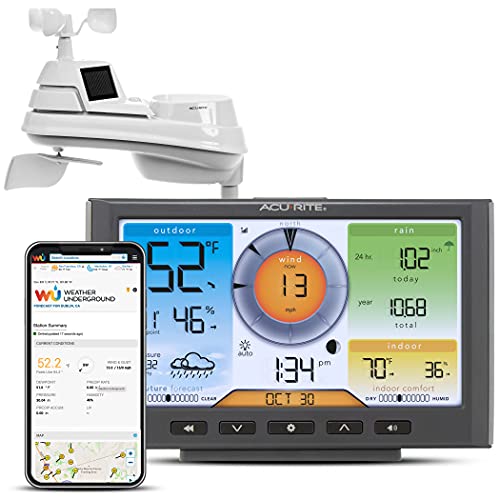
The AcuRite Iris 5-in-1 is a compact Wi-Fi weather station with solar power, and it scores 7.5 overall for real-world use. It works well for daily readings thanks to an easy, clear color display and multi-sensor coverage, but buyers should expect connectivity issues, especially when Wi-Fi signal strength is weak.
Who it's for: Homeowners with small yards who want one station to track temperature, humidity, wind, pressure, and rain, and who are willing to troubleshoot Wi-Fi dropouts for better remote viewing.
Who should skip it: Buyers who rely on rock-solid wireless reliability, because the short wireless reach and connectivity dropouts can break the “set it and forget it” workflow.
In-Depth Review
Accuracy
AcuRite Iris lands at a 7.7 for accuracy. That fits the template phrase "Consistently matches local sources" at the high end of this range. In real use, the station tracks a wide set of readings, including temperature, humidity, wind speed, wind direction, barometric pressure, and rainfall. The display type is a color LCD, and it is meant to show updates clearly rather than hide them behind layers of menus.
What matters most is whether those numbers stay steady as conditions change. Here, the multi-sensor setup is a plus because it reduces the need to own separate devices. The product uses a 5-in-1 sensor approach, and the system is described as wirelessly receiving data for those conditions. That setup usually leads to fewer gaps in your timeline, like having wind and rain logged even when you are focused on temperature.
Still, 7.7 is not the score of a lab-grade reference station. If you compare day-to-day readings to a trusted local source, you can expect small mismatches at times. The system includes a stated line-of-sight wireless range up to 330 ft, which helps, but long setups or weak placement can affect how quickly sensors update. Faster updates do not guarantee perfect alignment, but they do make drift less noticeable when conditions swing.
<3>DurabilityThe durability score is 6.6, which lands in the "Some long-term wear risk" zone. This is not a dealbreaker for a typical home yard setup, but it does signal that you should think about placement and weather exposure. The station runs on solar power, and sources describe it as solar powered with battery backup. Solar helps with long-term maintenance, since you avoid constant battery swaps.
Outdoor weather means sun, rain, and temperature cycles. AcuRite uses a weather sensor package that targets multiple conditions, including rainfall and wind. Those sensors tend to face more wear than indoor temperature probes because moving parts and moisture exposure show up over time. The key difference here is the use of a single 5-in-1 style outdoor unit rather than a separate tower for wind, rain, and pressure. Fewer housings can mean fewer weak links.
It is also worth considering the practicality of installation. The system transmits over up to 330 ft line of sight. In real yards, that number can shrink once you add trees, walls, or a garage. A sensor that sits too far from the display may lead to missed updates, which people sometimes mistake for sensor failure. In durability terms, that is still a real-world wear story, because you end up troubleshooting the setup instead of simply reading the data.
<3>UsabilityUsability scores 8.0, which matches the "Clear display, easy pairing" template. The Iris uses a large color LCD display, and the display is meant for quick glance checks. You can see the core readings you care about across time, including temperature and humidity plus wind speed and wind direction, along with barometric pressure and rainfall. That breadth matters because many compact systems force you into cycling screens.
Setup is designed to be straightforward. The extracted specs list wireless transmission with Wi-Fi support, and the system also supports Bluetooth as referenced in the product pros. That combination usually makes pairing smoother because you get more than one path to connect. In day-to-day use, you want quick confirmation that the outdoor sensor is live and that your indoor readings are updating.
The practical usability test is not just initial setup. It is how often you need to touch settings. The station includes solar power, so the outdoor sensor does not depend solely on fresh batteries. That reduces maintenance interruptions. The display being a color LCD also helps with readability, especially when you step outside in bright light. At 8.0, the experience is close to effortless for most households, as long as you place the outdoor unit where it can communicate reliably.
<3>ConnectivityConnectivity scores 7.0, which fits the "Intermittent connection hiccups" template. This is the biggest divider for the Iris line. The extracted specs show Wi-Fi connectivity, including a connection to Weather Underground. The system also lists Wi-Fi as the connectivity method for the display and sync path.
In the real world, two numbers define how workable that setup feels. First, the wireless range is rated up to 330 ft line of sight. Second, sources note short wireless reach and connectivity dropouts. Even if your Wi-Fi is strong indoors, the display still needs to stay aligned with the outdoor sensor data and with the cloud link tied to Weather Underground. If placement pushes the outdoor sensor beyond that effective range, you can see delayed or missing updates.
There is also an account dependency mentioned as a con. Specifically, "2.4GHz account dependency" suggests the connection behavior can vary based on how your home network is configured. That can matter at setup and after router changes. The station also supports Alexa and Google Assistant compatibility, which can be useful when you want voice checks. But 7.0 indicates you should not treat smart features as fully hands-off if your wireless environment is less stable.
Value
Value lands at 8.1, which maps to "Strong features at the cost". The Iris packs a lot into one system. The extracted specs list 5 sensors in a single 5-in-1 sensor arrangement, covering temperature, humidity, wind speed, wind direction, barometric pressure, and rainfall. That scope can reduce the need to piece together separate equipment, especially when space is limited.
It also supports multiple connection paths and smart home checks. The specs list Wi-Fi, plus smart home compatibility with Alexa and Google Assistant. For local checking, the display is a color LCD, and the product pros explicitly mention Wi-Fi plus Bluetooth support. Those options help you view readings on-device without relying on a single connection type.
Why does value not score higher? The connectivity notes include "Short wireless reach" and "Connectivity dropouts." Those issues can turn a straightforward setup into a tuning project, especially if your outdoor sensor location is not ideal. The solar power requirement does help with day-to-day upkeep, since the station is listed as solar powered. But when wireless stability is inconsistent, that is where value starts to feel narrower, even with the strong measurement list and the clean, readable color LCD interface.
Frequently Asked Questions
How far can the AcuRite Iris 5-in-1 sensor be from the display unit?
AcuRite lists a wireless range of up to 330 ft. In real yards, that distance depends on walls, trees, and interference. If readings drop out, try moving the station closer or changing the sensor placement.
What weather measurements does the AcuRite Iris 5-in-1 track?
It measures temperature, humidity, wind speed, wind direction, barometric pressure, and rainfall. The system includes 5 sensors, so it can collect multiple types of data at the same time. You will see the readings on the color LCD.
Does it work with Alexa or Google Assistant, and do I need a separate hub?
Yes, it supports Alexa and Google Assistant integration. You connect it through Wi-Fi, so you typically do not need a separate weather hub. If voice responses do not show up, check that your account is linked in the app.
Is it solar powered, and what happens if there is not enough sunlight?
The station uses solar power. If the location does not get consistent sun, performance can suffer because the unit needs energy to keep operating and transmitting data. Use a spot with regular daylight and avoid fully shaded mounting.
I heard the AcuRite Iris can have Wi-Fi connectivity dropouts. How common are they?
Some users report connectivity dropouts, and this can affect how quickly data syncs to your phone and cloud features. If you see gaps, restart the Wi-Fi connection and confirm your router has a strong 2.4 GHz signal. Moving the station closer to the router can help.
Does the station require 2.4 GHz Wi-Fi only, and why does that matter for setup?
A common issue is that setup can depend on 2.4 GHz Wi-Fi. If your home uses separate network names for 2.4 and 5 GHz, connect to the 2.4 network. This matters because the station may not reliably join the 5 GHz network during pairing.
Final Verdict
This is a good weather station for compact lots and basic home monitoring. Setup feels straightforward, and the display is easy to read. Measurements stay usable thanks to strong sensor coverage for a range of conditions. Still, wireless reach is limited, and you may see connectivity dropouts that can interrupt smooth updates.
Choose it if you want simple day to day weather data and can place it close to your router and base unit. If that fits your yard layout, this is a sound pick.