





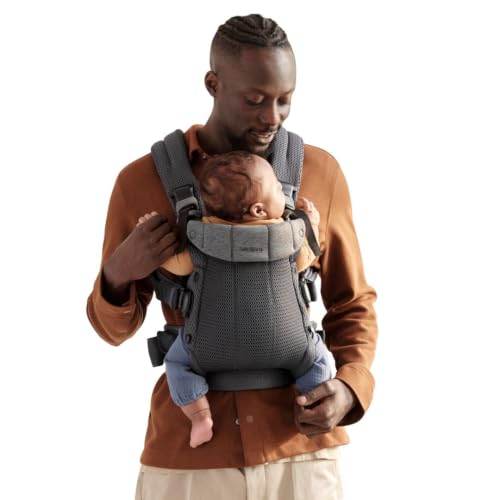
BabyBjörn Harmony Baby Carrier Review
Specifications
| Brand | BabyBjörn |
|---|---|
| Carrier Type | Soft-Structured Carrier |
| Carry Positions | Front Inward, Front Outward, Back Carry |
| Recommended Age Range | 0-36 months |
| Max Child Weight | 40 lb |
| Material | Mesh |
| Care Instructions | Machine Washable |
Pros
- Reliable support, no slipping
- Even weight, cozy fit
- Sturdy build, smooth adjustments
Cons
- Fit adjustment learning
- Limited knee-pit reach
- Seat depth restriction
The Verdict
With a Comfort score of 8.6, the BabyBjörn Harmony is a soft-structured carrier for newborns through toddlers, using mesh for everyday breathability. It feels stable and supportive once you nail the fit, but early setup takes practice, and some parents find the seat depth and knee-pit reach can limit later growth.
Who it's for: Parents who want a newborn-ready, front-facing inward carry and accept a short learning curve to get the straps and seat positioned well.
Who should skip it: Shoppers who need a one-and-done fit or who prioritize maximum knee-pit reach as babies grow, since seat depth and reach can feel restrictive.
In-Depth Review
Comfort
The BabyBjorn Harmony lands at 8.6 Comfort, in the “Breathable, evenly balanced” to “Snug, supportive fit” range.
The reason starts with its 3D mesh material. Mesh matters for travel because it tends to move air better than thicker fabric. In day-to-day use, that helps when you wear the carrier on warmer outings.
Comfort also comes from how the carrier divides the load. You get a soft-structured design with a supportive pressure-relieving waist belt and padded shoulder straps. That setup helps you avoid the common problem of shoulder-only carrying. The published carry options include front inward, front outward, and back carry, which means you can change your position as your baby grows and your shoulders feel different.
There are still trade-offs. The cons list a “Limited knee-pit reach” and a “Seat depth restriction.” Those two points can reduce comfort for some babies over time, especially as their legs and torso length change. In practice, you may need to tighten adjustments more often to keep your baby in the same supported posture.
Safety
At 8.1 Safety, the Harmony fits the “Secure, stable infant hold” to “Reliable buckles, no slipping” expectation.
The carrier is built to keep baby properly aligned in common travel positions. It supports front inward from early months, and that is the most controlled position for newborns and short errands.
The carrier also lists an upper support limit of 40 lb (18 kg). A clear max weight helps set real boundaries for day-to-day use. It can be used starting from newborn stage, with a minimum of 7 lb (3.2 kg). That matters because some carriers feel “fine” at a higher baby weight but do not stabilize well earlier.
No system is perfect, though. You will need to nail the fit. The cons mention “Fit adjustment learning.” If you rush the setup, you can end up with minor shifting, which reduces the feeling of secure support. Take the time during the first few uses to confirm the fit holds steady as you move around. That is the real safety swing with a structured carrier.
Portability
With 8.0 Portability, the Harmony sits in “Packs easily for travel” territory.
It is a soft-structured carrier designed for multiple carry styles. The simpler your carry rotations, the less fiddling you do on the move. The listed positions are front inward, front outward, and back carry, which lets you adapt without switching to a different device.
Portability also depends on care and upkeep. The Harmony is machine washable. Travel often means spills, snack smears, and weather exposure. Being able to wash the carrier in a standard cycle helps you keep it ready for the next outing without waiting for long hand-wash routines.
Even with that, plan for a small learning curve. “Fit adjustment learning” is listed in the cons. If you adjust slowly at home first, the carrier becomes easier to use when you are standing in a car trunk or navigating an airport. Otherwise, portability can feel worse than the score suggests.
Build Quality
The Harmony scores 8.7 Build Quality, aligning with “Reinforced seams, durable hardware” and “Sturdy feel, smooth adjustments.”
The product uses mesh and the brand ties it to its 3D mesh fabric approach. In travel terms, that is not just about breathability. Mesh also tends to dry faster than heavy cotton, which affects how soon you can reuse the carrier after washing.
Care supports durability too. The carrier is machine washable with guidance to wash separately using warm wash and mild detergent per the manual. That kind of clear instruction helps you avoid incorrect cleaning that can shorten fabric life.
Parents mention adjustment performance and stability in the pros, including “Sturdy build, smooth adjustments.” The cons also point to limits that can show up as babies grow, including “Seat depth restriction.” Those are not build failures. They are fit range boundaries that you should expect from this model.
Value
On 7.8 Value, the Harmony lands in “Decent value, not premium.”
It delivers a strong travel-ready mix of support and upkeep. The carrier uses 3D mesh and supports multiple positions, including front inward, front outward, and back carry. The combination helps families keep one carrier across a broader time window.
It also gives you concrete limits for planning. It supports up to 40 lb (18 kg), which helps extend useful life beyond the early months. The care routine is also straightforward, with machine washable cleaning instructions. In practice, that reduces the friction of keeping the carrier usable during frequent outings.
Value gets capped by the same issues that affect comfort and fit. The cons list “Fit adjustment learning,” plus “Limited knee-pit reach” and “Seat depth restriction.” Those limitations can mean you spend more time getting the fit right, and some babies may outgrow the most comfortable setup sooner than expected. If you want a carrier that needs minimal adjustment, that is the main place the Harmony loses ground versus its score.
Frequently Asked Questions
What is the BabyBjorn Harmony baby carrier weight limit?
The BabyBjorn Harmony supports children up to 40 lb (about 18 kg). It is recommended for ages 0 to 36 months. Use the fit guidelines so your child stays in the supported seat position.
Which carry positions can I use with the Harmony carrier?
You can carry in three positions: front inward, front outward, and back carry. Front inward is usually easiest for younger babies, while back carry works once your child fits the seat well. Always double check the straps feel secure before walking.
Is the Harmony carrier machine washable, and how should I wash the mesh?
Yes, the Harmony carrier is machine washable. Wash it using the care instructions on the product label, and let it air dry when possible to protect the mesh. If you are unsure, wash one small load first so you can confirm how the fabric holds up.
Will this carrier work for a newborn, and how hard is it to adjust?
It is designed for use from 0 to 36 months, but you may need time to learn the right adjustments. Some shoppers report a learning curve with getting the straps set correctly for each child. Take a few minutes at home to test fit before using it outside.
Does the Harmony offer enough leg support, especially for taller babies?
The Harmony can feel limited for some families when it comes to knee pit reach, which affects leg comfort. If your child has longer legs or you want deeper knee support, you may find the seat depth restriction noticeable. You should adjust the seat height carefully and stop if your baby’s position looks too shallow.
How breathable is the carrier during travel, since it uses mesh?
The Harmony uses mesh, which helps with airflow compared with thicker fabrics. Still, any carrier can feel warm in hot weather, especially during longer trips. Wearing light layers and taking breaks can make a difference.
Final Verdict
The BabyBjorn Harmony is a strong newborn-ready travel carrier with an even, supportive carry and reliable positioning that feels secure in real use. Comfort and build quality stand out. The main drawback is that getting the fit dialed in takes practice, and the seat can feel limiting for some baby sizes due to reach and depth limits.
If you want a dependable, structured carrier for frequent trips and you can take a little time to learn the adjustments, this is a sound pick.
BabyBjörn Harmony Baby Carrier
As an Amazon Associate, we earn from qualifying purchases.