If you're hunting for a reliable pull-up bar that will actually survive your workouts — and keep your shoulders, doorway and sanity intact — you’re in the right place. Choosing the right bar feels simple until you start reading reviews and realizing some models bend after a few months, others damage doorframes, and some are just plain uncomfortable to grip. To help you avoid that headache, we dove deep into the landscape of pull-up bars with a thorough, practical approach.
We analyzed thousands of customer reviews across dozens of models and compared features side-by-side — everything from mounting type, weight capacity and build materials to grip comfort, ease of installation, warranty and manufacturer support. We paid special attention to recurring praise and complaints so patterns, not one-off opinions, guided our judgments. Where possible, we also incorporated hands-on impressions and customer-reported longevity to paint a realistic picture of how each bar performs over time.
Our goal is simple: make your buying decision easier and safer. Whether you need a compact bar for a small apartment, a heavy-duty station for intense calisthenics, or something quick to install and remove, the recommendations ahead are filtered for quality, value and real-world durability. Read on and you’ll get a clear sense of which pull-up bars are worth your money — and which ones are best left on the shelf.
Quick Overview
Top Picks
Best Overall
Specifications
| Brand | Ally Peaks |
|---|---|
| Mounting Type | Doorway Mount |
| Bar Material | Steel |
| Max Load | 440 lb |
| Dimensions | 47.3 x 16 x 10.2 in |
Pros
Cons
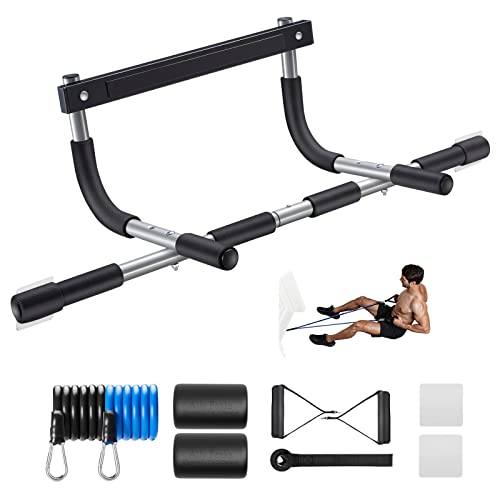
This doorway pull-up bar feels built to last — the 1.7mm thick steel, quality lock nuts and 440-pound weight rating give real confidence for heavy use. The foam-coated handles are comfortable and grippy, and the double silicone protection for the door frame is a thoughtful touch that reduces marks and improves stability during movement. Those details collectively justify its top pick status: it’s solid, safe and feels engineered rather than thrown together.
Beyond the core bar, Ally Peaks includes two resistance bands, handles and a door anchor so you can expand past standard pull-ups into rows, dips and assisted reps right away. Installation is straightforward and tool-free for standard 24"–32" doorways, though that means it relies on leverage rather than permanent mounting — perfectly fine for renters but less rigid than a bolted rig. Overall, the combination of beefy construction, comfort, added accessories and protective pads makes this a versatile, dependable option for most home gyms.
Best Heavy Wall-Mounted
Specifications
| Brand | Titan Fitness |
|---|---|
| Mounting Type | Ceiling/Wall Mount |
| Bar Material | Steel |
| Max Load | 500 lb |
| Dimensions | 53 x 34 x 31 in |
| Weight | 35 lb |
Pros
Cons
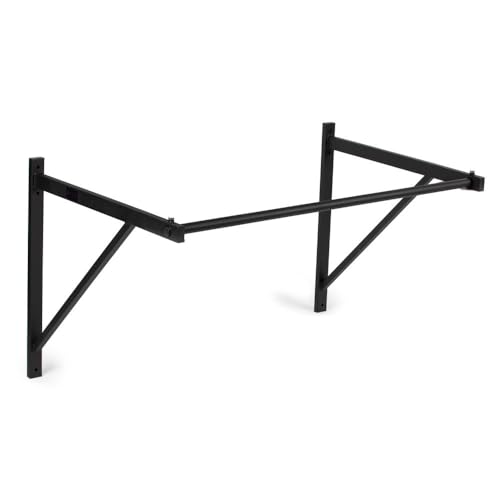
The Titan Wall-Mounted Bar’s headline feature is its 500 lb capacity, which gives real confidence for heavy-duty home gym use. It’s impressively flexible: you can mount it vertically or horizontally and set it to 16", 32", or 52" stud spacing on wood studs, while concrete installs work up to 48" with the supplied bar. The 53" length and a comfortable 1.3" OD tube make pull-ups and mixed-grip work feel stable, and the 31" bracket height plus 34" depth help keep the bar well away from the wall for full range of motion.
Installation is straightforward for someone handy, and the unit’s relatively light 25 lb weight makes positioning easier. A couple of modest caveats: mounting hardware isn’t included and you’ll need to buy a standard 1" steel tube and extra L-brackets if you want a multi-person station. Overall, it’s a solid, versatile choice for anyone needing a heavy-duty, space-efficient wall-mounted pull-up solution.
Best Elevated Clearance

Specifications
| Brand | Ultimate Body Press |
|---|---|
| Mounting Type | Doorway Mount |
| Bar Material | Steel |
| Max Load | 440 lb |
| Dimensions | 41 x 22 x 11 in |
| Weight | 10.2 lb |
Pros
Cons
The Ultimate Body Press XL stands out for elevated clearance because it genuinely makes full-range movements feel natural. The bar sits 1" above trim and 10" from the wall, which gives the space you need for proper pull-ups, dips, and full push-up arcs without banging knuckles or feeling cramped. Solid steel tubing and ABS couplers produce a rigid frame that cuts down on wobble, and the high-density foam grips keep workouts comfortable even during longer sets.
Installation is refreshingly simple — no drilling — and the expandable ends fit a wide range of residential doorways, so you can move it between rooms easily. It also converts quickly for floor exercises and pairs with accessories to build a versatile bodyweight setup. As an average note, the 300-pound capacity and doorway depth requirements are adequate for most users but not industry-leading for heavier lifters. Overall, the design choices that prioritize clearance and stability are exactly why it earns a top spot in this category.
Best High Capacity Tower
Specifications
| Brand | Sportsroyals |
|---|---|
| Mounting Type | Freestanding |
| Bar Material | Steel |
| Max Load | 440 lb |
| Dimensions | 87 x 41.2 x 39.7 in |
| Weight | 86 lb |
Pros
Cons
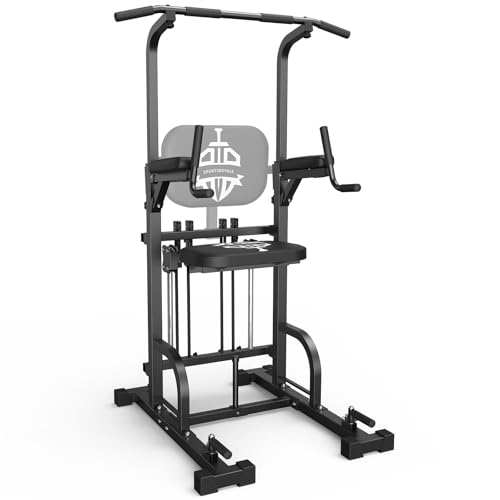
If you need a sturdy tower that actually handles bigger users, the Sportsroyals Power Tower is an easy pick. The powder-coated steel frame, wide 39.7-inch H-shaped base and eight rubber foot pads give it a rock-solid feel, and the manufacturer’s load rating (around 440–450 lb) makes it one of the better high-capacity options. I like the assisted pad with adjustable resistance bands — it smooths out pull-ups for beginners and lets heavier users work up progressively. Height and armrest adjustments, plus 45° rotating push-up handles, mean the station adapts to different users and exercises, and the thickened elbow pads with a slight inward tilt are a thoughtful comfort/safety touch.
A few things are simply average: it’s a substantial piece of equipment that takes space and a bit of assembly time, and some buyers treat the resistance bands as consumables that may need replacement down the line. Overall, for a home gym focused on durability and load capacity, this tower delivers solid value.
Best Adjustable Doorway

Specifications
| Brand | Sportneer |
|---|---|
| Mounting Type | Doorway Mount |
| Bar Material | Steel |
| Max Load | 440 lb |
| Dimensions | 1.8 x 37 x 6.7 in |
| Weight | 4.4 lb |
Pros
Cons
Sportneer’s adjustable door frame bar feels like a well-thought-out choice for anyone who wants a sturdy, no-drill pull-up solution. The twist-to-adjust design (29.5–37 inches) and integrated, sweat-resistant foam handle make it easy to fit and comfortable for a variety of exercises, from pull-ups to push-ups and hanging leg raises. The packed installation aids — spirit levels, arrow markers, and a video guide — genuinely simplify setup.
What pushes this model up the rankings are the safety and build details: thick steel tubing, a rotatable dual-gear lock on each end, and large PVC anti-slip mats that increase friction without damaging the frame. The manual recommends a 135 kg (297 lb) limit, yet controlled testing shows a much higher instantaneous tolerance, and the construction claims up to 200 kg (440 lb) capacity — a reassuring margin when installed on solid frames. The main caveat is the fixed adjustment range and the need for a solid doorframe; it’s not suitable for glass, tiles, or frames outside 29.5–37 inches. Overall, a reliable, user-friendly pick for most home doorways.
Best All-in-One Bar
Specifications
| Brand | Perfect Fitness |
|---|---|
| Mounting Type | Doorway Mount |
| Bar Material | Iron |
| Max Load | 300 lb |
| Dimensions | 38 x 15 x 14 in |
| Weight | 6.2 lb |
Pros
Cons
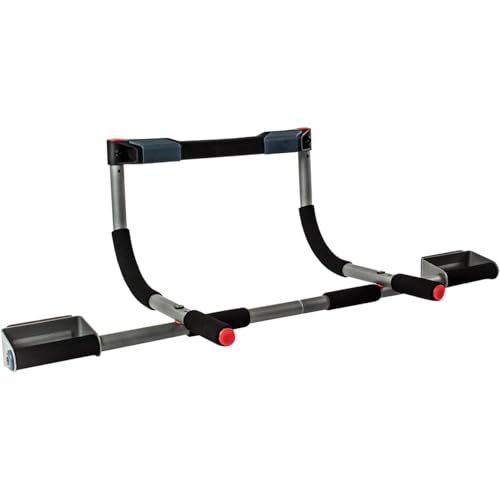
The Perfect Fitness Multi-Gym earns its spot as an all-in-one bar because it actually delivers on versatility without being fussy. Flip it into a doorway for pull-ups or place it on the floor for sit-ups, push-ups and dips — that simple swap makes it practical for small spaces. The wide, curved ergonomic handles give three grip options (wide, close, hammer) and the paddings make floor moves more comfortable and help keep your form honest. With a 300-pound capacity and a patented door frame guard, it feels secure for most users and setups.
It’s also pleasantly portable — at just over six pounds and compact when assembled, it’s easy to move or tuck away. The two-way adjustable design fits many common door frames (up to 33 inches wide, 6 inches deep), though that limit means it won’t suit every opening. Overall, it’s a solid, user-friendly choice if you want a lightweight, multi-use bar rather than a permanent mounted solution.
Best Multiple Grip Wall Bar

Specifications
| Brand | Titan Fitness |
|---|---|
| Mounting Type | Wall Mount |
| Bar Material | Steel |
| Max Load | 4400 lb |
| Dimensions | 22 x 8.5 x 5 in |
Pros
Cons
If you want a simple, workhorse multi-grip option for pull-ups and chin-ups, the Titan 3-Position delivers exactly that: a solid, no-nonsense bar with three different grip positions that let you vary your upper-body work without changing equipment. The steel feels very robust—Titan quotes heavy-duty construction and impressive weight capacities—so it inspires confidence for aggressive sets and mixed grips.
Beyond the grips, the product benefits from the same practical thinking found in Titan’s T-3 lineup: space-saving design, a skinny pull-up bar that’s easy to grab, and an included set of essentials (J-hooks and basic hardware) so you can get started fast. Assembly is straightforward if you have a partner to help.
On the flip side, it’s fairly utilitarian: you won’t find padded handles, fancy coatings, or a long list of accessories included. If you want a rugged, dependable multi-grip wall bar that focuses on function over flash, this is a very strong choice.
Best Wall-Mounted Dip Station

Specifications
| Brand | YES4ALL |
|---|---|
| Mounting Type | Wall Mount |
| Bar Material | Steel |
| Max Load | 515 lb |
| Dimensions | 33.7 x 13 x 4.5 in |
| Weight | 27.6 lb |
Pros
Cons
On paper, the YES4ALL Wall-Mounted Multi-Functional Bar makes a strong case as a top wall-mounted dip station. The 2-in-1 design lets you switch between pull-ups and dips, and the heavy-duty steel frame with a 515 lb rating promises real stability for heavier users and loaded routines. I also like that it supports a wide variety of movements — pull-ups, dips, leg raises, even push-up variations — so it’s more than a one-trick piece of kit. The padded back and arm rests sound well thought out for comfort during extended sets, and the included suspension anchors make mounting straightforward when you have a solid wall to work with.
That said, it’s not without limits. Installation is strictly for concrete or solid brick/tile surfaces, so renters or those with hollow walls are out of luck unless they retrofit. The unit seems functionally simple rather than fancy — no adjustable widths or extra accessory add-ons — but that simplicity also keeps it reliable and focused on the core exercises most people want from a dip station. Overall, a sturdy, practical pick if your space can support it.
Best for Wide Hallways

Specifications
| Brand | IRONSURGE |
|---|---|
| Mounting Type | Doorway Mount |
| Bar Material | Steel |
| Max Load | 680 lb |
| Dimensions | 29 x 5 x 3 in |
| Weight | 4.5 lb |
Pros
Cons
If you’ve got an extra-wide hallway and need a stable, heavy-duty option, the IRONSURGE Expandable Width Doorway Bar hits the mark. It’s built specifically for wider openings and — when mounted over wooden studs — feels rock-solid for pull-ups and hanging work. I liked the protective plastic-coated pads that help avoid chipped paint, and the included resistance bands and handles make it useful for more than just pull-ups. The barcode gift (leg set or travel bar) is a nice, unexpected bonus, and their phone support plus a straightforward warranty give confidence if you run into trouble.
A few practical notes: the 46–53" model won’t fit standard doorframes, which accounts for many returns, and the telescopic design isn’t suitable for hollow-gap frames unless you confirm the frame is solid. Installation takes a little care — they even provide a simple hinge-screw test — but if you measure first and follow their guidance, this is one of the better choices for wide hallways.
Best Portable Handles
Specifications
| Brand | Jayflex |
|---|---|
| Mounting Type | Doorway Mount |
| Bar Material | Steel |
| Max Load | 250 lb |
| Dimensions | 3 x 7 x 10 in |
| Weight | 5.1 lb |
Pros
Cons
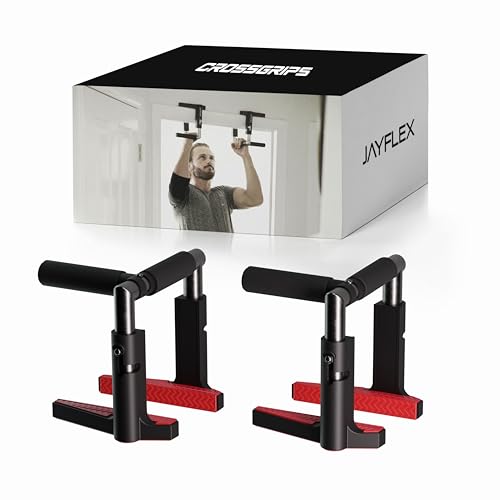
The Jayflex CrossGrips Compact Handles Bar earns its spot among the best portable handles by marrying practical design with genuine portability. The upgraded CrossGrips 2.0 — thicker steel, black powder-coating and a moulded hood to prevent sagging — feels sturdier than many travel-friendly options, and the improved non-slip grips make pull-ups, chin-ups or neutral-grip moves more confident. Setup is refreshingly simple: no tools, ready in about 15 seconds, and the foam-lined pieces interlock for tidy storage. Its versatility for narrow, wide and neutral grips lets you hit most upper-body muscles without bulky hardware.
It isn’t flawless: the 250 lb capacity and door-fit requirements (2–4" molding, 4.5–7.5" frame thickness) are pretty typical for over-door designs and may rule out some frames. Still, for anyone wanting a reliable, easy-to-pack doorway gym that actually feels secure during reps, the CrossGrips are a solid, well-thought-out choice.
What To Look For
Choosing a pull-up bar for home use means balancing strength, fit, and comfort so your workouts are safe and effective. Focus on practical features that match the bar to your space and training goals.
- Build quality and materials: Solid steel construction and corrosion-resistant finishes prolong life and prevent flex; check welds, tubing thickness, and whether fittings are reinforced for repeated use.
- Mounting type and compatibility: Decide between doorway, wall, ceiling, or freestanding options and confirm measurements, frame strength, and whether the model fits your door frame or studs.
- Weight capacity and stability: Match the rated capacity with a safety margin above your body weight and test for wobble under load to ensure stable, confident reps.
- Grip and ergonomics: Look for textured or padded grips, multiple grip widths, and rounded bar diameters that feel comfortable and reduce hand fatigue for different exercises.
- Adjustability and versatility: Bars that adjust height, width, or attach accessories let you progress, switch grips, and add movements like leg raises or resistance bands.
- Installation ease and hardware: Clear instructions, included mounting hardware, and the option for removable or permanent installation save time and avoid trips to the hardware store.
- Space and clearance: Measure ceiling height, doorway depth, and surrounding clearance so the bar doesn't obstruct doors, windows, or overhead movement during full range of motion.
- Safety features and certifications: Anti-slip end caps, locking mechanisms, and third-party safety certifications provide extra assurance that the bar meets performance and safety standards.
Prioritize durability, fit, and safety to pick a pull-up bar that supports consistent, effective training.
How We Select Our Products
We don’t pick pull-up bars at random. Our selection starts with a wide sweep: hundreds of models on the market are narrowed down using a mix of hard data and human judgement. First, we look at customer ratings and verified reviews across multiple retailers to spot consistent praise or recurring complaints. Then we dig deeper — reading detailed user experiences to understand how a bar performs over weeks and months, not just the first day out of the box. We also flag suspicious reviews and weigh verified purchases more heavily so our findings aren’t skewed by one-off opinions.
Next comes a side-by-side feature and specs comparison. We evaluate build quality (materials, welds, finish), weight capacity, mounting method, ease of installation, ergonomics of grips, corrosion resistance, and versatility for different exercises or doorways. Value for money is assessed by comparing what you actually get — durability, included hardware, warranty and customer support — against the asking price. Where possible we supplement this with hands-on testing or input from fitness professionals to assess stability and comfort. Safety and manufacturer reputation also factor in; a great price is meaningless if the bar isn’t safe.
Finally, we synthesize all these signals into transparent recommendations, explaining trade-offs so you can pick what matters to you — portability, maximum load, or budget. We update the list regularly and welcome reader feedback. Our goal is simple: save you time and money by recommending pull-up bars we’d be confident using in our own homes.
Final Thoughts
Picking the right pull-up bar does more than let you hang from the doorframe—it shapes how safely and effectively you train. A well-chosen bar meets your particular circumstances: if you live in a small apartment, a compact, no-drill doorway model saves space and keeps your landlord happy; if you’re a heavier lifter or want to add weighted pull-ups, a wall- or ceiling-mounted steel option gives the stability and weight capacity you need. Matching the bar’s build and installation style to your home prevents damage and avoids wobble that can throw off form or cause injury.
Comfort and biomechanics matter too. Bars with varied grips, comfortable padding, and the right diameter reduce strain on wrists and elbows and let you target different muscles—wide grips for lats, neutral grips for biceps and shoulders, and close grips for the upper back. Adjustable-height or multi-grip designs grow with your ability, supporting progress from assisted reps to unassisted sets without buying new equipment.
Durability and maintenance are practical benefits often overlooked. Choosing corrosion-resistant materials and checking weight ratings and warranties means years of safe use, less hassle, and better value. Portability and ease of assembly are perks if you travel or prefer to train outdoors. Finally, the right choice supports consistency: when your equipment feels safe and comfortable, you’re more likely to stick with a routine and see results. Take a moment to match features—installation type, weight capacity, grip options—to your goals and space, and you’ll turn a simple bar into a reliable tool for smarter, safer progress.