Running out of battery at the worst possible moment is one of those small modern annoyances that somehow derails an entire day. That’s why we’ve made it our mission to help you find a power bank that’s reliable, safe, and actually fits the way you live — whether you need something pocket-sized for daily commutes, a heavy-duty pack for travel and outdoor use, or a fast charger to top up multiple devices on the go. We know tech specs and shiny marketing copy can be confusing, so we focus on the real-world stuff that matters: how long a unit lasts in everyday use, how quickly it charges, and whether it survives life beyond the unboxing.
To make confident recommendations, we analyzed thousands of customer reviews and compared features across dozens of popular models and brands. We looked beyond capacity numbers to evaluate output stability, port types, recharge time, weight and size, build quality, and safety features like temperature control and short-circuit protection. We also weighed warranty coverage and brand reputation so you won’t be stuck with a product that looks great on paper but fails after a few months. The result is a curated list that filters out marketing fluff and highlights power banks that consistently deliver — great performance, sensible design, and long-term value. Read on and you’ll find options matched to different needs and budgets, backed by hands-on testing insights and broad customer feedback so you can buy with confidence.
Quick Overview
Top Picks
Best Overall

Specifications
| Brand | Belkin |
|---|---|
| Battery Capacity | 20000 mAh |
| Output Ports | 2x USB-C, 1x USB-A |
| Fast Charge Support | PD 65W |
| Dimensions | 1 x 5.2 x 3.4 in |
| Weight | 0.8 lb |
Pros
Cons
Belkin’s BoostCharge Pro earns its Best Overall spot by striking a smart balance between power, convenience, and thoughtful design. The 20,000mAh capacity and a single USB‑C port capable of 65W PD mean you can realistically top up a 14” MacBook quickly (Belkin’s claim of 0–50% in about 42 minutes is impressive). Being able to juice three devices at once — two USB‑C and one USB‑A — makes it genuinely useful for travel days or long work sessions. The full‑color digital display is a nice quality‑of‑life touch, so you always know exactly how much juice remains.
It’s also kinder to the planet than many competitors, made with recycled content and plastic‑free packaging, plus a reassuring 2‑year warranty and $2,500 connected equipment protection. On the flip side, some rivals offer higher single‑port wattages or lighter, more compact 20K bricks, so it’s not the ultimate pick for those chasing the absolute smallest or most powerful option. Overall, it’s a reliable, well‑rounded choice.
Best Slim 100W

Specifications
| Brand | Baseus |
|---|---|
| Battery Capacity | 20000 mAh |
| Output Ports | 2x USB-C, 2x USB-A |
| Fast Charge Support | PD 100W |
| Dimensions | 0.8 x 5.3 x 5.3 in |
| Weight | 1 lb |
Pros
Cons
Baseus Blade HD hits the sweet spot for anyone who needs serious power without the bulk. Its flat, travel-friendly profile actually fits a laptop bag or briefcase without feeling like a brick, yet the 100W USB-C PD means you can top up a MacBook Pro to about half in 30 minutes and keep phones, tablets and headphones running through long travel days. The 20,000mAh capacity is generous—enough for multiple phone charges or a solid boost for most 13–15" laptops—and the clear power display takes the guesswork out of battery management.
What seals the deal is the attention to safety and convenience: UL/IEC-level protection, FAA-friendly sizing, dual USB-C and USB-A ports, a 100W cable included and a two-year warranty with 24/7 support. It’s not reinventing the wheel—dual USB-A ports are pretty standard—but as a slim, reliable 100W option for commuters and frequent flyers, it’s hard to beat.
Best for Fast Laptop Charging

Specifications
| Brand | Anker |
|---|---|
| Battery Capacity | 24000 mAh |
| Output Ports | 2x USB-C, 1x USB-A |
| Fast Charge Support | PD 3.1 140W |
| Dimensions | 1.9 x 6.1 x 2.1 in |
| Weight | 1.4 lb |
Pros
Cons
The Anker 737 PowerCore 24K earns its spot for fast laptop charging by combining real-world capacity with serious power delivery. Its 24,000mAh pack and Power Delivery 3.1 support let you push up to 140W through the included USB-C cable, so thin-and-light laptops top up quickly and phones get rapid boosts. The smart digital display is genuinely useful — you can see output/input watts and get an estimate of recharge time, which makes managing power on travel days less guesswork.
It’s also thoughtfully travel-ready: compact, airline-friendly, and coming with a 140W USB-C cable, a travel pouch, and a 24-month warranty. On the flip side, the capacity won’t replace a heavy workstation for an entire day (expect more of a fast top-up than multiple full charges on power-hungry laptops), and to hit the full 140W you need a compatible 140W charger. Overall, it’s a strong, practical choice for anyone prioritizing speed and portability.
Best High-Power Value

Specifications
| Brand | UGREEN |
|---|---|
| Battery Capacity | 25000 mAh |
| Output Ports | 3x USB-C |
| Fast Charge Support | PD 3.1 145W + QC 3 |
| Dimensions | 1.1 x 6.3 x 3.2 in |
| Weight | 18.1 oz |
Pros
Cons
UGREEN’s 25,000mAh, 145W power bank shines as a high-power value pick because it combines seriously fast charging with a sensible, portable package. The headline grabber is PD3.1/QC3.0 support and a USB‑C port that can push up to 140W — enough to take a 16" MacBook Pro from 0–56% in about 30 minutes — while the overall 145W budget handles multiple devices. Two-way fast recharge (about 2 hours with a 65W+ adapter) and the ability to charge devices while the bank itself recharges make it very practical on long trips.
The 25,000mAh capacity is large enough for roughly 1.3 full laptop charges or more than five phone refills, so it’s real-world useful without being excessively bulky. The compact styling, clear digital battery readout, and broad device compatibility add polish.
A couple of caveats: peak speeds require a 65W+ adapter and a 5A-certified cable, and only the main USB‑C delivers the ultra-high 140W — if you need simultaneous multi-laptop top-end output, this isn’t ideal. Overall, though, it’s an excellent balance of power and practicality for the price-conscious user.
Best MagSafe Stand Charger

Specifications
| Brand | Anker |
|---|---|
| Battery Capacity | 10000 mAh |
| Output Ports | MagSafe wireless (15W), 1x USB-C |
| Fast Charge Support | Qi2 15W |
| Dimensions | 0.8 x 3.9 x 2.8 in |
| Weight | 0.6 lb |
Pros
Cons
If you want a MagSafe power bank that actually feels like an upgrade rather than a compromise, the Anker MagGo 10K checks a lot of right boxes. Its Qi2-certified 15W wireless charging delivers fast, reliable boosts — Anker even quotes 0–50% in 44 minutes for the iPhone 15 — and the built-in stand makes it genuinely useful as a bedside or desk charger, not just a battery. I also like the smart display: seeing exact percentages and estimated full-charge times removes the guesswork and helps manage charging sessions.
It’s worth noting this is a balanced, not ultra-heavy-duty solution. At 10,000mAh you’ll get roughly 1.8 charges for an iPhone 15 Pro, so it’s ideal for daily outings rather than extended travel. The package includes a USB-C cable and a 24-month warranty, which adds peace of mind. Overall, for anyone seeking a sleek MagSafe stand charger with fast wireless performance and handy on-device info, this is a strong, practical pick.
Best for iPhone Users
Specifications
| Brand | Apple |
|---|---|
| Battery Capacity | 1460 mAh |
| Output Ports | MagSafe wireless (12W) |
| Fast Charge Support | MagSafe 12W |
| Dimensions | 2.9 x 2.9 x 0.6 in |
| Weight | 0.4 lb |
Pros
Cons
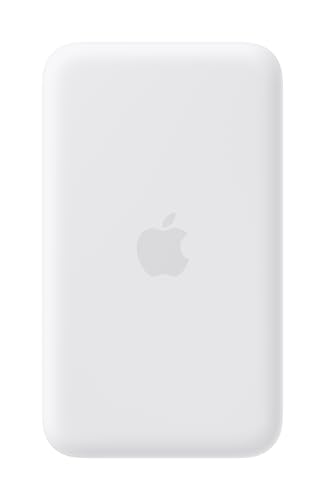
Apple’s MagSafe Battery Pack feels exactly like an accessory Apple would make: simple, pocketable and effortless to use. Because it’s made specifically for the iPhone Air, the magnetic fit is seamless and reassuring, and it adds up to 65% extra charge — enough to turn a worrying afternoon battery dip into a comfortable, all-day experience. The intelligent pairing between pack and phone also helps preserve long‑term battery health by timing top‑ups, so you’re not constantly stressing the phone’s battery cycles.
Performance-wise it’s handy for everyday users: snap it on for up to 12W of fast wireless charging when you’re out and about, and if you need even quicker refills you can plug your iPhone Air and the pack into a 25W (or higher) adapter at the same time. The trade-offs are predictable — it won’t replace a high-capacity power bank for multi-day trips and it’s tailored to iPhone Air rather than universal use — but for iPhone users who want convenience and polished integration, it’s a top choice.
Best Ultra-Slim Charger

Specifications
| Brand | Anker |
|---|---|
| Battery Capacity | 5000 mAh |
| Output Ports | Qi2 wireless (15W), 1x USB-C |
| Fast Charge Support | Qi2 15W + USB-C 20W |
| Dimensions | 4 x 2.8 x 0.3 in |
| Weight | 4.3 oz |
Pros
Cons
Anker’s Nano 5K MagGo Slim earns its spot among the best ultra-slim chargers largely because it nails the everyday balance between portability, speed, and safety. At just 0.3 inches thick and magnetically aligned with Qi2/MagSafe phones, it feels made for slipping into a pocket or small bag without the bulk of traditional power banks. The 15W Qi2-certified wireless output and up to 20W USB-C input/output give you genuinely useful fast charging — Anker’s lab numbers, like charging an iPhone 16 Pro to about 25% in 42 minutes, show it performs when you need a quick boost.
Where it really stands out is thermal management: graphene cooling, dual NTC chips, and smart heat control keep the surface under 104°F for safer handling during top-up sessions. The trade-offs are obvious but reasonable — 5,000mAh is a modest capacity compared with larger banks, so it’s a one-top-up device rather than an all-day charger. For daily carry and peace of mind, though, it’s a winning, pocket-friendly choice.
What To Look For
Picking a power bank is about balancing how much power you need with how portable and fast you want the charger to be; consider practical features that fit your daily routine.
- Capacity (mAh): Capacity indicates how many full charges you can expect; remember rated mAh overstates usable output, so choose higher capacity for tablets or multi-day use.
- Output power and fast charging: Look at wattage and supported fast-charge standards like USB‑C PD or Qualcomm QC to ensure quick top-ups and the ability to charge laptops or power-hungry phones.
- Input and recharge time: Faster input (especially USB‑C PD input) shortens how long the power bank itself takes to recharge, which matters if you use it frequently.
- Ports and compatibility: Check number and type of ports (USB‑C, USB‑A, Lightning, wireless) and whether it can charge multiple devices simultaneously without throttling.
- Size, weight and design: Match form factor to use case: slim, lightweight units for pockets and backpacks, larger bricks for longer trips where capacity matters more than weight.
- Build quality and safety protections: Prioritize banks with temperature control, overcurrent/overcharge protection and third‑party safety certifications to protect your devices and the battery.
- Battery type and cycle life: Lithium‑polymer tends to be lighter and safer while cycle ratings indicate how long the bank holds usable capacity before significant degradation.
- Extra features and convenience: Features like wireless charging, pass‑through charging, LED displays or built‑in cables add convenience but can increase cost and sometimes complexity.
- Price, warranty and brand support: Compare value by cost per usable mAh, read reviews for long‑term reliability and prefer products with a clear warranty and responsive customer service.
Choose a power bank by matching realistic capacity, charging speed and safety features to your typical usage while factoring in size, extras and warranty.
How We Select Our Products
We treat every roundup like a mini research project. First, we cast a wide net across the market to gather candidates—best-sellers, highly rated newcomers, and reputable brands—then narrow that pool using objective signals like average customer ratings, number of verified reviews, and recent sales momentum. That initial sweep ensures no solid option is missed.
Next we evaluate each candidate across a consistent set of criteria. Performance (real usable capacity, charging speed and efficiency, and how much energy reaches a phone or laptop) is paramount, followed by practical features such as port variety (USB‑C PD, USB‑A, passthrough), build quality, weight and size, and battery chemistry/cycle life. Safety counts heavily: we verify certifications (UL, CE, etc.), thermal behavior, and built‑in protections. Warranty, support, and reputation round out the list.
We combine quantitative analysis with qualitative review mining. That means reading hundreds to thousands of verified customer reports to spot repeat praise or problems, comparing manufacturer specs with independent test data, and — when possible — running hands‑on checks for charge times, heat under load, and real-world capacity. Each model receives a composite score that balances reliability, performance, features, and value-for-money so we don’t recommend flashy specs that fail in daily use.
Finally, we refresh this list regularly and document surprising tradeoffs so readers can pick the best power bank for their needs. We also consider real-life use cases — travel, commuting, or emergency backup — to match recommendations to different needs. Our goal is simple: give clear, well-researched, and trustworthy recommendations you can rely on.
Final Thoughts
Picking the right power bank isn’t just about grabbing the cheapest or biggest battery on the shelf — it’s about matching the tool to the job. If you’re commuting every day, a slim 5,000–10,000 mAh pack that slips into your pocket and gives your phone a full recharge is usually ideal. Travelers and remote workers will want higher capacity (20,000 mAh or more) and features like USB-C Power Delivery so you can top up a laptop or charge multiple devices quickly. Campers and emergency preppers should prioritize ruggedness, long shelf life, and solar or flashlight features, while families might value multiple ports so everyone can plug in at once.
Safety, reliability, and practical trade-offs matter too. Fast charging sounds great, but it’s only useful if your devices support the protocol; otherwise you’re paying for a feature you won’t use. Larger batteries weigh more and may be restricted on flights, so think about where you’ll actually carry the pack. Look for reputable cells, overcharge and short-circuit protection, and clear specs — not just marketing claims. Reading real user reviews and checking warranty terms can save you frustration later.
In short, the best power bank is the one that fits your habits, devices, and travel patterns. Take a moment to list your priorities — portability, capacity, speed, ruggedness — then compare models against those needs. You’ll end up with a charger that not only keeps your gadgets alive but also makes your life easier, without wasting money on features you don’t need.