If you’ve ever stood in a shop staring at a wall of longboards and felt overwhelmed, you’re not alone. Choosing the right board means balancing ride style, deck shape, material, wheel size, and a dozen other little details that add up to a great cruise—or a frustrating purchase. That’s why we made it our mission to cut through the noise and help you find a board that actually fits how you ride.
We don’t pick favorites on a whim. Our team analyzed thousands of customer reviews and cross-checked those real-world experiences against product specs and competing models. We looked for consistent patterns—what people praised, what broke, and what features mattered most for stability, carving, commuting, and downhill speed. Alongside the review deep-dive, we compared trims, materials, and component quality to make sure each recommendation stands up against similar boards in its category.
The result is a curated list of longboards that prioritize durability, performance, and value. Whether you’re a beginner looking for a forgiving cruiser or an experienced rider hunting for precision and speed, you’ll find options that have earned their place through data, direct comparison, and practical know-how. Read on and you’ll get clear, honest picks designed to help you make a confident purchase—no jargon, no hype, just boards that actually deliver.
Quick Overview
Top Picks
Best Overall Longboard
Specifications
| Brand | Atom Longboards |
|---|---|
| Material | Maple Wood |
| Deck Length | 41 Inches |
| Deck Width | 9 Inches |
| Wheel Size | 70 Millimeters |
| Weight | 2.2 Pounds |
Pros
Cons
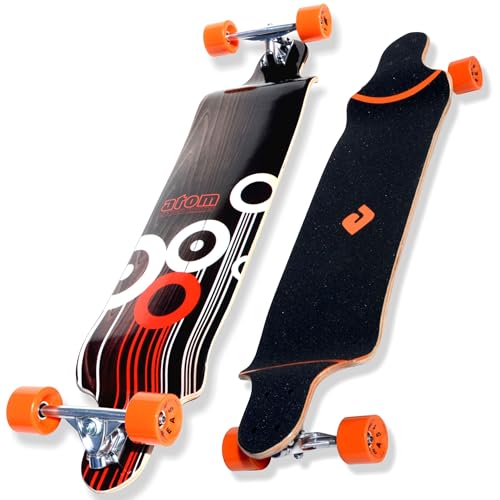
Tucked into the Best Overall Longboard category, the Atom Drop Deck genuinely feels like a sensible all-rounder. The full maple laminate deck gives it a sturdy, responsive pop without feeling overly stiff, so you get a nice balance between stability at speed and enough flex for comfortable cruising. The 245mm reverse kingpin trucks are tuned for predictable carving and confident turns, and the wide-lip 70x51mm SHR wheels soak up pavement imperfections while offering impressive rebound for rolling over cracks and rough spots.
The ABEC 9 bearings with high-speed lubricant contribute to a smooth, quick roll right out of the box, though bearing ratings alone aren’t the only measure of long-term performance. The 80S grip tape provides solid traction underfoot but isn’t anything revolutionary. Overall, the setup reads like a thoughtfully matched package: dependable, fun to ride, and versatile — a great pick if you want one board that does a bit of everything well.
Best All-Terrain Longboard

Specifications
| Brand | Atom Longboards |
|---|---|
| Material | Maple Wood |
| Deck Length | 39 Inches |
| Deck Width | 10 Inches |
| Wheel Size | 100 Millimeters |
| Weight | 10 Pounds |
Pros
Cons
The Atom All-Terrain Longboard feels confident right out of the gate: those 100 x 65mm MBS wheels with 78a super-high-rebound urethane deliver a surprisingly smooth, fast roll across gravel, grass, and cracked pavement without feeling mushy. The maple-lam drop deck keeps your center of gravity low, which makes pushing and carving more stable and less tiring on longer rides. I also liked the 50-degree reverse-kingpin trucks with heat-treated CrMo axles and grade 8 king pins — they offer responsive turning and durable hardware that stands up to rough use.
Rubber-shielded ABEC 9 bearings with high-speed lube are reliable and quick, though they’re a common choice in this category rather than a standout. The super-coarse 46-grit off-road grip holds your feet firmly through aggressive maneuvers. Overall, the Atom leans toward solid durability and comfortable off-road performance; it’s not the lightest or flashiest setup, but for everyday all-terrain riding it’s a very capable and confidence-inspiring board.
Best Cruiser Longboard

Specifications
| Brand | Retrospec |
|---|---|
| Material | Maple Wood, Bamboo |
| Deck Length | 44 Inches |
| Deck Width | 10 Inches |
| Wheel Size | 70 Millimeters |
| Weight | 9.3 Pounds |
Pros
Cons
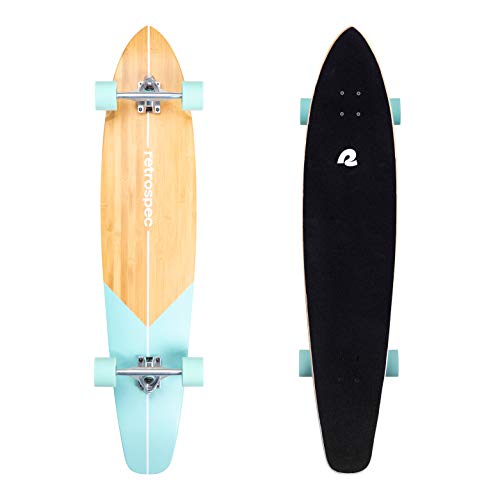
The Retrospec Zed nails that laid-back, surf-inspired cruiser feel while still being a dependable daily rider. Its 44-inch hybrid deck of 8-ply Canadian maple and bamboo gives just enough flex for comfortable carving and pop-free stability for relaxed cruising. Wheel wells help eliminate wheel bite, so you can lean in without worrying, and the 70 x 51 mm 85A PU wheels with a rock finish soak up small bumps while delivering confident grip.
Precision ABEC-7 bearings keep things rolling fast and true, making the Zed a solid choice for commutes and boardwalk laps. It comes fully assembled, which is perfect for anyone who wants to hop on and go. On the downside, the components are good but not top-tier pro parts—stock trucks and ABEC-7 bearings perform well for most riders but won’t satisfy those chasing competition-level hardware. Overall, it’s a stylish, comfortable cruiser that earns its place in the Best Cruiser Longboard category.
Best Freeride Longboard

Specifications
| Brand | VOLADOR |
|---|---|
| Material | Alloy Steel, Aluminum, Maple Wood, Urethane, Bamboo |
| Deck Length | 42 Inches |
| Deck Width | 9 Inches |
| Wheel Size | 70 Millimeters |
| Weight | 7.4 Pounds |
Pros
Cons
This board balances durability and playfulness in a way that makes it an easy pick for freeride newcomers and urban riders. The 8-ply maple deck bonded with epoxy gives a reassuring flex-to-strength feel and the cambered concave helps distribute weight for smoother shock absorption—useful when you’re carving or rolling over rough pavement. Symmetric double-kick tails add real versatility, so you can experiment with basic tricks or quick pivots without sacrificing stability, and the 220 lb rating means it won’t feel flimsy for heavier riders.
The adjustable 7-inch forged aluminum trucks (45°–55°) are a bright spot: you can dial in responsiveness for tight carving or more stable commuting. The 78A center-cored 70 x 51 mm wheels provide a soft, predictable grip-to-slide behavior and decent road cushioning, while ABEC-9 bearings keep things rolling with low maintenance. A couple of components sit squarely in the mid-range—not flagship-grade urethane or pro-level precision bearings—but overall the VOLADOR offers a well-rounded, dependable package for freeride progression and city cruising.
Best Electric Longboard

Specifications
| Brand | Meepo |
|---|---|
| Material | Maple Wood |
| Deck Length | 38 Inches |
| Deck Width | 11 Inches |
| Wheel Size | 90 Millimeters |
| Weight | 17.6 Pounds |
Pros
Cons
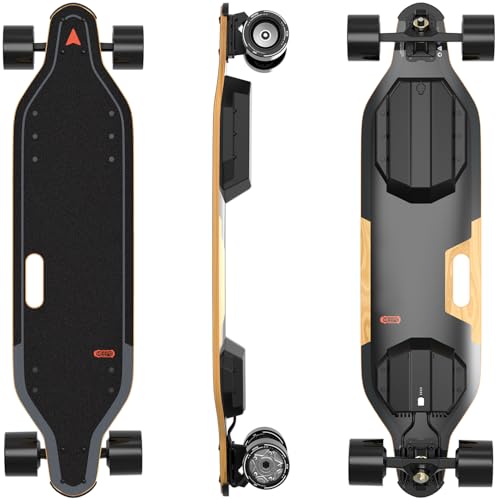
The MEEPO Campus V5 feels like a smart pick for the “Best Electric Longboard” slot—it pairs a comfortable, carry-friendly deck (8 layers of Canadian maple, FSC-certified) with gutsy dual 500W hub motors that push you to about 28 mph. That combination makes it great for campus runs or cruising the city, and the board’s solid construction and built-in handle make daily use easy and reliable.
On the ride side, the new ESC and M5 remote deliver predictable, smooth braking and four ride modes (including a gentle LO setting) that suit beginners and confident riders alike. It’s IPX5-rated and UL2272 certified, and Meepo backs it with six months of support—nice peace of mind. A couple of pragmatic notes: the 11-mile range and 1.5A (≈2.8-hour) charging are perfectly adequate for short commutes but not exceptional for longer trips, and hub motors can be less torque-y on steep hills. Overall, it’s a well-rounded, user-friendly longboard for everyday riders.
Best Bamboo Longboard

Specifications
| Brand | Loaded Boards |
|---|---|
| Material | Wood |
| Deck Length | 39 Inches |
| Deck Width | 8.75 Inches |
| Wheel Size | 70 Millimeters |
| Weight | 6.8 Pounds |
Pros
Cons
Loaded’s Tan Tien feels like a purpose-built toy for people who love carving and playing on pavement. Its cambered bamboo-and-fiberglass layup gives a lively, poppy flex that’s great for pumping and hard turns, while the drop-through mounting and large wheel cutouts keep everything stable and tuck in nicely for deep carves. The nose and tail kicks open up freestyle possibilities and make city riding more practical for getting over curbs and obstacles.
The spec package is thoughtful: Paris 180mm trucks provide predictable, smooth turning, and Orangatang 70mm Stimulus wheels in an 80a formula strike a nice balance between grip and slide for mixed riding. Loaded also includes Jehu V2 bearings, so the board is ready to go out of the box.
If there’s anything average here, it’s that the parts kit leans toward reliable rather than revolutionary — competent trucks, wheels, and bearings rather than boutique upgrades. Overall, the Tan Tien stands out for its carving-focused geometry, lively flex options, and real versatility.
Best Drop-Through Longboard

Specifications
| Brand | Retrospec |
|---|---|
| Material | Maple Wood |
| Deck Length | 41 Inches |
| Deck Width | 9 Inches |
| Wheel Size | 70 Millimeters |
| Weight | 8.35 Pounds |
Pros
Cons
The Retrospec Rift drop-through feels like a confident, no-nonsense cruiser — low to the ground for stable hill runs and a roomy 41" x 9.5" deck that’s forgiving for commuting and carving. The fully covered 80AB grip keeps your feet planted, while the drop-through trucks lower your center of gravity so pivots and fast runs feel controlled rather than twitchy. Those slant reverse 180mm kingpin trucks give the board a lively, responsive turn without being skittish.
Wheels and bearings are chosen for smooth everyday performance: 70 x 51mm 78A PU wheels soak up rough pavement well, and ABEC-7 stainless bearings deliver solid speed and reliability. The Canadian maple construction adds durability and a familiar, stable flex that many riders prefer. If you’re after top-tier race components, some parts are fairly standard, but for the price and intended use — commuting, carving, mellow downhill — the Rift checks the boxes and rides predictably great.
What To Look For
Picking the right longboard comes down to matching the board to how and where you want to ride, balancing comfort, stability and responsiveness. Below are the main features to consider so you can find a board that feels right from the first push.
- Deck Shape: The shape determines stance and control; pintails suit cruisers, drop-throughs add stability, and directional boards favor downhill performance.
- Deck Material and Construction: Materials like maple, bamboo or composite affect weight, durability and flex pattern, while layered or sandwich constructions influence strength and pop.
- Length and Width: Longer boards offer more stability at speed and room for footwork, while width should match your shoe size for secure footing and comfort.
- Flex: Flexible decks absorb bumps and suit carving or commuting, while stiff decks provide precise response and better high-speed control for downhill riding.
- Wheelbase and Truck Placement: A longer wheelbase increases stability and smoothness, while shorter setups are more maneuverable; truck mounting affects turning behavior and center of gravity.
- Trucks and Bushings: Quality trucks influence turning and stability; bushing hardness and shape determine how loose or controlled your turns feel and can be tuned to preference.
- Wheels (Size and Durometer): Larger, softer wheels roll over cracks and provide grip, ideal for cruising and rough surfaces, while smaller, harder wheels accelerate faster and slide easier.
- Bearings: Good bearings reduce friction and improve roll speed and consistency; look for sealed bearings for low maintenance and durable performance.
- Concave and Kicktails: Concave locks your feet for control and tricks, and kicktails add maneuverability for carving, tricks or quick direction changes.
- Intended Use and Load Capacity: Match the board to your primary activities—dancing, commuting, cruising, freeride or downhill—and ensure the board supports your weight for safety and longevity.
Consider these features together to choose a longboard that matches your riding style, comfort needs and the terrain you'll ride most often.
How We Select Our Products
We take selecting the longboards featured in this post very seriously — it’s not a quick list made from a single shopping trip. First, we aggregate and weigh customer ratings across multiple retailers and review platforms to identify consistently high performers. Raw star scores are only the starting point; we read hundreds of full reviews to spot recurring praise or complaints. That lets us separate one-off experiences from patterns (for example, a board that gets five-star praise for stability but frequent notes about poor hardware).
Beyond crowd wisdom, we compare tangible features side-by-side: deck construction and materials, wheel size and durometer, truck type and geometry, bearing quality, and total weight. These specs matter differently depending on the intended use — commuting, carving, downhill, or cruising — so we evaluate boards in context rather than in isolation. Durability tests, manufacturer warranties, and brand reputation are also considered; a great-sounding spec sheet doesn’t mean much if the company won’t stand behind the product.
Value-for-money is a key filter. We look at price relative to longevity, component quality, and real-world performance. If two boards perform similarly but one uses better bearings and comes with a solid warranty, it earns a higher ranking. We also consult expert feedback and, where possible, perform hands-on trials to validate claims like responsiveness and comfort.
Finally, we prioritize transparency: every recommendation reflects aggregated data, hands-on insight, and clear trade-offs so you can pick the longboard that best fits your riding style and budget. We update recommendations regularly to keep them relevant as new models arrive.
Final Thoughts
Picking the right longboard matters more than most people realize. When your board matches what you actually want to do—cruising around town, carving down hills, commuting, or learning tricks—you’ll notice immediate benefits: greater stability, smoother rides, and more confidence. Choosing the appropriate shape, flex, wheel size, and truck setup reduces the risk of slips and wheel bite, which means safer, more enjoyable sessions every time you ride. It also makes progression feel natural; learning to turn crisply or control speed becomes much easier with equipment suited to your skill level.
Practical advantages show up in comfort and cost, too. A board that fits the terrain you ride most often will spare you wrist and knee strain, and it’ll last longer because its components aren’t being pushed beyond their intended use. That translates into better value over time—less frequent replacements and fewer surprise repairs. Performance gains are also real: choosing the right wheels for pavement texture or a deck with the right flex for your weight can transform a choppy commute into a relaxed glide or a scary descent into controlled thrills.
If you care about having fun and staying safe, take a minute to match a board to your priorities. Think about where you’ll ride, how you want the board to feel, and how quickly you want to progress. Try test-riding when possible, read a few trusted reviews, and don’t be afraid to ask experienced riders for tips. With a thoughtful choice, you’ll get a longboard that fits your lifestyle and keeps you smiling every time you push off.


