




There’s something almost ritualistic about making the first cup of the day, and having the right coffee maker can turn that five-minute routine into a small moment of joy. We know how many choices are out there—drip machines, espresso makers, single-serve pod systems, and hybrid brewers—so our goal is simple: help you find a machine that fits your taste, schedule, and budget without the headache of sifting through endless options.
To do that, we don’t rely on hype or a single metric. We analyzed thousands of customer reviews and compared features across dozens of models to spot consistent winners and reveal common pitfalls. That means looking beyond specs to real-world concerns: how the machine performs after months of use, how easy it is to clean, whether replacement parts are available, and whether the coffee it produces matches what customers expect. We also weigh factors like build quality, energy usage, and warranty support so recommendations aren’t just about flash—they’re about long-term satisfaction.
This guide distills that research into straightforward recommendations, with clear reasons why a particular model might be right for you—whether you’re brewing for one or a whole household, prefer espresso or a classic drip, or need something that’s fuss-free and fast. Read on and you’ll get honest, evidence-backed advice designed to save you time and money while helping you wake up to better coffee every morning.
Quick Overview
Top Picks
Best Drip Coffee Maker

Specifications
| Brand | Technivorm Moccamaster |
|---|---|
| Type | Drip Coffee Machine |
| Operation Mode | Fully Automatic |
| Dimensions | 6.5"D x 12.75"W x 14"H |
| Weight | 6.25 pounds |
Pros
Cons
The Technivorm Moccamaster KBGV Select earns its place near the top of drip coffee makers largely because it consistently nails the fundamentals that actually matter for flavor. Its copper heating element and precise temperature control deliver water in the industry-recommended range, and the machine brews a full carafe quickly (typically a few minutes) without sacrificing extraction. The adjustable brew-basket gives you a simple way to dial strength up or down, and the glass carafe and straightforward design make it easy to see what’s happening and to clean. Built by hand in the Netherlands, it feels solid and durable—more of an investment in reliable daily performance than a gadget-packed gizmo.
Do read the user guide before first use to ensure proper setup and care. If you want bells and whistles, it’s fairly basic—no grinder or heavy programmability—but for pure, repeatable drip coffee and long-term reliability, the KBGV Select is hard to beat.
Best Single-Serve Coffee Maker

Specifications
| Brand | De'Longhi |
|---|---|
| Type | Espresso Machine |
| Operation Mode | Fully Automatic |
| Dimensions | 5.59"D x 16.88"W x 12.79"H |
| Weight | 12.4 pounds |
Pros
Cons
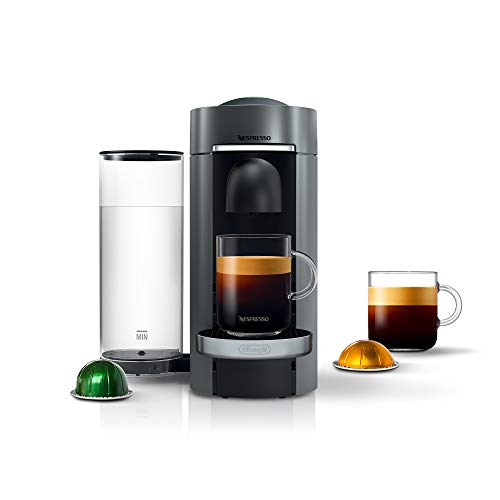
The Vertuo Plus is a delight if you want fuss-free coffee and espresso without a long learning curve. It heats in about 25 seconds, so your drink is ready quickly, and the one-touch brewing for four cup sizes (two coffee volumes and single/double espresso) makes switching between a morning mug and an afternoon espresso effortless. The large 60-ounce water tank and the included used-pod container mean fewer refills and less clutter on the counter, and the machine’s ability to brew over ice expands what you can make — from hot lattes to iced blends — right at home. The energy-saving automatic shutoff is a small touch that adds convenience and peace of mind.
On the flip side, it’s still a capsule system, so you’re tied to Nespresso pods and the limited customization that comes with them. Capsule assortment varies and there’s no manual pressure control, but for most people wanting consistent, quick, café-style drinks, the Vertuo Plus delivers exactly that.
Best Automatic Espresso Machine

Specifications
| Brand | De'Longhi |
|---|---|
| Type | Espresso Machine |
| Operation Mode | Fully Automatic |
| Dimensions | 17.5"D x 10.25"W x 15.13"H |
| Weight | 24.7 pounds |
Pros
Cons
If you want café variety with minimal fuss, the Eletta Explore delivers. Its 50+ one-touch recipes and dual LatteCrema systems (hot and cold) make everything from classic cappuccinos to iced lattes and cold brew in under three minutes impressively easy. The built-in grinder with 13 settings and Bean Adapt guidance means the machine adapts to different beans for consistently good extraction, and the 3.5" full-touch display plus app connectivity make customization and profile saving straightforward. Including a travel mug and dishwasher-safe parts adds practical convenience.
A few aspects are what you’d expect from a high-end automatic: removable components for cleaning and the usual counter-space considerations. Those routine practicalities don’t detract from its strengths—versatility, rapid cold extraction, and intuitive controls—so the Eletta Explore earns its place near the top of the best automatic espresso machines for home users who want variety and tech-forward convenience.
Best Manual Espresso Machine

Specifications
| Brand | Breville |
|---|---|
| Type | Espresso Machine |
| Operation Mode | Manual |
| Dimensions | 12.5"D x 14.5"W x 16.5"H |
| Weight | 23.7 pounds |
Pros
Cons
The Barista Express Impress earns its spot among top manual machines by removing much of the guesswork while keeping hands-on control. The Impress puck system with intelligent dosing and auto-correcting doses means you get consistent extractions without constantly fiddling with weights or timers. Assisted tamping — the barista-twist finish and consistent 10 kg pressure — replicates a pro routine so your puck is polished and even every time, which really elevates shot quality for home use.
Under the hood the integrated conical burr grinder (25 settings) and Thermocoil heating with PID give the precision needed for third-wave coffee: grind, temperature and flow are all tunable to chase flavor. The manual steam wand still lets you texture true microfoam for latte art, so you don’t lose the craft element.
A few things are fairly standard — a 250 g hopper and 2 L water tank and presets cover everyday convenience — but overall it strikes a strong balance between learning curve and repeatable performance, making it a top pick for serious home baristas.
Best Pour-Over Coffee Maker

Specifications
| Brand | Chemex |
|---|---|
| Type | Pour Over |
| Operation Mode | Manual |
| Dimensions | 6.3"D x 9.6"W x 1.35"H |
| Weight | 1.35 pounds |
Pros
Cons
The Chemex feels like the kind of coffee gear that makes brewing feel deliberate and a little ritualistic. Its timeless, elegant silhouette isn’t just for show — the Borosilicate glass is non-porous, so it won’t absorb flavors or chemical residues, and that clarity really translates to a clean, pure cup. The patented pour-over shape is straightforward to use, and the ability to cover and refrigerate brewed coffee without degrading the flavor is a practical advantage for anyone who likes to make a batch ahead of time. Using 5 oz as the standard “cup” makes recipe scaling predictable.
A couple of average, practical points: Chemex requires its bonded filters (FP-1, FC-100, FS-100, FSU-100), which aren’t included and can be a bit more costly than generic papers, and the single-walled glass won’t keep coffee hot as long as insulated carafes. Still, if you value aesthetic design and exceptionally clean tasting pour-over, the Chemex is hard to beat.
Best French Press Coffee Maker

Specifications
| Brand | Bodum |
|---|---|
| Type | French Press |
| Operation Mode | Manual |
| Dimensions | 4.2"D x 5.5"W x 9"H |
| Weight | 1.46 pounds |
Pros
Cons
The Bodum Chambord earns its spot among the best French presses because it delivers clean, full-bodied cups with very little fuss. Its classic stainless-steel frame and borosilicate glass carafe make it both attractive and easy to monitor while brewing, and the fine mesh filter extracts plenty of flavor without overdoing bitterness. In practice it rewards a consistent coarse grind and the right coffee-to-water ratio — too coarse, too little coffee, or not settling the grounds slightly before pouring can lead to a weaker extraction, so a little attention up front helps maximize results.
On the average side, the glass carafe doesn’t keep coffee hot as long as insulated models and the metal-and-glass build can be more fragile than all-steel presses. The Chambord is straightforward to clean (wash in warm, soapy water before first use and dry thoroughly), reliable, and offers a timeless design that makes it an easy recommendation for anyone wanting great, uncomplicated French press coffee.
Best Budget Coffee Maker

Specifications
| Brand | BLACK+DECKER |
|---|---|
| Type | Drip Coffee Machine |
| Operation Mode | Manual |
| Dimensions | 7.25"D x 9.75"W x 10.75"H |
| Weight | 2.5 pounds |
Pros
Cons
This little BLACK+DECKER 5-cup is exactly the kind of machine that earns a spot on a “best budget” list: straightforward, dependable, and built with everyday use in mind. The reinforced Duralife glass carafe feels tougher than the usual cheap glass and the clear level markings plus a solid handle make pouring and measuring worry-free. Its compact footprint is a real plus for apartments, dorms, or RVs where counter space is precious, and the one-hour nonstick carafe plate does a decent job of keeping a small pot warm without burning the coffee.
Cleanup is simple — the removable filter basket is dishwasher-safe and works with standard basket paper filters, so there’s nothing finicky about maintenance. Where it’s average is in features: there’s no programmability, multiple brew strengths, or large-capacity option, so it won’t replace a full-size machine for heavy coffee drinkers. For someone after an affordable, no-nonsense brewer that performs reliably for one or two people, it’s a very sensible pick.
What To Look For
Choosing the right coffee maker starts with knowing how you like your coffee and how much effort you want to put into making it. Consider features that affect flavor, convenience, and long-term cost.
- Brewing Method: Different systems—drip, espresso, pour-over, French press, and pod—determine flavor profile, hands-on time, and machine complexity.
- Capacity: Match carafe or reservoir size to how many cups you brew daily to avoid frequent refills or wasted coffee.
- Brew Strength Control: Adjustable strength or extraction settings let you tailor bitterness and intensity to your personal taste.
- Temperature Control: Accurate and stable brewing temperature (generally 195–205°F) is essential for proper extraction and consistent flavor.
- Grinder and Bean Compatibility: A built-in grinder or compatibility with freshly ground beans preserves aroma and significantly improves cup quality.
- Programmability and Timers: Auto-start, scheduling and memory functions save time and ensure you can wake to fresh coffee when needed.
- Ease of Cleaning and Maintenance: Removable parts, dishwasher-safe components and straightforward descaling keep performance high and reduce off-flavors.
- Size and Footprint: Consider counter space, clearance for tall mugs and storage needs, especially for larger espresso machines or combos.
- Build Quality and Materials: Stainless steel construction, quality seals and durable plastics resist wear, minimize heat loss and prevent metallic tastes.
- Milk Frothing and Espresso Features: If you want lattes or cappuccinos, look for steam wands, automatic frothers or dedicated espresso systems with proper pressure.
- Cost and Ongoing Expenses: Factor initial price, pod or filter costs, replacement parts and energy use to understand the machine's total ownership cost.
- User Interface and Connectivity: Clear displays, tactile controls or smartphone apps make operation intuitive and enable easy customization of settings.
Focus on the few features that align with your taste, daily routine and budget to choose a coffee maker you'll enjoy using every day.
How We Select Our Products
When we set out to pick the coffee makers featured in this post, we treated the process like a mini research project. Our goal was simple: give you recommendations you can trust. To do that we combined hard data with human judgment — aggregating customer ratings from multiple retailers, combing through hundreds of verified purchaser reviews, and reading closely to understand common praise and recurring complaints. We paid special attention to consistency in ratings across sites; a model that scores well everywhere usually means fewer surprises for buyers.
Beyond star ratings, we analyzed reviews for real-world performance details: how evenly a machine brews, how long it takes, how easy it is to clean, and whether features (programmable timers, built-in grinders, temperature control) actually work as advertised. We built a feature-comparison matrix to directly compare capacity, materials, warranty length, energy use, and compatibility with different coffee types (pods vs. grounds). Price was never evaluated in isolation — we considered value for money by balancing upfront cost against durability, warranty coverage, and long-term expenses like filters or pods.
Where possible, we also performed hands-on testing to verify things like brew temperature, repeatability, and user experience. Finally, we cross-checked brand reputation and customer service responsiveness, and filtered out suspicious or outlier reviews to reduce bias. The result is a curated list grounded in both data and day-to-day usability, created with careful attention so you can choose a coffee maker that fits your routine and budget.
Final Thoughts
Picking the right coffee maker isn’t just about having caffeine on demand — it’s about matching a machine to the way you live and how you like your coffee. The biggest benefit is better-tasting coffee that fits your routine: whether you crave a bold espresso shot, a smooth pour-over, or a fuss-free pot that you can set and forget, choosing the right brew method brings out flavors you actually enjoy and reduces wasted beans and disappointment.
Another big win is convenience. The right model saves time and minimizes friction in your morning ritual. If you’re short on time, an automatic drip with a programmable timer or a pod machine can get you out the door faster. If you’re particular about control, a manual or specialty espresso maker lets you tweak grind size, extraction time, and temperature to your liking. Matching features to needs—capacity, footprint, noise level, and ease of cleaning—makes your counter space work for you instead of against you.
Cost and sustainability matter too. A wisely chosen coffee maker can lower long-term expenses (fewer café trips) and reduce waste (reusable filters, less packaging). Durability and simple maintenance mean fewer replacements and more reliable cups over years.
Finally, choosing with intention helps you avoid buyer’s remorse. Think about how you drink coffee, where you’ll keep the machine, and what you’re willing to maintain. Read a few trusted reviews, compare features, and prioritize what matters most—then buy with confidence. When your coffee maker aligns with your needs, mornings become easier and your coffee better—simple as that.


