Chamber vacuum sealers pull air out inside a sealed chamber, then lock in a heat seal. For buyers, that matters most when food has moisture, liquids, or strong odors that can break seals in other styles. This sub-category also fits kitchens that seal often, seal in larger bags, or need fast, repeatable results.
Choosing one is harder than it looks because performance depends on how well the unit removes air, not just on the listed vacuum specs. You also trade off cycle time, seal bar width, and how many seal settings you can use for different foods. Build quality matters too. Chamber units run heat and vacuum repeatedly, so gaskets, locking parts, and maintenance access decide how consistent the results stay over time.
Looking for all types? See our Best Vacuum Sealers.
Quick Overview
Our Top Picks
#1. Vacmaster VP215 Chamber Vacuum Sealer

Specifications
| Brand | Vacmaster |
|---|---|
| Sealer Type | Chamber |
| Seal Bar Width | 10.25 in |
| Dimensions | 14 x 20 x 15 in |
| Weight | 84 lb |
Pros
- Consistent vacuum holds
- Reinforced and steady
- Clear controls, quick cleanup
- Clear pressure indicator
Cons
- Heavier to store
- Oil-fill maintenance
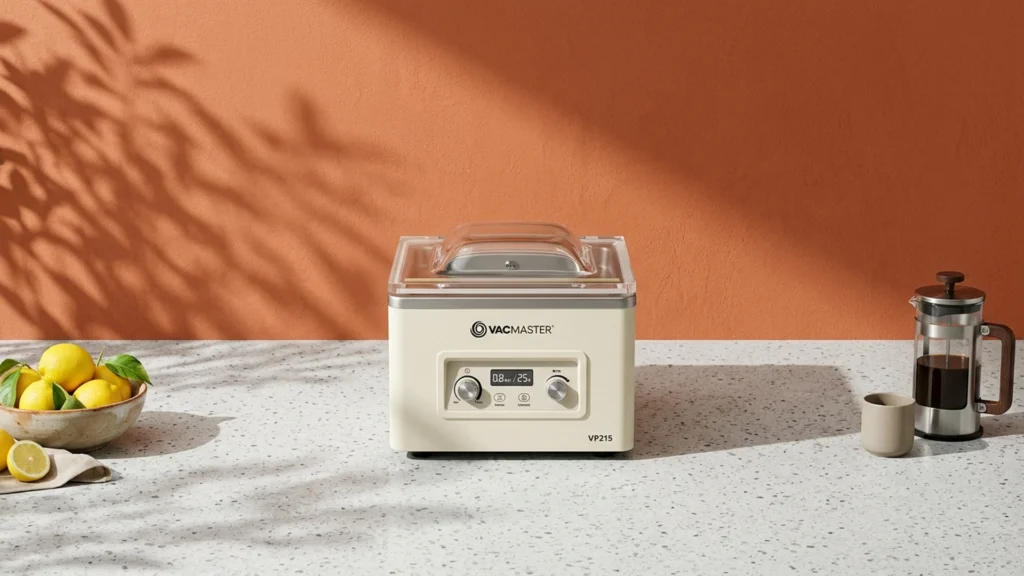
This Vacmaster VP215 chamber vacuum sealer stands out for how steady it stays once the lid closes. In a chamber design, that matters because you want the same vacuum strength from batch to batch and a reliable thermal seal right after. Users get consistent vacuum holds and a reinforced, stable build, along with clear controls and a pressure indicator that makes it easier to judge when the machine is doing what you expect.
The main trade-off is practical. At 84 lb and with a sizable footprint, it is not a grab-and-go countertop unit, and storage takes planning. It also has oil-fill maintenance, which means you will spend a little time on upkeep if you run it often. This makes it best for kitchens and food prep setups that seal frequently and can commit space and basic maintenance to keep performance consistent.
#2. Gasbye CV4520 Chamber Vacuum Sealer

Specifications
| Brand | Gasbye |
|---|---|
| Sealer Type | Chamber |
| Seal Bar Width | 11.5 in |
| Accessory Port | Yes |
Pros
- Consistent vacuum holds
- Stronger vacuum sealing
- Works with jar lids
- Clear controls, quick cleanup
Cons
- Limited quantitative specs
- No quantified failure data
- Maintenance feature unconfirmed
This Gasbye chamber vacuum sealer stands out for consistent vacuum holds and strong, tight seals, which matters most when you are prepping large batches for later. In a chamber style unit, the sealed environment helps it pull down reliably and then keep the pack sealed, so you get fewer weak seals when you are working through different foods. It also includes an accessory port for jar lids, which makes it easier to switch from bag storage to jar vacuuming without needing a separate setup. Controls are straightforward, and cleanup stays manageable after use.
The main trade-off is limited published data. The specs list an 11.5 in seal bar, but it does not share suction inHg, mode details, or quantified failure rates. Maintenance helpers are mentioned, yet dishwasher safe or removable parts are not clearly confirmed. This makes it a better fit for shoppers who want repeatable chamber sealing results and are comfortable learning the machine by doing a few test runs first.
#3. Vacmaster VP230 Chamber Vacuum Sealer

Specifications
| Brand | Vacmaster |
|---|---|
| Sealer Type | Chamber |
| Seal Bar Width | 12.25 in |
| Dimensions | 15.5 x 19 x 15.75 in |
| Weight | 89 lb |
Pros
- Consistent vacuum holds
- Clear controls, quick cleanup
- Stronger vacuum sealing
- Wider sealing capacity
Cons
- Heavier to store
- No built-in cutter
- Noisier operation
Vacmaster VP230 is a chamber vacuum sealer that stands out for dependable suction and seal consistency. In daily use, it pulls air out evenly and keeps a strong vacuum hold, which matters when you seal messy or moist foods in bulk bags. The 12.25 in sealing bar also makes bigger batches easier, since you spend less time repositioning and re-sealing.
The main trade-off is practicality. At 89 lb, it is harder to store, and it runs a bit noisier than many countertop options. It also skips conveniences like a built-in cutter, so you will trim bags manually. This model fits best for households, meal preppers, or small food businesses that seal often and want a chamber-style seal that stays consistent.
#4. NutriChef PKVS18SL Vacuum Sealer

Specifications
| Brand | NutriChef |
|---|---|
| Sealer Type | Chamber |
| Wattage | 110 W |
| Housing Material | Plastic |
| Dimensions | 14.1 x 6 x 3 in |
| Weight | 2.9 lb |
| Built In Cutter | Yes |
| Accessory Port | Yes |
Pros
- Stronger vacuum sealing
- Clear controls, quick cleanup
- Built-in bag cutting
- Works with jar lids
Cons
- Less durable plastic housing
- Limited maintenance features
This chamber vacuum sealer stands out for vacuum strength that holds up in real use, plus practical extras that fit meal prep workflows. The NutriChef PKVS18SL pairs a strong vacuum cycle with a reliable heat seal, and it includes a built-in bag cutter so you are not juggling separate tools. It also has an accessory port for sealing with jar lids, which is useful when you want to extend storage on liquids and dry goods without switching methods. Controls are easy to read, and cleanup stays simple after busy kitchen days.
The trade-off is in durability. The housing is plastic, so it may not feel as rugged as more metal-built chamber units, and maintenance options are limited compared with models that make gasket care easier. This is a solid pick for home cooks who want strong chamber-style sealing and jar-lid compatibility, but do not need a heavy-duty, long-haul build or advanced maintenance design.
What to Look For
Actual pull and seal consistency: Look for strong inHg suction and a reliable thermal seal. In this sub-category, that is what keeps moist foods from leaking or forming weak edges after cooling. If the unit offers a pulse or multiple settings, you can better match delicate or high-moisture items to the right vacuum level.
Seal bar width for the bags you will use: Seal bar width limits how wide you can package. Measure your typical bag width and choose a unit that matches it, especially if you seal bulk portions or pre-cut sizes. A wider bar usually means fewer stops and more consistent sealing for larger packages.
Chamber power and cycle speed: Wattage alone does not guarantee speed, but it helps you compare power class between chamber models. Aim for units that complete cycles without long waits, since chamber vacuums are built for repeat runs. If you see slow cycle behavior in reports, it shows up quickly when you seal often.
Build quality that survives repeated cycles: Prioritize tough housing material and well-made internal components. Check gasket quality because it directly affects how well the chamber holds vacuum. Also pay attention to the locking mechanism and motor heat handling, since chamber units run the same sequence many times.
Daily workflow features: Many chamber models include a built-in bag cutter and offer internal bag roll storage. Those features reduce setup time. Also check whether the design supports an external accessory port for jars, if you plan to seal non-bag items in the same workflow.
How We Picked
Products were identified through broad research across review sites and buyer forums, then filtered to only those that qualify as Chamber Vacuum Sealers.
Scoring used the same objective pillar framework as the main Vacuum Sealers post, allowing direct comparison of products within this sub-category.
Frequently Asked Questions
What makes a chamber vacuum sealer different from other vacuum sealers?
A chamber vacuum sealer seals inside a sealed chamber. This removes air more evenly around the bag. It usually works better for moist foods and messy liquids. It also helps bags keep a stronger seal over time.
How do I choose the right chamber vacuum sealer for different bag sizes?
Start with the maximum seal bar width for the bags you plan to use. A wider seal bar supports larger bags and larger batches. Also check if the machine works with roll bags for custom lengths. If you batch cook, choose a model that fits your most common bag sizes.
How do I keep a chamber vacuum sealer working well after sealing moist foods?
Moist foods can leave residue near the seal area. Wipe down the chamber after use and check the gasket for food particles. Use the drip tray if your model has one. Replace or clean the gasket as the manual recommends.
How many seal modes should I look for in a chamber vacuum sealer?
More modes can help you dial in results for different foods. Look for settings like dry and moist, plus a pulse or delicate option. Pulse is useful for soft items where you do not want to pull too hard. Two well chosen settings can still work if you mostly seal similar foods.
When should I choose a chamber vacuum sealer instead of a handheld or suction type?
Choose a chamber vacuum sealer when you need repeatable results and strong seals. It is a better match for batches, liquids, and foods that release moisture. Handheld sealers are better for lighter, quick tasks. If you plan heavy weekly sealing, the chamber style usually saves time.
How does suction strength in a chamber vacuum sealer compare to other vacuum sealer types?
Chamber models create more consistent vacuum pressure around the whole bag. They usually feel stronger because the food sits inside the chamber during air removal. External suction units pull air from the bag only at the opening. That can lead to more uneven results for bags with liquid or irregular shapes.