




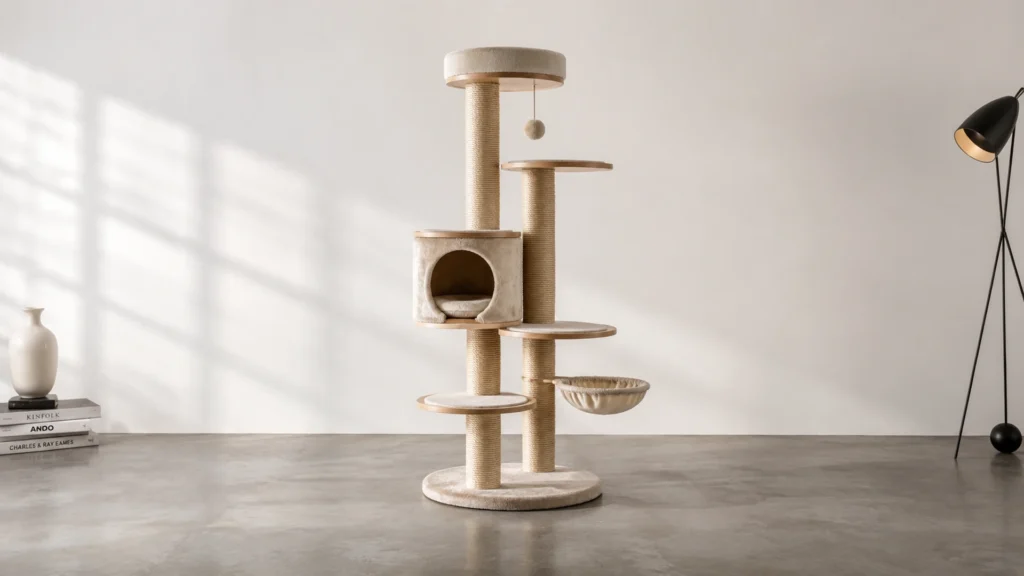
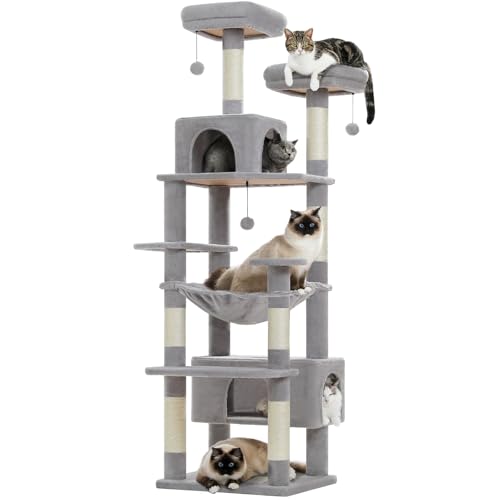
A 72-Inch Cat Tree is tall enough to give cats more vertical routes than shorter towers. In this range, buyers usually want stable climbing paths, multiple places to perch, and enough room for scratching and lounging without turning the tree into a wobbling ladder.
Picking one is hard because height often pushes the design into trade-offs. A taller frame can improve climbing, but it can also increase tipping risk if the base is narrow. More tiers also mean more surfaces to maintain and cover, so you need durable materials where claws and teeth touch most.
For broader guidance across sizes and tower styles, keep this 72-inch checklist aligned with the full category. Looking for all types? See our Best Cat Trees.
Quick Overview
Our Top Picks
#1. Feandrea 81.1" Multi-Level Cat Tree

Specifications
| Brand | Feandrea |
|---|---|
| Overall Dimensions | 81.1 x 23.6 x 19.7 in |
| Product Weight | 43.4 lb |
| Number Of Levels | 5 |
| Number Of Perches | 2 |
| Number Of Condos | 2 |
| Number Of Scratching Posts | 13 |
| Material | Particleboard |
Pros
- Steady during excited climbs
- Thoughtful layout, easy access
- Feature-rich, built to last
Cons
- Wall-mount dependency
- Assembly stabilization needed
In the 72-inch cat tree space, this one stands out for how steady it feels during real climbing. With a tall 81.1 x 23.6 x 19.7 in footprint and 5 levels, cats can hop between tiers and reach the top without the whole tower feeling loose. The layout also makes sense for daily use, with 2 condos and 2 perches spaced so cats do not have to awkwardly backtrack to get to the next stop. Even though it uses particleboard, the overall build comes across as solid, and the many sisal-wrapped scratching areas help keep jumping and stretching busy.
The main trade-off is setup. It depends on wall mounting for the most secure feel, and you should plan on doing the full assembly stabilization step carefully. This is a good match for adult cats that want a long vertical route and plenty of places to scratch, nap, and hide. If you need a freestanding tower for renters or tight layouts that block wall anchors, you may want to look at other 72-inch options.
#2. SHA CERLIN 81" Multi-Level Cat Tree

Specifications
| Brand | SHA CERLIN |
|---|---|
| Overall Dimensions | 45.7 x 24.4 x 81.1 in |
| Product Weight | 63 lb |
| Weight Capacity | 33 lb |
| Material | Engineered Wood, Sisal, Plush Fabric |
Pros
- Feature-rich, built to last
- Scratch-friendly durability
- XL multi-cat fit
Cons
- Low supported load
- Hard to move
- Wall-anchoring recommended
This SHA CERLIN 81 stands out among 72-inch cat trees because it feels made for real climbing and multi-cat use, not just height. It uses engineered wood with sisal-wrapped scratching surfaces and plush resting areas, and it is heavy at 63 lb. That mass helps it handle busy days where cats jump between levels, which is often the weak spot in tall towers.
The main trade-off is support and transport. With a listed max load of 33 lb, it is best suited for smaller adult cats or carefully shared use, rather than one very heavy cat. It can also be hard to move once placed, and wall anchoring is recommended for extra peace of mind. If you want a tall, scratch-forward tower for an XL home setup and can anchor it where you plan to keep it, it is a solid pick at #2.
#3. Mau 73" Modern Cat Tree

Specifications
| Brand | Mau Lifestyle |
|---|---|
| Overall Dimensions | 73 x 37 x 23 in |
| Product Weight | 57 lb |
| Weight Capacity | 18 lb |
| Number Of Levels | 4 |
| Material | Sisal, Wicker, Plush Fabric |
Pros
- Thick posts resist fraying
- Supportive perches, soft condos
- More vertical activity
Cons
- Low supported load
- Hard to move
- Minor sway under jumping
For a 72-inch cat tree, the Mau 73 stands out mainly for its vertical climb space. It has 73 x 37 x 23 in footprint but still reaches tall enough for repeated jumping and different “routes” up the structure. Cats also get thick sisal-wrapped posts that hold up well, plus soft, supportive perches and cozy condos for rest time.
The main trade-off is safety margin under heavier use. The tree tips toward a minor sway when cats jump, and its stated weight capacity is 18 lb, which is on the light side if you have larger cats. It is also not easy to move once assembled, so plan the spot first. Best fit: single-cat homes or households where one cat uses it at a time and you want strong climbing and scratching materials on a tall frame.
#4. SHA CERLIN 81" XXL Cat Tree

Specifications
| Brand | SHA CERLIN |
|---|---|
| Overall Dimensions | 45.7 x 24.4 x 81.1 in |
| Product Weight | 62 lb |
| Weight Capacity | 33 lb |
| Material | Engineered Wood, Sisal, Plush Fabric |
Pros
- Feature-rich, built to last
- Scratch-friendly durability
- Multi-cat usability
Cons
- Missing parts shipments
- Low supported load
- Setup-dependent stability
This 72-inch SHA CERLIN tower stands out for its bigger, multi-cat setup made from engineered wood, sisal, and plush fabric. With a 62 lb frame and a 33 lb weight capacity, it feels more built for active climbing than lighter 72-inch options. The layout also leans into daily use, with scratch-ready surfaces and multiple resting spots that suit cats that like to rotate between levels.
The main trade-off is stability that depends on how you assemble it. Some buyers report setup-dependent wobble, and the supported load is not the highest for the size. It is a solid pick for households with one or two cats that will be climbing frequently, but it is not ideal for very heavy use or for owners who want a completely guaranteed, wall-free feel right out of the box. Also watch for potential missing parts shipments during setup.
#5. PAWZ Road 72" Cat Tree

Specifications
| Brand | PAWZ Road |
|---|---|
| Overall Dimensions | 17.7 x 22 x 11.4 in |
| Product Weight | 39.7 lb |
| Weight Capacity | 20 lb |
| Number Of Levels | 8 |
| Number Of Scratching Posts | 7 |
| Material | Engineered Wood, Sisal, Plush Fabric |
Pros
- Feature-rich, built to last
- More vertical activity
- Scratch-friendly durability
Cons
- Low supported load
- Minor sway under jumping
- Top-ledge leaning
This 72 inch tower is notable in the 72 inch cat tree set because it leans into vertical play. With 8 tiers and 7 scratching posts, it gives cats a lot of places to climb and scratch as they move higher. The materials are also a solid fit for long-term use, using engineered wood, sisal, and plush fabric for the main rest areas.
The trade-off is stability at the top. It can show minor sway when cats jump, and the top ledge can feel like it leans slightly. Also, the listed supported load is 20 lb, so it is best for small to medium cats, or single-cat use. If you want a tall tree for climbing and scratching, this one is a practical choice, just not the most confidence-inspiring for heavy, constant activity on the highest level.
What to Look For
Stability at 72 inches: Prioritize a wide base and a layout that keeps the center of gravity low. If the product description does not mention a stable base, treat it as a risk. For multi-cat homes, aim for designs with strong joints and clear user reports of low wobble.
Tier layout you can climb: Check how perches stack from bottom to top. Look for accessible steps, not platforms that force awkward jumps. Count the number of usable platforms and make sure the top tier is reachable for adult cats, not only kittens.
Comfort where cats rest: Tall trees still lose value if the rest spots feel thin or rough. Favor condo and platform surfaces that look like real resting areas, not tiny ledges. If the tree mixes perches and hideaways, confirm the lounging surface sizes match your cat size.
Scratching coverage in the right places: Scan for multiple scratching posts and where they sit relative to climb paths. The goal is to give cats a natural reason to scratch while they move through tiers. Fewer scratching points often push claws onto nearby carpet edges or perches.
Material durability for claw wear: For 72-inch buyers, wear spots matter more because the tree lasts longer in daily use. Look for Sisal for scratching and durable fabric or carpet on platforms and condos. Avoid designs that rely on thin coverings over large surfaces.
How We Picked
Products were identified through broad research across review sites and buyer forums, then filtered to only those that qualify as 72-Inch Cat Trees.
Scoring used the same objective pillar framework as the main Cat Trees post, allowing direct comparison of products within this sub-category.
Frequently Asked Questions
Are 72-inch cat trees stable for larger or more than one cat?
A 72-inch tree can work for bigger cats if it has a wide base and solid support posts. Look for a stable footprint and features that reduce side-to-side wobble. If the tree offers an optional wall anchor, use it for extra safety. Always check that platforms feel firm before letting a new cat use the top.
How many platforms and scratching posts should I expect on a 72-inch cat tree?
Many 72-inch trees include multiple levels with several perches or platforms. You also usually get multiple scratching areas placed along the main supports. More levels and more scratch spots help different cats use the tree at the same time. Count the actual platforms and scratch posts, not just the height.
How do I set up and maintain a tall 72-inch cat tree?
Assemble on a flat floor and tighten all screws after the first day of use. Place the tree away from high-traffic doors to reduce bumps and shaking. Brush off loose carpet or sisal fibers and check scratching posts for fraying. If the tree wobbles, confirm the base is fully seated and consider wall anchoring if available.
When should I choose a different type of cat tree instead of a 72-inch one?
Choose a shorter or wall-mounted option if you have low ceilings or tight space near doorways. Choose a smaller or compact tree if your cat prefers ground-level lounging. If you want easy cleaning or low assembly time, a simpler design can be better. A 72-inch tree works best when you want vertical climbing and multiple high resting spots.
How do 72-inch cat trees compare to other cat trees in terms of space use?
A 72-inch tree uses less floor space because it grows upward. It still needs a decent base width so it stays steady. If you have limited room, measure the base footprint first. Also check that cats can reach the top comfortably from the lower platforms.


