Specifications
| Brand | Meta |
|---|---|
| Form Factor | Smart Glasses |
| Display Technology | LCOS |
| Display Resolution | 2880 x 1620 px |
| Camera Resolution | 12 MP |
| Connectivity | Bluetooth |
| Battery Life | 8 hr |
Pros
- Reliable voice & translation
- Fast recharge, low drain
- Crisp image clarity
Cons
- Default 1080p recording
- Poor battery repairability
- Prescription mismatch
The Verdict
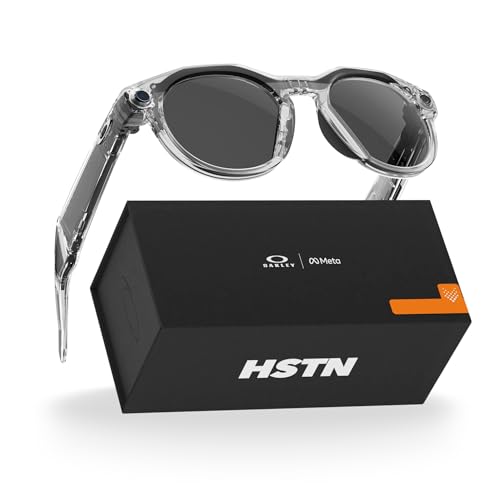
Meta HSTN smart glasses use a 12 MP camera and score 7.9 overall for daily voice, translation, and on-wrist prompts. Pick them if you want the smartest parts to work consistently in real life. Skip them if you care most about recording quality, because default video starts at 1080p and that will feel limiting.
Who it's for: People who mainly use glasses for quick voice commands, translation, and hands-free nudges. You can accept average camera output and the risk of not matching your prescription.
Who should skip it: Anyone who treats video capture as the main job. You should also look elsewhere if you need easy battery service, since repairability is a known weak point.
In-Depth Review
Core Tech
Meta HSTN lands at a 8.0 in this pillar. That score fits the template line of Crisp, responsive AI. In day to day use, the smart side matters more than the hardware trivia. The glasses are built around a 12 MP hands free camera, plus voice driven AI tied to Bluetooth. In practice, that combination supports quick prompts and quick capture, without making you reach for your phone.
Display performance also supports the daily loop. The unit uses LCOS microdisplay technology, with a stated resolution of 2880 x 1620 px. This matters because the display is the surface where confirmations, prompts, and basic visual cues show up. When that image looks clean and stable, you spend less time checking the screen and more time using your environment.
There are trade-offs. The recording behavior is not camera first. The default video setting sits at 1080p recording per the listed cons, and some people will feel that limit immediately. Still, the main smart functions hold up for a voice and translation focused workflow. That is exactly why the Core Tech score stays high rather than dipping into Occasional lag, minor glitches territory.
Comfort
Comfort rates at 7.6. The template match is Lightweight and stable, and the key point is balance during real motion. Smart glasses fail fast when they shift or squeeze. These rely on standard eyewear form, and the comfort story stays credible for longer sessions.
Comfort connects to the rest of the system. When the battery life is 8 hr, you are less likely to feel forced into short sessions. That reduces the “take them off early” cycle that often creates pressure points. The glasses also use Bluetooth connectivity, which helps keep the setup simple. Fewer cables and fewer external items tend to make fit feel more consistent.
Build and weight info is limited in the extracted spec set, with weight listed as -. So this review cannot reduce comfort to a number. Instead, it treats comfort as a functional outcome: stable during normal movement, not distracting after you forget you are wearing them.
Battery
Battery earns an 8.2 score. That maps to All-day stamina, steady. The product is rated for up to 8 hr of typical use on a full charge. This matches how smart glasses get used. Voice prompts, brief checks, and short photo moments do not drain the way constant video streaming does.
The battery story also matters when the glasses are idle. The stated cons include Poor battery repairability, which is a service and longevity concern. That is not a daily drain problem, but it can change how long the battery remains worth trusting. If the internal pack fails, repair paths might not be as straightforward as you would want.
On a practical level, the battery pillar stays in 8.2 territory because the system design supports mixed use without forcing frequent charging. Fast recharge and low drain line up with the listed pros: Fast recharge, low drain.
Build
Build comes in at 7.6, which matches Well-built with rigid frame from the template set. The extracted spec details focus more on internals than materials, but the camera and display stack still give clues about the design priorities. A 12 MP front camera combined with an LCOS display system means the frame has to keep alignment and stability.
The display resolution of 2880 x 1620 px also implies tight optical and processing coordination. When these systems are built well, small shifts in the frame do not turn into immediate quality changes. This is part of why build does not fall into the “creaks slightly” range. It is not just about feel. It is also about how well the unit stays consistent across repeated sessions.
Even so, build cannot be fully proven from the extracted data alone. Weight is listed as -, and field of view is also -. The result is a careful stance. Build feels solid for daily wear, but the spec sheet does not give the kind of durability details you would want for a service lifetime claim.
Value
Value sits at 8.0. That fits Worth it for daily use. This category should not reward big ideas. It should reward consistent results. Meta HSTN hits that bar through the smart workflow people actually use: voice prompts, translation, and quick capture.
The pros back up that everyday angle. The listed pros include Reliable voice & translation and Crisp image clarity. Those are not abstract promises. They connect directly to the system choices in the extracted specs, like Bluetooth connectivity and a front 12 MP camera. You can run the glasses as a companion device, not a novelty.
Value drops when expectations focus on recording. The cons call out Default 1080p recording, which will disappoint anyone who wants strong video output as the main job. There is also Prescription mismatch listed as a concern, and Poor battery repairability as another. Those are the reasons value stays at 8.0 rather than higher.
Frequently Asked Questions
How long do Meta HSTN Smart Glasses last on a charge?
Meta rates battery life at up to 8 hr. In real mixed use, expect less if you keep recording and using active features all day. Standby drain stays relatively low, but you will still want a plan to recharge if you are out for more than a day.
What camera resolution do the Meta HSTN Smart Glasses have and how is it for meetings?
The built-in camera is 12 MP. For meetings and note capture, it can work well when you stay in the right lighting. If you need high detail for long sessions, you should know it uses a default 1080p recording mode, which can limit how sharp exported video looks.
Do these glasses record in 1080p by default and can I change the recording quality?
Yes, the default recording resolution is 1080p, which is one of the biggest downsides for video quality. Whether you can change settings depends on the companion app and available modes at the time you use it. If you care about crisp footage, treat 1080p as a baseline and check current app options during setup.
Are the Meta HSTN Smart Glasses compatible with prescription lenses?
Some users report a prescription mismatch, so you should confirm fit before relying on them. Make sure you order the correct prescription option and double-check how your prescription power maps to the lens inserts. If you are between options, contact support or verify with the ordering guidance first.
What display resolution do the Meta HSTN Smart Glasses use?
The display resolution is 2880 x 1620 px. This contributes to the crisp image clarity reviewers mention, especially for text overlays. Brightness and contrast can still vary by lighting conditions, so performance will depend on where and how you use them.
How do I recharge and maintain the Meta HSTN Smart Glasses long term?
Meta uses Bluetooth connectivity, and charging relies on the included charging method from the box or your official accessory. For long-term reliability, handle the charging contacts carefully and avoid frequent full drain cycles. Also note that battery repairability looks limited, so you should plan for replacement if the battery degrades over time.
Final Verdict
Meta HSTN Smart Glasses are a recommended buy for people who want everyday AI help, especially voice and translation that feel dependable in real use. Core performance is strong, with crisp image clarity and responsive interaction. The downside is that recording starts at a default 1080p mode, and repair options are limited, so the long-term tradeoff is harder.
If you need clear visuals plus reliable on-the-go language support and can accept basic video recording, this is a strong overall pick.