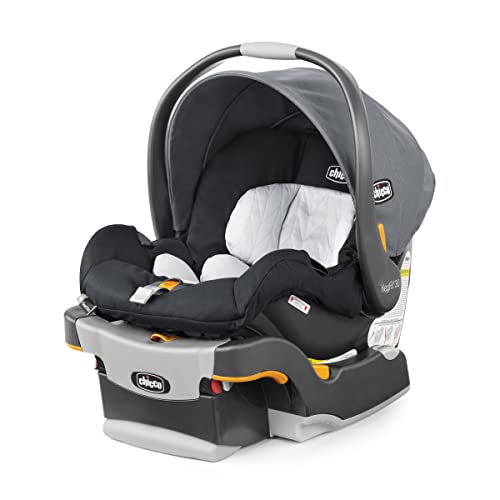
Specifications
| Brand | Chicco |
|---|---|
| Product Type | Infant Car Seat |
| Weight | 16.5 lb |
| Open Dimensions | 24 x 27.5 x 16.8 in |
| Weight Capacity | 30 lb |
| Age Range | 4 to 30 pounds |
| Travel Compatibility | Compatible with Chicco Strollers |
Pros
- Stable and well-restrained
- Sturdy frame, dependable locks
- Smooth adjustments, no fuss
Cons
- Limited to older babies
- Adapter compatibility friction
The Verdict
With a 16.5 lb weight, the Chicco KeyFit 30 is built for frequent car-to-stroller travel setups. Safety and ease of use stay strong thanks to stable restraint and smooth adjustments, but the fit skews toward older babies, and adapter compatibility can slow you down.
Who it's for: Families who do lots of short trips and want a quick, stable car-to-stroller workflow accept a narrower baby size window and potential adapter hassle for the smoothest routine.
Who should skip it: Parents who need the easiest possible third-party stroller adapter setup, or who want to cover a wider range from the earliest stage, should look at a car seat with fewer compatibility steps.
In-Depth Review
Portability
Chicco KeyFit 30 scores 8.1 for Portability, landing in the “great” zone. The seat weighs 16.5 lb, which is not feather light, but it is manageable for frequent car to stroller moves. For travel days, that matters because you often lift and carry the seat while juggling bags and a toddler in the other hand.
On the size side, the open dimensions are 24 x 27.5 x 16.8 in. That profile fits the reality of most compact vehicles and airport shuttles, but it also tells you it will not disappear in tight trunks. In practice, the travel win comes from keeping the same system. The seat uses a travel setup by design, since it is compatible with Chicco Strollers, so you do not need to rebuild your routine at every stop.
The trade-off is that the seat is still an infant carrier you will move through space often. With a 16.5 lb carry weight and no folded dimensions listed, you should plan for space in your car and packing strategy. This is a “road trip friendly” weight, not a “sit it in a carry-on bin” product.
Comfort
Chicco KeyFit 30 scores 8.3 for Comfort, which maps to “great”. Comfort here starts with fit range that aligns with many early rear-facing schedules. The seat is rated from 4 to 30 pounds, so most babies land in this window through a large chunk of the infant stage. That long stretch reduces how often you need to rethink position and harness settings.
Support and restraint are key to perceived comfort during short rides and longer drives. The core comfort notes tie to stability, with feedback that it stays stable and well-restrained while you move between places. When a car seat feels steady, the baby often tolerates bumps better because there is less rocking and shifting inside the shell.
Still, the Comfort score does not ignore the real trade-off: the cons include “Limited to older babies.” In other words, the 4 lb starting point and the overall 4 to 30 lb span may not match every newborn scenario. If your baby starts at the low end, you may find the fit takes more attention than seats that cover a wider earliest range.
Durability
With a durability score of 8.1, the KeyFit 30 lands in “great”. The review summary calls out a sturdy frame and dependable locks, which is exactly what you want when the seat comes in and out of the car repeatedly. At 16.5 lb, you will handle the seat often. If the frame and locks hold up, that repeated routine becomes less tiring and less risky.
Durability also matters because travel brings more setup cycles than routine life. This seat is built around a reliable installation experience that you will use across many trips. The summarized pros include “Sturdy frame, dependable locks,” and that theme shows up in the claim that the solid frame and reliable hardware stand up well to frequent take-outs and re-installs.
One more durability angle comes from the stated weight capacity of 30 lb. A seat rated to 30 lb can keep you in the same model longer, which reduces how often you replace parts or switch systems. You will still want to follow cleaning and adjustment guidance carefully, but the spec range suggests a longer usable lifecycle within the infant seat category.
Ease of Use
Chicco KeyFit 30 scores 8.6 for Ease of Use, which matches the “excellent” template line of “Smooth adjustments, no fuss”. Day to day, the biggest friction points are buckling, harness tweaks, and removing the seat for transfers. Here, the review notes smooth adjustments and no-fuss operation when you buckle in or tweak fit.
Travel testing comes down to repeatability. The mini-review already hints that you do not need to rethink your system each trip when you can keep the same car to stroller setup. The specs support this travel workflow because the seat is compatible with Chicco Strollers. With that compatibility, a trip does not require a whole new base strategy, so the “setup each time” problem stays small.
There is still a real caution in the cons: “Adapter compatibility friction.” The friction is tied to how you pair systems when you are not using a fully matched Chicco stroller setup. Even if the seat itself works smoothly, the adapter path can add time. Also, remember the weight range is 4 to 30 pounds. During that span, you will keep adjusting the harness as your baby grows, so smooth adjustment matters more than it does on seats that only cover a shorter period.
Safety
Safety scores 8.7, which maps to “great” and the phrase “Stable and well-restrained.” That is the most important travel outcome. On the road, you need confidence that the seat locks in and stays put while you drive and while you load and unload your baby between locations.
The review pros make this specific: “Stable and well-restrained” and “Sturdy frame, dependable locks.” These points connect to routine stability during fast transitions. When a car seat reduces wobble and shifting, the experience feels safer for both baby and caregiver because you are not constantly correcting position.
The spec numbers help ground that safety zone. The seat is rated for babies from 4 to 30 pounds, and the weight capacity listed is 30 lb. That means it is intended to keep working within a known range. The open dimensions are 24 x 27.5 x 16.8 in, which hints at a stable footprint inside the vehicle. As with any infant seat, your best safety outcome comes from using the seat as directed and ensuring a solid, secure installation before you hit the road.
Frequently Asked Questions
What is the weight capacity and age range for the Chicco KeyFit 30 infant car seat?
The KeyFit 30 supports babies from 4 to 30 pounds. It is built to fit that weight range while keeping the harness properly positioned. Always check the manual for how the harness should sit for your baby’s size.
How much does the Chicco KeyFit 30 weigh for travel, and what are its overall dimensions?
The car seat weighs 16.5 lb. In open size, it measures 24 x 27.5 x 16.8 in. Those numbers help you judge fit in your vehicle and how it stores between trips.
Is the Chicco KeyFit 30 compatible with Chicco strollers for travel?
Yes. Chicco lists the KeyFit 30 as compatible with Chicco Strollers. If you plan to use it on a specific stroller model, confirm the exact adapter or connection kit your stroller requires before you travel.
What is the most common travel issue with using the KeyFit 30 with other strollers or bases?
Some shoppers find adapter compatibility takes extra effort. The seat needs the right adapter for the stroller you pair it with, and not every setup matches cleanly out of the box. Plan to verify compatibility and have the correct adapter on hand.
Does the KeyFit 30 work well for newborns, or is it limited to older babies?
It is designed for 4 to 30 pounds, so it does not fit smaller babies below that minimum. That limitation matters if you need a seat starting at a lower weight. Check your baby’s current weight and the seat settings before relying on it for early travel.
How do I keep the harness and seat area clean during frequent trips?
Spot clean the fabric as needed and follow the cleaning instructions in the manual for removable parts. Frequent travel can bring more mess from food and outdoor exposure, so use a gentle method that won’t damage straps or padding. Recheck that straps lie flat and are properly tensioned after cleaning.
Final Verdict
Yes, this is a recommended buy as a travel-friendly seat for parents who want fast everyday use and a secure ride. It earns high marks for safety, with a stable base and a well-restrained harness. The main drawback is fit limits, since it is better suited to older babies than newborn first trips, and adapter pairing can feel annoying.
If you will use it within its intended age range and you do not mind checking compatibility before you travel, this is a solid pick for frequent movers.