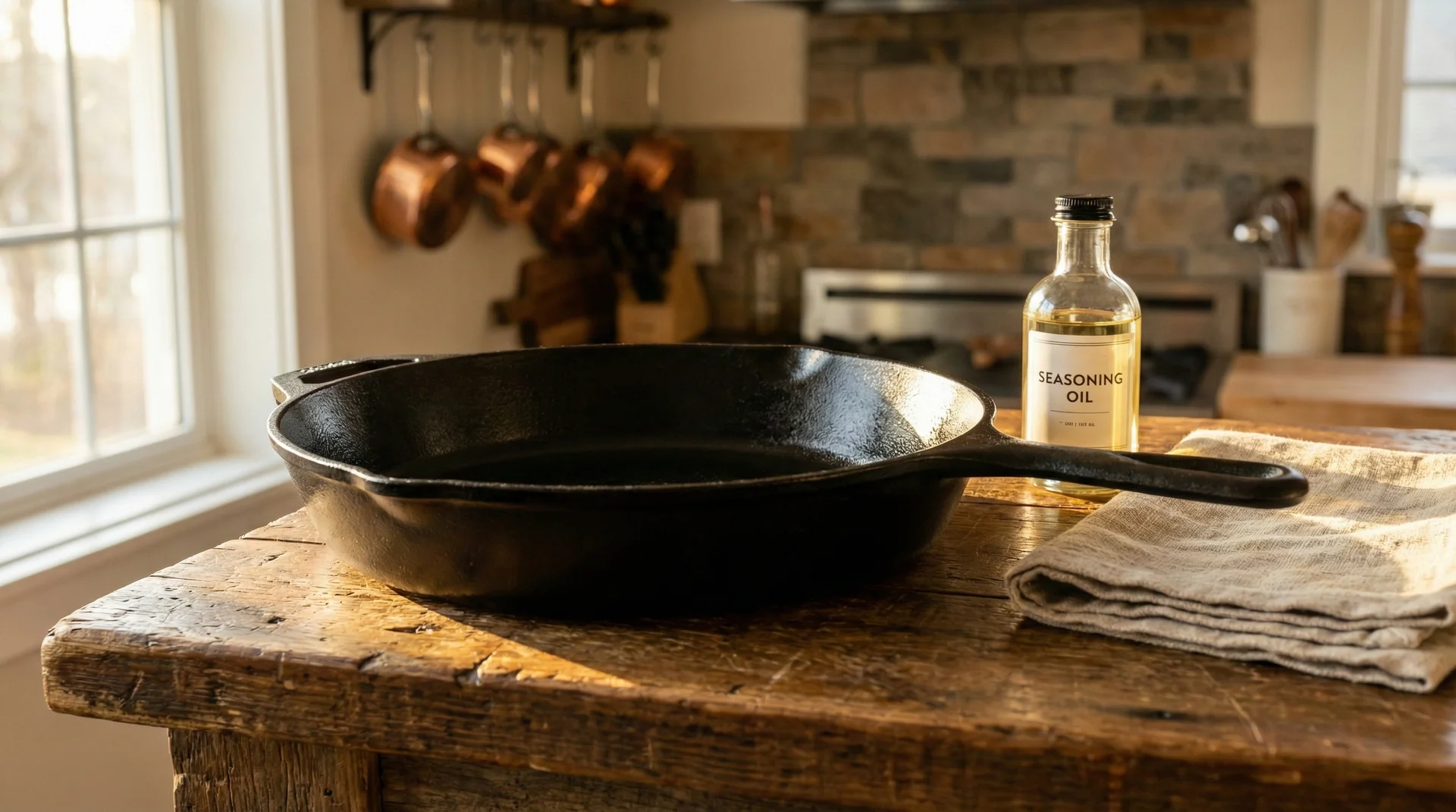
There is something deeply satisfying about cooking with a piece of kitchenware that could quite literally outlive you. The cast iron skillet is more than just a heavy pan; it is a kitchen heirloom, a versatile workhorse, and for many, a point of culinary pride. Whether you are searing a thick ribeye to perfection or baking a golden-brown cornbread, the heat retention and durability of cast iron are unmatched by modern non-stick alternatives. However, that legendary durability comes with a trade-off: you cannot treat it like your average stainless steel pan. If you toss it in the dishwasher or leave it soaking in the sink, you are asking for trouble.
Maintaining a skillet is not nearly as difficult as the internet often makes it out to be. There is a lot of gatekeeping in the cast iron world, with self-proclaimed experts arguing over which oil is best or whether soap is a mortal sin. The reality is that cast iron is remarkably resilient. Even if you inherit a rusted-out hunk of metal from an attic, it can usually be brought back to life. But why wait for a disaster? By following a simple, consistent maintenance routine, you can ensure your skillet develops a slick, black patina that performs better than any Teflon coating ever could. In this guide, we will break down the science and the soul of cast iron care, ensuring your favorite kitchen tool stays in peak condition for decades to come.
Understanding the Patina and Seasoning
Before we dive into the cleaning steps, it is essential to understand what ‘seasoning’ actually is. Many beginners think seasoning is just a layer of grease, but it is actually a chemical process called polymerization. When you heat fat or oil in a cast iron pan, it reacts with the oxygen and the metal to create a hard, plastic-like film that is bonded to the surface. This is what makes the pan non-stick and protects the iron from air and moisture, which cause rust. When you are looking for the best cast iron skillets, most come pre-seasoned, but that is just a starting point. Every time you cook with fat, you are adding another microscopic layer to that seasoning.
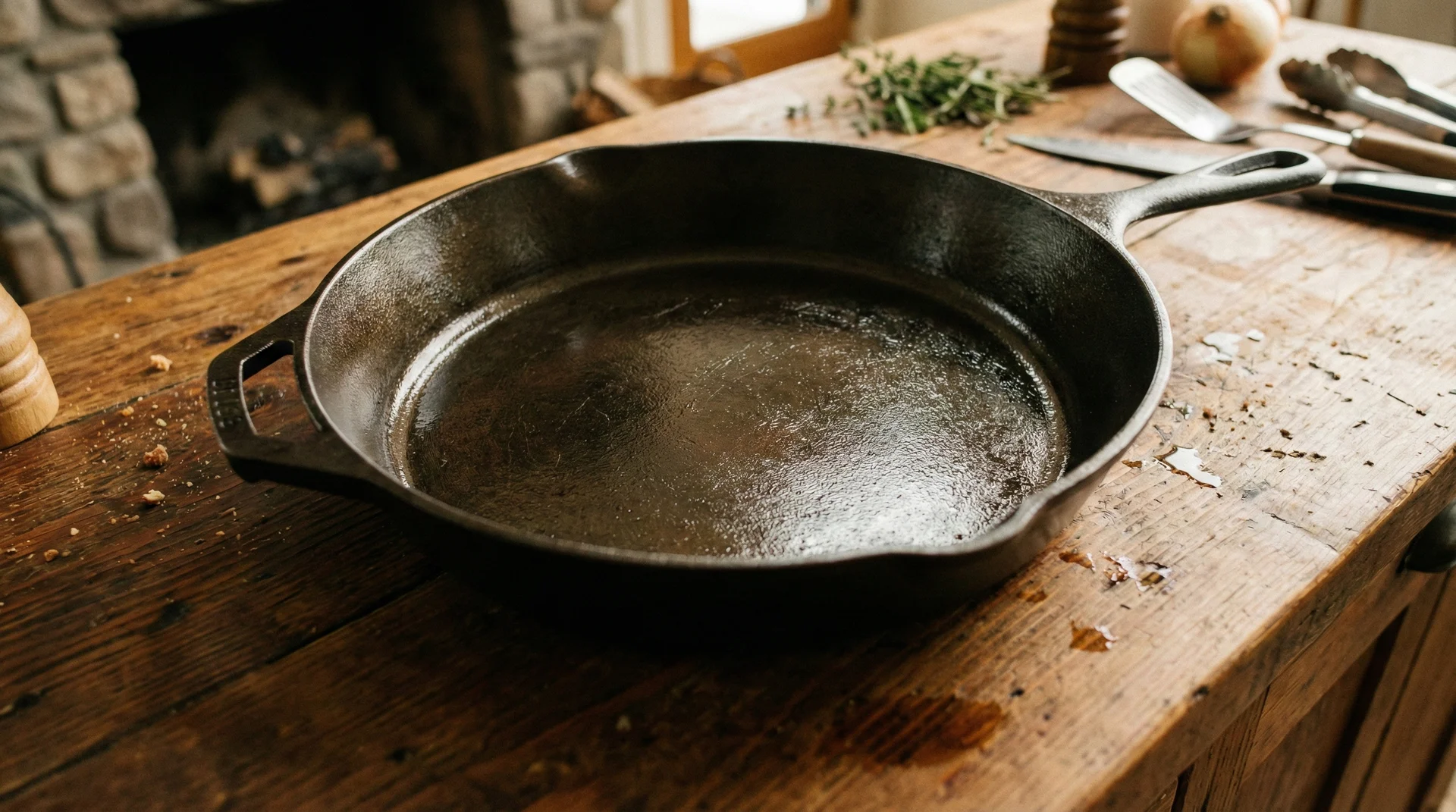
A well-maintained patina is smooth, dark, and slightly semi-glossy. It is not sticky or greasy to the touch. If your pan looks dull or grey, it likely needs more seasoning. If it feels tacky, you have either used too much oil or didn’t heat it long enough during the seasoning process. Understanding this lifecycle of the seasoning helps take the fear out of maintenance. You aren’t just cleaning a pan; you are managing a living surface that evolves with every meal you prepare.
The Daily Cleaning Routine
The most common question people ask is: ‘How do I wash this thing without ruining it?’ The answer is simpler than you think. Ideally, you should clean your skillet while it is still warm, but not piping hot. If you let it cool completely, the fats and proteins from your food will solidify, making them much harder to remove. However, if you pour cold water onto a screaming-hot pan, you risk thermal shock, which can actually crack the iron. Give it a few minutes to rest after cooking, then head to the sink.
The Soap Debate Settled
Let’s address the elephant in the room: can you use soap? The short answer is yes, but with a caveat. In the old days, dish soaps contained lye, which would strip seasoning right off the pan. Modern dish soaps like Dawn are much gentler and are designed to cut through surface grease, not polymerized oil. Using a drop of soap to get rid of a lingering fishy smell or a layer of bacon fat won’t hurt a well-seasoned pan. However, you don’t need it every time. Most of the time, hot water and a good brush will do the trick.
Scrubbing Without Stripping
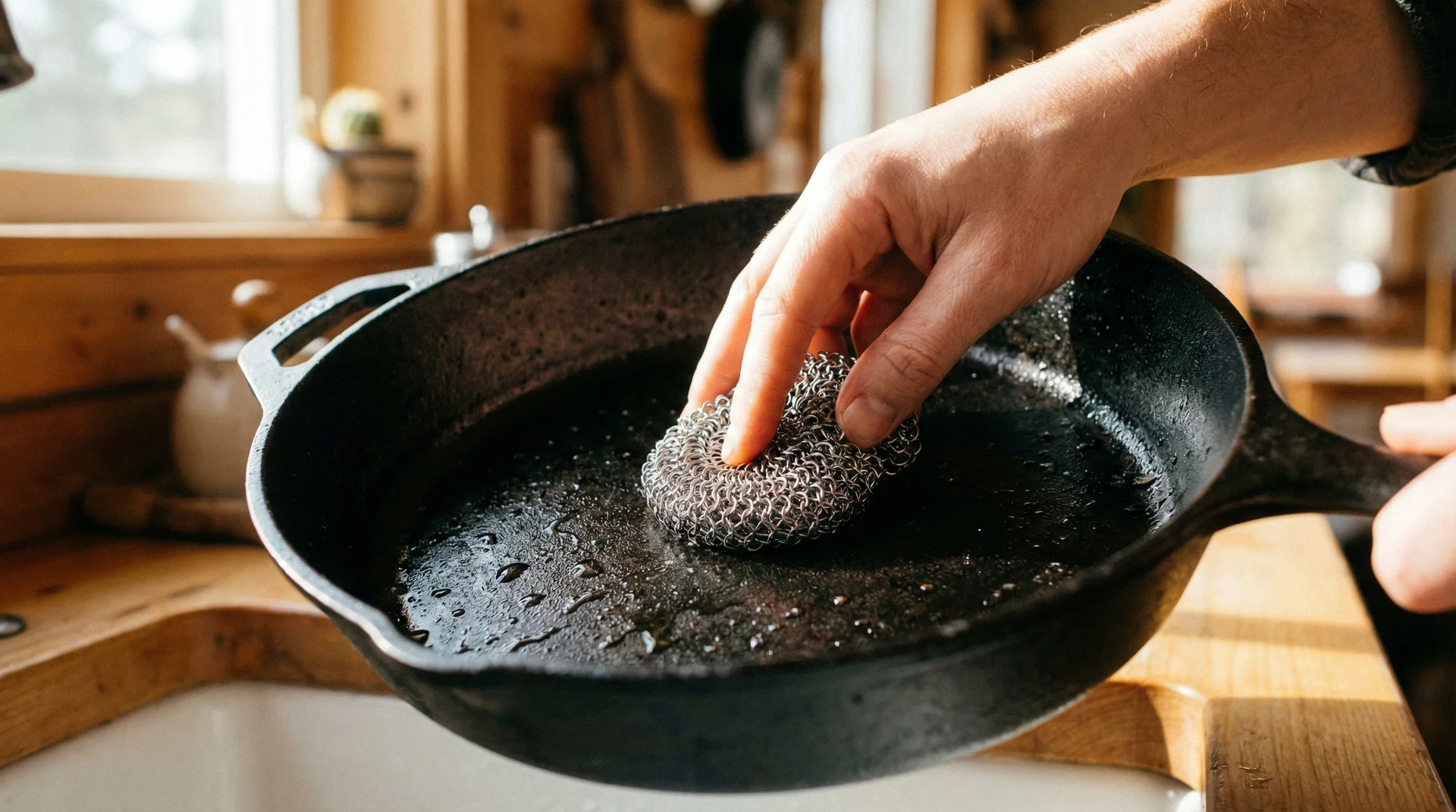
For most cleaning jobs, a stiff-bristled nylon brush or a non-scratch sponge is your best friend. If you have stubborn, burnt-on bits of food, don’t reach for the steel wool unless you are planning on re-seasoning the whole pan. Instead, try a chainmail scrubber. Chainmail is fantastic because it’s tough enough to knock off carbonized food but the rounded links won’t gouge into your seasoning layers. Another old-school trick is the salt scrub: pour a handful of coarse kosher salt into the dry pan and use a folded paper towel to scrub away the debris. The salt acts as a mild abrasive and absorbs excess oil. Once the pan is clean, rinse it thoroughly with hot water.
The Crucial Step: Drying Properly
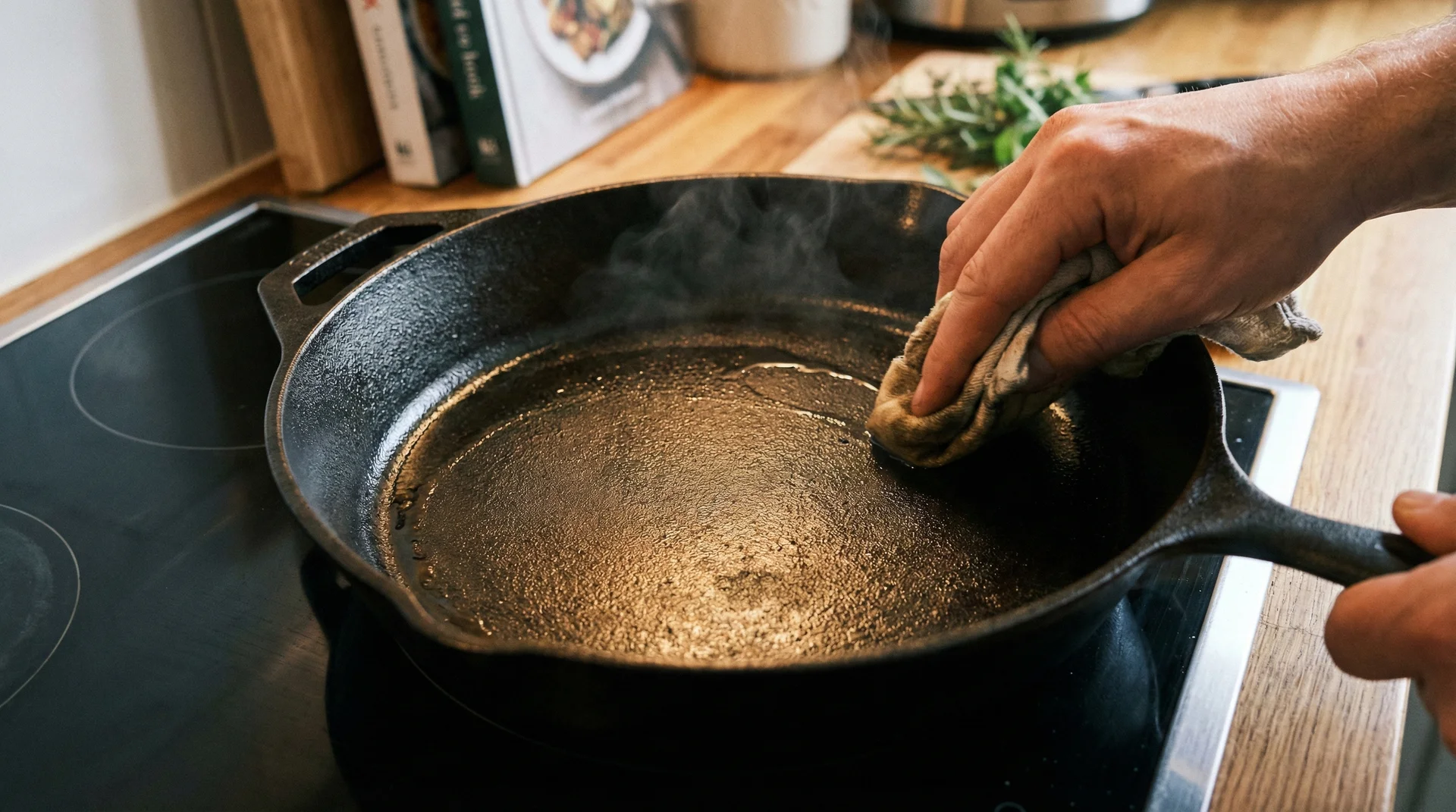
If there is one rule you must never break, it is this: never, ever let your cast iron air dry. Iron is porous, and even with a good layer of seasoning, moisture is the enemy. If you leave your skillet in a drying rack, you will likely find orange rust spots the next morning. After rinsing, wipe the pan down immediately with a lint-free towel or a dedicated ‘cast iron’ rag (it will get black stains over time, so don’t use your fancy guest towels).
To be 100% sure the pan is dry, place it back on the stove over medium-low heat for two or three minutes. This evaporates any moisture trapped in the microscopic pores of the metal. While the pan is still warm from the burner, apply a tiny drop of oil—grapeseed, flaxseed, or even Crisco—and rub it all over the interior and exterior with a paper towel. Buff it out until the pan no longer looks greasy, just slightly shiny. This ‘maintenance seasoning’ keeps the iron protected until its next use. Because even the best cast iron skillets can succumb to rust if left in the sink or put away damp, this two-minute habit is the difference between a lifetime of use and a ruined pan.
Deep Seasoning: When and How
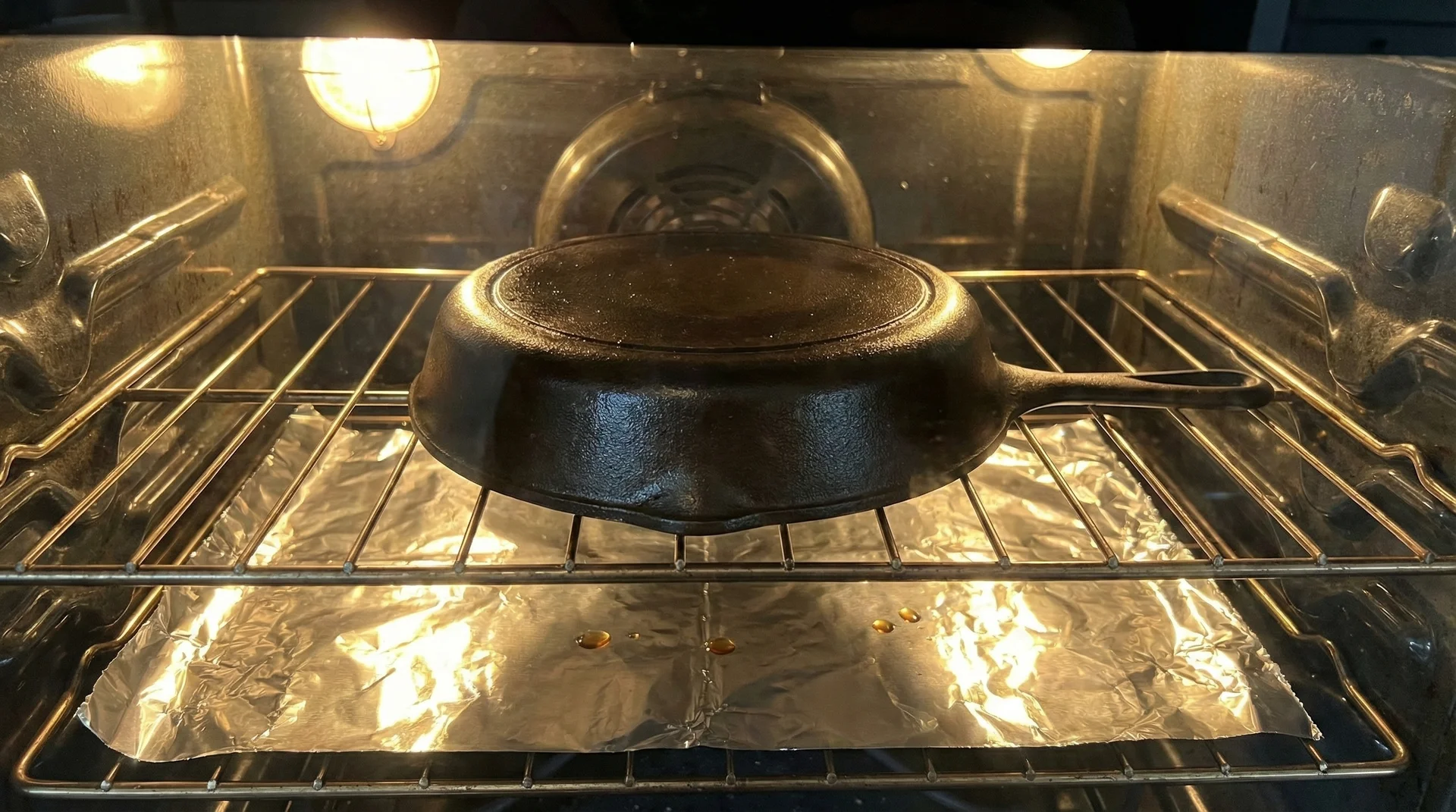
While daily maintenance keeps the pan in good shape, occasionally you will need to do a deep season in the oven. You should do this if you notice the pan is losing its non-stick properties, if you see any dull grey patches, or if you have just finished removing rust. To deep season, you first need to ensure the pan is meticulously clean. Then, apply a thin layer of oil to the entire surface—handle and bottom included. The key word here is thin. You want to wipe the oil on and then try to wipe it all off with a clean paper towel. If there is too much oil, it will pool and become sticky during the baking process.
Place the skillet upside down in an oven preheated to 450°F (230°C). Putting it upside down prevents any excess oil from pooling in the bottom of the pan. Place a sheet of aluminum foil or a baking tray on the rack below to catch any drips. Bake the pan for one hour, then turn off the oven and let the pan cool completely inside. This controlled heat ensures the oil polymerizes fully. If you’re just starting out with one of the best cast iron skillets on the market, doing this two or three times in a row will give you a massive head start on building that coveted non-stick surface.
Proper Storage to Prevent Rust
Where you store your skillet matters almost as much as how you clean it. Most people tuck their pans away in a kitchen cabinet. If you stack your cast iron, be careful; the bottom of one pan can scratch the seasoning off the one underneath it. To prevent this, simply place a paper towel or a small piece of felt between each pan. This also helps absorb any residual moisture that might be in the air.
Avoid storing your cast iron in high-humidity areas, like under the sink near the plumbing. If you live in a particularly damp climate, you might want to be even more diligent about that light coating of oil after cleaning. Some people prefer to hang their skillets on a pot rack. Not only does this look great in a rustic kitchen, but it also ensures maximum airflow around the metal, which is the best defense against rust. Whatever you do, never store your cast iron with the lid on (if it has one) unless you place a folded paper towel inside to allow for airflow. Moisture trapped inside a sealed Dutch oven or skillet is a recipe for a musty smell and potential corrosion.
Troubleshooting Common Cast Iron Issues
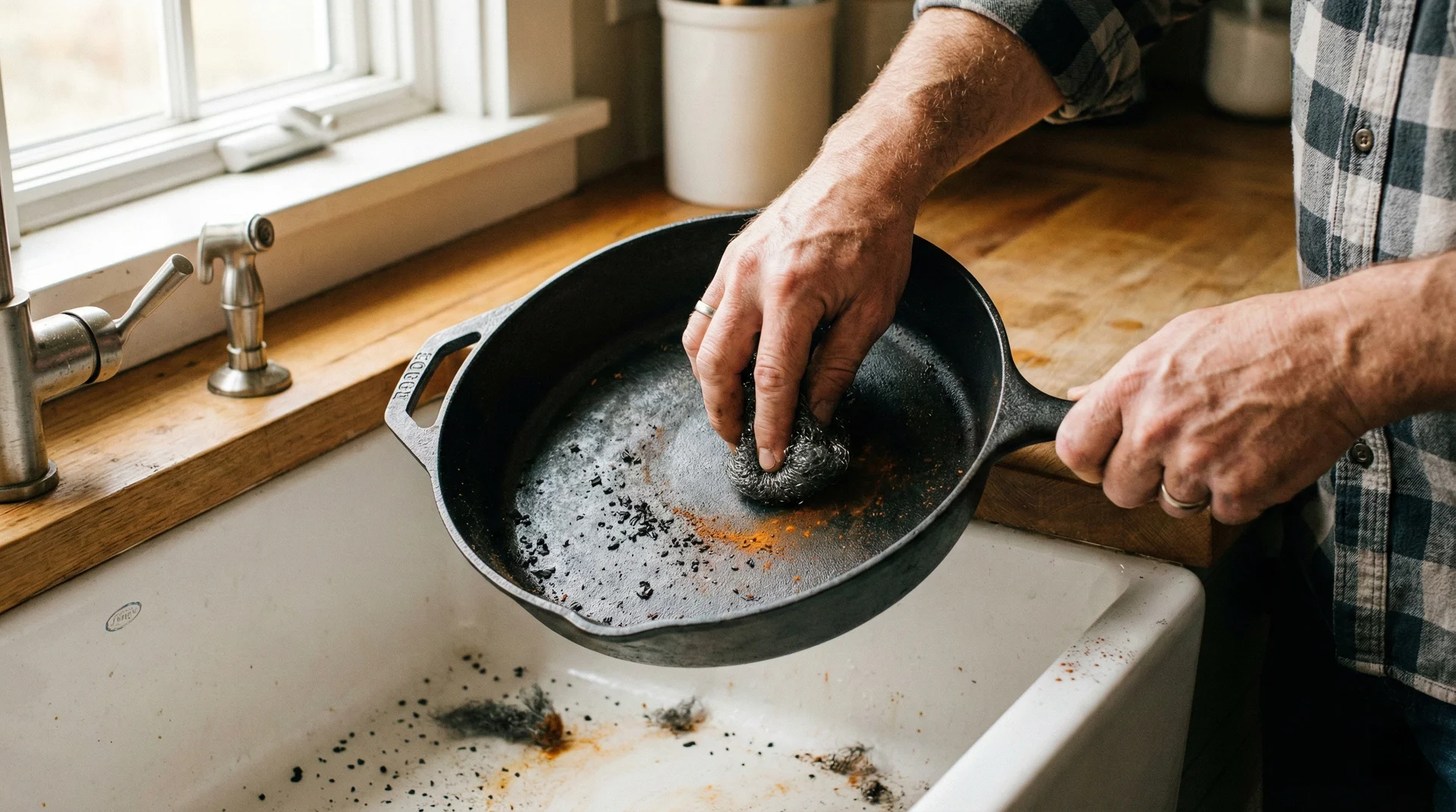
Even the most careful cook will eventually run into an issue. The good news is that cast iron is forgiving. If your pan develops rust, don’t panic. For light surface rust, a bit of steel wool and some elbow grease followed by a re-seasoning session will fix it. If the rust is deep and pitted, you may need to soak the pan in a 50/50 mixture of water and white vinegar for no more than an hour (vinegar will eventually eat the metal, so keep an eye on it), then scrub and re-season immediately.
Dealing with Sticky Residue
If your pan feels sticky, it means you have a buildup of excess oil that didn’t polymerize. This usually happens when you use too much oil during seasoning or don’t get the pan hot enough. To fix this, place the pan back in the oven at 450°F for another hour. If it’s still sticky, you might need to scrub it down with a bit of soap and hot water to remove the gunk and start the seasoning process over.
Flaking and Black Specks
Sometimes you might notice little black flakes coming off your pan into your food. This isn’t actually the metal; it’s usually just carbonized food or layers of weak seasoning that have dried out and started to peel. While it’s not harmful to eat, it is unappetizing. The solution is a good, hard scrub with a stiff brush to remove the loose bits, followed by a thin layer of oil and a stovetop heat-up to stabilize the surface. If the flaking is severe, it’s time for a full strip-and-reseason cycle.
Final Thoughts on Skillet Care
Owning a cast iron skillet is a journey, not a destination. It is one of the few things in life that actually gets better the more you use it. Every steak seared and every batch of fried potatoes adds to the history and the performance of the metal. Don’t be afraid of your pan. It won’t break if you drop it (though your floor might), and it won’t be ruined if you make a mistake with the cleaning.
By sticking to the basics—clean it while warm, dry it thoroughly on the stove, and keep it lightly oiled—you are doing 95% of the work required to keep it in top shape. Cast iron cooking is about embracing a slower, more intentional way of preparing food. When you sit down to a meal prepared in a pan that has been perfectly maintained, you can taste the difference. Treat your skillet with respect, and it will reward you with incredible meals for the rest of your life.