





How to Install a Wall-Mounted or Recessed Electric Fireplace
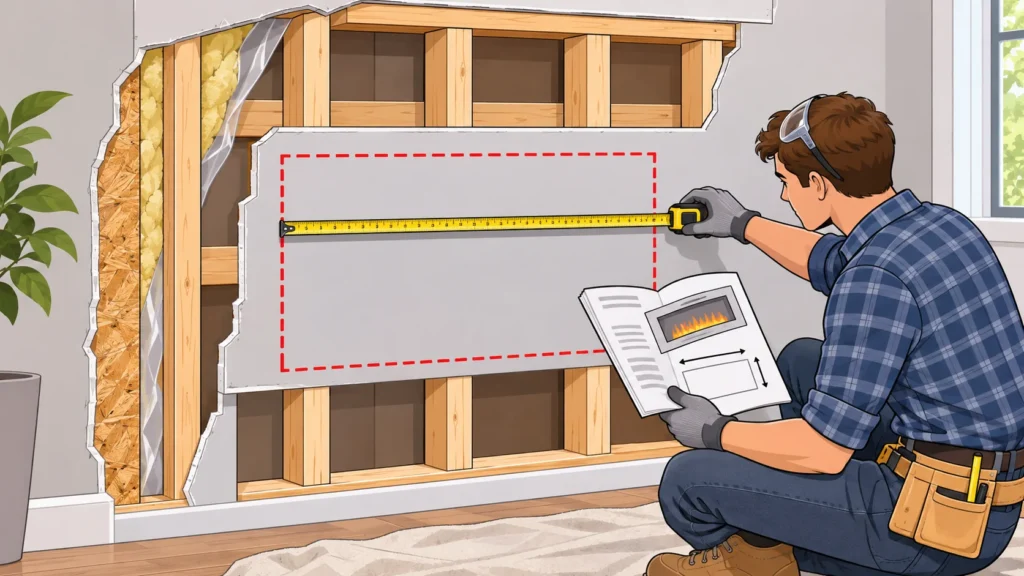
A wall-mounted fireplace and a recessed fireplace are different installation jobs. A wall-mounted unit attaches to the finished wall; a recessed model needs an opening that fits its case and leaves the clearances specified by its manufacturer. Before buying materials or cutting into a wall, identify the exact model and get its current installation manual. The manual—not a generic diagram, another model’s measurements, or an online rule of thumb—must guide the opening, support, electrical connection and final checks.
If you are still deciding which style suits your room, start with TheTopZone’s electric fireplace Top Picks. This guide is for planning and carrying out an installation after you have a specific unit in mind.
Start with the manual and the wall
Find the installation instructions for the precise model and version you plan to install. Confirm whether it is approved for surface mounting, partial recessing or full recessing; those terms are not interchangeable. Check the manufacturer’s required opening dimensions, permitted orientation, mounting method, clearances and power arrangement. A recessed-installation article likewise advises checking the selected unit’s opening and clearance requirements before framing, but its example dimensions should not be transferred to another fireplace (recessed-fireplace planning discussion).
Next, establish what is behind the proposed location. Identify the wall type, studs, wiring, plumbing and any other services before drilling or opening the wall. Do not assume a wall is safe to cut because a fireplace will fit in the visible space. If you cannot confidently identify the structure or hidden services, pause and get a qualified contractor to assess it. A load-bearing wall, an exterior wall, a shared wall or an unfamiliar wall assembly deserves particular care; do not cut structural members to make an opening unless an appropriate professional has designed and approved the change.
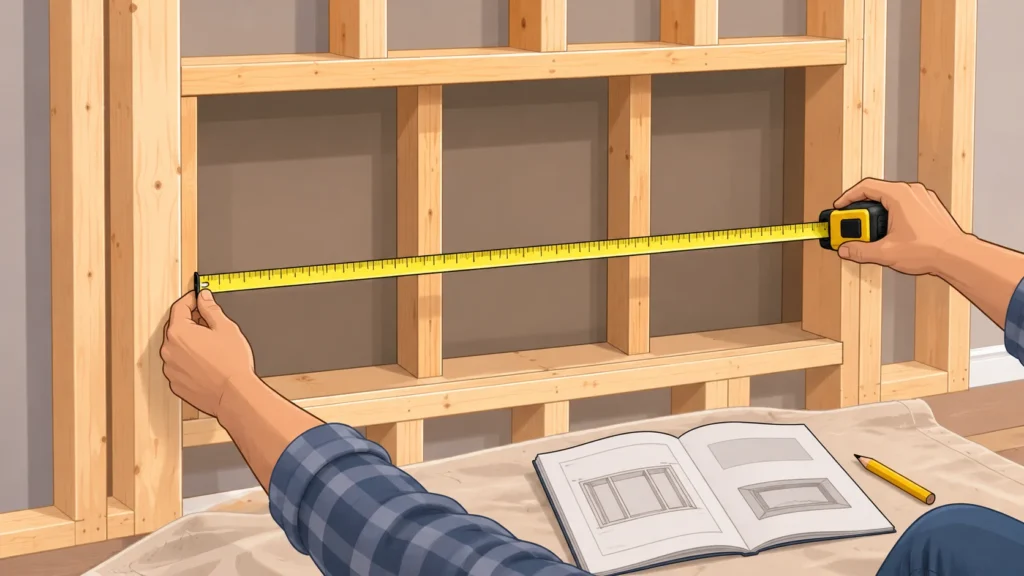
Measure the actual installation area, not just the visible face of the fireplace. For a wall-mounted unit, check the available flat wall space, the manufacturer’s mounting points and whether the required fixings can reach suitable support. For a recessed unit, compare the manual’s required cavity width, height and depth with the usable space between obstructions. Include the finished surface in your plan: tile, panels or other cladding can change the final opening and how the unit sits against the wall. Do not make the opening larger or smaller based on a general rule; use the dimensions and tolerances in the exact manual.
Choose the right installation route
Surface-mounted installation
Use the supplied mounting method and hardware only as directed. Confirm that the wall and fixing points can support the appliance, and that the installed position satisfies the manual’s clearance requirements. A plug-in unit needs an appropriately located outlet that remains usable as the manual requires; do not trap a cord behind the appliance, pinch it against a bracket, or route it through a wall unless the product instructions and applicable rules explicitly permit that arrangement. Keep the fireplace’s air inlet and outlet unobstructed.
Recessed installation
Build or prepare the opening to the exact model’s instructions. Check whether the manual permits installation in the wall type and orientation you have, and whether the case needs a specific space around it. Do not pack insulation, cable or other material against the unit unless the manufacturer expressly allows it. Plan the finished opening as well as the rough opening so the trim, glass and access points are not obstructed.
Framing, cutting and finishing may be separate from the electrical work, but they still affect safety and fit. If the opening involves structural framing, uncertain loads, concealed services or a wall assembly you do not understand, hire a suitably qualified professional. An online installation account describes framing and wiring as separate stages, but its suggested construction details are not a substitute for a site-specific design or local approval (general recessed-fireplace installation discussion).
Plan the electrical supply before closing the wall
Read the electrical section of the exact manual before deciding where power will come from. Determine whether the unit is designed for a plug and outlet or requires a hardwired connection. Do not infer the answer from the fireplace’s appearance or from a similar model. Also check the unit’s electrical rating and the manual’s circuit requirements; a published input-power figure is not a promise that any convenient circuit is suitable.
Use a qualified electrician for hardwiring, new circuits, changes to fixed wiring, or any electrical work that you are not trained and authorized to perform. An electrician can check the proposed supply, connection method and applicable local requirements. A general installation page also recommends professional help where wiring is beyond the installer’s experience, but local rules and the product manual determine what is required in your situation (installation and wiring discussion).
Do not assume a standard outlet is appropriate simply because another electric fireplace plugs in. The supplied product listing for one freestanding mantel model, for example, says that model plugs into a standard outlet; that statement does not establish the requirements for a wall-mounted or recessed unit. Follow the instructions for the fireplace you are actually installing. If the manual is missing, unclear or inconsistent with the proposed setup, get written clarification from the manufacturer or ask an electrician before proceeding.
Respect clearances and finish the opening
Record every clearance in the manual that applies to your planned installation. This may include spacing at the sides, above, below or behind the appliance and distances to a mantel, television, shelf, trim or combustible material. The relevant locations and measurements differ by model and installation type. Do not use a clearance quoted for another fireplace, and do not assume that a forward-facing heater vent makes overhead placement safe. If the manual does not address a planned nearby object, seek guidance from the manufacturer rather than guessing.
Before closing a recessed wall, check that the framing, power route and opening still match the manual and any approved electrical plan. Keep required access and ventilation provisions clear. Finish the surrounding wall without covering vents, controls, fasteners or service access. If a mantel or television is part of the design, check its position against the fireplace’s own instructions before installing it.
Final checks before use
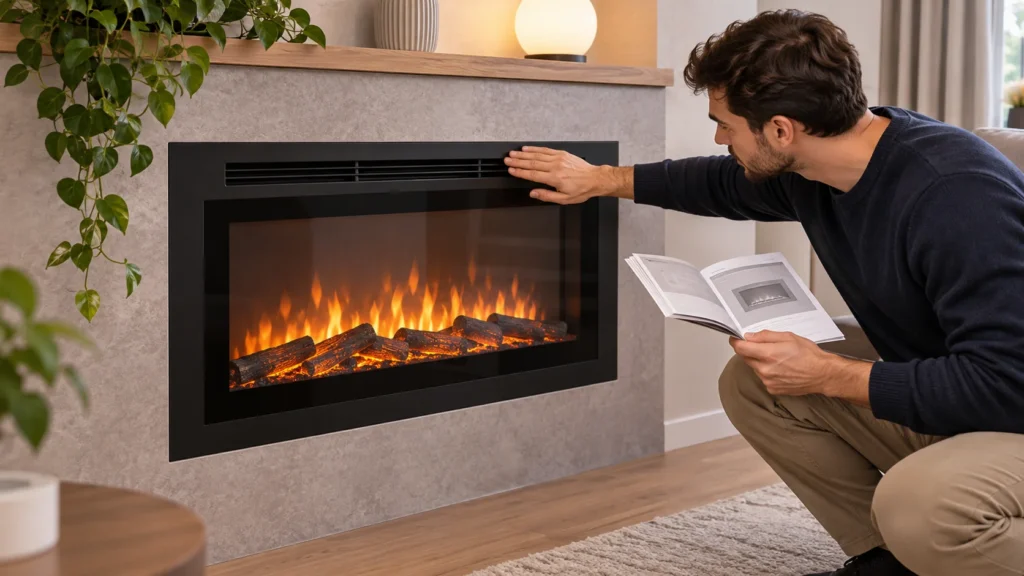
- Fit: Confirm that the installed unit is the model covered by the instructions and that its mounting or opening dimensions match those instructions.
- Support: Check that the appliance is secured using the specified method and that the wall or framing has not been cut or altered without appropriate approval.
- Power: Verify that the cord, outlet or hardwired connection follows the manual and applicable local requirements. Have an electrician inspect work that requires electrical expertise.
- Clearances: Confirm that required gaps and the air inlet and outlet are unobstructed, including after trim or other finishes are fitted.
- Operation: Follow the manual’s first-use instructions. Stop if the appliance, cord or connection appears damaged, or if it behaves unexpectedly; contact the manufacturer or a qualified service professional.
Keep the manual and any electrician or building-work records for future reference. If the finished installation differs from the manual, a required clearance cannot be maintained, or you are uncertain about the wall or supply, do not energize the fireplace until the issue is resolved. These steps help plan an installation; they do not replace the manufacturer’s instructions, local building and electrical rules, or professional assessment where required.