





How to Wash and Dry an Electric Heating Pad Safely
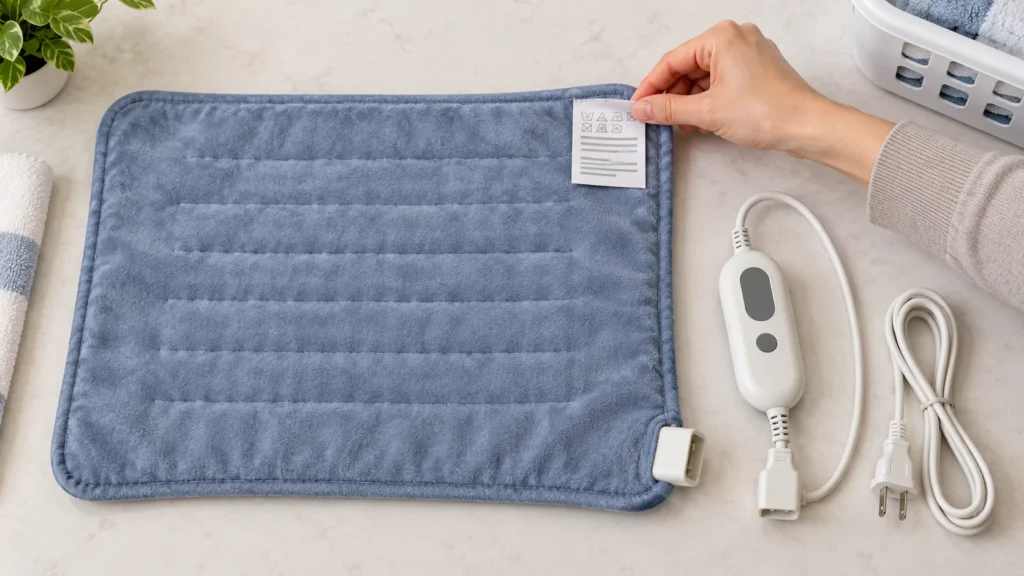
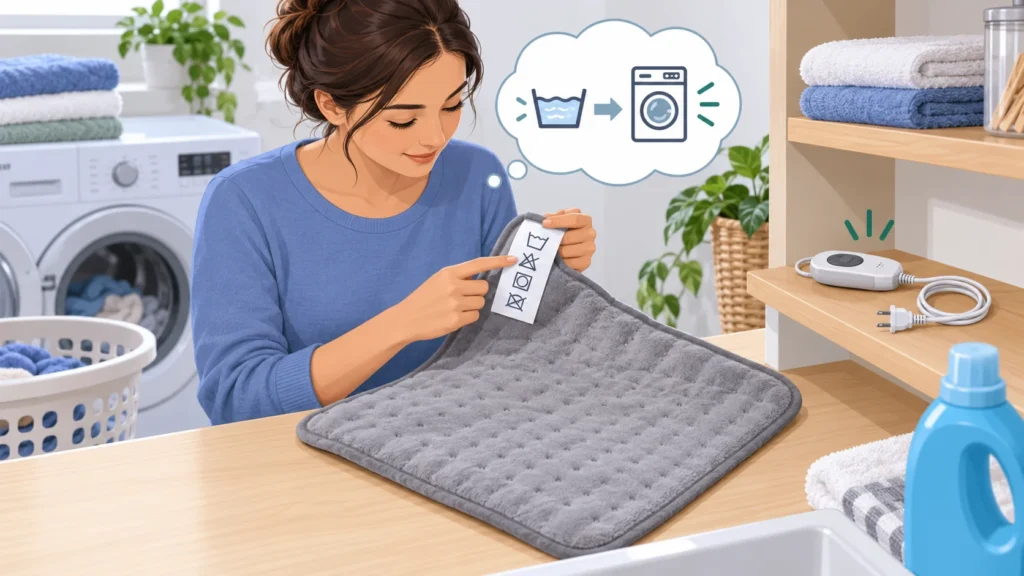
Cleaning an electric heating pad safely starts with its care label or the manual for its exact model—not with a washing method that worked for another pad. Some pads allow washing after the controller is detached; others may require spot cleaning or have different drying instructions. If the manufacturer does not permit washing, do not immerse the pad or put it in a washing machine.
The key rule is to keep the controller, power cord and any other electrical parts out of water. Only wash the pad itself if the manufacturer says it is washable, and do not reconnect it until it is completely dry. The steps below explain how to check what applies to your model and how to handle uncertainty. For help choosing a pad with care instructions that suit your routine, see our electric heating pad Top Picks.
Check the care instructions first
Find the care label on the pad and the cleaning section of the model’s manual. Check both before you unplug anything. Look for explicit directions on whether the pad is machine-washable, hand-washable or spot-clean only; whether its controller detaches; and which wash and drying methods are allowed. A general claim that a brand makes washable pads does not establish that your particular model can be washed.
If the label and manual are missing, unclear or inconsistent, contact the manufacturer using the details provided with the product. Until you have model-specific guidance, avoid machine washing, soaking or applying water to the pad. Use only a cleaning method the instructions permit. The manufacturer’s cleaning guide describes detachable-controller washing for many of its own pads, but that guidance should not be treated as permission to wash other models. See Comfytemp’s cleaning guide alongside your own pad’s instructions.
Check for instructions about the controller connection as well as the fabric. The manual may specify which parts must be removed before cleaning and how to handle them. Do not infer that a connector is removable just because it looks like it might unplug. If it does not detach in the way the manual describes, stop rather than pulling or forcing it.
Disconnect and prepare the pad
- Switch it off and unplug it. Remove the plug from the wall before cleaning. Do not clean the pad while it is connected to power.
- Detach the controller only if designed to come off. Follow the model’s instructions for removing it from the pad. If the cord or controller is not designed to detach, do not force the connection or assume the pad is washable.
- Keep electrical parts dry. Do not put the controller or power cord in a sink, basin or washing machine. Set them aside somewhere dry while you clean the pad.
- Check for visible damage. Look over the fabric, connection area and cord. If you see damage, stop and check the manual or ask the manufacturer whether the pad should be used or cleaned.
For detachable-controller models, the maker’s directions may call for removing every electrical component before washing. That is a model-specific example, not a universal design feature. Never pull, twist or wash a connector in a way the instructions do not describe. General heating-pad safety guidance also advises inspecting the pad and cord for damage; see HB Mag’s safety guidance.
Wash only as the manufacturer allows
If the instructions approve machine washing, follow their specified settings, detergent guidance and any instructions about a laundry bag. Do not substitute a hotter cycle, stronger cleaner or fabric treatment just because it is convenient. For example, Comfytemp’s guide recommends a gentle, cold-water wash for the models covered by its advice and says to avoid bleach and fabric softener. Those directions do not automatically apply to another manufacturer’s pad; check the guide and your model’s care instructions.
If hand washing is permitted, use the method and water conditions stated in the manual. Do not wring, twist or aggressively scrub the pad unless the manufacturer specifically allows it. If only spot cleaning is permitted, use only the recommended approach and avoid wetting electrical connections. If the directions do not say whether a part can get wet, do not guess.
Keep the controller and cord away from the sink or washing machine while cleaning the fabric. A detached component is still electrical equipment: do not wash or soak it. If cleaning instructions call for a removable connector to be protected in a particular way, follow the manual rather than improvising a covering or seal.
Illustrative example: You have a pad with a detachable controller, but its care label says “spot clean only.” The detachable connection does not override that instruction: unplug the pad, detach the controller as directed, and spot-clean only in the way the manual permits. Do not put the fabric in the washer just because another detachable-controller pad is machine-washable.
Dry completely before reconnecting
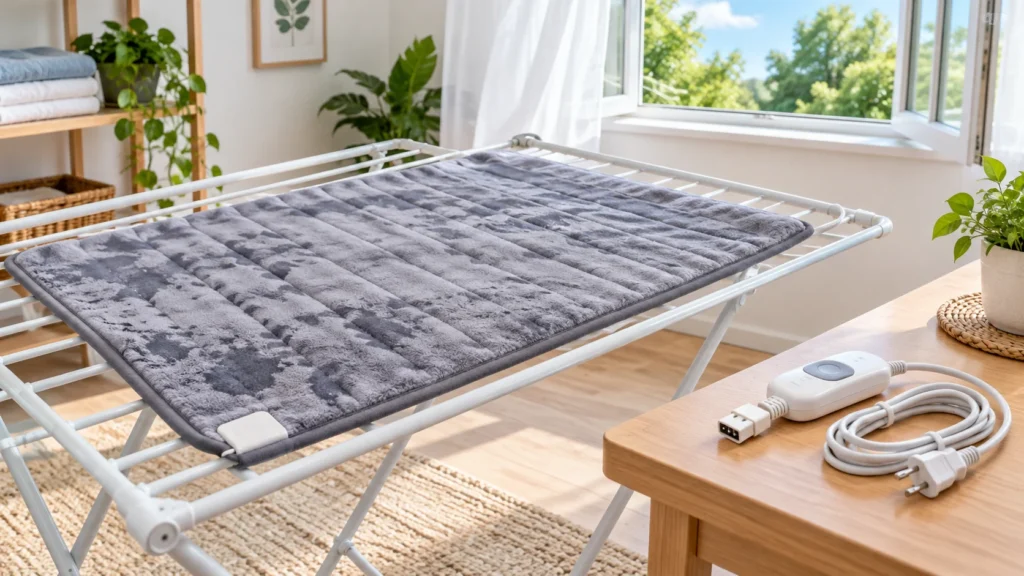
Use the drying method approved for the exact model. If its instructions specify air drying, lay the pad out as directed and give it sufficient time to dry. If they allow a dryer, use only the setting they specify. Do not assume a dryer is safe for every washable pad: the Comfytemp guide, for instance, gives air drying as its preferred approach for the pads it discusses and permits a low-heat or air-fluff option only if needed. Follow the manufacturer’s directions for the relevant model, not another model’s settings.
Do not reconnect the controller or plug the pad in while any part is damp. Check the fabric and the connection area, including places that may take longer to dry. If you are unsure whether it is fully dry, wait longer. A surface that feels dry does not by itself prove that hidden or thicker areas are dry. There is no universal drying time: it depends on the pad, the washing method and the conditions in which it dries.
When the pad is fully dry, reconnect the controller only as the manual instructs. If the connection is difficult, appears damaged or does not fit correctly, do not force it or use the pad; contact the manufacturer for guidance.
If the controller gets wet or the pad acts differently
If a controller or cord gets wet, do not reconnect or use it. The available cleaning guidance from Comfytemp says to disconnect the device from power and contact the manufacturer if a controller becomes wet; because it is brand guidance, check the instructions and support channel for your own model too. Do not assume that wiping the outside dry makes an electrical part safe to use.
After cleaning, stop using the pad if it does not work as expected, if a connection appears damaged, or if you notice an unusual smell or other sign of a problem. Consult the manual’s troubleshooting section or the manufacturer rather than repeatedly reconnecting it to test it. Do not attempt electrical repairs unless the manufacturer specifically directs you to a qualified service option.
Make cleaning part of safe ownership
Wash only when the care instructions allow it, and use those instructions each time—especially if you have misplaced them or the pad’s design has changed. Avoid storing a pad while it is damp, and follow the manual’s storage advice. Before use, check that the pad and cord look intact and that the controller connection is secure. If the pad has been damaged or you cannot confirm that it is safe to reconnect, leave it unplugged and ask the manufacturer.
The practical decision is simple: wash only the parts and in the way the exact model’s instructions approve; keep electrical components dry; and reconnect only after the pad is completely dry. When those instructions are unavailable or unclear, pause and ask the manufacturer rather than risking damage by guessing.