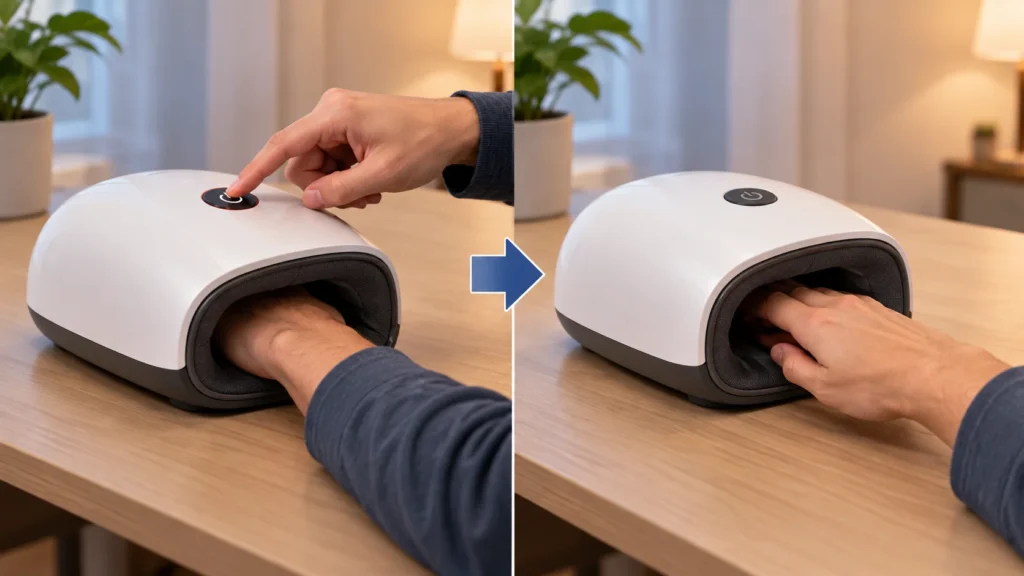





How to Use a Hand Massager Comfortably and Safely
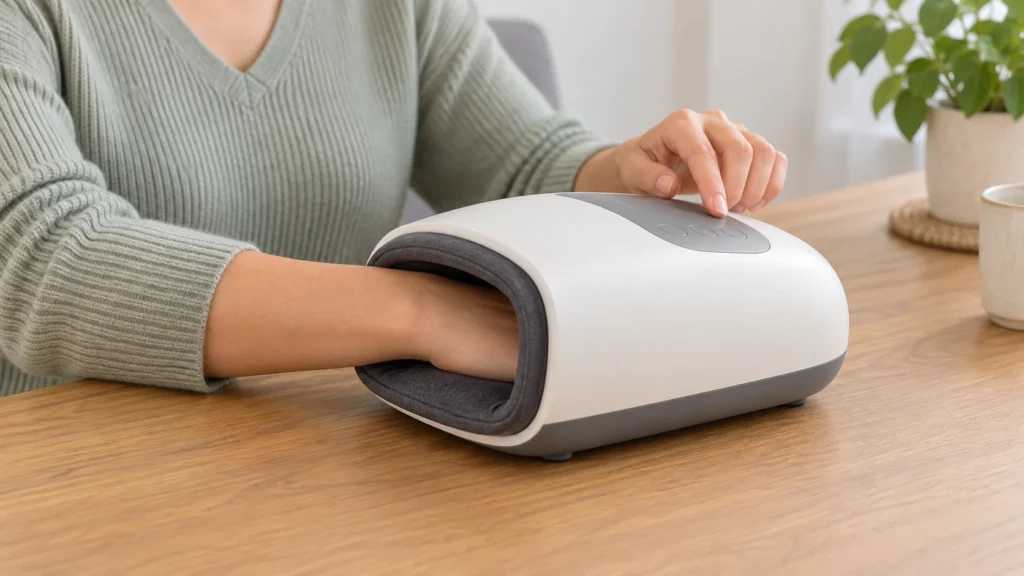
A hand massager should feel manageable from the start—not like something you have to endure to get a result. Because controls and session limits vary by model, use the instructions for your exact device as the authority. Begin with a comfortable fit and the gentlest available settings, then make one adjustment at a time. Stop if the experience becomes uncomfortable.
This guide explains a cautious routine for common enclosed hand massagers that use compression, heat, vibration, rollers, or a combination. It is not a substitute for a model manual or medical advice. For help choosing a device, see TheTopZone’s hand massager Top Picks.
Start with your model’s instructions
Before switching the device on, check its manual or manufacturer’s use guidance for how to position your hand, operate the controls, set session length, and use heat. Do not assume that a control, opening, or recommended routine is the same across brands. If the manual and a general online tip differ, follow the manual for your model.
Check any cautions that apply to you or the device. For example, Aaslo’s product page says to read its manual before first use and advises against using its massager with a pacemaker or other implanted device, or on broken or irritated skin, unless a doctor has approved it. Those are Aaslo’s stated cautions for its product; they should not be treated as a complete or universal list for every device. Read the warnings supplied with yours, and ask a healthcare professional if you are unsure whether it is appropriate for you.
Place the massager on a stable surface and make sure you can reach its controls. Sit in a position where your hand and arm can rest without being held awkwardly. If the device is rechargeable or corded, use and charge it as its own instructions specify. Avoid starting while distracted: you should be able to notice how the pressure and warmth feel and reach the stop control.
Fit your hand before starting
With the device off, slide in your hand as directed. Settle your fingers and palm into the intended spaces without forcing them into position. The fit should not require you to push past resistance or hold your hand in a strained posture. Follow any model-specific guidance about thumb position, finger openings, or which way the palm faces.
Do not put a hand inside if the device is damaged, the opening is obstructed, or the controls are not working as expected. Check the manual for cleaning and inspection instructions rather than reaching into a powered device or trying to repair it yourself. If the hand does not sit comfortably, remove it and recheck the positioning steps. A product’s claim that it fits a broad range of hands does not guarantee that it will feel comfortable for every individual.
Begin gently and change one setting at a time
Choose the lowest pressure or intensity setting available, and select a simple mode if your model offers one. If you want heat, begin with it off or at the lowest setting, provided the manual allows that combination. Start the device according to its instructions and pay attention to how the sensation changes as compression begins.
Pressure should feel tolerable, not painful or alarming. If it feels too strong, use the controls to reduce it or stop the session; do not wait for the device to finish just because it has a timer. If the initial setting feels comfortable, you may try a small adjustment, then pause to notice the difference before changing anything else. This makes it easier to identify which setting affects comfort. More intensity is not a goal, and a setting number on one model cannot be compared directly with a number on another.
Do not add extra time beyond the device’s instructions or restart it repeatedly to extend a session. Models set different session limits: for example, the ALLJOY H4 product page lists timer options of 10, 15, and 20 minutes, while Aaslo describes a 15-minute session for its model. These are product-specific details, not general recommendations. Follow the limit and operating directions for your own massager.
Illustrative first session
Imagine a device whose manual permits independent adjustment of compression and heat. For a first try, seat your hand as directed, choose the lowest compression setting, leave heat off, and start the shortest session the manual allows. If the sensation remains comfortable, you could test a modest change on a later use, changing only pressure or heat—not both together. This is an example of a cautious adjustment process, not a required routine or a claim that every device has these controls.
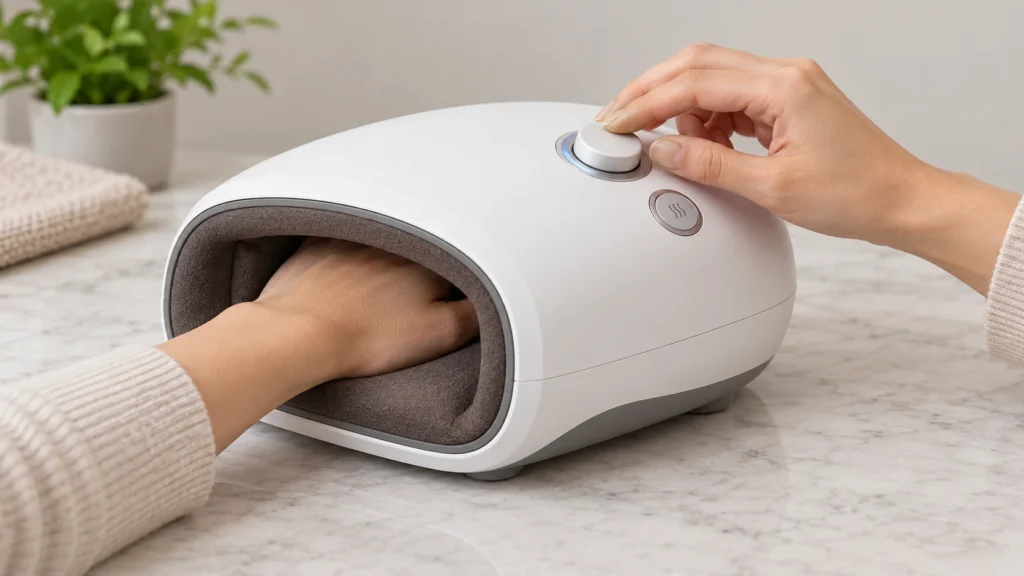
Adjust heat with care
Heat may feel different from one person to another, and a device’s temperature labels or levels are specific to that model. Start at the lowest available heat setting, or leave heat off at first. Pay attention to the warmth throughout the session; do not treat a higher setting as automatically better. If the warmth feels unpleasant, turn it down or off, or stop the device.
For a model with heat, check its manual for how heat is enabled, whether it operates alongside compression, and any stated restrictions. The ALLJOY H4 product page, for instance, describes three heat settings and multiple massage controls; those specifications apply to that product listing, not to hand massagers generally. Do not rely on another model’s settings to operate yours.
Do not use heat over broken or irritated skin if your product’s instructions warn against it. Aaslo specifically gives this caution for its massager unless a doctor has approved use. If you have a question about a personal health concern, skin condition, or implanted device, check the exact product warnings and seek appropriate professional advice before using it.
Stop if it doesn’t feel right
Stop the session if pressure, stretching, vibration, or warmth causes pain or other discomfort. Remove your hand carefully once the device has stopped and follow its directions for releasing pressure; do not pull against a mechanism that is still squeezing or holding your hand. Do not resume simply to complete the timer. If discomfort continues after use or you are worried about a reaction, seek advice from a healthcare professional.
Keep an eye on how the experience changes rather than assuming that a sensation is harmless because the device is marketed for relaxation. If the massager has an emergency stop or pressure-release feature, learn how to use it before starting. Only rely on a feature your model actually has; check its manual rather than assuming every device includes one.
After the session
Switch off the massager and remove your hand as directed. Clean and store the device according to its manufacturer’s instructions, including any guidance about keeping it dry or charging it. Do not improvise cleaning methods or use the device while it is charging unless the manual permits that use. If you notice damage, unusual operation, or a control that no longer responds, stop using it and contact the manufacturer or seller for model-specific help.
Comfort is individual: a setting that feels gentle to one person may feel too strong to another. Use only the settings and session limits provided for your model, make adjustments cautiously, and stop when use is uncomfortable. A hand massager is a personal comfort device, not a reason to ignore symptoms or continue through pain.