





How to Use a Beard Straightener Safely
A heated beard straightener puts a hot surface close to your cheeks, jaw and neck. A careful routine can reduce avoidable contact burns and heat exposure, but it cannot eliminate risk. Start with the instructions for your exact tool: controls, safe-use directions and automatic shut-off features differ between models. The steps below are general precautions, not a substitute for the manual. For product options, see TheTopZone’s beard straightener Top Picks.
Check the tool and your beard before switching it on
Read the manufacturer’s manual before first use. Confirm how the straightener is switched on and off, how its settings are selected, and what the maker says about preparation, use near skin, cleaning and cooling. Do not assume that a temperature range, safety feature or technique advertised for one model applies to another. If the manual is missing, look for instructions from the manufacturer for the exact model rather than guessing.
Inspect the tool and cord for visible damage, and check that the heated surface is clean. Do not use a damaged appliance or one that behaves unexpectedly; follow the manufacturer’s guidance or contact its support team. Place it on a stable, heat-resistant surface while it heats and cools, away from water, loose fabric and anything that could be scorched. Keep it out of reach of children. Before plugging in, make sure the cord can reach the outlet without being stretched across a sink, hot surface or walkway. Set out a regular comb and a clear place to put the tool down so you are not searching for them while it is hot.
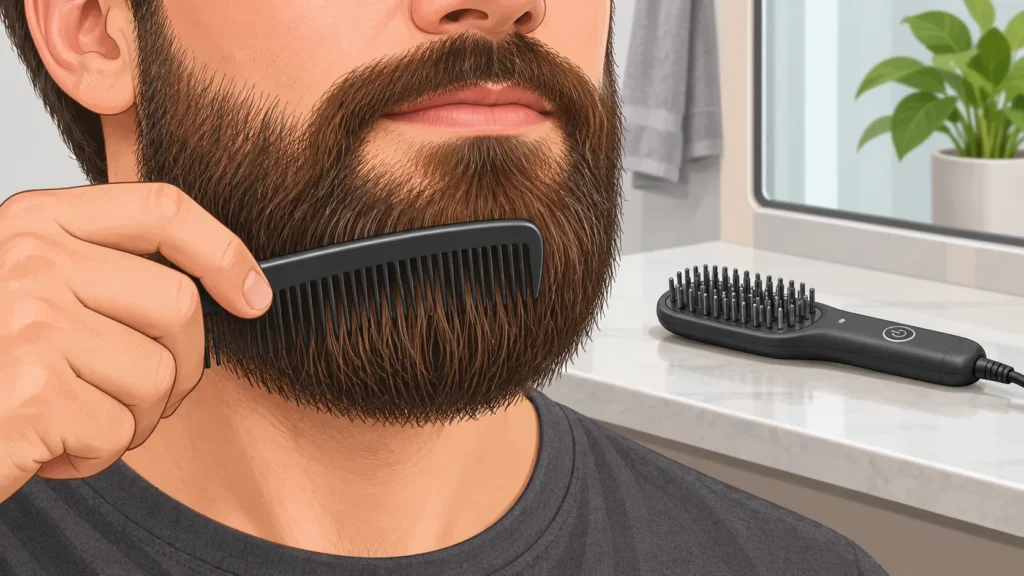
Prepare a clean beard and make sure it is fully dry before using heat. Odenson’s instructions likewise advise drying the beard completely before styling, but follow your own tool’s manual if it gives different model-specific directions (Odenson’s beard-straightener instructions). Do not use a heated tool on damp or wet hair unless the manufacturer explicitly says that exact model is designed for it. Detangle gently with an ordinary comb or brush before heating; if the tool catches, pulls or snags, stop instead of forcing it through.
Check that your beard is long enough for the heated teeth or bristles to pass through the hair without pressing the hot part against your skin. If you cannot keep the heated surface clear of your face, skip the heated tool and style with a regular comb or brush instead. Do not use a beard straightener on irritated or injured skin.
Choose a setting by the manual, not by guesswork
If your model has adjustable heat, use its lowest suitable setting first, provided the instructions permit it. Make a brief, controlled pass through a small section and assess whether it smooths the hair. Increase heat only if needed and only within the maker’s instructions. There is no single safest temperature for every tool or beard: the controls and their meaning vary, and hair responds differently from person to person. Do not copy a temperature from another brand’s guide or assume that a higher setting is necessary for a coarse beard.
Some straighteners have one setting rather than adjustable heat. If the manual does not explain how to use that model safely near facial skin, ask the manufacturer for guidance rather than adapting instructions for a different appliance. Do not use a tool if you cannot control it comfortably or keep its hot parts away from your skin. Features such as a guard or automatic shut-off are not permission to disregard handling instructions; check what the manual says each feature does and what it does not do.
Use short, controlled passes while keeping the brush moving
- Work in manageable sections. Start where you can see and control the brush easily. Separate a small amount of hair with a comb or your fingers, without bringing them close to the heated surface.
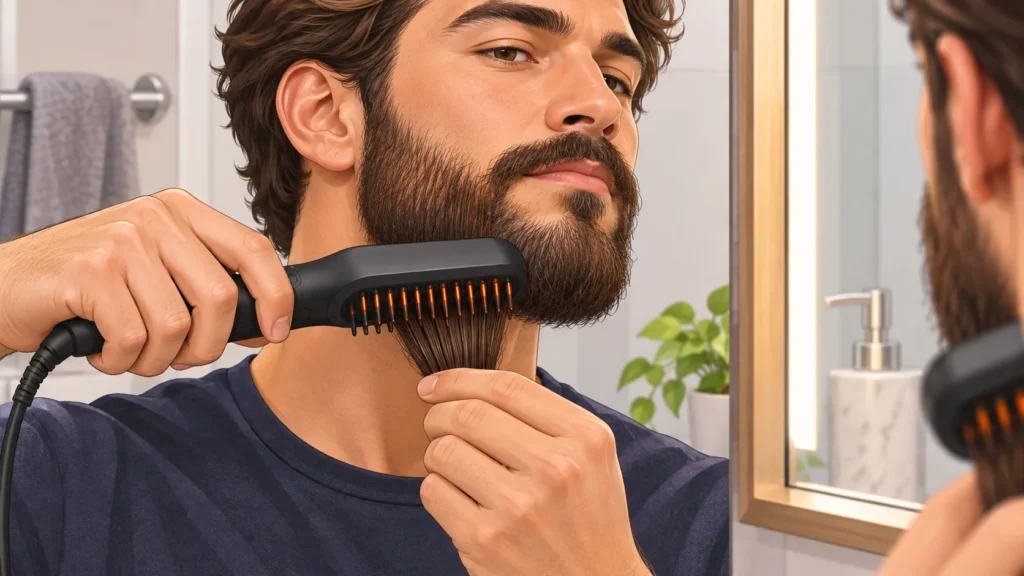
- Keep the hot part away from skin. Hold the hair away from your face where practical. Guide the brush through the hair rather than pushing its heated base into the cheek, jaw or neck. Use extra care around the chin and under the jaw, where visibility and brush angle can be awkward.
- Move steadily; do not pause on one spot. Follow the manufacturer’s technique. Shaving School also recommends continuous movement rather than leaving a heated brush resting on the hair (Shaving School’s heated-brush guidance). If you feel resistance, stop and detangle the section with the tool switched off and cool.
- Reassess before repeating. Check the result after a pass. Avoid repeated passes over the same hair just to chase a perfectly straight finish; more exposure means more heat applied. If the hair does not respond at a permitted low setting, consult the manual before changing technique or heat.
Keep your attention on the tool throughout styling. Do not touch the heated teeth or surface to test its temperature, and do not set the appliance down while it is on. If it touches your skin, feels unexpectedly hot, or causes discomfort, stop immediately and switch it off safely. Do not continue styling over an area that has been burned or irritated. Work in good light and use a mirror angle that lets you see where the heated part is, especially when moving around the jawline. If you cannot see or control the brush clearly, pause and reposition yourself rather than making a pass by feel.
Switch off, unplug and let the tool cool
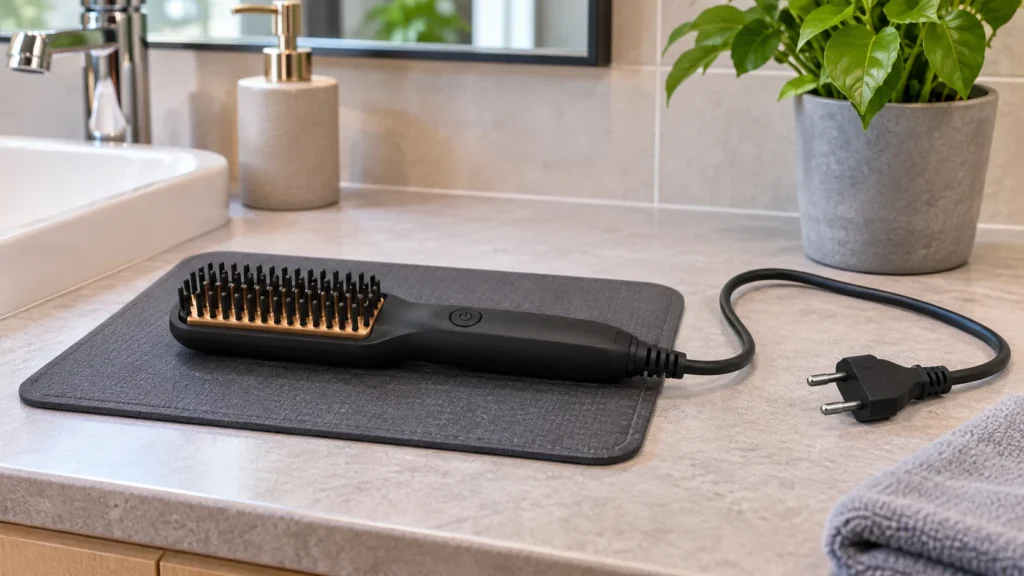
When finished, switch the straightener off and unplug it if the manual directs you to do so. Place it on a stable, heat-resistant surface and let it cool completely before cleaning or putting it away. Do not wrap a hot tool in a pouch, leave it on a bed or counter that could be damaged, or store it where someone may touch it accidentally. An automatic shut-off, if your model has one, is not a reason to leave the appliance unattended.
Clean the tool only as the manufacturer instructs and only after it is switched off and cool. Avoid immersing an electrical appliance in water unless its manual specifically permits it. Before the next use, check again for damage or residue that could affect safe handling. For care details, rely on the instructions for your model rather than a general cleaning tip meant for another design.
When to skip heat
Choose a non-heated comb or brush if the beard is too short to style without pressing the hot part against skin, if you cannot comfortably control the tool, or if your appliance’s instructions are unclear. Stop using it if it snags, pulls, has visible damage or behaves unusually. A cooler, non-heated styling approach may be a better fit when you are unsure how to keep the hot surface away from your face. Individual beard texture, tool design and technique vary, so no routine can guarantee damage-free styling.
Illustrative example: You have a straightener with several settings, but its manual says to use it only on dry hair and does not give a beard-specific temperature. Dry and detangle your beard, select the lowest setting the manual permits, and try one controlled pass on a small section while keeping the heated teeth clear of skin. If the tool catches or you cannot keep it away from your jaw, stop and use a non-heated comb instead. Do not borrow a temperature from a different model’s guide.