





How to Shovel Snow With Less Strain
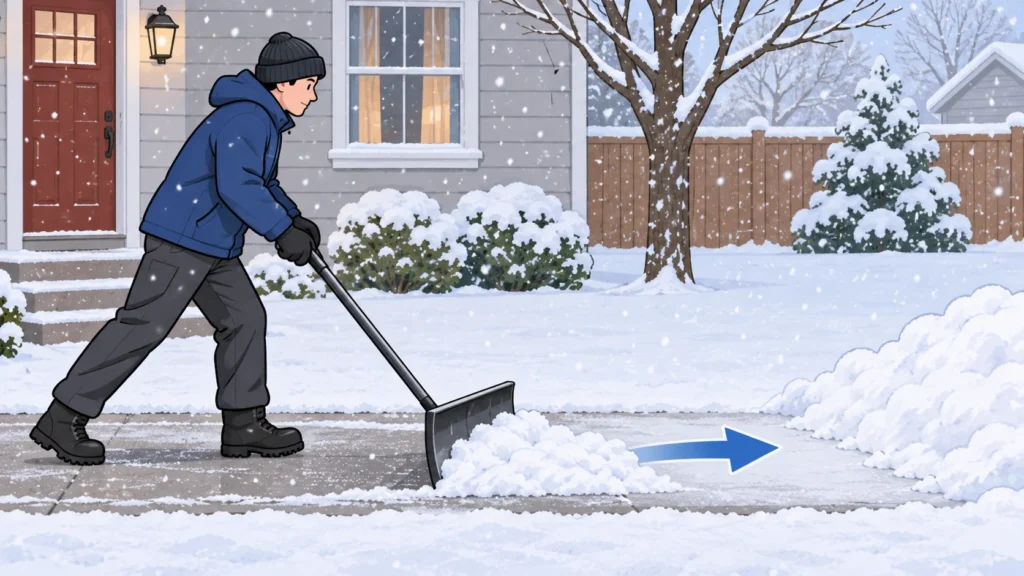
Snow clearing is repetitive physical work, and the best technique depends on what is on the ground. Loose snow on a clear path can often be pushed aside; packed or plow-dropped snow may need to be broken up and lifted. In either case, smaller loads, controlled movement and a pace you can sustain are more practical than trying to finish in a hurry.
This guide focuses on technique, not on choosing a winner from a product list. For a broader look at shovel styles and features, see TheTopZone’s snow shovel Top Picks.
Choose whether to push or lift
Push loose snow when you can move it along the ground. A pusher-style blade is made for moving snow forward or to the side without repeatedly scooping and throwing it. This can be a useful approach on a reasonably clear driveway or walkway when the snow is loose and there is somewhere to pile it. Push manageable amounts rather than driving a large ridge of snow ahead of you; if resistance builds, reduce the amount or change direction.
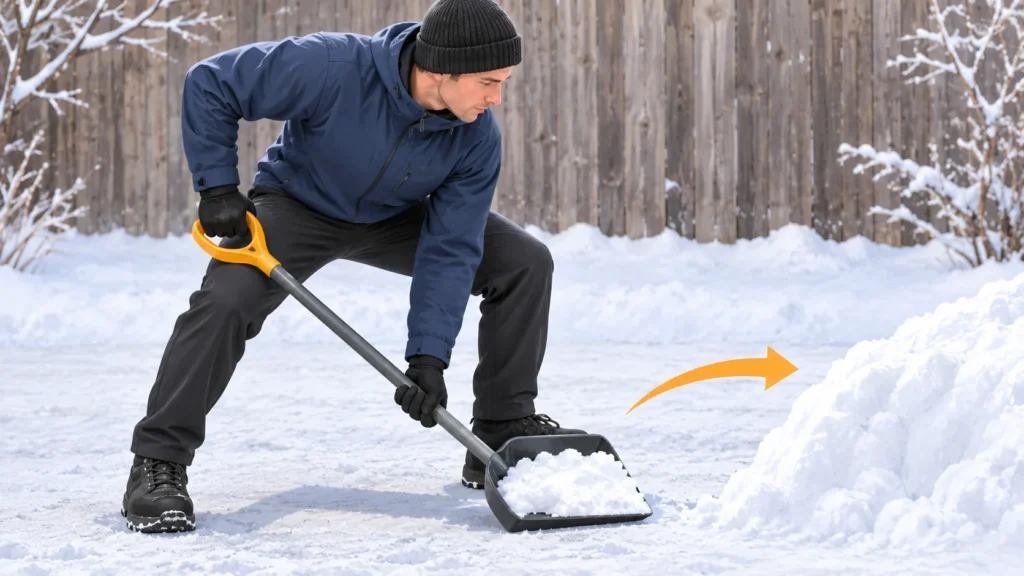
Lift only when the job calls for it. A scoop-shaped shovel is useful where snow needs to be picked up, such as clearing a small area or moving snow that cannot be pushed aside. Packed or plow-dropped snow may also need to be loosened and handled in smaller sections. Avoid treating every pass as a full scoop: a partially filled shovel is easier to control than an overloaded one.
A combination shovel can handle both motions, but the blade shape does not make every task equally easy. A wide, straight pusher is aimed at pushing; a scoop is designed to collect snow for lifting. For the practical trade-offs between these formats, consult the linked snow shovel Top Picks.
Keep each load manageable
Do not judge a load by how shallow it looks. Wet or compacted snow can take more effort to move than loose snow, and a larger scoop means more material to control. Start with a small amount. If you can move it smoothly without wrenching, straining or losing control, continue at that scale. If not, reduce the load, use a pushing motion where practical, or take a break.
When lifting, keep the shovel close to your body rather than reaching far out with a loaded blade. Bend at your knees and hips as you lower the shovel, and use a stable stance with your feet apart. Avoid rounding forward to reach a distant pile or taking a larger scoop just to reduce the number of trips. These are practical technique suggestions from Fitzgerald Physical Therapy Associates’ shoveling guidance, which also recommends spacing your hands apart on the handle for leverage.
Use your feet to reposition and turn toward the place where the snow should go. Avoid twisting your torso while holding a loaded shovel. If the destination is awkwardly placed, move closer or put the snow down and reset rather than throwing it over your shoulder. Keep the movement controlled; a longer throw is not a useful goal if it makes the motion harder to manage.
Match the motion to the conditions
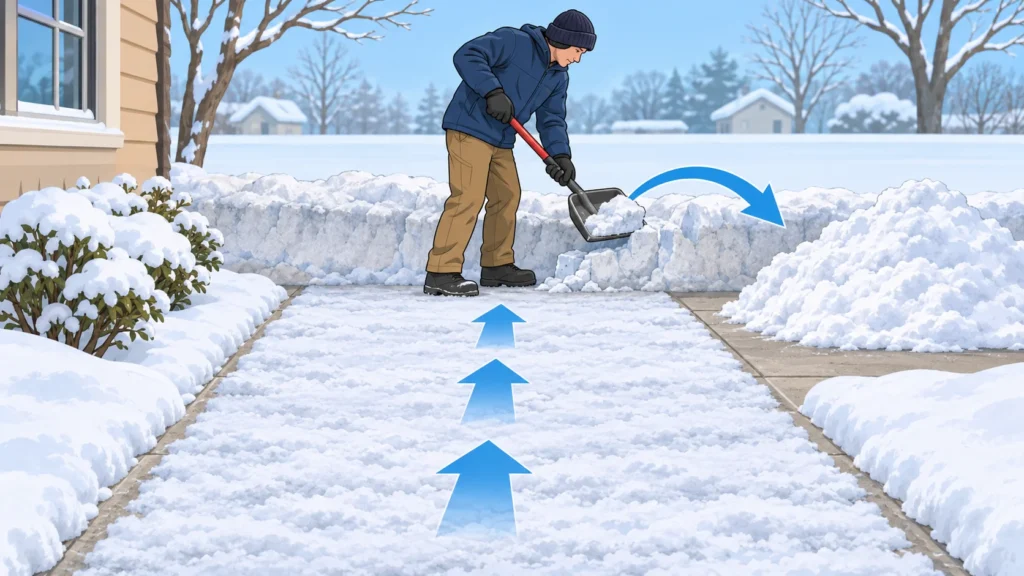
Look over the route before starting. Identify where snow can be pushed without blocking a doorway, path or the next section you need to clear. Work toward an open edge or a suitable pile location. On narrow paths or around obstacles, shorter pushes and smaller scoops offer more control than trying to clear a wide swath in one go.
When snow is loose, push it in short, steady passes. If it becomes difficult to move, stop and reassess: the snow may be deeper or denser than the section you just cleared, or the path may be obstructed. Divide the area into smaller sections, reduce the amount on the shovel, or switch from pushing to lifting only where necessary. Do not force a pusher through packed snow simply because it is the tool in your hands.
Illustrative example: Suppose a walkway has a layer of loose snow, followed by a ridge left at its end by a plow. On the open walkway, push short passes toward a clear piling area. At the ridge, stop rather than trying to push the whole mass at once; loosen a small section and move manageable amounts with a scoop. This is a technique example, not a claim that one shovel type works best in every storm.
Pace the work and reset before fatigue
Start at a comfortable pace, especially if you have not been active recently. Pause when your effort rises, your form becomes rushed, or you need to recover your breathing. There is no single break schedule that fits everyone: conditions, fitness and the amount of snow vary. Taking breaks before you are exhausted is more useful than setting a deadline and pushing through it.
Clear in sections so you can stop and reassess without leaving the entire area as one demanding task. If snow is accumulating and weather or visibility makes working unsafe, wait for conditions to improve rather than treating immediate clearance as mandatory. Fitzgerald Physical Therapy Associates suggests pacing, breaks and drinking water during the task in its snow-shoveling technique guidance.
Snow shoveling can also be strenuous for the heart, not just the back and shoulders. Neighbourhood Heroes’ snow-shoveling safety article summarizes cardiovascular cautions and advises people with cardiovascular disease, significant risk factors or restrictions on strenuous activity to discuss the task with a healthcare professional. It also says to stop and seek urgent medical help for concerning signs such as chest pressure, severe unusual breathlessness, faintness or sudden weakness. These are reasons not to try to solve a problem by changing shovel technique alone.
A simple working sequence
- Plan the route. Decide where pushed snow can go and which areas require lifting.
- Start with a small section. Push loose snow in controlled passes; reduce the amount if resistance rises.
- Lift only where needed. Keep the load small and close, bend through your knees and hips, and step to turn rather than twisting under load.
- Pause and reassess. Take a break before fatigue makes it harder to control the shovel or maintain a steady pace.
The goal is not to eliminate effort—manual snow clearing is work—but to choose the motion that fits the snow, avoid unnecessarily large loads and stop when conditions or your capacity call for it.
When technique is not enough
A pusher cannot make every surface or snow condition easy, and a smaller lifting load does not make strenuous work appropriate for everyone. If snow is too deep, dense or awkward to move comfortably, reduce the task, wait if conditions allow, or arrange help. People who have been advised to limit strenuous activity should follow that advice rather than relying on a particular handle or blade design. Individual capacity varies; no single posture, tool or pace guarantees a strain-free result.