




How to Set Up a Vibration Plate Safely at Home
A safe first session starts before you switch the plate on. Check that the floor, surrounding space, power connection and machine instructions suit the exact unit you own. A generic setup tip cannot replace the model’s manual: platforms can differ in their controls, placement requirements and stated user limits.
Use this guide to prepare the area and make a cautious first-use check. For help comparing models, see TheTopZone’s vibration plate Top Picks; once you have a particular plate, use its own manual and labels to confirm setup details.
Choose a stable location and clear the area
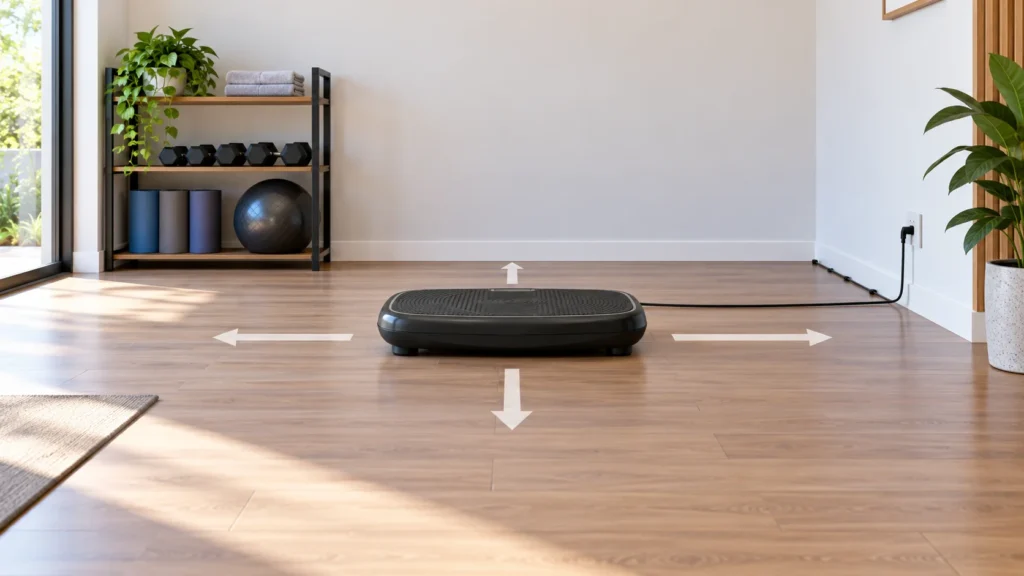
Put the plate on a firm, level surface where it cannot rock or sit partly on a rug edge. Check that the floor is dry and that the machine’s feet or base make full contact. The supplied general setup guide recommends a flat, non-slip surface and enough room to step on and off, but your model’s instructions should take priority if they specify a different placement method. See the general vibration-plate setup guide.
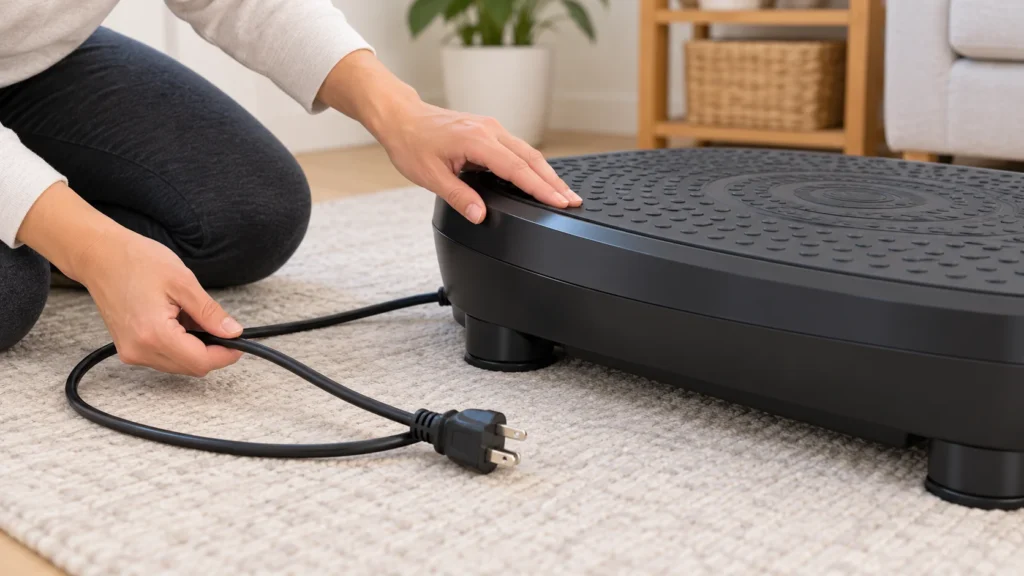
Leave enough open space to approach and leave the plate without stepping over clutter. Keep the route clear, including the area where you will stand before starting and after stopping. Arrange the power cord so it reaches the outlet without stretching across a walkway or becoming trapped beneath the unit.
Do not assume that a household mat is suitable simply because it looks grippy. If you are considering one to protect the floor, check the plate manufacturer’s guidance first. The supplied sources do not establish that a mat is appropriate for every model or floor.
Inspect the plate and power cord
With the plate switched off and unplugged, look over the platform, base and visible cable. Check for a cracked or loose part, exposed wire, a damaged plug, or anything else that looks out of place. The general setup guide specifically advises inspecting the power cord before use. Do not use a machine with visible damage; contact the seller or manufacturer for instructions rather than attempting an electrical repair yourself.
Check the plug and outlet against the unit’s manual or label. Keep the cable away from places where it could be pulled, pinched or tripped over. If your model uses a remote or detachable accessory, consult its instructions for how to prepare it; do not assume every plate has the same controls, batteries or included parts.
Confirm the exact model’s limits and instructions
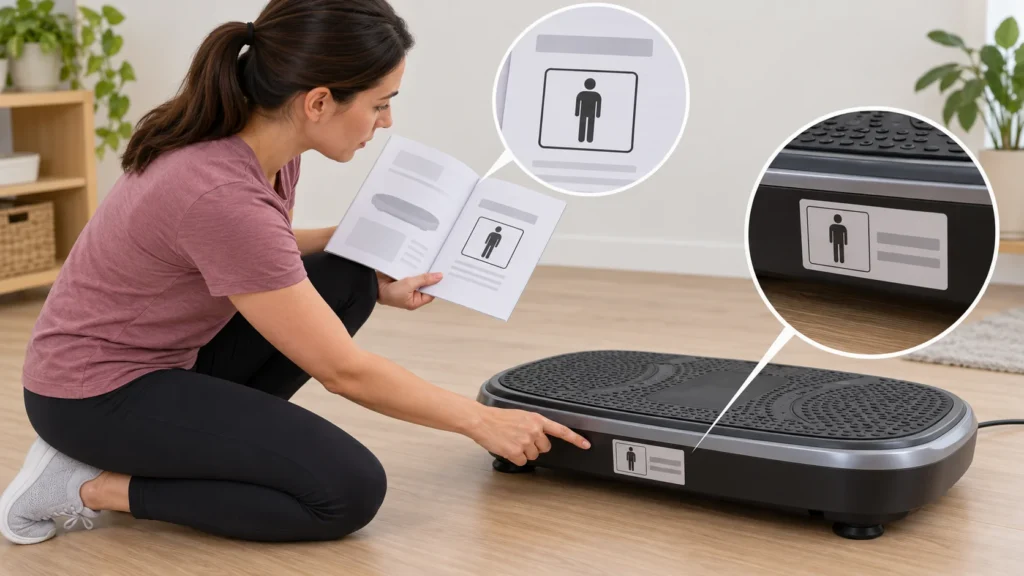
Find the model name or number on the plate, packaging, manual or order record. Use instructions for that exact version to check the stated maximum user weight, permitted location, power requirements, controls, and any setup or operating restrictions. Do not rely on a similar-looking product page: versions can differ, and a retailer listing may not describe every variant.
Compare the stated user limit with the person who will use the plate. Treat a maximum as a limit, not as a suggested target or a guarantee that an installation is suitable. If the label and manual disagree, or you cannot identify the model, ask the manufacturer or seller to clarify before use.
For example, the supplied Amazon listing for a LifePro Waver states a 330 lb capacity. That is a retailer listing, not evidence that every Waver version has the same rating. Confirm the rating on the manual or label for your exact unit; do not transfer the number to another model or variant. See the supplied retailer listing.
Before turning the unit on, read the manual’s starting and stopping directions. Locate the controls you will need, learn how to stop the plate, and check whether the manufacturer requires particular placement or setup. Do not copy a speed, duration or exercise routine from a different model’s guide: the supplied sources do not establish one universal first-session setting.
Do a cautious first-use check
When the setup checks are complete, start in the way your manual specifies. Keep the controls within reach and make sure the space remains clear. If the instructions allow a no-load check, follow them; if they do not describe one, do not invent a test procedure. Use the designated stop control if the unit behaves unexpectedly, shifts, makes an unusual sound or shows a warning, then consult the manufacturer before trying again.
For your first time on the plate, follow the manual’s directions for getting on, starting and stopping. Avoid adding exercises or accessories until you understand the basic operation. Stop if you feel unsteady or uncomfortable. This is a cautious approach, not a universal prescription for session length or vibration setting. Do not choose the highest setting or a longer duration just because it is available; use only options permitted by the instructions for your exact model.
Setup advice does not establish that vibration-plate use is appropriate for every person or circumstance. If you have a health concern, are unsure whether the activity is suitable for you, or have been advised to restrict exercise, seek advice from a qualified health professional rather than treating a product manual as medical guidance.
Pre-use setup check
Before each session, use this short check to catch common setup issues:
- Stable placement: The plate sits level on a firm surface and does not rock.
- Clear access: There is room to approach and leave without stepping over objects.
- Sound equipment: The plate, plug and visible cord have no obvious damage.
- Correct model guidance: You have checked the manual or label for the exact unit, including its user limit and operating instructions.
- Ready controls: You know how to start and stop the machine and can reach the controls.
If something isn’t right
Do not use the plate if it is unstable, visibly damaged, missing instructions needed for safe operation, or cannot be matched to a reliable model-specific user limit. Contact the manufacturer or seller for clarification. If the plate moves during use, stop it and reassess its location and instructions before another attempt. Do not compensate for a rocking base by wedging objects under it unless the manufacturer explicitly directs you to do so.
Likewise, do not route the cord where it could be pinched, stretched or crossed by people walking through the room. If no suitable outlet or clear location is available, choose another setup location rather than accepting a trip hazard or unstable placement.
Once the checks are complete, keep the manual accessible for later setup questions. A careful first-use check cannot prove that a machine is suitable for every user or situation, but it can help catch avoidable placement, damage and model-instruction problems before use.