





How to Clear Snow Safely With a Snow Blower
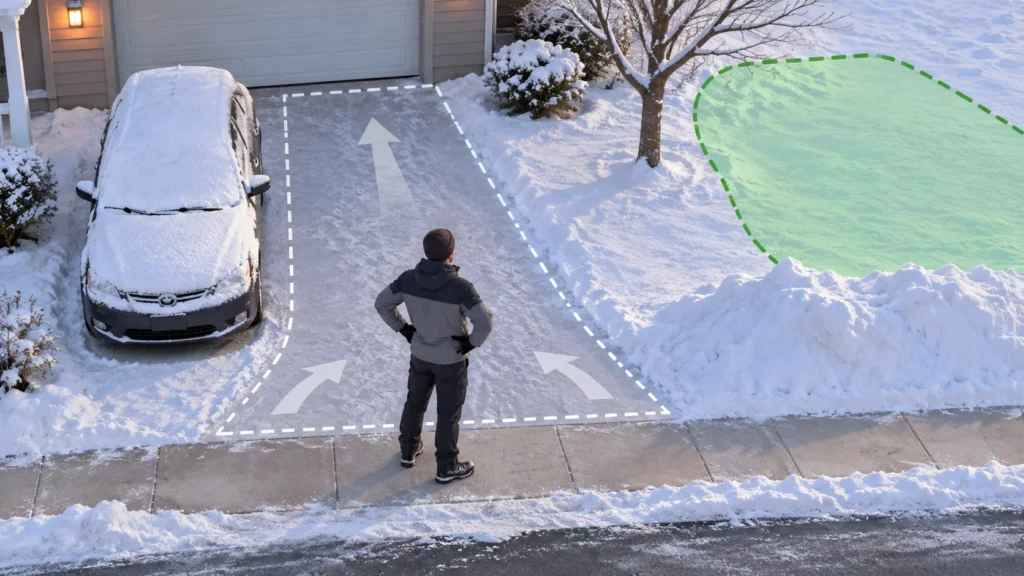
Safe snow blowing starts before you start the machine. Plan where the snow will go, clear the work area, and keep people and pets well away while the blower is running. Those steps matter because the auger can pick up objects and the discharge chute can throw snow and debris. Your owner’s manual is the authority for your particular machine: controls, operating limits and safe procedures can differ by model.
This guide focuses on a practical operating routine, not on choosing a machine. For help comparing types and capacity, see TheTopZone’s snow blower Top Picks.
Before you start, plan the route
Walk the area you intend to clear before operating. Look for items that could be struck, hidden by snow or thrown by the machine: mats, newspapers, sleds, boards, wires and other loose objects. Troy-Bilt specifically advises inspecting the area and removing these hazards before clearing. Also note fixed obstacles such as parked vehicles, walls, steps, landscaping and windows. Choose a route that gives you room to turn without directing snow toward them.
Decide where snow can safely land across the whole job, not just on the first pass. Consider the wind and how the pile will grow as you work. Avoid sending the discharge toward roads, bystanders or places where thrown snow or objects could injure someone or damage property. If the safe landing area changes as the pile grows—or wind shifts snow back toward a path or vehicle—stop and reassess the route and chute direction.
Clear snow before driving over it where practical. Troy-Bilt cautions that vehicle weight can compress snow, which may become difficult to remove and hazardous to walk on when temperatures freeze. Be especially deliberate around driveways: avoid blowing toward a vehicle, and do not assume that a snow-covered area is free of objects.
Set the safety zone and check the machine
Before starting, make sure other people know you are clearing and can stay out of the operating area. Troy-Bilt recommends keeping bystanders, children and pets at least 75 feet away while its snow blower is operating, and stopping the machine if someone enters that area. Treat that as Troy-Bilt’s guidance, not a universal distance for every model; follow your own manual and keep people farther away if the machine’s instructions require it or the situation calls for it.
Read the manual before using a new or unfamiliar machine. Know how to start and stop it, how to disengage the controls, and how its chute and drive controls work. Check that the chute is present and undamaged, and that safety devices are in place and working. Do not operate if an important part is damaged or a control behaves unexpectedly; consult the manual or an authorized service provider.
Wear eye protection and clothing that will not catch in moving parts. Troy-Bilt advises against jewelry, long scarves and other loose clothing, and recommends eye protection during operation and adjustments. Wear footwear suitable for the conditions, and use the blower only when visibility is good enough to see the route and people nearby. Be cautious on slippery ground, in reverse and on slopes. Troy-Bilt advises against steep slopes and urges caution on mild ones; follow the limitations for your specific machine and do not use it where you cannot maintain control.
Clear in a controlled pattern
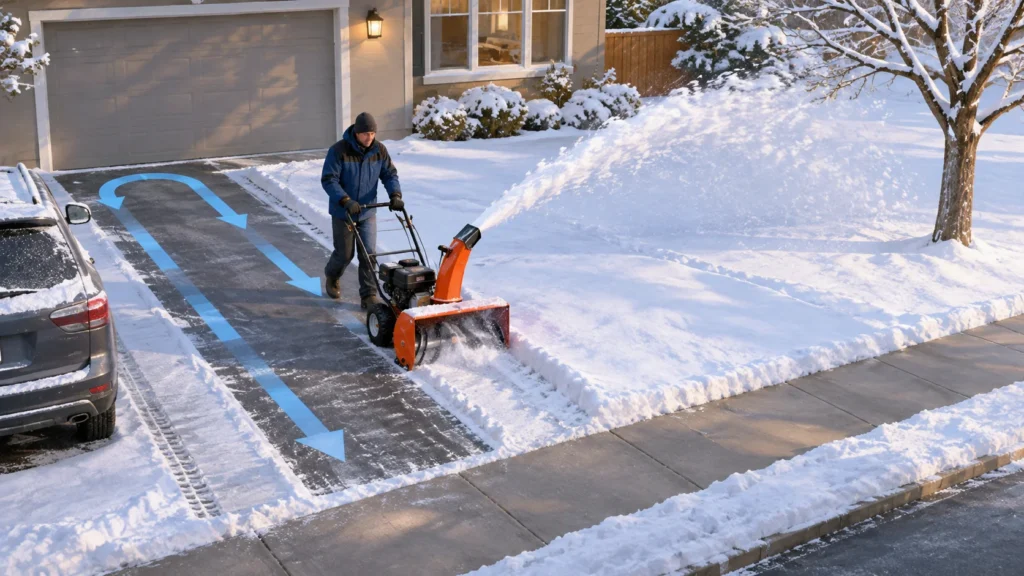
Start with the chute aimed at a safe landing area, and keep reassessing its direction as you move. Use the machine’s controls as described in its manual; do not reach toward the chute or make adjustments while moving parts are running unless the manual specifically directs it. Take manageable passes and maintain a pace that lets you steer, see ahead and respond to changing conditions. Ariens advises starting slowly rather than overloading the machine. Do not treat that general tip as a substitute for your model’s operating instructions.
Choose a route that avoids repeatedly crossing your own cleared path where snow could be blown back onto it. Work around fixed obstacles with enough room to steer, and avoid pushing the machine into places where you cannot see what lies beneath the snow. When you approach a road, walkway or other area where someone may appear, stop if you need to reassess. Never direct the discharge toward people, traffic or a nearby vehicle. Stop the machine if anyone enters the safety zone.
Illustrative example: Suppose a driveway borders a public sidewalk on one side and has open yard space on the other. Rather than aim the chute across the sidewalk or toward parked cars, plan passes that direct snow into the open space, checking the direction as the pile grows. If wind carries snow back toward the sidewalk, pause and change the plan. This is a route-planning example, not a guarantee that any particular chute setting is safe in every wind or layout.
If the chute clogs, stop first
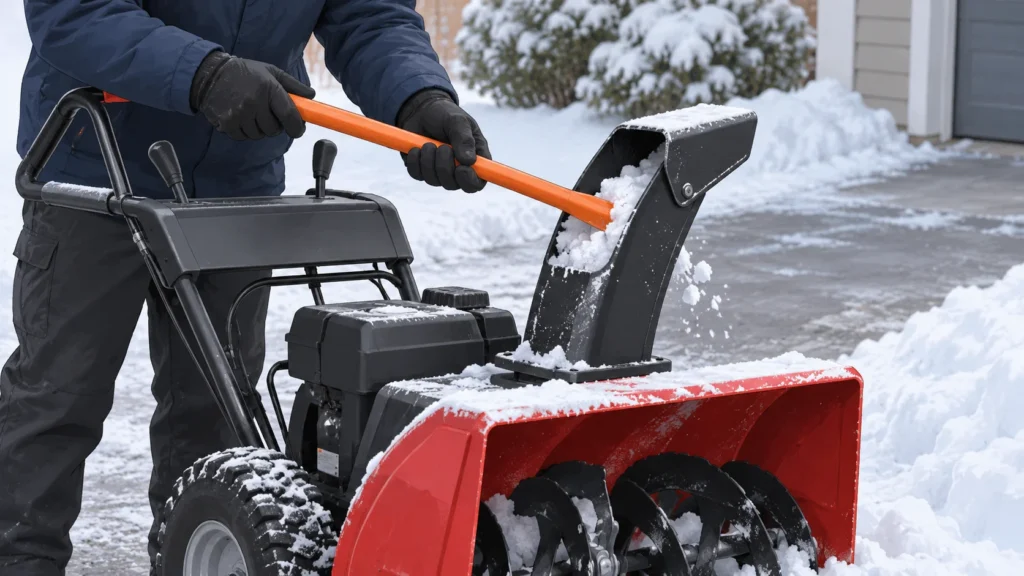
Never use your hands to clear a clog. Troy-Bilt’s safety guidance says to shut off the engine and wait behind the handles until all moving parts have stopped before unclogging. Use the cleanout tool supplied or specified for your machine, following its manual. Ariens likewise advises turning the machine off and using a tool, not hands, to clear an obstruction. Do not assume a stopped engine means every moving part has stopped; wait as directed by the manufacturer.
Do not try to dislodge snow or ice while the auger or impeller is engaged. If the clog does not clear using the manufacturer’s method, or the machine appears damaged, stop and consult the manual or a qualified service provider rather than improvising. Keep hands and feet away from the auger, impeller and chute assembly, including during inspection and cleanup.
Finish and reassess
Stop the machine before inspecting it, moving obstacles or making adjustments, and follow the manual’s shutdown procedure. Look over the cleared route for remaining hazards, slippery patches or snow deposited where it could obstruct people or vehicles. If conditions have changed—visibility has worsened, wind is redirecting snow, or someone is nearby—pause until you can work safely. A route that was clear at the beginning may need a different chute direction or a new plan by the end.
These are general precautions, not a replacement for model-specific instructions or training. Procedures can vary by machine, and the cited 75-foot safety-zone recommendation is Troy-Bilt’s, not a universal rule. Check your own manual for operating limits and use the machine only in conditions where you can see, steer and keep others clear.
Sources and model-specific guidance
- Troy-Bilt: Snow Blower Safety Tips—route planning, area inspection, bystander distance, visibility, slopes and clog clearing.
- Ariens: Snow Blower Safety—manual familiarization, clearing hazards, cautious operation and using a tool rather than hands to clear a clog.