





How to Clean a Cheese Grater Without Scrubbing the Blades
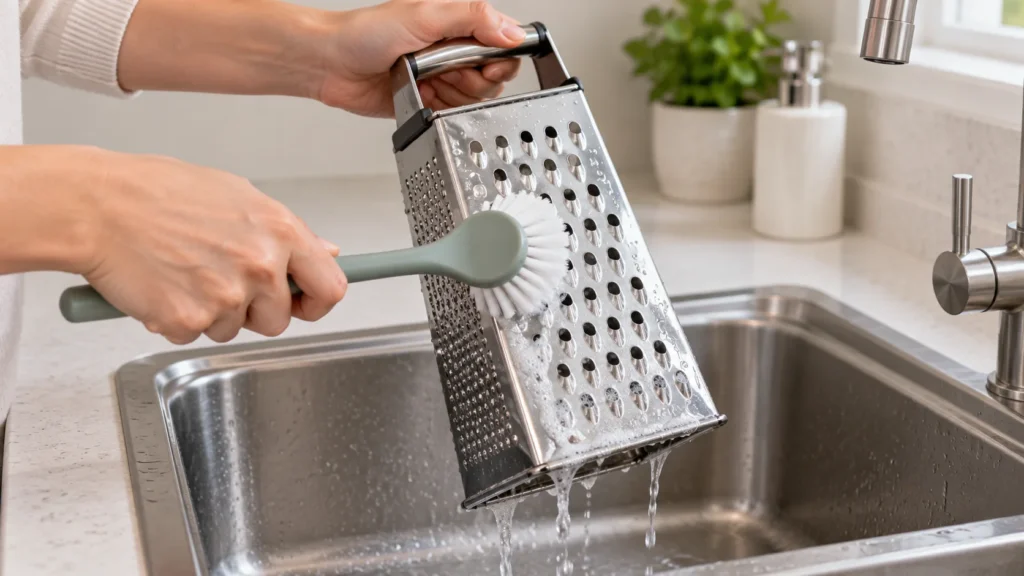
Cheese caught in a grater’s holes can be stubborn, especially once it dries. The safest approach is to keep your fingers out of the cutting area, loosen residue with water when needed, and use a brush rather than rubbing a sponge or cloth directly across the blades. This routine works for box graters and handheld flat graters; check your specific grater’s care instructions before deciding whether it can go in the dishwasher.
Start with safe handling
Set the grater on a stable surface before cleaning. Hold a box grater by its handle or a broad, blunt edge, and keep your grip away from the cutting panels. For a handheld grater, hold the handle rather than the metal surface. If the grater shifts or feels awkward to control, put it down and reposition it instead of trying to clean it while it is moving.
Keep the working edge pointed away from your other hand and avoid reaching through or across a sharp panel. Do not run a cloth, sponge, or fingertip over the holes to test whether they are clean. A dish brush with a handle, or a clean small brush, lets you work on residue while keeping fingers farther from the cutting surface. Chowhound’s cleaning guide recommends using a brush to clear grater crevices without putting fingers against the jagged surface.
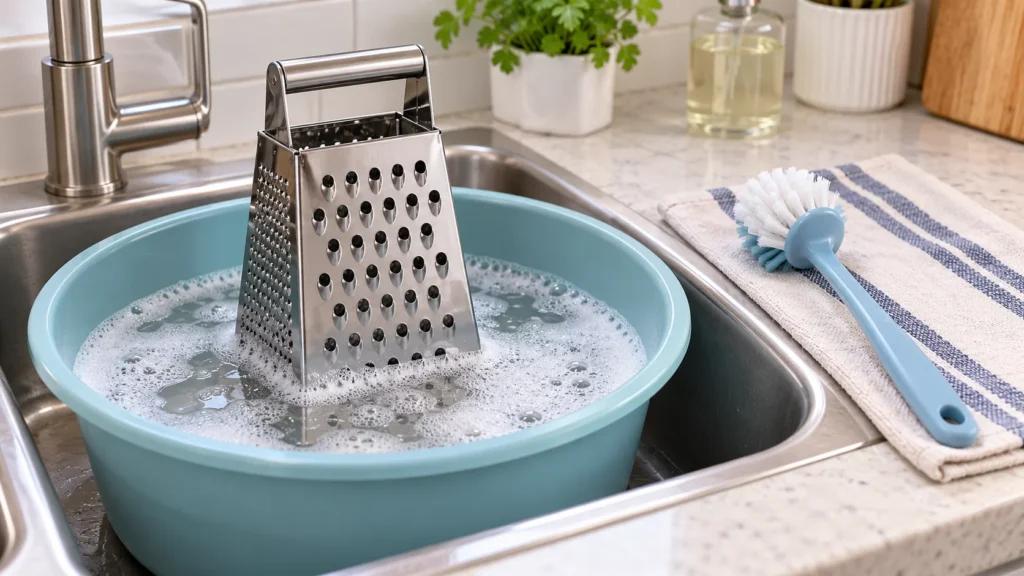
If you need to move the grater, lift it by a safe handle or non-cutting edge. Don’t leave it submerged in a sink where a sharp panel may be hidden beneath sudsy water; wash it where you can see and control it. Keep the brush within reach before you begin, so you do not have to handle the grater with wet, slippery hands while looking for a tool.
Remove fresh cheese residue before it hardens
- Clear loose shreds. Set the grater over the food container or sink and gently shake or tap it so loose cheese falls away. Keep your hand on the handle or blunt edge, not behind a cutting face.
- Rinse from the safe side. Hold the grater securely and rinse the affected area with warm water. Aim to flush residue out of the openings rather than rubbing at it. Rotate a box grater by its handle to reach the different panels; turn a handheld grater only while holding its handle.
- Brush the holes. Apply a little dish soap to a dish brush. Work in short, controlled strokes over the grater surface, keeping your fingers behind the brush head and away from the metal. Rinse the brush and grater as cheese lifts out.
- Inspect without touching the blades. Look across the surface under good light. If you still see cheese lodged in the holes, rinse and brush again. Don’t scrape it out with a knife or pick at it with a fingernail.
- Rinse, then dry carefully. Rinse away soap and remaining residue. Place the grater where it can dry without the sharp surface resting against a hand-contact area, or carefully dry it by holding a safe edge and using a clean towel without wiping across the cutting holes.
For fresh residue, the Microplane care instructions recommend tapping food off after use, rinsing, and allowing the grater to drip dry. Prompt rinsing avoids leaving food to dry on the blade. This does not require rushing: first find a secure grip and a clear space beside the sink. If you cannot clean the tool immediately, leave it somewhere its cutting surfaces will remain visible.
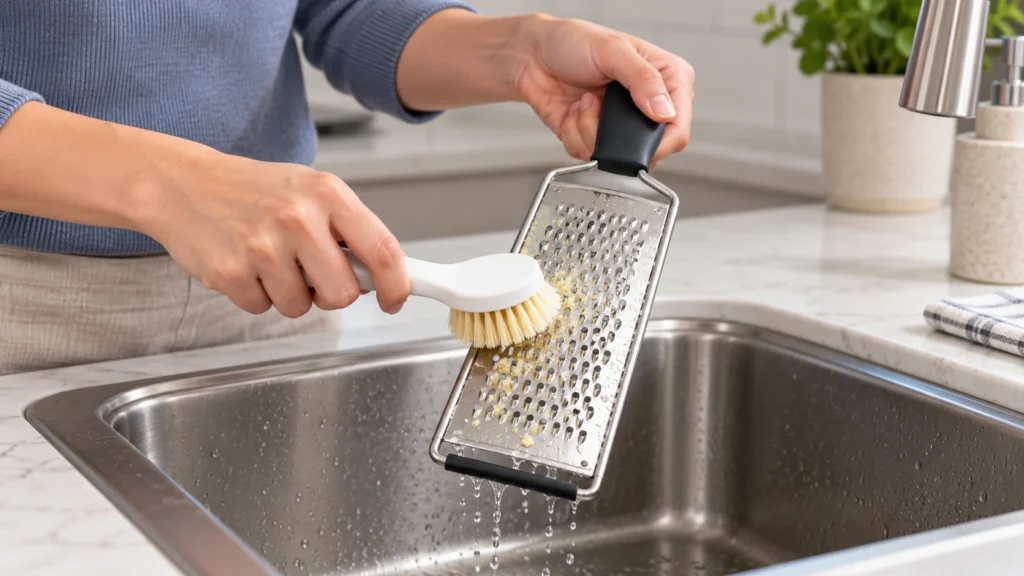
When cheese has dried on
Check whether your grater permits soaking before placing it in water. For a suitable washable grater, softening dried cheese can reduce the need to scrub. Chowhound describes a warm, soapy soak followed by brushing. This is not a universal instruction: Microplane specifically excludes its wooden-handled Master Series from soaking. Keep the handle and cutting area visible, and follow your exact model’s care instructions rather than using a fixed soaking time for every grater.
If your grater permits soaking and residue remains, let the residue soften before brushing again. If soaking is prohibited or the materials are unclear, use the maker’s recommended cleaning method instead. Do not assume that a detachable handle, wooden part, base, cover, or other attachment can be treated like a stainless-steel blade. Avoid forcing hardened residue out with a knife or trying to remove it with your fingertips.
Adjust your grip for box and handheld graters
Box graters
Hold the top handle and clean one panel at a time. Turn the grater by its handle or a blunt side to reach each face; don’t wrap your palm around the cutting panels. Brush from the outside of a panel and rinse as needed. Check the inside, too, where loose cheese can collect, but keep fingers away from the sharp openings on every side.
Handheld graters
Hold the handle firmly and support the tool over the sink or a basin. Keep the opposite hand out of the path of the metal surface. Use a small brush to reach the openings, rather than holding a sponge against the underside and pushing through the holes. If the tool has a separate frame, cover, or removable part, follow its own instructions for taking it apart and cleaning it.
For either style, pause if you cannot keep the grater steady or see the area you are cleaning. Reposition it on a stable surface or change your grip to a safe handle before continuing. A brush is a way to keep fingers back from the cutting surface, not a reason to rush or press hard.
Check the dishwasher instructions first
Do not assume that every cheese grater is dishwasher-safe. Look for a care label or symbol on the item, packaging, or manufacturer’s instructions for the exact grater. If they clearly permit dishwasher cleaning, follow any placement or cycle guidance they give. If the instructions are missing, unclear, or say to hand wash, use the brush-and-rinse routine instead.
For example, OXO lists its Good Grips Grater, SKU 11283000, as dishwasher-safe. That statement applies to the identified grater; it does not establish the care requirements of every box, rotary, or handheld model. Microplane’s instructions distinguish the blade from its protective cover and wooden-handled models. Check the complete tool and each removable accessory before choosing a washing method.
Once clean, dry and store the grater so the cutting surface is not exposed where someone might grab it accidentally. If you want help choosing a format for your kitchen, see TheTopZone’s cheese grater Top Picks.