




How to Clean and Dry Different Types of Bath Mats
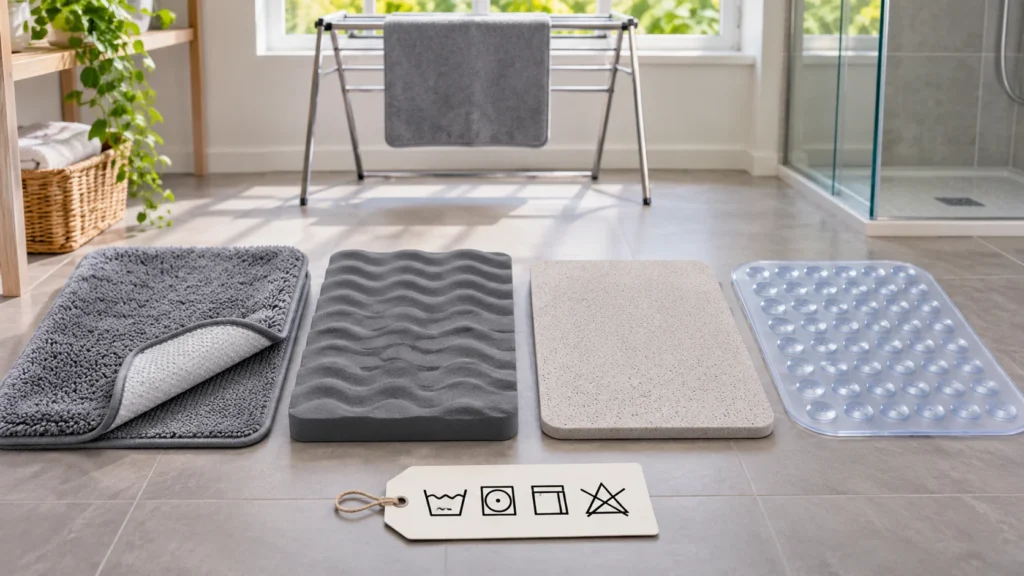
A bath mat’s care depends on what it is made of: a washable fabric rug, a foam mat, a porous stone mat and a rubber shower mat are not interchangeable. Start by checking the care label or the instructions for your exact mat. If its care instructions are missing, choose a gentler method rather than assuming it can go in a washer, use bleach or tolerate heat.
The routine below separates cleaning from drying. That matters because a mat can look clean on top while its backing or underside is still damp. For help choosing among mat styles before buying, see TheTopZone’s bath mat Top Picks; this guide focuses on care after you have one.
Start with the material and care label
Look at the whole mat, not just its visible surface. A fabric mat may have a rubber or other backing, and that backing can have different care limits from the fabric. A foam mat needs gentler handling than a simple woven rug, while a stone-style mat is cleaned as a solid porous surface rather than laundered. A shower-floor mat made entirely of rubber is also different from a fabric rug with a rubber backing.
- Fabric rug: Check whether the label permits machine washing and what cycle, water temperature and drying method it specifies. Cotton, microfiber and chenille may have different instructions; don’t assume one fabric’s directions apply to another.
- Foam mat: Check for explicit machine-wash instructions. If none are available, hand-clean gently and avoid twisting, wringing or high heat.
- Stone-style mat: Follow the maker’s cleaning directions for the particular mat and any separate base or pad.
- Rubber shower mat: Check whether the maker allows machine washing. Otherwise, clean it by hand so you can reach the underside and textured areas.
A general care guide also advises checking the label because methods vary by material, and describes gentler washing for rubber-backed and foam mats. Treat that as general guidance, not a substitute for the instructions for your exact mat. Rosenberry Rooms’ material-by-material bath mat guide
Clean fabric mats without stressing the backing
For a fabric mat the care label says is machine washable, shake off loose debris first. Use the cycle and water temperature on the label, with a suitable detergent; don’t add bleach or fabric softener unless the manufacturer permits it. If the mat has a rubber backing, avoid treating it like an ordinary towel: the backing may be damaged by unsuitable washing or drying. Remove the mat promptly when the cycle ends and move it to a place where air can circulate.
If the label says hand wash, or gives no machine-washing guidance, use a basin or tub and a mild cleaning solution appropriate to the care instructions. Gently work the water through the fabric, then rinse until the suds are gone. Press out excess water without twisting or wringing a backed or foam mat. If a stain or odor remains, check the maker’s advice before trying a stronger cleaner; a cleaning method that works on one fiber or backing may harm another.
Handle foam and stone mats differently
Foam can be distorted or damaged by aggressive handling, so follow the mat’s label rather than assuming it can take a washer’s agitation or a tumble dryer. When hand cleaning is appropriate, use gentle pressure, rinse thoroughly and press out water without wringing. Dry it in a position that supports its shape and allows air to reach the surface and underside. If the mat’s care information is unavailable, ask the manufacturer rather than testing an uncertain method.
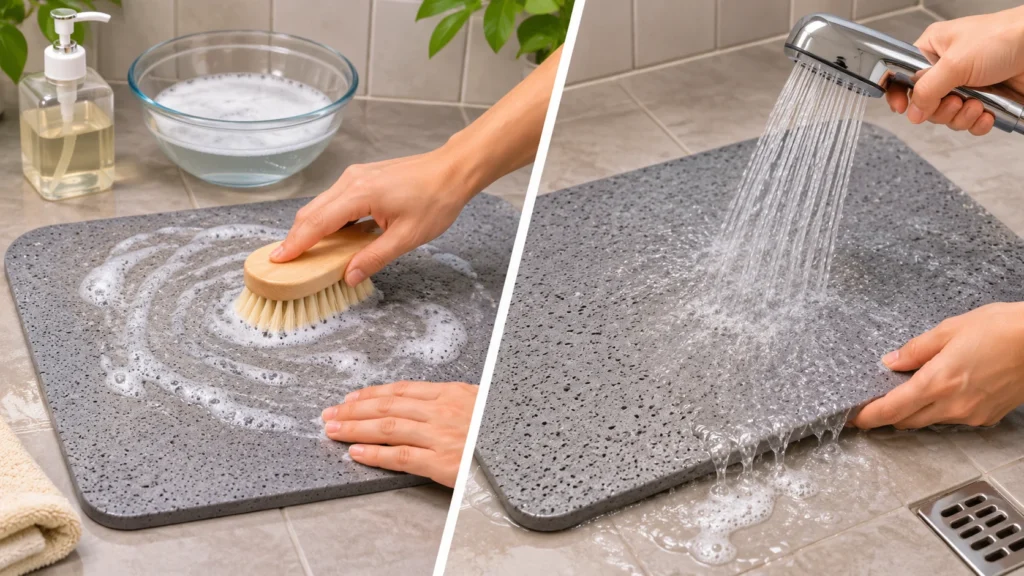
For one specific example, Dorai’s Bath Stone™ instructions say to wet the stone surface, apply a mild liquid-based soap or gentle household cleaner, scrub in small circular motions, rinse thoroughly and let it dry completely. The instructions mention light sanding for deeper stains. These are instructions for that product, not a universal recipe for every stone-style mat; check your own mat’s directions before scrubbing or sanding it. Dorai’s Bath Stone product care instructions
Clean rubber shower-floor mats
Lift the mat so you can clean both sides, including textured areas or suction cups where residue may collect. If hand washing, use a cleaning solution permitted by the manufacturer and scrub gently with a brush or cloth. Rinse away the cleaner and debris. Avoid mixing cleaning products, and don’t use bleach unless the mat’s instructions allow it.
If the manufacturer permits machine washing, follow its specific directions. A general rubber-mat cleaning guide describes hand washing and air drying, and warns against putting rubber mats in a dryer because heat can warp them. Its advice applies to rubber bath mats, not automatically to every fabric-backed mat or every product. WikiHow’s guide to cleaning rubber bath mats
Dry the whole mat before reuse
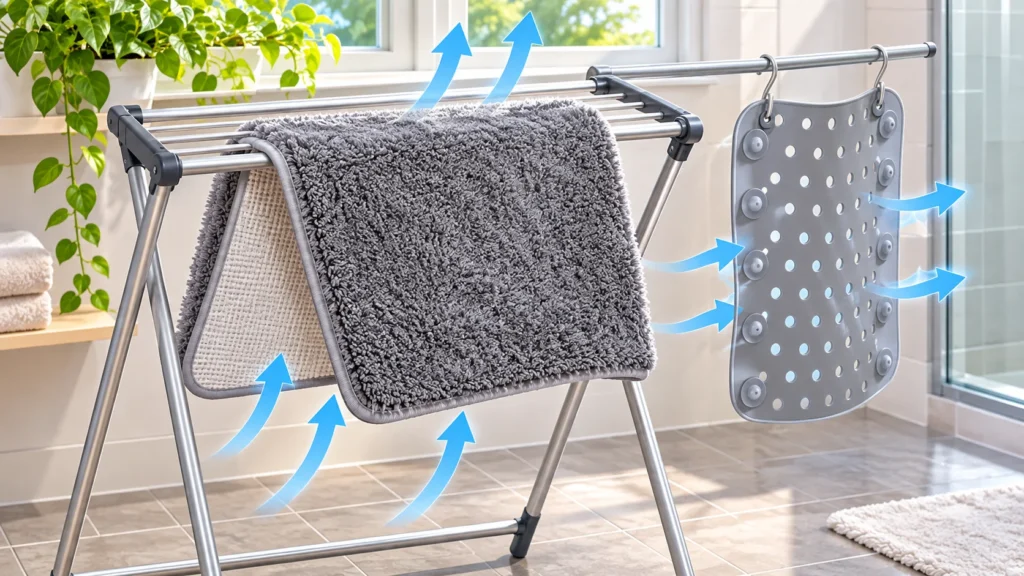
Air-dry the mat in a well-ventilated place, arranged so air can reach its underside as well as its top. For a fabric rug, hang it or lay it flat according to its care instructions; for foam, support it so it does not sag out of shape. A rubber shower mat should be lifted from the shower floor to dry rather than left suctioned down. For a stone-style mat, let the surface dry completely as directed by its maker. Avoid a clothes dryer or direct heat unless the product instructions expressly allow it.
Before returning any mat to use, check the underside, edges and thicker areas. If they still feel damp, keep drying. Don’t fold or store a damp mat, and don’t put it back on a wet floor where moisture can remain trapped underneath. There is no single drying time that suits every material, thickness, room or level of airflow, so judge by the mat itself rather than a fixed number of hours.
After use, take a moment to hang or lift the mat so it can air out. If it becomes visibly soiled or develops a lingering odor, clean it using the appropriate method above and verify it is fully dry before putting it back. Stop using a mat if its backing is deteriorating, it no longer lies securely, or its maker says it should be replaced; cleaning cannot restore damaged material.
A practical care decision
Illustrative example: You have a fabric mat with a rubber backing, but its care label is unreadable. You cannot confirm that machine washing or tumble drying is safe. Rather than apply washing advice for an all-rubber shower mat or assume the fabric determines the backing’s limits, hand-clean gently, rinse thoroughly and air-dry with both sides exposed to moving air. If you cannot identify the materials or the backing’s care limits, contact the maker before using a stronger method. The choice is deliberately cautious; it is not a guarantee that every unknown mat is suitable for hand washing.
Keep the main decision simple: identify the material and backing, follow the exact care instructions, use the gentlest method they allow, and verify the entire mat is dry before reuse. That approach avoids turning a method for one kind of bath mat into a damaging rule for another.