





How to Fit and Adjust a Weighted Vest for Stable Movement
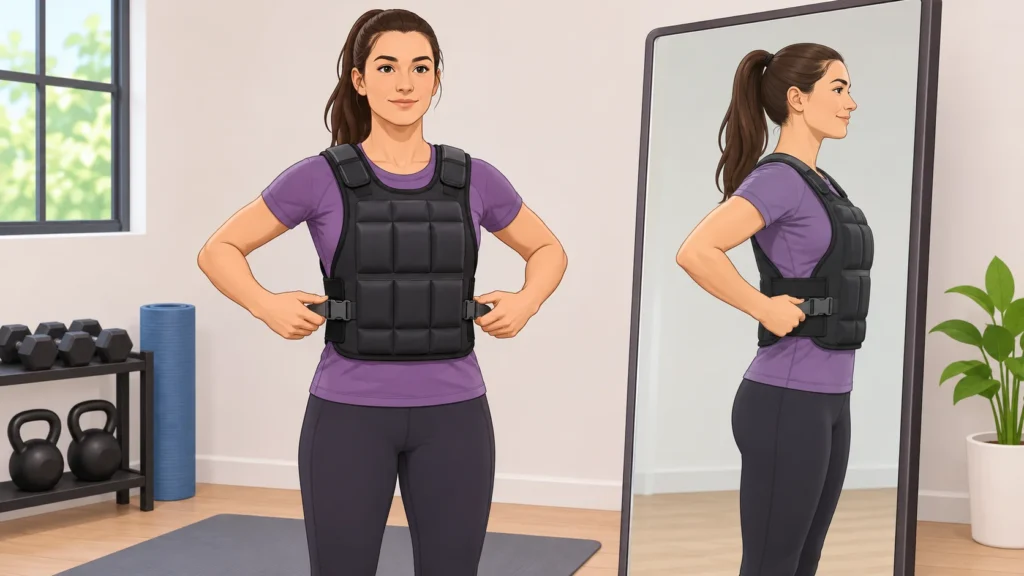
A weighted vest should stay reasonably close to your torso as you move, without making comfortable breathing or natural movement difficult. The goal is a stable fit, not the tightest possible fit. A vest that shifts may need adjustment; one that feels restrictive may need loosening or may not suit your torso. Check how it behaves during the movements you plan to do, rather than judging fit only while standing still. UNBROKENSHOP’s fit guide describes this distinction and recommends evaluating the vest in motion.
Check the fit before adjusting
Start by reading the instructions for your specific vest. Designs differ: some have adjustable straps or removable weights, while others have a fixed load and limited or no torso adjustment. Do not assume that every vest has the same closures or that its straps can be adjusted in the same way. Check the manufacturer’s size information and instructions before putting it on. The entries in this weighted-vest roundup illustrate why checking the exact design matters: some entries describe adjustable closures or removable weights, while another is described as fixed-weight. Treat these as examples of product differences, not universal features.
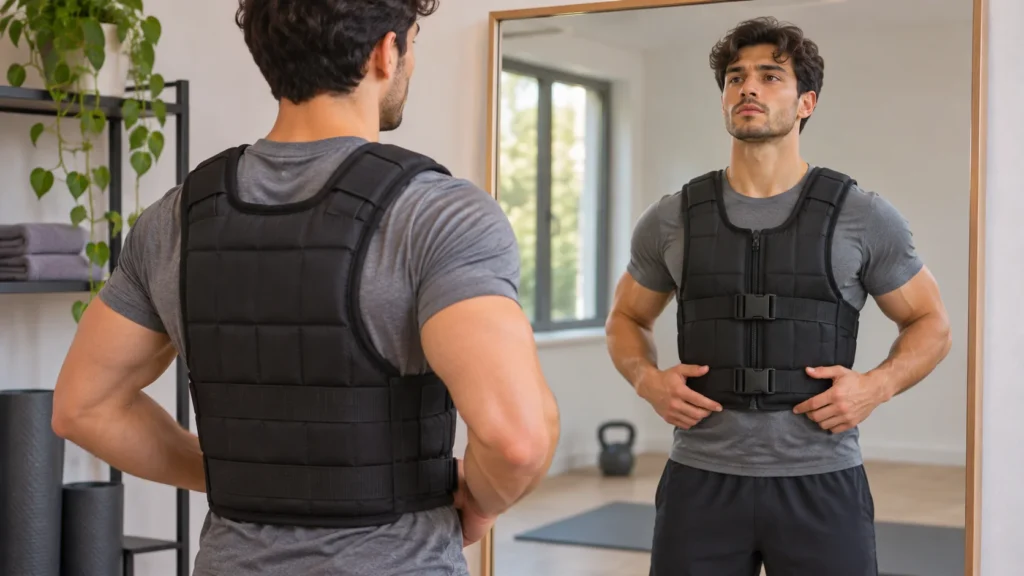
Put the vest on with its load removed or reduced only if the design and instructions allow it. Center the front and back sections as intended, and check that the vest is not twisted. A mirror can help you spot an obvious lean or uneven position, but appearance at rest does not prove that the fit will remain stable during exercise. If a vest cannot be worn unloaded, use the lightest setup its instructions permit for the initial fit check.
Adjust closures gradually
Fasten the closures as directed, then make small, even adjustments rather than pulling every strap as tight as possible. If the vest has two side straps, adjust both sides in a balanced way; if it uses another closure system, follow its manual rather than applying strap-specific advice. The fit should feel close enough to limit pronounced movement, but it should not press uncomfortably into your torso or prevent comfortable breathing. Take several normal breaths and raise your arms. If the vest presses in a way that changes your breathing or blocks the shoulder movement you need, loosen it and reassess.
Do not try to fix every shifting problem by tightening. First check whether the vest is centered and fastened correctly. If it still moves substantially when adjusted as intended, its shape or sizing may not suit you. Conversely, loosening an already stable vest can create unnecessary movement. Make one adjustment at a time so you can tell what changed.
Test stability in your movements
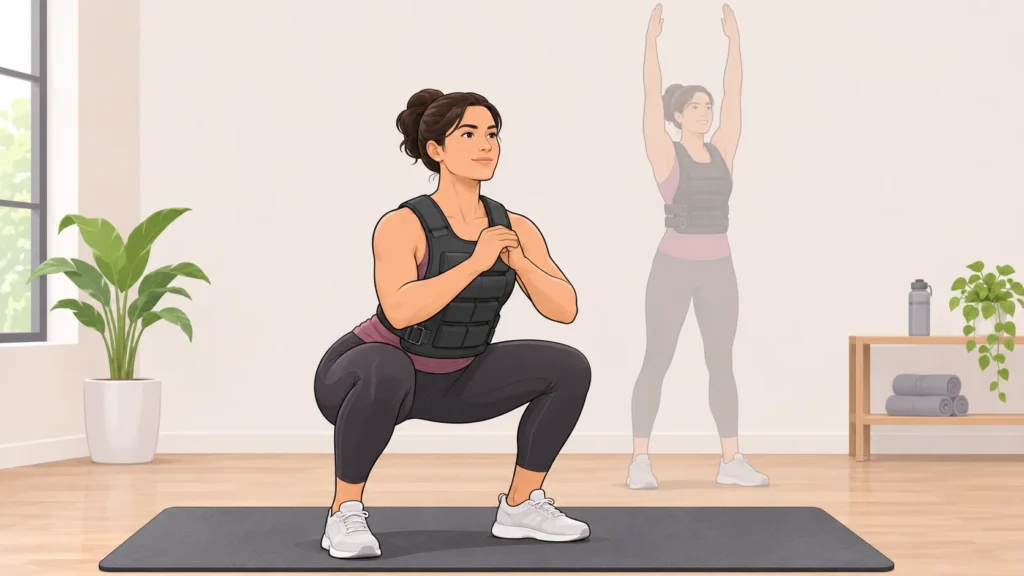
Before a full session, test the vest with a few controlled versions of the movements you actually plan to perform. Start with walking in place or a short walk, then try reaching overhead and a few comfortable bodyweight squats. If relevant to your workout, add a push-up position or a gentle jog in place. There is no mandatory number of repetitions: the point is to see whether the vest stays centered and reasonably close to your torso without interfering with your normal movement.
Pause between movements to notice whether the vest rides up, swings, shifts to one side, or repeatedly needs repositioning. A small amount of movement may occur, but obvious repeated bouncing or slipping is a reason to stop and check the fit. The UNBROKENSHOP guide also suggests testing movements such as walking, squatting, reaching and push-ups, and notes that a vest can behave differently once exercise begins. Its suggestions are general guidance, not a substitute for the instructions for your vest.
If the vest shifts, stop, recenter it, and check the closures and load arrangement permitted by its design. If it feels restrictive, loosen the relevant closure and retest. If you cannot make it both reasonably stable and comfortable, do not force a tighter fit; the model or size may not work for you. Check the seller’s actual return terms before buying or wearing a vest, since return conditions vary.
Recheck after changing the load
Fit and load are separate decisions: a vest can feel secure at one load and shift differently after its resistance changes. With a model that allows weights to be added or removed, use only the placement and configuration described in its instructions. Do not improvise by concentrating weight in one area. After a load change, repeat the centering, breathing, reach and movement checks before continuing. If the vest is a fixed-weight model, you cannot use load changes to solve a fit problem; rely on its permitted adjustments and sizing information instead.
Also reassess when changing activity. A setup that feels steady during a controlled squat may move more during jogging or direction changes. Test the activity you intend to do at a manageable pace before extending the session or making movements more dynamic. If the vest becomes distracting or unstable, stop and readjust rather than continuing to compensate for it.
Read the signs
- Repeated bouncing or side-to-side shifting: Stop and check that the vest is centered and fastened correctly; make a small adjustment if the design permits, then repeat the movement test.
- Riding up or sliding during a movement: Reposition the vest and test that movement again. If it continues to slip despite correct adjustment, the fit may not suit your torso.
- Uncomfortable pressure or breathing feels restricted: Loosen the closure and reassess. Do not tighten further in pursuit of stability if breathing or movement is affected.
- Shoulder or arm movement feels blocked: Check the vest’s position and closures, then repeat the reach test. If the restriction persists, do not use that fit for the movement.
- Load feels uneven after a weight change: Stop and check the manufacturer’s prescribed weight placement and configuration before moving again.
These are practical fit cues, not a medical assessment. Stop if you feel unwell or experience pain, and seek appropriate professional advice when needed. Individual torso proportions and comfort vary; one adjustment or vest style will not suit everyone.
Choose for your fit process
When comparing options, look beyond the listed load. Check the actual torso sizing information, where and how the closures adjust, whether resistance is fixed or removable, and whether the maker provides clear fitting instructions. Adjustable designs may let you fine-tune fit or load, but adjustability alone does not guarantee a stable fit. Fixed-weight designs can still work if their sizing and permitted adjustments suit you. For a broader look at available designs, see TheTopZone’s weighted-vest Top Picks; use the product’s own sizing and instructions to make the final fit decision.
Illustrative example: Suppose you are choosing a vest for both walking and bodyweight squats. An adjustable design may give you more opportunity to refine the torso fit, but you would still need to test it in both movements and use only its specified weight arrangement. A fixed-weight vest might also be suitable if its size fits and it stays stable in both tests. The deciding evidence is the specific vest’s fit information and your movement check—not the category label alone.