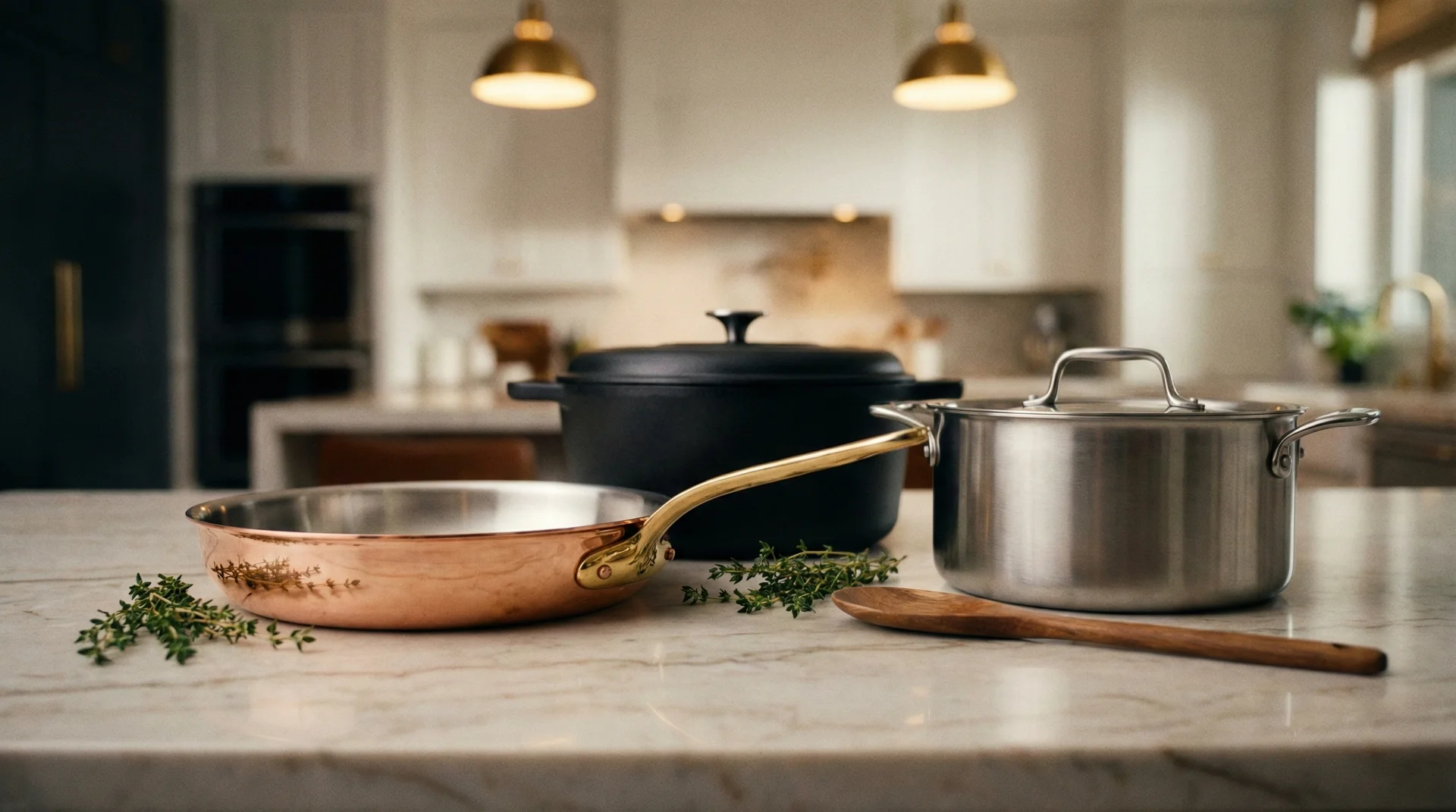
Stepping into a professional kitchen or even a well-stocked home goods store can feel a bit like entering a high-tech laboratory. Rows of gleaming silver, matte black heavy-hitters, and shimmering copper pots line the shelves, each promising to turn you into a culinary maestro. But for the average home cook, the sheer variety of materials and constructions can be paralyzing. Is a $300 copper pan really ten times better than a $30 stainless steel one? Why does everyone seem to have a love-affair with cast iron despite its weight? The truth is, there is no single “perfect” pan for every task. Instead, the secret to a functional kitchen lies in understanding the unique personalities of different cookware materials.
Choosing the right cookware isn’t just about aesthetics or even durability; it’s about physics. Different metals conduct and retain heat in distinct ways, directly impacting how your food cooks. A delicate piece of fish requires a different thermal environment than a thick ribeye steak or a slow-simmering tomato sauce. By mastering the characteristics of stainless steel, non-stick, cast iron, and more, you can match your equipment to your menu, resulting in better textures, deeper flavors, and a much more enjoyable cooking experience.
In this comprehensive exploration, we’re going to break down the most common types of cookware you’ll encounter. We’ll look at the pros, the cons, and the specific tasks where each material shines. Whether you are building a registry, upgrading your old hand-me-downs, or simply curious why your eggs keep sticking, this deep dive will provide the clarity you need to cook with confidence.
Stainless Steel: The Kitchen’s Indestructible Hero
If you were to peek into the kitchen of a Michelin-starred restaurant, you’d likely see stacks of stainless steel pans. There’s a reason for this: stainless steel is the ultimate workhorse. It is incredibly durable, resistant to rust and corrosion, and—perhaps most importantly—non-reactive. This means you can cook highly acidic foods, like wine-based sauces or lemon-infused dishes, without the metal leaching a metallic taste into your food or damaging the pan’s surface.
However, stainless steel has a bit of a secret. On its own, it’s actually a poor conductor of heat. To fix this, high-quality stainless steel cookware is “clad.” This means layers of highly conductive metals, like aluminum or copper, are sandwiched between layers of stainless steel. This construction, often referred to as “tri-ply” or “5-ply,” allows the pan to heat up quickly and evenly across the entire surface, preventing those dreaded hot spots that can scorch your onions while leaving others raw. When shopping, always look for pans where the cladding extends all the way up the sides, not just at the bottom disc.
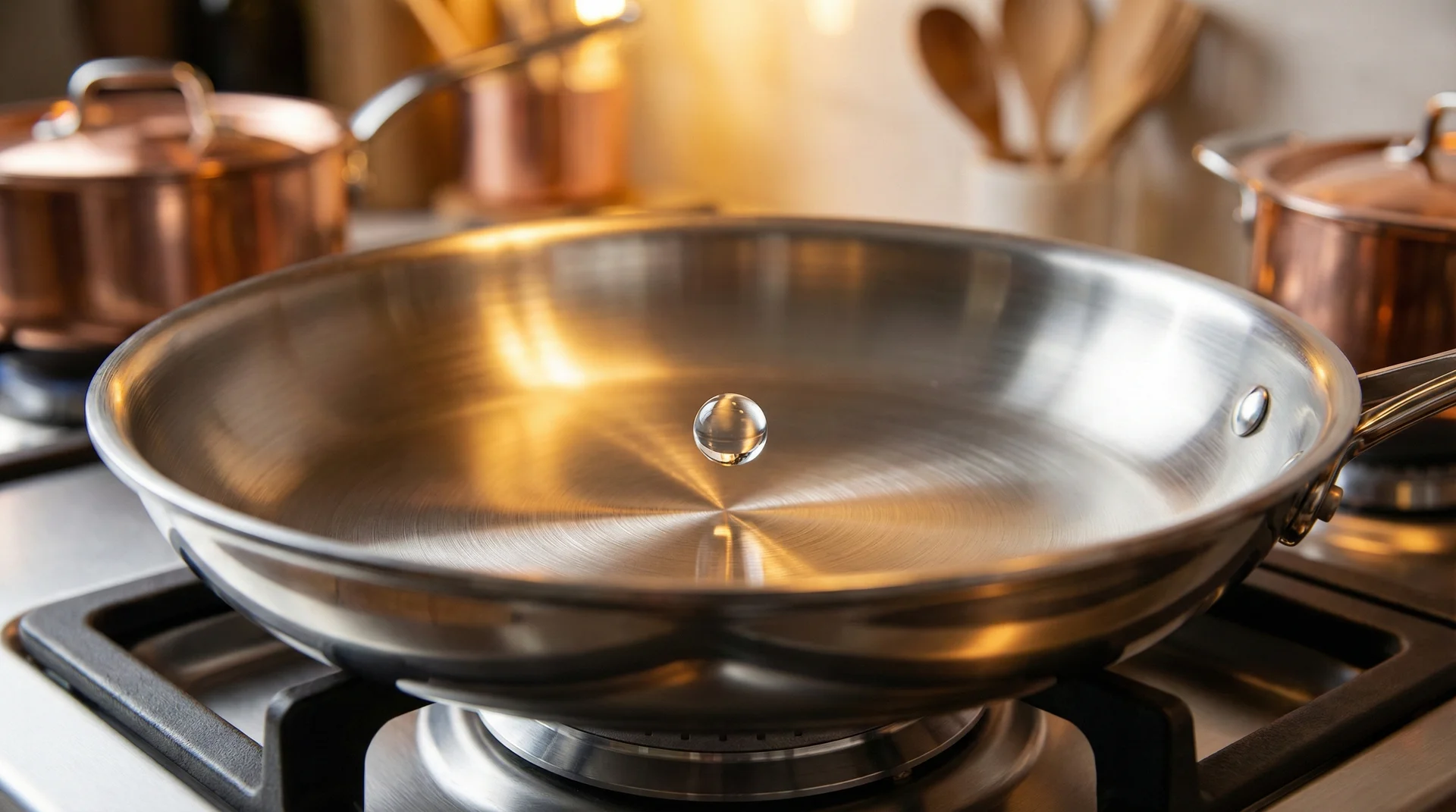
The learning curve for stainless steel mostly involves temperature control. Because it lacks a chemical non-stick coating, food can stick if the pan isn’t properly preheated. The trick is the “Leidenfrost effect”—wait until a drop of water beads up and dances across the pan like mercury before adding your oil and food. Once you master this, stainless steel offers the best fond (those little browned bits) for making delicious pan sauces.
Non-Stick Cookware: Convenience at a Cost
Almost everyone owns at least one non-stick skillet. It is the undisputed king of the breakfast table, making omelets, crepes, and delicate fish fillets effortless to flip. Modern non-stick cookware generally falls into two categories: PTFE-based (commonly known by the brand name Teflon) and ceramic-coated. Both offer a slick surface that requires very little oil, making them a popular choice for health-conscious cooks.
The primary advantage of non-stick is, of course, the ease of use and cleanup. You don’t need to worry about the complex physics of heat cycles; you just turn on the stove and go. However, this convenience comes with limitations. Non-stick coatings are fragile. They can be easily scratched by metal utensils, and their effectiveness degrades over time. Even the most expensive non-stick pan will likely need to be replaced every three to five years, whereas a stainless steel pan can last a lifetime.
Safety is another consideration. Traditional PTFE coatings can release fumes if heated to extremely high temperatures (usually above 500°F). For this reason, non-stick is best reserved for low-to-medium heat tasks. If you’re looking to sear a steak at high heat, reach for a different material. Ceramic-coated pans are a newer alternative marketed as “greener” or “safer” because they don’t use PFOA or PTFE, but keep in mind that their non-stick properties often fade faster than their traditional counterparts.
Cast Iron: The Timeless Kitchen Essential
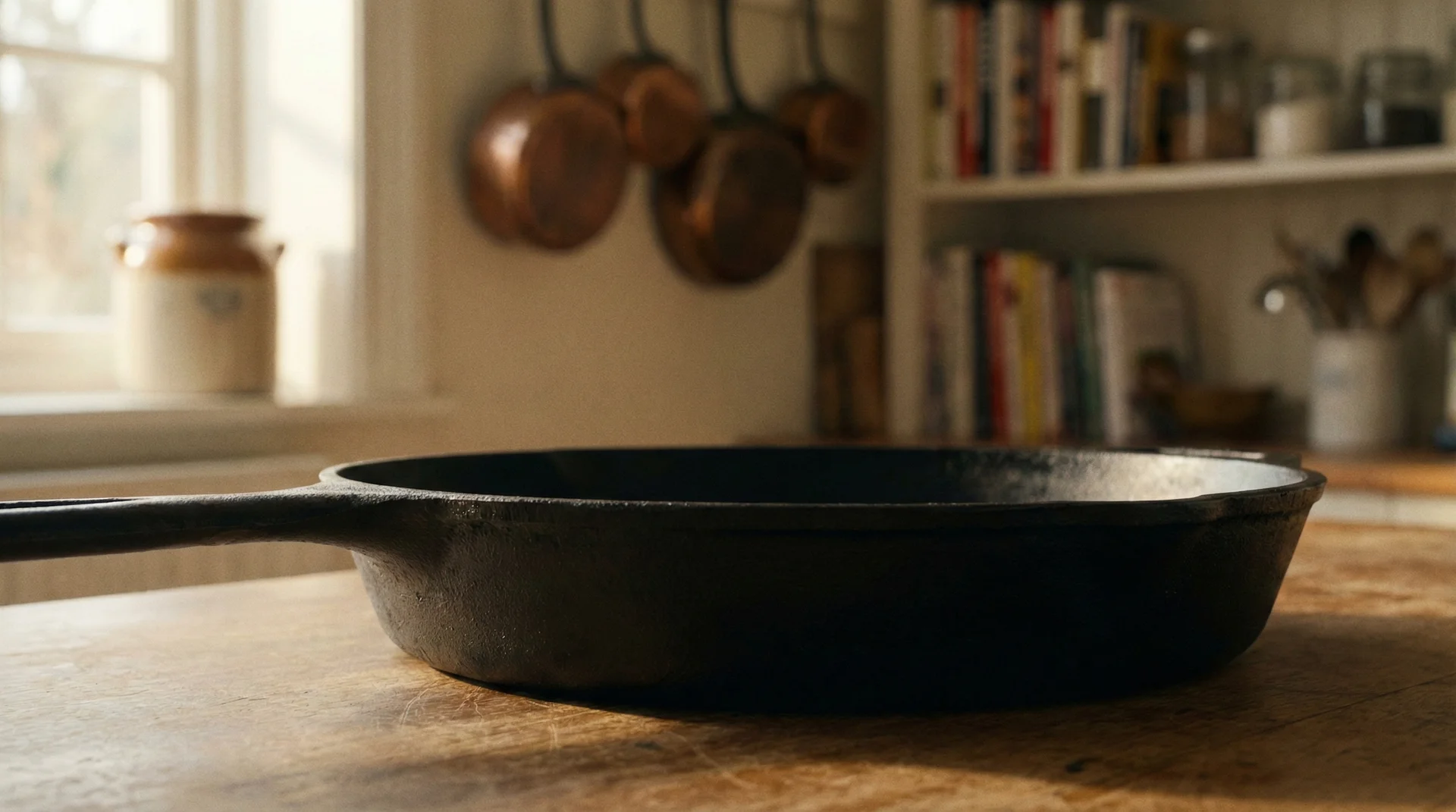
Cast iron is perhaps the most beloved and misunderstood material in the kitchen. It is heavy, slow to heat up, and requires a bit of special care, yet it has a cult following for a reason. Its greatest strength is its incredible heat retention. Once a cast iron skillet gets hot, it stays hot. This makes it the absolute gold standard for searing steaks, achieving a crust that other materials struggle to replicate.
Many people are intimidated by the “seasoning” process, but it’s simpler than it sounds. Seasoning is just a layer of carbonized oil that has bonded to the metal, creating a naturally non-stick surface. While you shouldn’t soak cast iron in the sink or put it in the dishwasher, the myth that you can never use a drop of soap is largely debunked. A gentle scrub and a quick dry on the stovetop are usually all it takes to keep it in prime condition. Plus, the more you use it, the better the non-stick surface becomes.
Cast iron is also incredibly versatile because it can move seamlessly from the stovetop to a high-heat oven. It’s perfect for cornbread, deep-dish pizzas, and oven-roasted chickens. Because it’s essentially a solid hunk of iron, it is virtually indestructible. Many families pass down cast iron skillets through generations, making it one of the few kitchen tools that actually gets better with age.
Enameled Cast Iron: The Best of Both Worlds
If you love the heat retention of cast iron but hate the maintenance of seasoning, enameled cast iron is the answer. Brands like Le Creuset and Staub have built empires on this material. By coating the iron in a smooth porcelain enamel, manufacturers create a surface that is non-reactive and requires no special care. You can simmer a tomato sauce for six hours without worrying about the iron leaching, and you can soak it in the sink without fear of rust. While it lacks the searing prowess of raw cast iron, it is the ultimate vessel for braising, stewing, and baking bread.
Carbon Steel: The Pro Chef’s Secret
If stainless steel is the workhorse and cast iron is the powerhouse, carbon steel is the nimble hybrid. Often found in professional kitchens and used almost exclusively for woks, carbon steel offers the heat retention and non-stick potential of cast iron but with significantly less weight. It responds more quickly to changes in temperature, which is why it is the preferred choice for stir-frying and sautéing where precision matters.
Like cast iron, carbon steel requires seasoning to develop its dark, slick patina. It is not a “pretty” pan; it will discolor and look mottled as you use it, but that is a sign of a well-loved tool. Because it is thinner than cast iron, it can develop hot spots if used on a small burner, but its ability to take a beating and its lightweight nature make it a favorite for those who find cast iron too cumbersome. If you want the performance of iron but want to be able to toss your vegetables with a flick of the wrist, carbon steel is your best bet.
Copper Cookware: Precision and Beauty
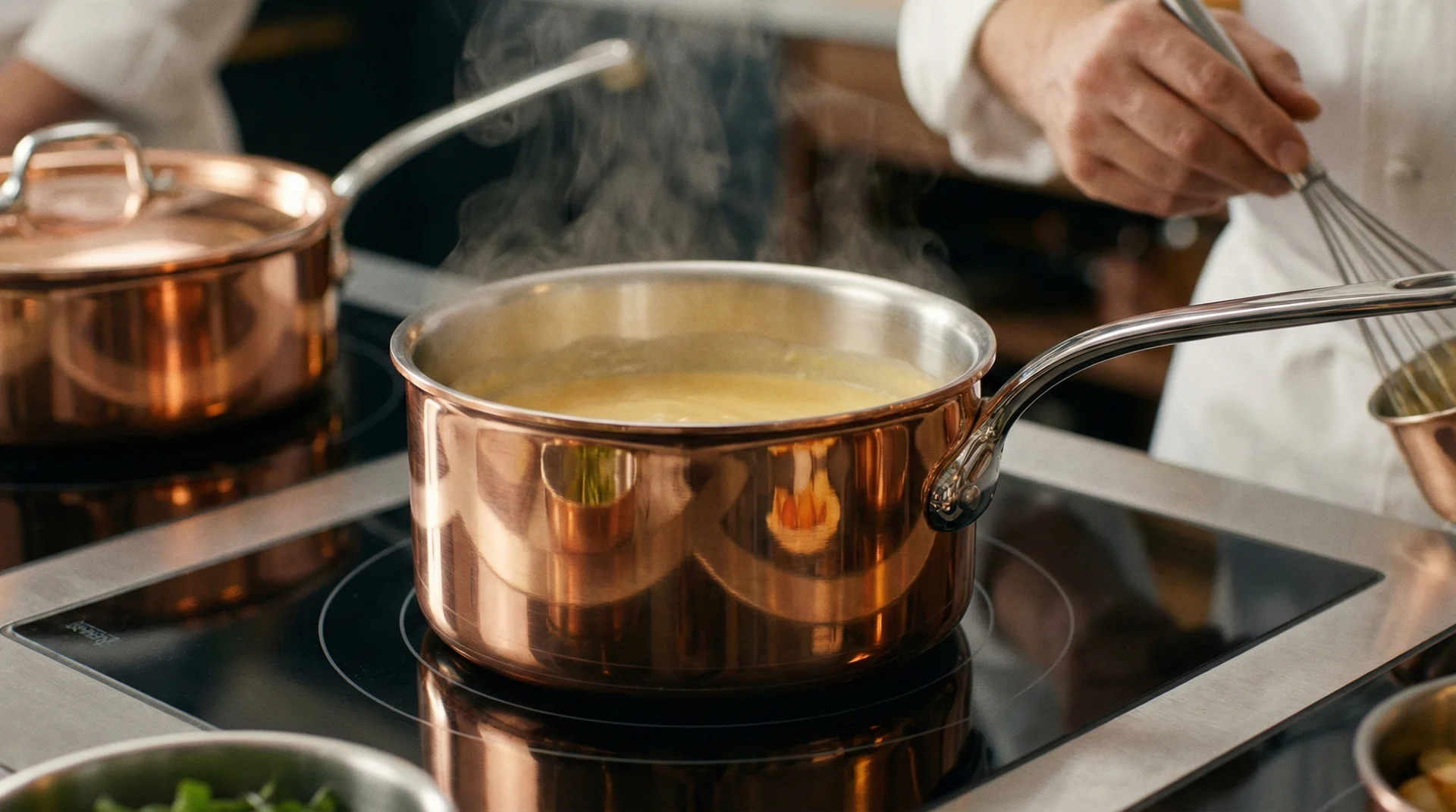
Copper is the undisputed king of thermal conductivity. It heats up almost instantly and, perhaps more importantly, cools down just as fast. This level of control is vital for delicate tasks like tempering chocolate, making hollandaise sauce, or creating intricate sugar work. In the hands of a skilled cook, copper is like driving a high-performance sports car—it responds to every tiny adjustment of the dial.
However, copper is a high-maintenance material. It is expensive—often the most expensive option on the market—and it tarnishes easily, requiring regular polishing to maintain its iconic glow. Furthermore, copper is highly reactive. Most modern copper pans are lined with a thin layer of stainless steel or tin to prevent the copper from reacting with acidic ingredients. Tin is more non-stick but can melt if the pan is left empty on high heat, while stainless steel lining is more durable but slightly less conductive. Copper is a luxury, but for the serious enthusiast, its performance is unmatched.
Ceramic Cookware: The Modern Alternative
It is important to distinguish between 100% ceramic cookware and ceramic-coated metal. Pure ceramic (like Xtrema) is completely non-reactive and can withstand incredibly high temperatures, but it is brittle and can crack if dropped or subjected to thermal shock. It’s a niche choice for those who are extremely concerned about metal leaching or who want a piece that can go from the freezer to the oven to the microwave.
Ceramic-coated cookware, on the other hand, is usually an aluminum base with a silica-based coating. It’s marketed as a healthy alternative to Teflon. While these pans are excellent for the first six months, many users find that the non-stick properties degrade much faster than traditional non-stick. They are great for low-heat cooking and add a pop of color to the kitchen, but they aren’t meant for heavy-duty searing or long-term durability.
How to Choose the Right Cookware for You
With all these options, how do you actually decide what to buy? The first step is to assess your stove type. If you have an induction cooktop, you need magnetic cookware. Stainless steel and cast iron work perfectly, but pure copper and aluminum will not work unless they have a specialized magnetic base. Check your pans with a simple refrigerator magnet; if it sticks to the bottom, it’s induction-compatible.
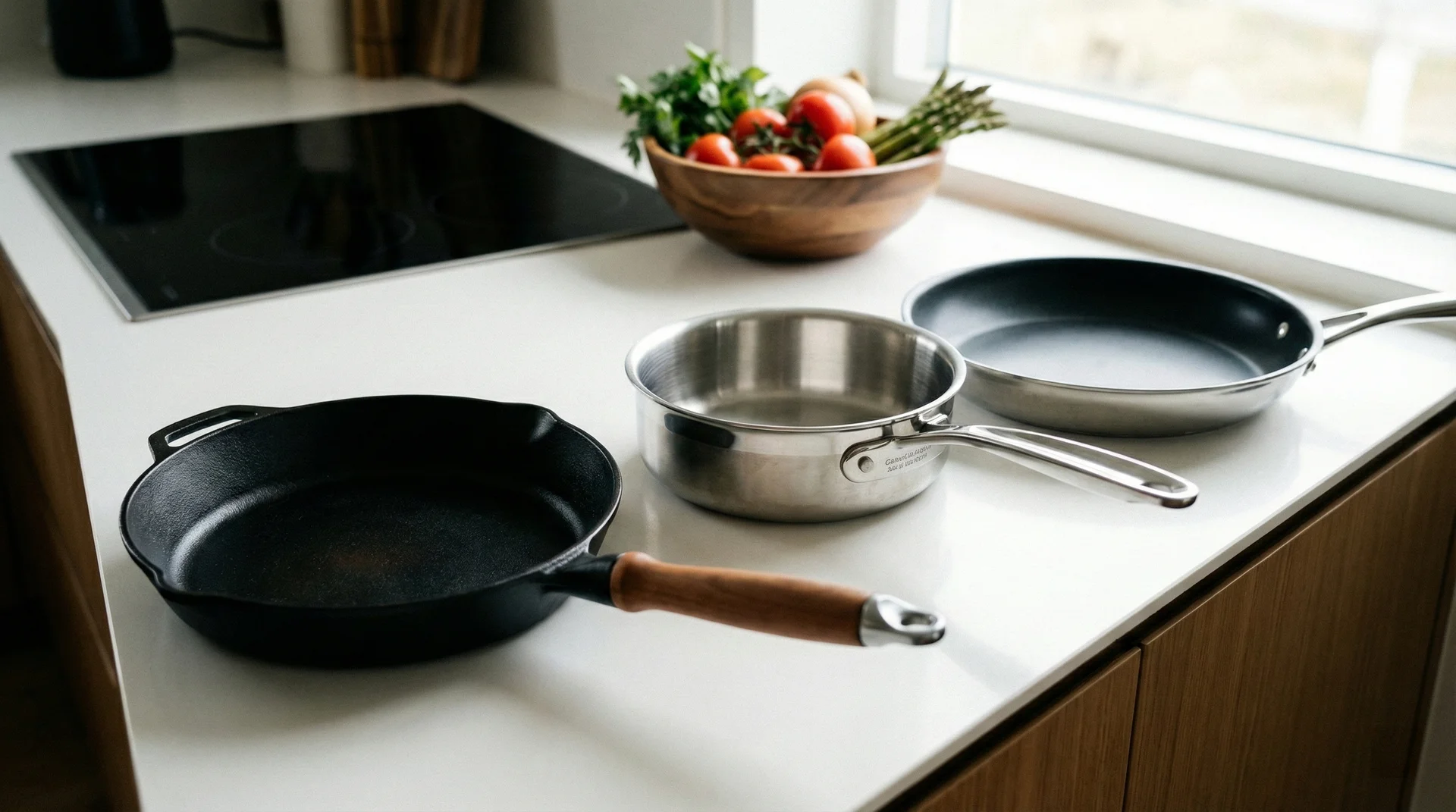
Next, think about your cooking style. Do you find yourself making quick weeknight stir-fries and eggs? A combination of a carbon steel wok and a high-quality non-stick skillet might be your best investment. Do you prefer slow-cooked stews and braised meats? An enameled cast iron Dutch oven is an absolute must-have. Most home cooks find that a “mix and match” approach works best. You don’t need a 12-piece set of the same material. In fact, you’re better off buying individual pieces: a stainless steel saucier, a cast iron skillet, and a non-stick frying pan.
Finally, consider your budget and maintenance threshold. If you hate hand-washing, stay away from cast iron, carbon steel, and copper. If you want a one-time purchase that you can leave to your kids, invest in high-end multi-clad stainless steel. Cookware is an investment in your daily life. While it’s tempting to buy the cheapest set available, high-quality pans make cooking more predictable and less frustrating, which ultimately means you’ll spend more time enjoying your kitchen and less time scrubbing burnt bits off a thin, warped pan.
Making Your Cookware Last
Regardless of which material you choose, the way you care for your pans will determine their lifespan. Avoid using high heat for everything; most tasks are better suited for medium heat, which prevents warping and preserves non-stick surfaces. Use the right utensils—silicone or wood for non-stick, and metal only for stainless steel or cast iron. By matching your technique to your tools, you ensure that your kitchen remains a place of creativity rather than a source of frustration. Understanding the “why” behind your cookware is the first step toward becoming a more intuitive, successful cook.