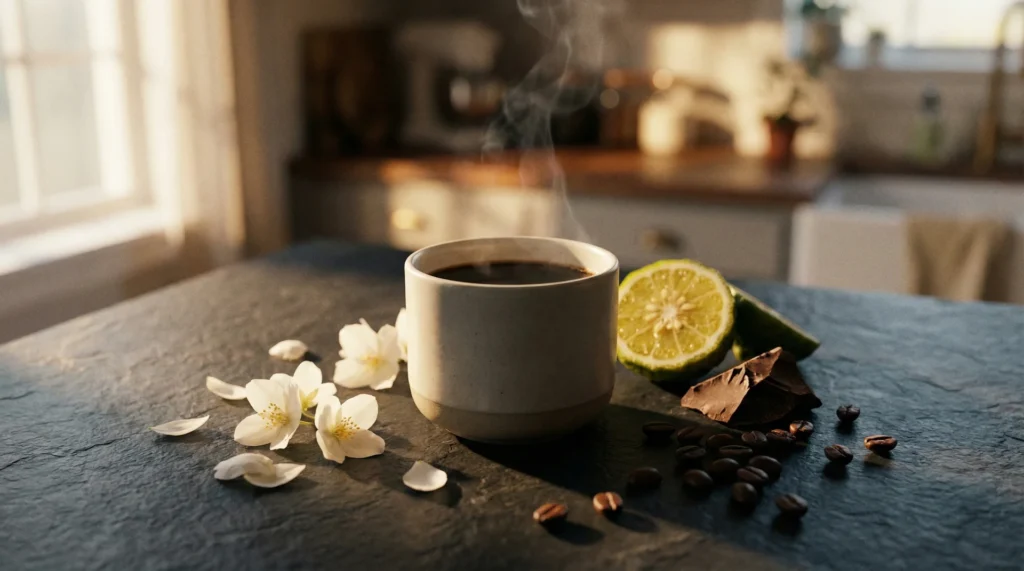
Have you ever taken a sip of specialty coffee and heard someone describe it as having 'notes of jasmine and bergamot,' only to find yourself wondering if they were drinking the same beverage as you? To the uninitiated, coffee often just tastes like, well, coffee. But beneath that initial hit of caffeine lies a complex world of chemistry, agriculture, and artistry. In fact, coffee has a more diverse chemical flavor profile than wine, with over 800 aromatic compounds identified by scientists.
Learning to identify these flavors isn't just for snobbish baristas or professional cuppers. It is a journey that transforms your morning routine from a simple caffeine delivery system into a sensory experience. By understanding flavor profiles, you can stop gambling on random bags of beans and start choosing the exact sensory experience you want to wake up to every day. This guide will walk you through the nuances of coffee tasting, from the influence of soil to the magic of the roast.
The Building Blocks of Coffee Flavor
Before we dive into specific notes like 'blueberry' or 'toasted walnut,' we need to understand the three pillars of coffee perception: acidity, body, and aroma. These are the structural elements that define how a coffee feels and tastes in your mouth.
Acidity in coffee doesn't refer to the pH level (though coffee is acidic). Instead, it refers to a bright, dry, or sparkling sensation on the tongue. Think of the difference between a crisp green apple and a glass of flat water. That 'pop' of brightness is acidity. Body, or mouthfeel, is the weight of the coffee on your tongue. Is it thin and tea-like, or heavy and syrupy like whole milk? Finally, aroma is perhaps the most important part, as our sense of smell accounts for a massive portion of what we perceive as flavor through retronasal olfaction.

The Coffee Taster's Flavor Wheel
The Specialty Coffee Association (SCA) created the Flavor Wheel to provide a common language for the industry. While it looks intimidating at first, it is actually quite intuitive. You start at the center with broad categories and work your way out to more specific descriptors.
Fruity and Floral Notes
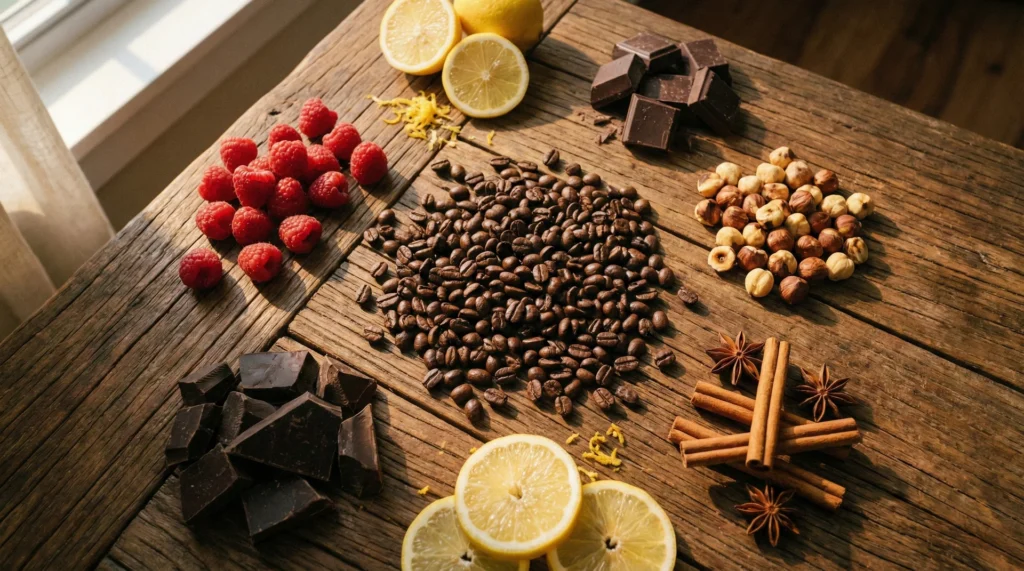
Fruity notes are common in lightly roasted coffees, particularly those from East Africa. You might taste 'stone fruit' (like peach or apricot), 'citrus' (lemon or grapefruit), or 'berries' (raspberry or strawberry). Floral notes are more delicate and often found in high-altitude beans like those from Ethiopia. These can range from the sweet scent of jasmine to the herbal quality of black tea or lavender.
Nutty and Cocoa Notes
If you prefer a more traditional 'coffee' taste, you are likely a fan of nutty and cocoa profiles. These are typical of Central and South American coffees, especially those from Brazil and Colombia. Common descriptors include roasted peanuts, hazelnuts, milk chocolate, and dark cocoa. These flavors are often more pronounced in medium roasts where the sugars in the bean have had time to caramelize.
Spice and Earthy Tones
Some coffees, particularly those from Indonesia and parts of India, offer a savory or earthy profile. You might pick up on notes of cedar, tobacco, or even fresh soil. Spiced notes can vary from 'sweet spice' (cinnamon and nutmeg) to 'savory spice' (clove or black pepper). These coffees tend to have a heavy body and low acidity, making them very grounding and intense.
How Origin Shapes the Beans
Just like wine has terroir, coffee is a product of its environment. The soil composition, rainfall, and altitude all play a role in what ends up in your cup. Generally, higher altitudes lead to denser beans with more complex acidity because the cherries grow more slowly, allowing more sugars to develop.
Latin American coffees are famous for their balance. They usually offer a clean mouthfeel and a nice mix of nutty and chocolatey notes with a gentle citric acidity. African coffees, on the other hand, are the 'wild' children of the coffee world. They are often incredibly vibrant, floral, and tea-like. Asian and Pacific coffees, such as those from Sumatra, are known for being bold, earthy, and syrupy with almost no perceptible acidity.
The Impact of Processing Methods
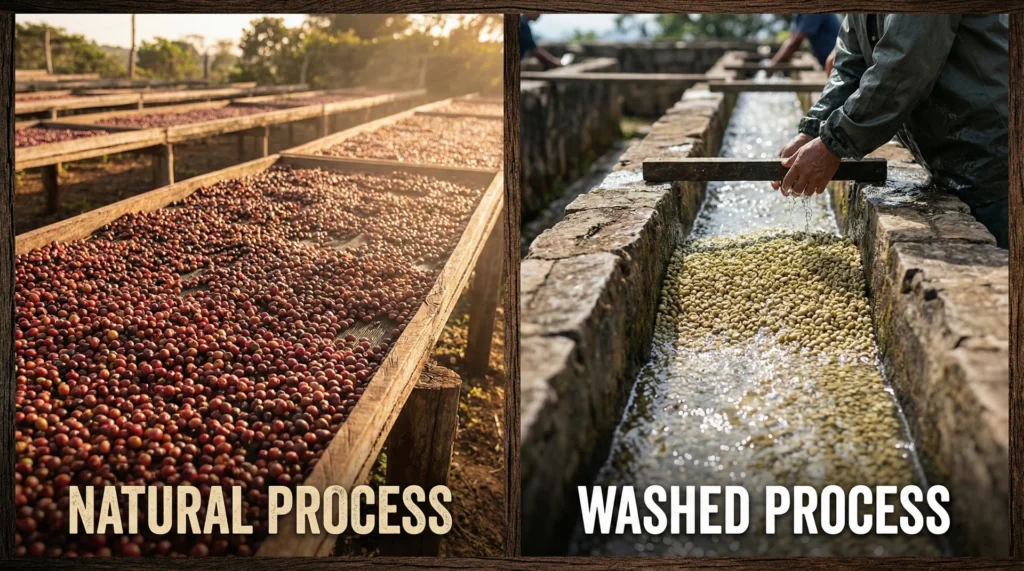
Once the coffee cherry is harvested, the fruit must be removed to get to the seed (the bean). How this is done drastically changes the flavor profile. The two most common methods are 'Washed' and 'Natural'.
In a washed process, the fruit is stripped away immediately. This results in a 'clean' cup that highlights the inherent characteristics of the bean itself. You get bright acidity and clear, distinct flavor notes. In a natural process, the cherries are dried with the fruit still on the bean. This allows the sugars and flavors of the fruit to ferment and seep into the seed. Natural coffees are often 'funkier,' with heavy fruit notes (like dried fruit or wine) and a thicker body.
Roast Levels and the Development of Sugar
Roasting is the final stage of flavor development. It is a delicate dance between preserving the bean's origin flavors and introducing the flavors of the roasting process itself. A light roast is like a photograph of the farm; it preserves the acidity and floral/fruity notes. As the roast gets darker, the heat begins to break down the natural acids and caramelize the sugars.
A medium roast hits the 'sweet spot' for many, balancing acidity with sweetness and body. Once you get into dark roast territory, the 'roast flavors' begin to dominate. You'll taste smoky, charred, and bitter notes as the oils migrate to the surface of the bean. While dark roasts have less complexity, they offer a comforting, bold intensity that pairs beautifully with milk.
Developing Your Palate at Home
Tasting coffee is a skill, and like any skill, it requires practice. To start developing your palate, try drinking your coffee black—even if it's just for the first few sips. Milk and sugar are wonderful, but they act as a mask, hiding the subtle nuances of the bean.
Another great exercise is side-by-side tasting. Brew two different coffees at the same time—perhaps an Ethiopian and a Brazilian. When you taste them one after the other, the differences become glaringly obvious. One might feel 'sharp' and 'bright' while the other feels 'smooth' and 'round.' Don't worry about getting the descriptors 'right' at first. Use your own words. If it tastes like a specific brand of cereal or a fruit from your childhood, use that! The more you connect flavors to your own memories, the better you will become at identifying them.

Conclusion: Your Journey Into Flavor
Coffee is so much more than a morning jolt; it is a complex agricultural product with a story to tell. By paying attention to the acidity, body, and specific flavor notes, you start to appreciate the hard work of the farmers, processors, and roasters who made your cup possible. Whether you find yourself drawn to the bright berries of a Kenyan light roast or the deep chocolate of a Sumatran dark roast, the most important thing is that you enjoy the journey. So, next time you brew a pot, slow down, take a deep sniff, and see what you can discover. Your perfect cup is out there, waiting to be identified.