





How to Clear Snow and Ice From a Car Without Scratching It
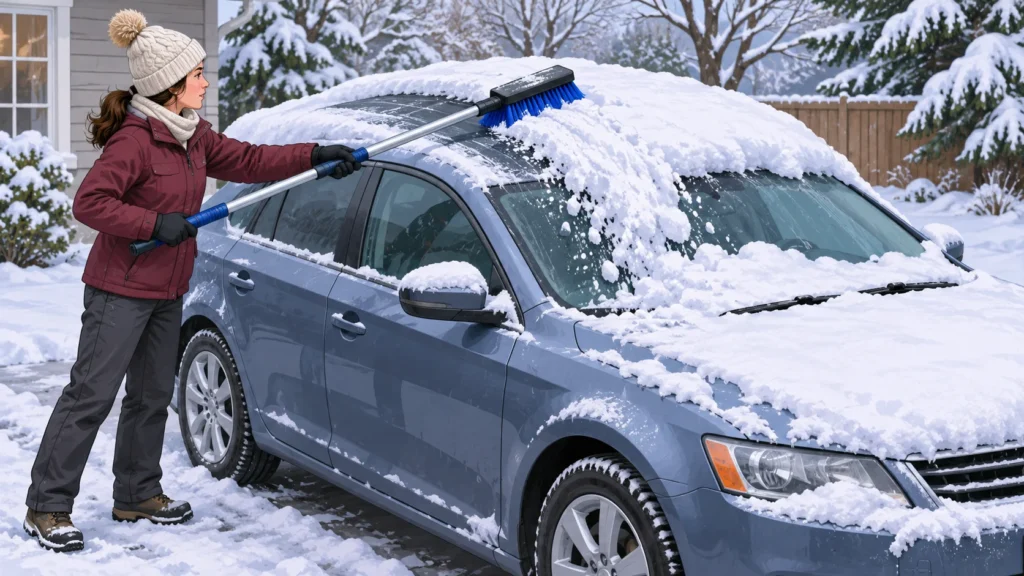
Clearing a car after a storm is a balance: remove enough snow and ice for a clear view, but avoid dragging grit across paint or glass. No brush or scraper can guarantee a scratch-free result, especially if dirt is caught in snow or on the tool. The practical aim is to reduce abrasion: use a soft brush for loose snow, keep scraping to glass, and stop when ice resists rather than forcing it.
Work from the highest surfaces down so snow does not fall back onto areas you have already cleared. Once the loose snow is gone, deal with bonded ice separately. This guide covers the order of work and what to do when ice will not lift; for help choosing a brush or scraper, see our Top Picks guide to snow brushes.
Prepare the car and tools
Use a vehicle snow brush with a soft brush or foam head for loose snow. A plastic ice scraper is for ice on glass, not for scraping painted panels. A snow-brush guide describes foam heads as an option for moving snow over paint and notes that brush types and intended surfaces vary; follow the directions for your own tool rather than assuming every head is suitable for every surface. Sensible Digs’ snow-brush guide
Before starting, inspect the brush head and scraper edge for obvious damage or trapped grit. Remove loose debris from the tool without rubbing it against the car. If snow contains grit or road debris, use particularly light contact and avoid repeated back-and-forth strokes. A soft tool lowers risk; it does not make abrasive debris harmless. If a tool looks damaged or dirty and you cannot clean it, choose another one.
Clear a safe working space around the car so you can stand steadily and reach without leaning heavily on the bodywork. Wear gloves that allow you to hold the tool securely. Use the vehicle’s defroster only as directed in its owner’s manual, and do not rely on it as a substitute for clearing the windows. Avoid pouring hot water on frozen glass: the practical guide in the source packet cautions against rapid heating and refreezing. CleaningBro’s snow-clearing guide
Clear loose snow from the top down
Remove loose snow before working on ice. This makes it easier to see what is actually bonded and reduces unnecessary scraping. Use steady strokes that move snow off the vehicle rather than scrubbing it around. If the head catches, feels gritty, or makes a scraping sound, stop and inspect the contact area instead of pushing harder.
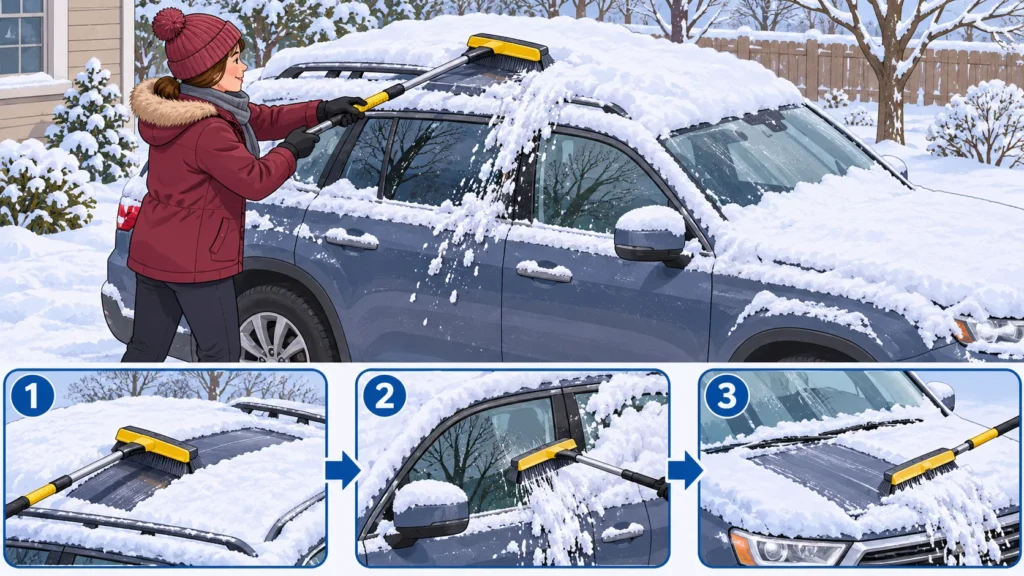
- Roof: Stand beside the car and push snow off the roof with the brush or foam head, working across it in controlled passes. Use a tool long enough to reach without leaning on the vehicle. Clear the roof before the glass so snow does not slide onto already-cleared windows. For a large roof, work from accessible edges and reposition yourself as needed instead of stretching across the car.
- Windows: Brush loose snow off the windshield, side windows and rear window. Use light strokes; do not press hard or scrub snow around. Keep the brush head as flat against the surface as you can, and avoid dragging a dirty brush over areas you have already cleared.
- Hood and trunk: Move loose snow away from these surfaces, taking care not to pull roof snow back across a cleared area. Avoid pushing a heavy pile onto the windshield or into gaps. If snow is compacted or gritty, use less pressure and take smaller passes rather than forcing it along the paint.
- Mirrors and lights: Clear snow from both mirrors and the headlight and taillight lenses. Use the soft brush rather than an ice scraper on painted housings or trim. Take care around edges and seams, where an ill-fitting tool may catch.
This top-down sequence and gentle, controlled movement are practical ways to limit repeated contact with grit. The advice comes from a general-use guide, not a guarantee against scratches for every paint finish, brush, or snow condition. Read the source’s snow-removal steps
Scrape bonded ice on glass, not paint
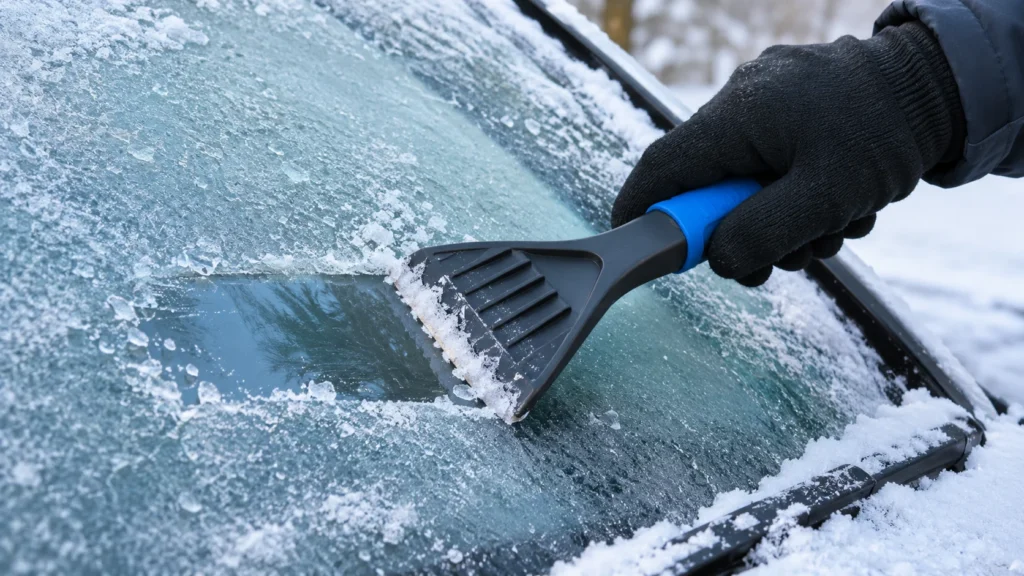
Once loose snow is off, look for ice that is actually bonded to a window. Use a scraper intended for vehicle glass, with its edge held at a shallow angle, and make controlled, straight strokes. Avoid scraping in tight circles or using the scraper on paint, mirror housings, lights, plastic trim or rubber seals. Bob Vila’s guide discusses ice scrapers as windshield tools and describes plastic scraper designs; that does not establish that a scraper is safe for bodywork. Bob Vila’s ice-scraper guide
Start with a light pass and check whether the ice releases. Do not treat the scraper as a chisel: avoid jabbing at thick ice or levering against window edges. If ice does not release with moderate pressure, stop. Use the vehicle’s defroster according to the owner’s manual or apply a de-icer only if its label says it is suitable for the surface in question. Give it time to work, then try again gently. The supplied practical guide recommends loosening ice before scraping and cautions against hot water; use the product label and vehicle manual rather than treating any general dwell time as universal. CleaningBro’s guidance on loosening ice
Pay special attention to the wiper area. Do not pry at ice beside wipers, seals or trim, and do not force frozen wipers away from the glass. Soften the ice first and follow the vehicle manual before operating the wipers. If the scraper edge has picked up grit from another surface, clean it before using it on glass. If it is chipped or rough, do not drag it across a window. Even a suitable scraper can mark glass if debris is caught under its edge or excessive force is used.
Check visibility before driving
Finish by checking that the windshield, side windows, rear window, mirrors and lights are clear enough for you to see and be seen. Remove remaining snow from the roof and hood too; do not leave a loose layer that could shift while driving. Clear snow from around the wiper blades without tugging on frozen blades, and use the vehicle’s controls as instructed to confirm the windshield is clear.
Do not set off with only a small viewing gap through the windshield or with mirrors or lights still covered. If ice remains and visibility is limited, wait and continue clearing rather than driving before you can see adequately. The cleaning guide in the source packet emphasizes clearing windows and mirrors; exact vehicle controls and procedures should come from the owner’s manual. See the guide’s visibility-clearing advice
When to stop and reassess
- The brush catches or grinds: Stop brushing. Check for grit on the tool or surface, remove loose debris without rubbing it across the car, and resume with a clean head and lighter contact.
- Ice will not lift easily: Do not increase force or chip at paint, seals or trim. Use the defroster as instructed or a surface-compatible de-icer, then reassess.
- Wipers are frozen in place: Do not pull them free or switch them on against bonded ice. Soften the ice and follow the vehicle manual.
- You cannot reach the roof safely: Do not climb on the car or lean heavily against it. Use a suitable long-reach brush from the ground or get help.
The same method will not suit every storm: wet, compacted snow and grit-laden slush are harder to move gently than fresh loose snow. A soft head and careful order reduce unnecessary contact, but they cannot remove every risk of marks. When a pass feels rough or the ice resists, pause and loosen it rather than trying to finish faster by pressing harder.