





Choose the Perfect Running Shoes for Your Gait

Running is often celebrated for its simplicity. You don’t need a gym membership, a specialized court, or a team of twenty people to get started. You just need the open road and a pair of shoes. However, that last part—the shoes—is where things can get surprisingly complicated. If you’ve ever walked into a dedicated running store, you know the feeling. You’re met with a wall of neon colors, varying stack heights, and technical jargon like 'medial posts,' 'energy return,' and 'carbon plating.'
But before you pick a pair based on the aesthetics or the price tag, there is one critical factor you need to consider: your gait. Your gait is the unique way your body moves as you run, specifically how your foot strikes the ground and rolls through each step. Choosing a shoe that doesn't align with your natural mechanics is a fast track to discomfort, or worse, chronic injury. In this deep dive, we’re going to break down everything you need to know to find the perfect footwear for your specific stride.
Understanding the Mechanics of Pronation
To choose the right shoe, you first need to understand pronation. Pronation isn’t a bad thing; in fact, it’s your body’s natural way of absorbing shock. When your foot hits the ground, the arch flattens slightly, and the foot rolls inward. This motion helps distribute the impact of the strike. However, the degree to which your foot rolls determines which category of runner you fall into.
There are three primary types of pronation: neutral pronation, overpronation, and supination (also known as underpronation). Neutral runners have a foot that rolls inward about 15 percent, which is ideal for shock absorption and keeping the ankles and legs aligned. Overpronators experience an excessive inward roll, often associated with flat feet, which can put a strain on the big toe and the inner side of the knee. Supinators, on the other hand, have feet that don't roll inward enough. The impact is concentrated on the outer edge of the foot, which is common in those with high, rigid arches.
Identifying where you sit on this spectrum is the first step toward a pain-free running experience. If you ignore these mechanics, you’re essentially forcing your joints to take on stress they weren't designed to handle.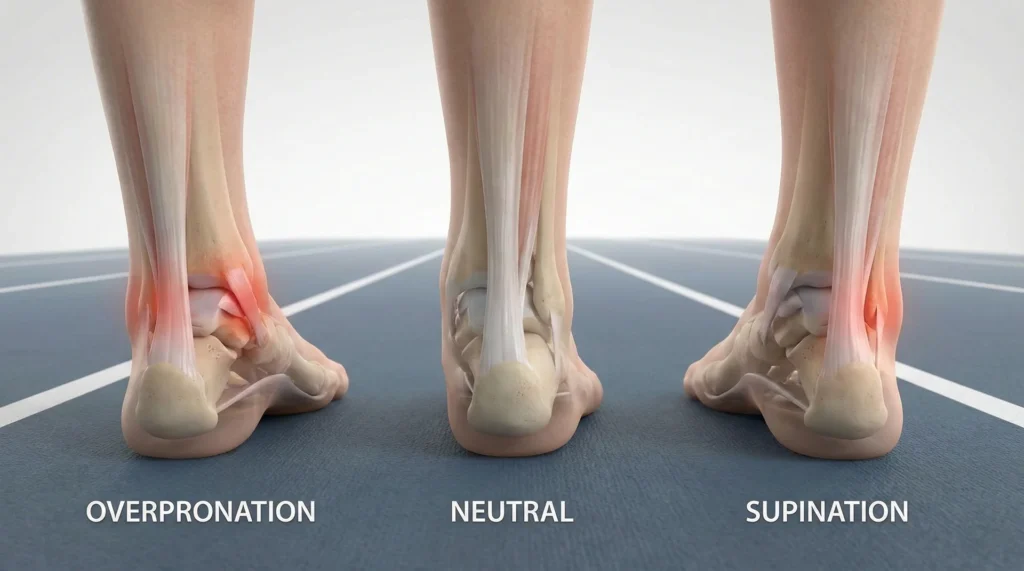
How to Analyze Your Gait at Home
While a professional gait analysis at a running boutique is the gold standard, you can get a very good idea of your foot type at home using two simple methods: the Wet Foot Test and the Wear Pattern Test. These DIY assessments provide a blueprint of your foot's structural tendencies.
The Wet Foot Test Explained
To perform the wet foot test, simply wet the sole of your foot and step firmly onto a piece of heavy paper or a dry concrete surface. Look at the imprint left behind. If you see about half of your arch, you likely have a neutral gait. If the imprint looks like a complete foot—meaning you can see the entire sole—you have low arches or flat feet, which indicates overpronation. If you only see your heel and the ball of your foot with a very thin line connecting them (or no line at all), you have high arches, suggesting supination.
Checking Your Old Running Shoes
Another tell-tale sign is the wear pattern on a pair of shoes you’ve already been using. Flip them over and look at the outsoles. Neutral runners will see wear concentrated on the outer heel and the ball of the foot. Overpronators will notice significant wear on the inside edge of the heel and the big toe. Supinators will see the most friction on the entire outer edge of the shoe. By combining the results of the wet foot test and your wear patterns, you’ll have a clear picture of what your feet need from a shoe.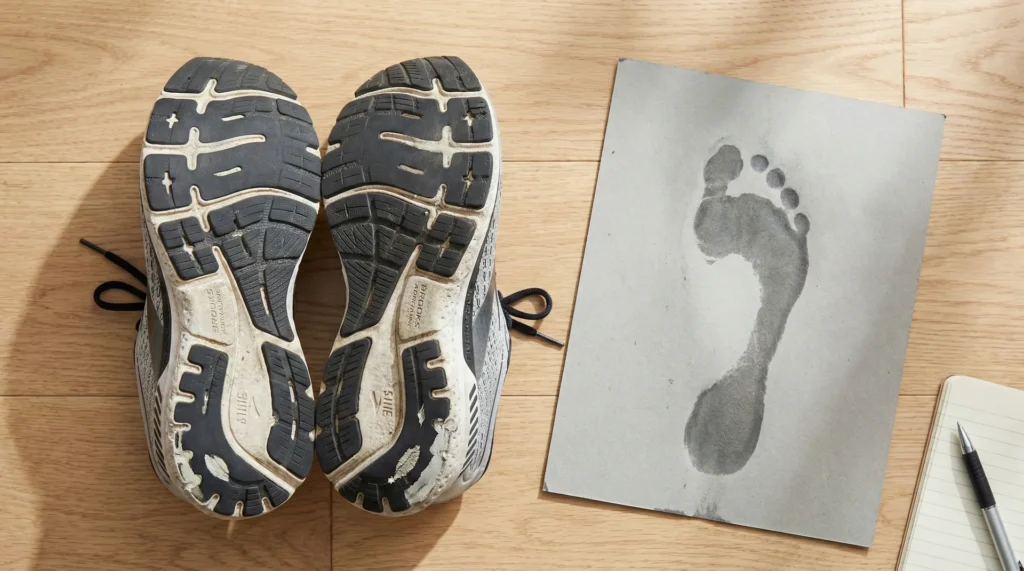
Matching Shoe Categories to Your Foot Type
Now that you know your gait, it’s time to navigate the three main categories of running shoes: Neutral, Stability, and Motion Control. Manufacturers design these shoes with specific geometries and foam densities to counteract or support certain movements.
Neutral Cushioned Shoes
Neutral shoes are designed for runners with neutral pronation or supination. Because supinators don't absorb shock well, these shoes feature a lot of cushioning in the midsole to mimic the natural shock absorption the foot lacks. They are flexible and don’t have much structural support on the medial (inner) side, allowing the foot to move naturally. If you have a high arch, look for 'plush' or 'maximum cushion' models.
Stability Shoes for Mild Overpronation
Stability shoes are the middle ground. They are built for runners with normal arches who experience mild to moderate overpronation. These shoes often feature a slightly denser foam (sometimes called a medial post) on the arch side of the midsole. This firmer material prevents the foot from rolling too far inward without being overly restrictive. They provide a balanced mix of cushioning and support.
Motion Control Shoes for Severe Overpronation
For those with very flat feet or severe overpronation, motion control shoes are the answer. These shoes are built on a wider, straighter last (the shape of the shoe) and feature heavy-duty support structures. They are designed to keep the foot in a more rigid, neutral position. While they are often slightly heavier than neutral shoes, the protection they offer against injuries like shin splints and bunions is invaluable for those who need it.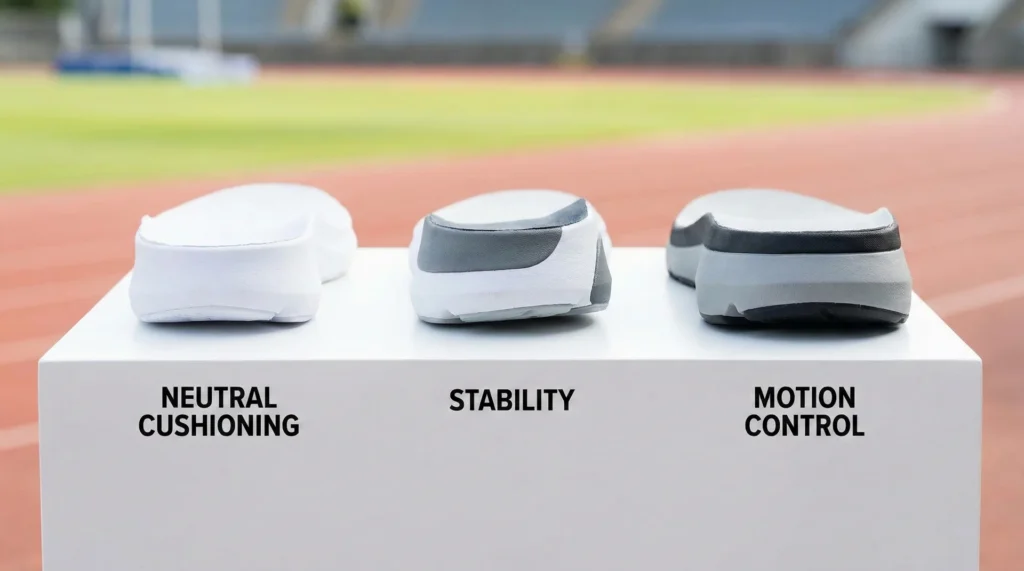
Beyond Gait: Fit and Feel Matter
Even if a shoe is technically perfect for your gait, it won't matter if the fit is wrong. Running shoes should generally be bought half a size to a full size larger than your casual shoes. This is because your feet swell as you run, especially over long distances. You want about a thumb’s width of space between your longest toe and the end of the shoe.
Pay attention to the width of the toebox as well. Your toes should be able to splay naturally as you push off the ground. If they feel cramped or pinched, you’re risking blisters and black toenails. A great tip is to go shoe shopping in the late afternoon or evening. Your feet are at their largest after a full day of walking around, which better simulates the swelling you’ll experience during a run.
Don't be afraid to trust your intuition. The 'comfort filter' is a real scientific concept in biomechanics; research suggests that the shoe that feels the most comfortable is often the one that is safest for your body. If a shoe feels 'clunky' or 'stiff' in the store, it likely won't get much better on the road.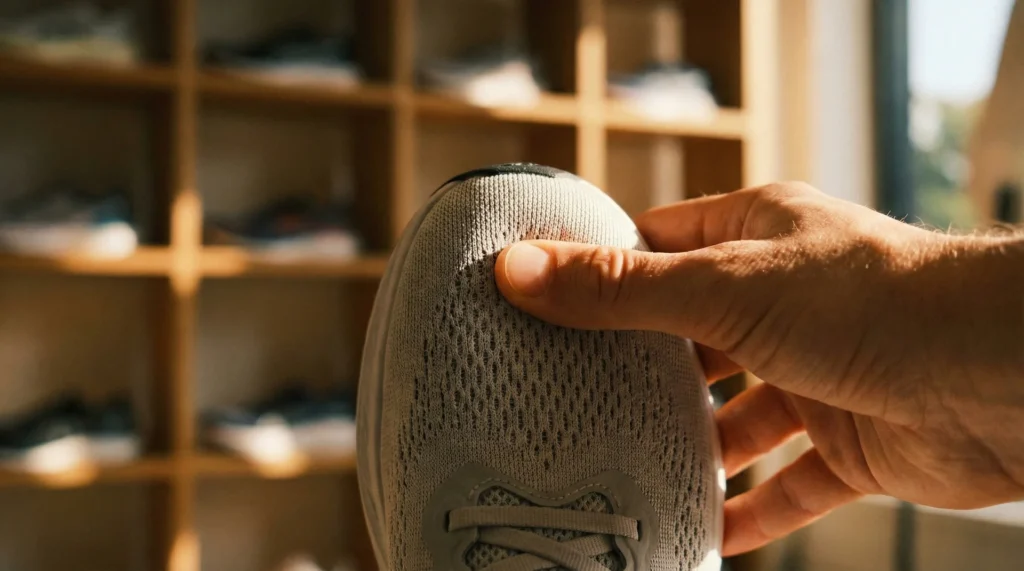
The Role of Heel-to-Toe Drop
One technical specification you’ll see on shoe boxes is the 'drop.' This is the difference in height between the heel and the forefoot. Traditional running shoes usually have a drop of 8mm to 12mm, which favors heel strikers. If you are a midfoot or forefoot striker, you might prefer a 'low drop' shoe (0mm to 4mm). Changing your drop drastically can put new stresses on your calves and Achilles tendons, so if you decide to switch, do so gradually to avoid injury.
When Is It Time to Retire Your Shoes?
No matter how perfect your shoes are, they won't last forever. Most running shoes have a lifespan of 300 to 500 miles. Over time, the midsole foam loses its resiliency and ability to absorb shock, even if the outsole still looks brand new. If you start feeling unusual aches in your knees or hips after a run, it’s a good sign that the structural integrity of your shoes has been compromised. Keeping a log of your mileage in an app or a journal is the best way to ensure you aren't running on 'dead' shoes.
Final Thoughts on Finding Your Sole Mate
Finding the right running shoes isn't just about speed; it's about longevity. By taking the time to understand your gait and matching it with the appropriate shoe technology, you are investing in your future health. Remember that every runner is an experiment of one. What works for a professional marathoner might not work for you, and that’s okay. Focus on your unique mechanics, prioritize comfort, and don’t be afraid to ask for help from experts. Now that you're armed with this knowledge, you can lace up with confidence and enjoy every mile.