


Branch Ergonomic Chair Pro Home Office Chair Review
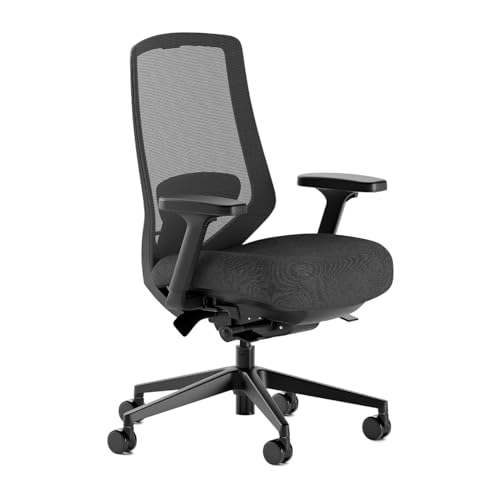
Specifications
| Brand | Branch |
|---|---|
| Chair Type | Ergonomic Office Chair |
| Overall Dimensions | 40 x 27 x 29.3 in |
| Weight Capacity | 275 lb |
| Armrest Type | 4D Adjustable Armrests |
| Lumbar Support | Adjustable Lumbar Support |
| Upholstery Material | Mixed Materials |
Pros
- Spine-following back support
- Adjustable lumbar support
- Smooth recline and tilt
Cons
- Assembly hassle
- Finicky headrest sliding
- Size-dependent comfort
The Verdict
With an 8.2 overall rating, the Branch Ergonomic Chair Pro is an office chair built around a spine-following back plus adjustable lumbar support, so it can feel aligned during long desk days. It can still be a mismatch if you want instant setup, or if your headrest adjustment annoys you, since assembly and headrest sliding can take patience.
Who it's for: People who adjust their setup until it feels right, especially those who need lower-back tuning and want 4D arms placed close to the desk, and who accept some fiddling during setup.
Who should skip it: Buyers who hate assembly steps, or who tend to be between sizes, since comfort and fit can vary and the headrest can feel finicky while sliding.
In-Depth Review
Ergonomics
The Branch Ergonomic Chair Pro scores 8.1 for ergonomics. The match to the Spine-following back support described in the listing is the core reason. Instead of a fixed curve, the backrest follows your movement. That matters when you alternate between upright work and a slight recline.
You also get adjustable lumbar support, with a padded two-way lumbar cushion that adjusts vertically. In real use, that helps you tune where the chair presses. The goal is to reduce lower-back strain during long sessions. For arm setup, the chair uses 4D adjustable armrests. With height and position adjustments, you can keep your shoulders relaxed instead of reaching forward.
The chair’s overall size is 40 x 27 x 29.3 in. That footprint matters if you sit close to a desk or if you share space in a home office. Size can influence how well the back support aligns with your spine, which also ties into the chair’s noted size-dependent comfort. With a 275 lb weight capacity, it is built to support a wide range of body types without needing to rely on the chair “giving” as you settle in.
Comfort
The Branch Chair Pro scores 8.3 for comfort, which lands in the “cushioned, pressure-free seating” range. The listing’s comfort story centers on the seat and how the support holds as you move. The seat is meant to stay supportive without forcing you to shift constantly.
Material choice can affect how the chair feels during long workdays. This model comes in mixed materials, including options that range from performance mesh to bouclé, plus vegan leather and leather variants. Even though this review cannot claim one upholstery is the best, mixed materials usually means you can pick a feel closer to your preferences. That can also change how warm the chair runs in a home office.
Comfort is also tied to fit, not just padding. The chair’s 40 x 27 x 29.3 in dimensions and the adjustable lumbar support help many people, but the listing flags size-dependent comfort. The cons include “Size-dependent comfort,” which means your experience may depend on how your torso length lines up with the lumbar cushion adjustment range.
Adjustability
The chair scores 8.3 for adjustability. The best part is the way the chair lets you dial in your posture without a lot of fight. The listing calls out smooth recline and tilt, and that matters because small posture changes happen often during a day.
For desk work, the 4D adjustable armrests are a key reason the fit can improve fast. The listing describes 5D armrest adjustments, but the closest standardized label here is 4D adjustable armrests, since multiple axes are included. In practice, that means you can adjust height, plus width and depth, and then set the armrest so the pad stays where your forearm needs it. When your arms land at the right height, shoulder tension usually drops.
Recline and tilt also matter for comfort and for keeping pressure off one spot. The chair’s “Smooth recline and tilt” is listed as a pro, and the lumbar control adds another layer of personalization. The lumbar cushion adjusts vertically, so you can raise or lower where it presses. The cons also mention “Finicky headrest sliding,” which suggests the headrest adjustment may not feel as intuitive as the rest of the chair.
Build Quality
With a score of 8.3 for build quality, the Branch chair falls into the “quiet, dependable mechanics” range. The spec data does not list frame material, but the chair is still described as having smooth recline and tilt. Smooth motion usually means the internal mechanism is working cleanly, which tends to matter for long-term use.
Stability is also part of build quality, and the chair’s rated weight capacity of 275 lb is a concrete baseline. A higher capacity rating often correlates with a sturdier internal structure. The chair dimensions also help frame stability: 40 x 27 x 29.3 in gives you a wider seat footprint and a consistent base profile.
Still, the cons bring up two practical realities. “Assembly hassle” is one, and it can affect how well the chair sits if steps get missed. “Finicky headrest sliding” is the other. Even if the main support system feels well-built, a headrest mechanism that feels fussy can be annoying during day-to-day use.
Value
The Branch Ergonomic Chair Pro scores 7.9 for value, which aligns with “feature-rich for the cost.” This is one of the chairs where the strongest strengths show up as usable adjustments, not just ergonomic language. You get adjustable lumbar support with a padded two-way cushion that shifts vertically. You also get arm support tuned through 4D adjustable armrests.
Those features pair with smooth recline and tilt, which supports posture changes over time. For many buyers, the value question comes down to whether the chair helps reduce the need to correct yourself every hour. The listing’s “Spine-following back support” suggests the backrest shape stays aligned with your movement rather than forcing one position.
Value also means knowing what can cost you patience. The cons include “Assembly hassle,” and that can slow setup even if the chair ends up comfortable. “Size-dependent comfort” also affects overall value. If you fit the chair well, the adjustable lumbar support and multi-direction armrests make it easier to create a working setup that holds steady through the day.
Frequently Asked Questions
What is the weight capacity of the Branch Ergonomic Chair Pro?
The Branch Ergonomic Chair Pro supports up to 275 lb. If you are near the top end, pair that with steady use of the chair adjustments so the chair stays balanced during sitting and leaning.
How big is the Branch Ergonomic Chair Pro and will it fit under a desk?
The overall dimensions are 40 x 27 x 29.3 in. Measure the clearance under your desk for the chair footprint, arm sweep, and backrest, especially if your desk sits close to the wall.
Does this chair have adjustable lumbar support for lower back pain?
Yes, it includes adjustable lumbar support. The back is designed to follow the spine, and the lumbar control lets you dial in support so you do not feel pushed forward during long sessions.
Will the 4D adjustable armrests work for different desk heights?
The chair uses 4D adjustable armrests, which lets you change arm position for comfort at your desk. You should still check your desk height and chair height range during setup, since proper positioning depends on both.
Is the assembly difficult, and what is the main pain point?
Assembly can feel like a hassle, according to user feedback. The most common issue is getting everything aligned correctly; go slowly and double-check fasteners before fully tightening them.
Does the headrest slide smoothly or get stuck when adjusting position?
Some people report that the headrest can feel finicky and may not slide exactly the way they expect. If that happens, try adjusting in small steps and confirm the chair is sitting level on the floor.
Final Verdict
The Branch Ergonomic Chair Pro is a strong choice for people who want a precise fit and solid back support for long desk sessions. Its spine-following back and adjustable lumbar help keep posture stable. Still, assembly can be a chore, and the headrest can slide in a finicky way. If you take time to set it up and like dialing in support, this will likely satisfy you.
Focus on your height and how you want the headrest to sit before you commit. If that matches your body and setup, this is a sound pick.