





Beurer EM59 3-in-1 TENS Unit Review
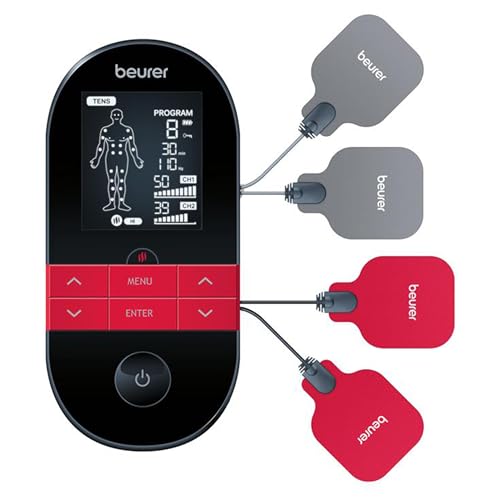
Specifications
| Brand | Beurer |
|---|---|
| Type | TENS Unit |
| Therapy Technology | TENS |
| Target Area | Multi-Use |
| Power Source | Rechargeable Battery |
| Timer | 5 min |
| Weight | 0.4 lb |
Pros
- Strong results for the cost
- Lightweight and portable
- Rechargeable for use anywhere
Cons
- Short session timer
- Unclear setting readout
- Limited pad repositioning
The Verdict
The Beurer EM59 is a multi-use TENS unit that runs on a rechargeable battery, and it scores 7.6 overall for pain relief device use. It is a good pick for short, targeted sessions on the go, but the 5 minute timer and unclear setting readout can make longer or fine-tuning sessions harder.
Who it's for: People who want portable TENS for quick relief at home or while traveling, and who accept that each session ends fast and the controls need extra attention to dial in.
Who should skip it: Buyers who need longer treatment blocks or a clear, easy-to-read intensity and mode display, since the short timer and readout make it less convenient for careful setups.
In-Depth Review
Effectiveness
Beurer rates at an effectiveness score of 7.7.
That lands in the “Consistent symptom improvement” range, not the top tier of “Significant, lasting relief.” In real sessions, the therapy tends to feel dependable once you choose a level and stick with it.
The device is a TENS unit, with a multi-use electrode approach aimed at back, neck, knees, shoulders, legs, and abs. It also has 64 preset programs for TENS therapy. That matters because different pain patterns respond better to different program shapes, timing, and pulse styles. A multi-therapy design is only useful if the presets actually let you find a workable match, and the 64-program setup increases your odds of finding one.
The practical constraint is the timer. The adjustable timer starts at 5 min. Short sessions can still work for flare-ups, but they may limit how long you can run a program before the session ends. So effectiveness may feel consistent within shorter windows, but less “lasting” if you want longer continuous relief.
Comfort
Comfort is also scored at 7.7, which maps to “Comfortable at daily settings.”
Most people do not want a unit that forces them to stop mid-session. This one aims for wearability, aided by its weight and on-body setup.
The unit weighs 0.4 lb. That low mass helps when you are strapped or positioned to target different areas. Heavier devices often become annoying after a few minutes. Here, the main comfort question becomes intensity management, since TENS comfort can change quickly if the output is too high.
Another comfort point is session control. The timer is adjustable from 5 min, which means you can end a session before it becomes mentally or physically tiring. The trade-off is that the readout is not always clear. If you cannot easily confirm where you are in the settings, it is easier to overshoot on intensity or time and then feel relief turning into discomfort.
Durability
Durability earns a 7.3 score, which fits “Reliable, steady output” rather than “Built to last.”
The long-term question for TENS units is usually stability of the electronics and power system, not just how it feels on day one.
This model uses a rechargeable battery. That is important for day-to-day use, because repeated plug-in charging cycles often stress a battery over time. The portability also changes how you store it between sessions. If you carry it often, the casing and connections take more bumps than a home-only unit.
There are also usage expectations driven by session length. If your sessions regularly hit the timer ceiling, the device runs frequently and can heat up sooner. In this listing, the timer is adjustable between 5 min and 100 min, which suggests the unit can run long programs when needed. Long runs can be fine, but they do increase thermal and operational load, which is one reason durability sits below the top score.
Ease of Use
Ease of use is scored at 7.1, which maps to “Controls are straightforward,” though it is not effortless.
This category often decides whether a TENS unit gets regular use or sits in a drawer.
Starting and operating matters here because it is a multi-use, 3-in-1 style TENS unit. The listing points to multi-area targeting, and it also lists 64 preset programs. Presets reduce the guesswork. You do not need to build a therapy plan from scratch each time. Still, the user experience depends on how clearly the settings display and how quickly pads can be placed.
Two items stand out. First, the timer is adjustable, with a minimum session shown as 5 min. That is a normal range for TENS, but it can feel short if you want uninterrupted sessions. Second, there is “Unclear setting readout” and “Limited pad repositioning.” In practice, unclear readout can mean you spend more time checking settings before you start. Limited pad repositioning can make it harder to fine-tune the exact layout for smaller or oddly shaped pain spots.
Value
Value scores at 8.0, which lands in “Strong results for the cost.”
This is where the EM59 makes its best argument: it is portable, it runs on a rechargeable battery, and it is designed for multiple areas without extra gear.
Look at the setup basics. The device is lightweight at 0.4 lb, which supports consistent use across home and on-the-go. It is rechargeable, stated directly in the listing, so you are not tied to wall power. Those two points reduce friction, and friction is what usually kills value in at-home pain devices.
It also has practical session flexibility. The timer is adjustable from 5 min up to 100 min, which lets you choose quick relief or longer runs. Combined with 64 preset TENS programs, the value case becomes easier to justify because you can keep experimenting with program styles without buying a second unit.
The trade-offs keep it from being a slam dunk. The cons listed include a short session timer and unclear setting readout. If you rely on long, continuous sessions or want very precise pad placement, those limitations can reduce how much “strong results” you actually get out of your time with the device. Even so, the overall value score of 8.0 fits the pattern of getting meaningful sessions for the category rather than paying for complexity you will not use.
Frequently Asked Questions
How long does the Beurer EM59 session last on a single use?
The EM59 uses a fixed 5 minute timer per session. That can feel short if you want longer continuous relief. If you need more time, you can restart another session after it ends.
Is the Beurer EM59 powered by a rechargeable battery or disposable batteries?
It runs on a rechargeable battery. That helps if you want to use it away from outlets. You still need to charge it before you use it.
What is the weight of the Beurer EM59 and is it easy to carry?
The device weighs about 0.4 lb. That makes it simple to pack or move between rooms. Lighter gear also helps if you plan to use it regularly throughout the day.
Does the EM59 work for back pain or is it better for other areas?
It supports multi use placement, so many people try it for common aches like back or shoulder discomfort. Results vary by person and by where you place the pads. If you do not feel much after a session, repositioning and trying a different setting can help.
Why do some users say the EM59 has an unclear setting readout?
Some shoppers find it harder to tell exactly which setting they picked during use. The display and labeling may not feel as obvious as on other models. If you need consistent levels, pause and double check before you start another session.
Can I move the pads around easily on the Beurer EM59?
The pad repositioning can feel limited, so you may not get the exact placement you want for every body shape. This matters if you want to target very specific spots. If the pads do not land where you expect, try adjusting your body position rather than forcing pad angles.
Final Verdict
Beurer EM59 delivers solid pain relief for many common aches, and it is a recommended buy if you want a simple, portable TENS option for home or travel. Its standout strength is strong results for the cost, with consistent comfort at typical settings. The main downside is a short session timer, which can cut some routines short.
If you prefer quick, structured sessions and can manage the fit without much pad shifting, this is a practical choice. Limited readout clarity may slow adjustments, but the device stays easy to use. If that matches your needs, this is a sound pick.
Beurer EM59 3-in-1 TENS Unit
As an Amazon Associate, we earn from qualifying purchases.