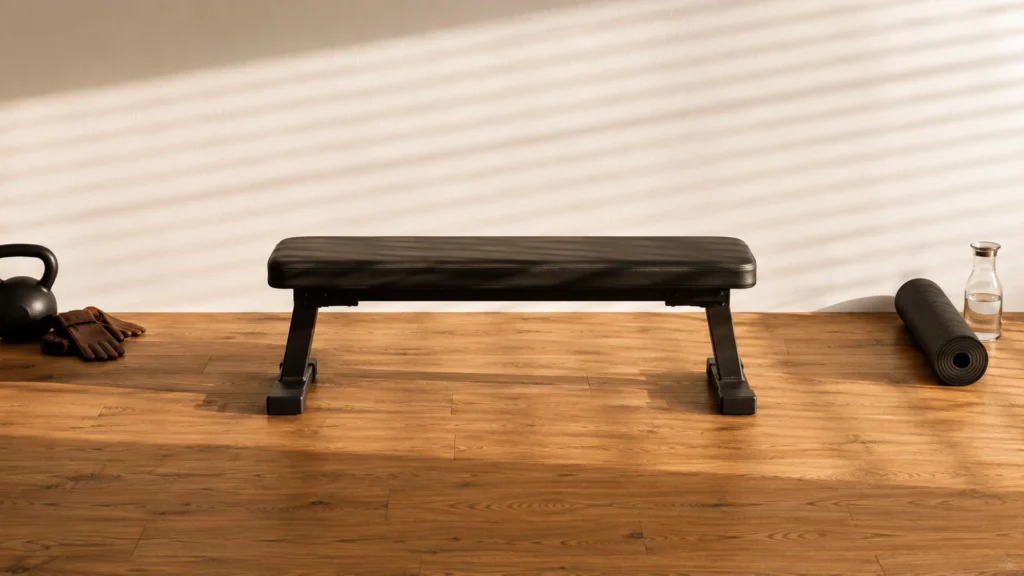
Flat weight benches are built for one job: presses and supported movements on a level pad. For this sub-category, you need a bench that holds your line during reps, with padding that feels steady under the shoulders and hips.
Buying a flat bench is still a set of trade-offs. Thicker padding can feel better but may add bulk. Higher weight ratings often come with a heavier frame. Fold options add convenience, but you still need to check for wiggle at the joints.
We also keep the guide tight to what flat bench buyers care about most: stability, build quality, and real day to day comfort, so you can choose with less guesswork, and see how these picks stack up across the category in our Best Weight Benches.
Quick Overview
Our Top Picks
#1. Vulcan Prime 3x3 Flat Weight Bench

Specifications
| Brand | Vulcan Strength Training Systems |
|---|---|
| Bench Type | Flat |
| Weight Capacity Lb | 2000 |
| Overall Dimensions In | 48 x 12 x 17.5 in |
| Pad Thickness In | 3 in |
| Frame Material | Steel |
Pros
- Minimal wobble, secure stance
- High lifting capacity
- Thick, comfortable padding
Cons
- Limited workout style
The Vulcan Prime 3x3 Flat Weight Bench stands out in the flat bench category with a very secure feel. Users get minimal wobble and a stable stance, even when pushing heavy reps. The frame is built from steel and supports up to 2000 lb, which matters for strength work where form breaks first when a bench moves. The 3-inch thick pad also helps you stay planted, with cushioning that feels comfortable without feeling mushy.
The main trade-off is limited workout style. Since it is a flat bench, it is best for people who focus on movements like flat presses and other exercises that do not need backrest changes. If you want one bench for many angles, this setup may feel too simple. If your priority is a solid flat bench for consistent training, this is an easy top pick.
#2. REP FB-3000 Flat Weight Bench
Specifications
| Brand | REP |
|---|---|
| Bench Type | Flat |
| Weight Capacity Lb | 750 |
| Overall Dimensions In | 47 x 12 x 17.5 in |
| Pad Thickness In | 2.5 in |
| Frame Material | Steel |
Pros
- Rugged frame, quality hardware
- Minimal wobble, secure stance
- Comfortable padding, stays firm
Cons
- Unreliable pin issue
- Non-adjustable design
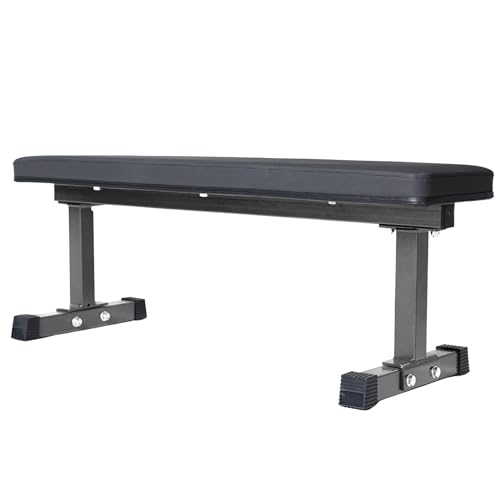
REP FB-3000 is a standout flat bench thanks to its solid, stable build. The steel frame feels rigid in use, and the bench stays planted during presses and support work. At 750 lb capacity, it is built for serious training, while the 2.5 in thick pad feels firm and steady rather than squishy.
The main trade-off is adjustability. This is a flat bench, and that also means you are limited to movements that fit a fixed position. Also, there is a reported pin issue, so double-check the hardware during setup and periodically inspect the locking points as you train. This bench is best for people who want a dependable flat setup and mainly work with standard barbell pressing.
#3. PRx Performance Folding Wall Mounted Weight Bench

Specifications
| Brand | PRx Performance |
|---|---|
| Bench Type | Flat |
| Foldable | Yes |
| Overall Dimensions In | 19 x 45 x 12 in |
Pros
- Rugged frame, quality hardware
- Minimal wobble, secure stance
- Folds for storage
Cons
- Limited workout style
This PRx Performance folding wall mounted flat bench stands out in a flat bench category because it solves a space problem while staying rock solid in use. When you are ready to press, the wall mount setup gives a secure, minimal wobble stance for dumbbell and barbell work. The frame and hardware feel rugged, and the bench folds away for storage instead of taking up floor space year-round.
The trade-off is that it stays focused on flat training. If you want lots of backrest angles and seat positions for incline or decline work, this is not the most flexible choice. It is best for people who mainly bench flat and want a strong, stable bench that stores neatly.
#4. Bells of Steel Flat Utility 9.84" Weight Bench

Specifications
| Brand | Bells of Steel |
|---|---|
| Bench Type | Flat |
| Weight Capacity Lb | 661 |
| Foldable | No |
| Pad Thickness In | 2 |
| Frame Material | Steel |
Pros
- Rugged frame, quality hardware
Cons
- Loose settings, unreliable pins
This flat utility bench stands out for people who want one solid spot for pressing and supported work. The steel frame and overall hardware feel rugged, and the 2 inch pad hits a good middle ground for benching comfort. It is rated for 661 lb, which lines up well with typical flat-bench training loads.
The main trade-off is adjustability reliability. Some users report loose settings and unreliable pins, so switching positions or dialing in setup can be annoying. This makes it a better fit for buyers who mostly use it as a flat bench and are okay accepting careful setup over frequent changes.
#5. Marcy SB-315 Flat Utility Weight Bench

Specifications
| Brand | MARCY |
|---|---|
| Bench Type | Flat |
| Weight Capacity Lb | 600 |
| Overall Dimensions In | 16.5 x 41 x 14 in |
| Frame Material | Steel |
Pros
- Great features at fair cost
- Durable steel frame
Cons
- Loose settings, unreliable pins
- Limited max weight
- Limited versatility
The Marcy SB-315 stands out as a true flat bench option, focused on pressing and supported work without trying to do incline or multi-position training. It uses a steel frame and feels solid in use, which is what most people want from a flat weight bench. The bench also targets heavier sessions better than many budget-style flats, with a stated 600 lb weight capacity.
The main letdown is with the hardware and adjustment feel. Reviewers note loose settings and unreliable pins, which can be a problem if you plan to frequently change setup or move the bench around. It is also limited in versatility, so it fits best for someone who mainly trains flat movements and wants a straightforward bench, not a do-it-all utility station.
What to Look For
Frame build quality: Look for a steel frame that feels rigid when you push down by hand. Check for solid welds, tight hardware, and upholstery that does not look thin at the seams. If the bench flexes empty, it will flex under load.
Stability under press: Test for wobble and rocking. A wide, well-balanced base helps. Make sure the rubber feet sit flat on your floor, especially if you train on rubber mats or uneven flooring.
Flat-only practicality: Because the bench is flat, you should confirm the pad length and width fit your build. Too narrow pads force your shoulders off center. Enough pad length helps keep your grip and setup consistent from set to set.
Comfort that holds up: Favor padding that is firm enough to stay supportive. Extremely soft pads let your shoulders sink during heavier presses. Also check that the upholstery surface grips well so you do not slide.
Value for a flat bench: Flat benches can be cheaper, so pay attention to what you get. A solid frame and stable base matter more than extra marketing features. If two benches cost close to each other, the better one is usually the one that feels more rigid and secure.
How We Picked
Products were identified through broad research across review sites and buyer forums, then filtered to only those that qualify as Flat Weight Benches.
Scoring used the same objective pillar framework as the main Weight Benches post, allowing direct comparison of products within this sub-category.
Frequently Asked Questions
What kinds of workouts work best on a flat weight bench?
Flat benches are best for flat dumbbell and barbell presses. They also work well for chest supported rows, triceps work, and shoulder work done at a flat angle. If you want lots of incline or decline angles, you may prefer an adjustable or incline focused bench.
How do I choose between a simple flat bench and a foldable flat bench?
Choose a foldable bench if space is tight. It often stores upright or folds for easier cleanup. If you have room, a non-folding flat bench usually feels a bit more solid during heavy sets.
How much weight capacity do I really need for a flat bench?
Start with your heaviest planned lift. Then add a safety margin for normal use and for reracks or missed reps. Look for a stated max capacity and make sure it covers both you and your weights.
When should I switch to an adjustable bench instead of a flat weight bench?
Switch when your program includes regular incline or decline pressing. Adjustable benches let you train more angles without swapping setups. If you only do flat pressing, rows, and arms, a flat bench can be the simpler and cheaper choice.
How do flat weight benches compare to incline benches for chest training?
Flat benches stress your mid chest more consistently. Incline benches shift more effort toward your upper chest. Some people need both, but you can still build a strong chest with only flat work using different grips and dumbbell variations.