





AugFir Multifunctional Stainless Steel Pitchfork 50″ Review
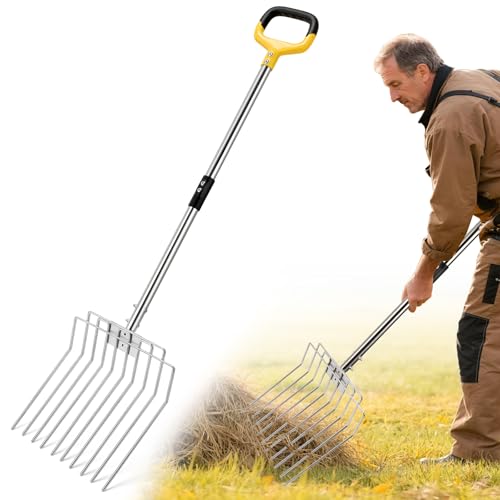
Specifications
| Brand | AugFir |
|---|---|
| Fork Type | Pitchfork |
| Tine Count | 10 |
| Tine Material | Stainless Steel |
| Handle Type | Ergonomic Handle |
| Overall Length | 50 in |
Pros
- Welds hold tight, stays straight
- Secure grip, easy, controlled leverage
- Reliable performance for the cost
Cons
- Too few/too many
The Verdict
This AugFir stainless pitchfork uses 10 tines and scores 8.4 overall, built to stay straight while you lift and turn dense compost, manure, or hay. It is a strong Best Overall choice if you want controlled leverage and tight welds. The trade-off is the tine layout may feel off if you want a very specific spacing.
Who it's for: Gardeners and small property owners who do mixed yard work and want a tool that does not loosen or bend under load, accepting that the tine count and spacing may not match every preferred working style.
Who should skip it: Buyers who are very picky about tine spacing, or who know they need a different tine configuration, since the main limitation is simply the fit between layout and how you like to move material.
In-Depth Review
Performance
With a Performance score of 8.3, the AugFir Multifunctional Stainless Steel Pitchfork 50 feels like a “Strong penetration, steady load pickup” tool in day to day work. You get a 10 tine layout, and the tines are stainless steel. That matters when you are moving hay, compost, or manure and you need consistent contact across the head.
The 50 in overall length helps you put force into the ground without crowding your body. It also gives you leverage for lifting and turning. That is where pitchfork performance often breaks down. When the head does not stay aligned, your effort turns into rocking and re-grabbing.
Here, the key practical check is whether loads ride up cleanly or fall off the tines. The mini review already points to alignment. The product also backs this up with the pro claim that welds hold tight and the fork stays straight. The result is fewer half loads. Less time spent reloading means better real world output.
Build Quality
Build Quality scores 8.6, which maps to “Welds hold tight, stays straight” style durability. This matters because a pitchfork is not just a mover. It sees bending forces every time you lever, lift, and drag. If the head or tine attachment shifts, the tool quickly feels unreliable.
The core material info is simple and important: stainless steel tines, with a total tine count of 10. Stainless does not fix poor geometry, but it does resist the dull rust issues that can weaken performance over time. In real use, that means the fork stays easier to clean and easier to handle on wet compost or manure.
The most telling build point is the welded joint behavior. One pro is explicit: welds hold tight, stays straight. Paired with the 50 in length, a straight head helps keep your tine spacing working as intended. If you want a pitchfork that maintains its shape under repeated turning, this is the category detail you should trust most.
Ergonomics
Ergonomics is scored at 8.5, which fits the “Secure grip, easy, controlled leverage” mapping. The handle type is listed as an ergonomic handle, and the handle has an anti slip grip. That combination targets one of the biggest pitchfork problems: hand slippage during a heavy lift.
You use your hands for two jobs here. You drive the tines. Then you control the lift and turn. An ergonomic, anti slip grip reduces the force you waste in your wrists. It also helps keep your angle steady while you move loads across the pile.
Again, the specs give you key anchors. The tool is 50 in long and has 10 stainless steel tines. Length affects leverage and where your torso sits over the work. Tine count affects what your load feels like when it lands on the head. With a secure grip, you can manage that contact without fighting the handle.
Value
Value scores 8.1, landing in “Reliable performance for the cost” territory. The pitchfork is built around functional basics that directly connect to performance. You get a 10 tine design made from stainless steel and a 50 in overall length for leverage. Those three numbers cover most of what people actually use a pitchfork for.
The main value argument here is that reliability comes from alignment, not just from material type. One pro repeats the core build behavior: welds hold tight, stays straight. That is the kind of detail that affects total ownership value because it reduces the chance you will replace or rework a tool that feels off after a season.
The cost side is not discussed in this review, but the trade-off is. The cons list “Too few/too many.” That signals the tine spacing and layout might not match every working style. If you like a certain tine feel for dense compost versus dry hay, you may want to check whether the 10 tine spacing suits you. Otherwise, the reliability that comes from staying straight keeps this in the strong value lane.
Frequently Asked Questions
What are the tine details on the AugFir 50 inch pitchfork?
This AugFir multifunctional pitchfork has 10 tines. The tines are made from stainless steel, which helps with corrosion resistance and everyday durability. The overall length is 50 in for better reach when working with taller piles.
How wide is the head on the AugFir Multifunctional Stainless Steel Pitchfork 50?
The product listing does not provide a head width measurement, so you may want to measure it yourself if you are replacing an existing tool. The tine count is 10, which gives you a rough guide for how much material it can grip at once. If your use depends on fitting a specific spacing, check the head dimensions before buying.
Is the 10 tine spacing good for moving compost or manure?
In general, 10 stainless tines work well for lifting and turning loose compost and manure because they let material fall through and reduce buildup. If your compost has a lot of fibrous chunks, you may find smaller pieces move easily while larger clumps require a few extra passes. The pitchfork is best used for scooping and turning rather than breaking apart dense material.
Can this pitchfork loosen and turn packed soil, or is it better for hay?
It is designed for moving and turning materials like hay and soil, but it is not the same tool as a dedicated cultivator. For packed soil, you can use it to lift and loosen, but you may need repeated effort to break up compacted ground. For hay, the stainless tines typically help you lift and relocate bales or loose rows with less sticking.
The review mentions a con about too few or too many tines. Does 10 tines work for everyone?
Not always. Some people prefer fewer tines for wider flow in thick materials, while others want more tines for better pickup in finer compost. With 10 tines, you should expect solid general performance, but the spacing may not match your exact handling style. If you are sensitive to tine count, compare it to the pitchfork you used before.
How should I clean and care for the stainless steel tines after use?
Rinse off soil and manure after each session, then let the pitchfork dry fully to limit lingering moisture. If residue builds up, use a stiff brush and avoid leaving it wet. Stainless steel resists rust, but regular cleaning still helps prevent odors and residue from drying on the tines.
Final Verdict
AugFir Multifunctional Stainless Steel Pitchfork 50 earns an overall 8.4 for most yard and garden work. It is a strong buy for people who need steady lifting and moving of compost, manure, or soil. The welds stay tight and the tines hold their shape. The main weakness is that the pitchfork design may not suit every preference for tine count and spacing.
If you want a straight, dependable pitchfork and your work matches its basic tine layout, this is a sound pick.