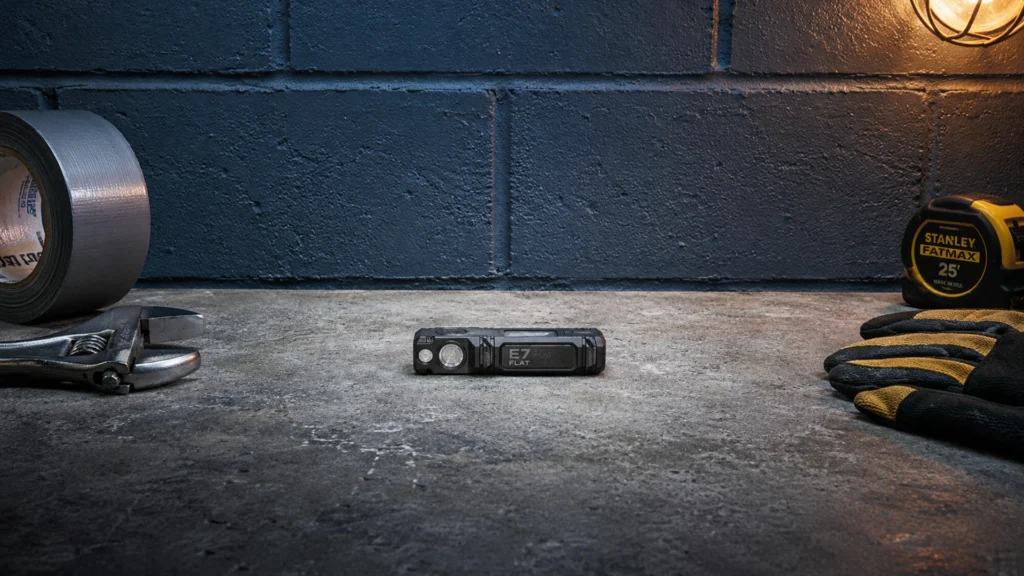
Flat EDC flashlights are built to sit close to your pocket or pack strap. You want a low profile, a clip that stays put, and controls that work one-handed. In this sub-category, focus on how the light performs in tight spaces and how steady it stays during normal use.
This is not a category where size wins for free. The flat form factor can limit battery capacity, which affects runtime and sustained brightness. It also changes heat handling, so some lights step down sooner than you expect. The real trade-off is usually between thinner carry, output comfort, and how long you keep useful brightness.
If you want a broader list beyond flat EDC models, start with our roundup in the main guide to match the right flashlight style to your needs; Looking for all types? See our Best Flashlights.
Quick Overview
Our Top Picks
#1. OLight ArkPro Ultra Flashlight

Specifications
| Brand | OLIGHT |
|---|---|
| Brightness Lumens | 1700 lm |
| Beam Distance Ft | 224 ft |
| Runtime Hr | 14 days |
| Mode Count | 7 Modes |
| Battery Type | Built-in Lithium-Ion |
| Charging Port | Magnetic |
| Waterproof Rating | IPX7 |
| Weight Oz | 4.8 oz |
Pros
- High output brightness
- Laser-like throw
- USB-C or magnetic charging
Cons
- Built-in battery tradeoff
This OLight ArkPro Ultra stands out for Flat EDC Flashlights users because it hits hard on both close range and far reach while staying easy to carry. With 1700 lm and a 224 ft beam distance, the hotspot reads clean at distance, yet the output stays useful for everyday tasks like checking locks, walking paths, or inspecting gear. Charging is also fast to manage for on-the-go carry, using magnetic charging (and using the built-in lithium battery means no swapping in the field).
The main trade-off is its built-in Lithium-Ion battery. If you prefer quick battery changes for long trips, that is less convenient than lights that take standard cells. For most daily carry plans, though, the USB-C or magnetic top-ups and the simple 7-mode layout make it feel straightforward and ready when you need it, and the IPX7 rating helps it handle rain and splashes without extra care.
#2. Nitecore EDC27 UHi Flashlight

Specifications
| Brand | Nitecore |
|---|---|
| Brightness Lumens | 3100 lm |
| Beam Distance Ft | 333 ft |
| Runtime Hr | 55 hr |
| Mode Count | 5 Modes |
| Battery Type | Built-in Lithium-Ion |
| Charging Port | USB-C |
| Weight Oz | 4.8 oz |
Pros
- Laser-like throw
- High output brightness
- Tight fit, dependable switch
Cons
- Lockout switch unreliability
- UI/state clarity issues
This Nitecore EDC27 UHi stands out for Flat EDC Flashlights buyers who want reach in a pocket friendly body. The beam is very tight and long, hitting a stated 333 ft with 3100 lm output. In daily use, that makes it easier to spot details across a driveway or trail edge instead of lighting only what is near. The light also holds a useful level for a long stretch, with a rated 55 hr runtime, so it feels steady rather than fading fast.
The main trade-off is control confidence. The lockout switch can be unreliable, which matters if you keep it loose in a pocket or bag. The UI and state hints can also be unclear at a glance, even with only 5 modes. It is best for people who value strong throw and one handed handling, and who are willing to spend a little time learning the button logic.
What to Look For
Real output and sustained brightness: Check how bright the flashlight stays after the first few minutes. For flat EDC models, sustained output matters more than peak numbers.
Beam reach that fits everyday use: Look for a beam that reaches far enough for yards, trails, and parking lots without turning the spot into a narrow gimmick. Aim for a balance of usable spill and practical distance.
Flat carry ergonomics: Favor pocket-friendly dimensions, a stable clip, and a grip that does not feel slippery. Test how you click modes and whether the light stays easy to aim while held one-handed.
Power that matches daily routines: Prioritize common battery types and straightforward charging. If the flashlight uses USB charging, confirm the port location and whether charging is easy with the light in your workflow.
Build and sealing for the stuff you do: Verify an IP waterproof rating and pay attention to the switch and lens fit. Flat EDC lights often ride with keys and coins, so drop resistance and tight sealing matter.
How We Picked
Products were identified through broad research across review sites and buyer forums, then filtered to only those that qualify as Flat EDC flashlights. We kept the list focused on low-profile lights that are meant for daily carry, not throw-only or large-body tactical models.
Scoring used the same objective pillar framework as the main Flashlights post, allowing direct comparison of products within this sub-category. Performance, build, ergonomics, power, and value were weighted to reflect what flat EDC buyers notice first: usable brightness over time, dependable controls, comfortable carry, practical charging, and overall durability at the asking price.
Frequently Asked Questions
What counts as a flat EDC flashlight for everyday carry?
A flat EDC flashlight stays thin against your pocket or bag. It usually uses a low profile body and a clip-first design. Look for a simple grip that still lets you turn the light on fast.
How do beam shape and throw matter more on a flat EDC light?
Flat EDC lights often prioritize a balanced beam for close to mid range. You may get less reach than larger throw-focused flashlights. Check both brightness and beam distance so you know what you can actually see.
Will flat EDC flashlights step down and dim after a while?
Most compact lights reduce output to manage heat. This can happen sooner if you use turbo modes often. For real daily use, focus on sustained brightness, not just the max output.
How do flat EDC flashlight controls differ for one-handed use?
Many flat EDC lights use side switches or simple button layouts. Some let you hold for brightness ramps, while others use click-through modes. If you wear gloves, confirm you can operate the switch without hunting for it.
When should I choose a different type instead of a flat EDC flashlight?
Choose a different flashlight type if you need long runtime at high output or extra throw. A flat light can feel great for daily carry, but it has less room for bigger cooling and batteries. If you plan for search and rescue style use, bigger designs usually perform better.
How does battery and charging convenience compare to other compact flashlights?
Many flat EDC lights use built-in charging for quick top ups. Some use removable cells, which can be swapped when you run low. For daily use, prefer clear battery status and a charging port that matches what you already carry.