Specifications
| Brand | SOLOS |
|---|---|
| Form Factor | Audio Glasses |
| Connectivity | Bluetooth 5.2 |
| Battery Life | 10 hr |
Pros
- Long-lasting battery
- Modern wireless support
- Worth it for daily use
Cons
- Audio-only glasses
- Not airtight
- Unfinished build feel
The Verdict
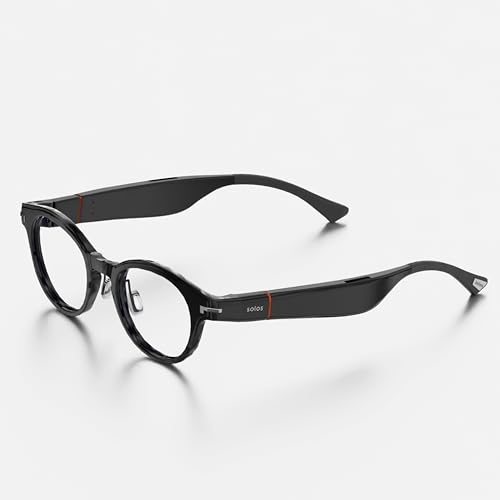
SOLOS AirGo A5 Hydro 8 is audio-focused smart glasses, with up to 10 hr battery life for calls and listening. The trade-off is core_tech 7.1, since it stays dependable as an audio headset rather than a full visual AR device. If you want a stable way to hear notifications while moving, this fits. If you need on-lens visuals, look elsewhere.
Who it's for: People who want hands-free calls and day-to-day audio while on foot or commuting, and who accept audio-only glass lenses as the main compromise.
Who should skip it: Buyers who expect a more traditional smart-glasses experience with airtight comfort and a more finished frame feel, since the fit and build leave less margin for long wear.
In-Depth Review
Core Tech
SOLOS AirGo A5 Hydro 8 earns a 7.1 for Core Tech. That lands in the “Occasional lag, minor glitches” zone, but the bigger story is different: these are audio smart glasses with no visual layer. The spec sheet lists the form factor as “Audio Glasses,” and the display technology, resolution, field of view, and camera resolution are all listed as “-.” Practically, your experience lives and dies by audio reliability and call handling, not on-lens prompts or a camera view.
On the connection side, the glasses use Bluetooth 5.2. That matters because modern phone pairing and low latency depend on stable wireless behavior. In day to day use, you should expect fewer disconnects than older Bluetooth versions. The battery life spec also shapes how “core” the tech feels. VisionXO lists battery as “10 hr,” which is what keeps voice and calls usable all day without frequent resets.
Still, the trade-off stays clear. The cons list “Audio-only glasses,” and with no display spec listed, the glasses cannot show notifications or translations visually. If you need real-time on-lens readouts, you will rely entirely on audio cues and your phone app.
Comfort
Comfort scores a 7.8, which maps to “Lightweight and stable.” The spec table does not list weight, and it shows “-” for weight. So you cannot judge comfort from grams in the specs. Instead, you judge fit by what the product is trying to do: keep audio present while you move. The mini review already frames it as balanced for everyday movement, and the core comfort question becomes pressure and stability, not display posture.
There is one practical comfort angle tied to battery too. With a listed battery life of “10 hr,” you are more likely to wear them long enough to test heat, skin contact, and nose pressure in real sessions, not just in short trials. Comfort matters because any fatigue becomes a deal breaker when your main input is audio through the temples.
For fit anxiety, the cons mention “Not airtight.” That implies gaps for airflow, which can reduce heat buildup for some people. It also means you should not expect a sealed, noise-canceling feel. Comfort can be good, but audio leakage from the environment may still affect the listening experience during commutes.
Battery
Battery sits at 7.1, landing in the “Weak” zone for this segment. The key spec is battery life listed as “10 hr.” That is solid on paper, and it matches the mini review claim about mixed use for calls and listening. But the pillar score says the battery story does not fully translate to dependable day after day behavior. With only one explicit number in the extracted specs, there is limited proof of how that 10 hr holds under heavier call time or higher audio levels.
What you can confirm from specs is charging dependency on everyday wireless behavior. Bluetooth 5.2 is the connectivity standard, and that impacts how the glasses maintain their link to your phone. If the connection drops and reconnects, battery drain often rises. The product is “Audio Glasses,” so your audio playback and mic activity drive power use more than a display would. That makes the audio workload the real battery test.
Given the score and the “10 hr” reference point, plan for a charger when your day runs long. The pro list includes “Long-lasting battery,” but the Core Tech and comfort context points to how you will actually use them: calls, listening, and movement, where power demand can vary.
Build
Build scores 6.6, which lines up with “Feels a bit flimsy, loosens easily” as the closest match. The specs do not include materials, hinges, or scratch ratings. The only build-related guidance comes from the cons: “Unfinished build feel.” That is the kind of feedback that usually points to frame rigidity and how the glasses feel after repeated handling.
Look at the form factor again. These are “Audio Glasses” with no display stack. That can reduce some complexity in the frame. Still, you will feel build quality in the parts that matter: the temple pressure points and the steadiness while you wear them. A battery life of “10 hr” also means more hours to notice any flex, creak, or shift in fit. Even small looseness becomes noticeable over time.
The connectivity spec is strong at “Bluetooth 5.2,” but build quality governs whether that stability holds physically. If the frame does not clamp firmly, wireless performance and mic capture can suffer through movement. The score suggests you should handle these carefully if you tend to toss gear into bags.
Value
Value scores 8.1, mapping to “Worth it for daily use.” The reason starts with the pro list: “Worth it for daily use.” The experience seems focused and consistent, not broad. You get audio driven smart use, and the extracted specs give you concrete anchors for daily reliability. Connectivity is listed as “Bluetooth 5.2,” and battery life is listed as “10 hr.” Those are the two specs most tied to whether the glasses fit into a routine.
The value argument also depends on what you accept as the limitation. The cons are “Audio-only glasses” and “Not airtight.” If you need a visual HUD, camera feed, or on-lens display, those missing spec categories with “-” values tell you the AirGo A5 Hydro 8 is not built for that kind of interaction. You buy these to hear your phone, calls, and audio guidance through the glasses.
With that focus, the score makes sense. Core Tech at 7.1 and Battery at 7.1 suggest occasional rough edges. But Comfort at 7.8 helps the daily wear case, even without a weight spec listed. For many people, that combination is exactly what “Worth it for daily use” means: predictable audio time, stable wireless support, and enough comfort to keep them on through the day.
Frequently Asked Questions
How long do the SOLOS AirGo A5 Hydro 8 Smart Glasses last on a single charge?
SOLOS rates the battery life at up to 10 hours. In daily use that mixes listening and voice features, you should expect a similar range but real time can vary by volume and how often you use prompts. If you use them nonstop for calls and AI features, plan for less than the maximum.
Do these glasses support Bluetooth 5.2, and will they work with iPhone or Android?
Yes, they include Bluetooth 5.2 for wireless connections. They pair like typical Bluetooth audio accessories, so they should work with both iPhone and Android phones that support Bluetooth audio. Your best results come from using the SOLOS app for setup and feature control.
Are the glasses only for audio, or do they have a display too?
These are audio glasses, so they do not provide a visible screen for text or visuals. If you want glanceable notifications or on-lens video, these may feel limiting. The experience focuses on what you hear rather than what you can read.
How airtight are the SOLOS AirGo A5 Hydro 8 glasses for rain or wind noise?
They are not airtight, so you can still hear outside sounds more than with in-ear earbuds. That also means wind noise and street noise can come through depending on your environment. If you need heavy isolation, you may want noise-canceling headphones instead.
What is the build quality like, and do they feel sturdy after long use?
Some users report an unfinished feel in the build, which can make the frames feel less premium than expected. They still function day to day, but you should handle them carefully and avoid twisting the arms. If you are rough on gear, consider how you transport them.
How should I clean the lenses and avoid scratching the frames?
Use a soft microfiber cloth and wipe gently to remove smudges. Avoid abrasive cleaners and paper towels that can scratch coatings. If you need to remove residue, lightly dampen the cloth with clean water first.
Final Verdict
SOLOS AirGo A5 Hydro 8 earns a qualified thumbs up for people who want all-day audio in a light, everyday wearable. The strength is its strong battery life, so it keeps up with real routines. The weakness is that it stays audio only, so you miss out on the fuller smart-glasses experience. The comfort helps, but the build can feel a bit unfinished.
If you mainly care about reliable wireless listening and long sessions, these glasses fit the bill. If you expect a true visual or all-in-one smart display, look elsewhere.