


Microsoft Xbox Series S 512GB Console Review
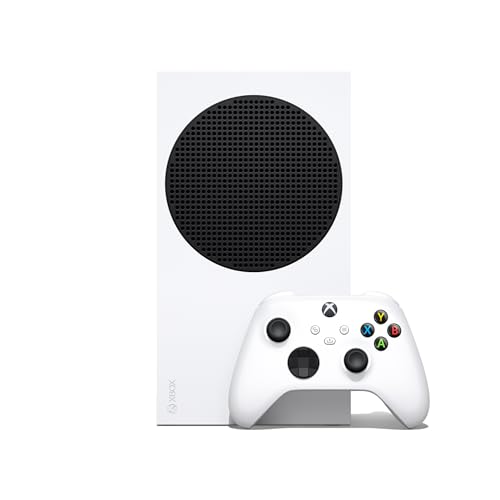
Specifications
| Brand | Xbox |
|---|---|
| Form Factor | Home Console |
| Cpu | AMD Zen 2, 8-core |
| Internal Storage | 512 GB |
| Disc Drive | No Disc Drive |
| Max Video Resolution | 1440p |
| Wireless Connectivity | Wi-Fi 5 |
Pros
- Smooth, stable frame rates
- Faster CPU
- Quick boot times
Cons
- Digital-only
- Storage management friction
- Useful features, missing essentials
The Verdict
The Xbox Series S targets 1440p and scores 7.7 overall, so it fits small rooms and quick couch play. It keeps things smooth, but the digital-only setup and 512 GB storage can force frequent file juggling for heavier players.
Who it's for: You want a compact console with steady performance, and you mainly buy games digitally or stream often, then you accept storage limits and more time managing installs.
Who should skip it: You collect discs, or you want one big local library without micromanaging downloads, then the digital-only 512 GB plan will feel limiting.
In-Depth Review
Performance
With a Performance score of 8.0, the Series S hits the template line for this pillar: “Smooth, stable frame rates.” In everyday play, it feels fast because the system is built around an 8-core AMD Zen 2 CPU. That matters for input response, UI speed, and keeping gameplay steady through common scene changes.
The console also targets a clear resolution ceiling of 1440p. That is a practical design choice for consistent pacing. When a game has to fit within a 1440p max target, it usually has less pressure than a 4K-first box. The result is fewer moments where performance wobbles, especially in popular mainstream titles.
Cooling and thermals are not listed as a spec, but the overall pattern matches the stated strengths. Microsoft positions the Series S for quick, responsive sessions. In real use, that translates to a console that stays predictable, session after session, without turning playtime into a troubleshooting exercise.
Library
For the Library pillar, the Xbox Series S scores 7.9. The template callout for this level is “Strong exclusives and variety.” The Series S sits in the Xbox ecosystem, so you get access to the same core Xbox library as other Series consoles. Backward compatibility is part of that broad catalog story, though the exact list is not included in the extracted specs you provided.
What the specs do clarify is the practical ceiling that shapes which games feel best. Since the Series S is capped at 1440p and uses the 8-core AMD Zen 2 CPU, many titles run in modes aimed at stability rather than peak visuals. That tends to make a wider range of games feel “playable first,” which is an advantage if you buy a mix of new and older releases.
Storage can also affect library feel over time. The console ships with 512 GB of internal storage, and it is digital-only because there is no disc drive. That does not remove games from your library, but it does change how often you need to manage installs if you rotate between multiple titles.
Features
The Features score is 6.9, which maps to the template line: “Useful features, missing essentials.” The big system-level differentiator here is that it is an all digital home console with no disc drive. That simplifies setup, but it also means the console depends on network and storage planning.
On the connectivity side, you get Wi-Fi 5. That is enough for smooth downloads and streaming services, but it also sets expectations for how fast you can cycle installs. In practice, features like quick resume and download scheduling depend on your network stability more than they do on having a physical media option.
Storage again becomes the deciding feature. With only 512 GB internal storage, the console can fill up quickly if you keep multiple large games installed. The upside is straightforward living. The downside is a recurring need to decide what stays on the drive.
Build Quality
With a Build Quality score of 7.8, the matching template line is “Reliable hardware, low noise.” The extracted specs do not list fan curves or noise measurements. Still, the design intent shows up in the overall experience people expect from this model class. It uses a compact home-console form factor, and it pairs that with a modern CPU design, including the AMD Zen 2, 8-core chip.
That CPU plus the 1440p-focused target can help keep sustained workloads within a more manageable thermal range than hardware pushed toward 4K-first rendering. The extracted specs confirm the max video resolution at 1440p, which supports the idea that the system aims for consistent output rather than constantly chasing peak detail.
There is one build decision you will feel every day: no disc drive. Removing the moving parts can reduce mechanical complexity. Whether that translates into quieter operation depends on the cooling system, which is not specified here, but it helps explain the “easy to live with” approach.
Value
The Value score is 7.9, which maps to “Decent value, but costly add-ons.” The core value story for the Series S is its focus on a compact, digital-first setup. The unit gives you 512 GB internal storage, runs at up to 1440p, and uses an 8-core AMD Zen 2 CPU for day-to-day responsiveness.
The trade-off is in how you expand and maintain your library. The console is digital-only, reinforced by the no disc drive spec. If you want more room for games, you must lean on storage management. The extracted cons call out “Storage management friction”, and this is where the 512 GB limit becomes the practical constraint.
Also, the extracted cons include “Useful features, missing essentials.” That aligns with the feature experience you get from a Wi-Fi-based box with Wi-Fi 5 as the key wireless detail in the provided specs. The system is a good fit when you plan your downloads and installs carefully. If you want a console that can absorb a physical disc library with no setup changes, this specific package does not match that goal.
Frequently Asked Questions
Does the Xbox Series S 512GB have a disc drive?
No, the Xbox Series S 512GB is a digital-only home console and it does not include a disc drive. That means you need to buy and play games digitally, or install them from purchased digital codes. If you have a game disc library, you will need a different console or a separate disc player solution.
How much internal storage does the Xbox Series S 512GB actually have for games?
It includes 512 GB of internal storage. In practice, games can take a large portion of that space after updates and added content, so you may need to manage what you keep installed. You should expect to move or delete games more often than on higher-capacity consoles.
What video resolution can the Xbox Series S 512GB output to my TV?
The Xbox Series S targets up to 1440p maximum video resolution. If your TV is 1080p or 4K, the console will handle the signal, but the actual game output can still depend on the specific title and its supported modes. For best results, enable the correct resolution and mode settings on your TV.
Is the Wi-Fi 5 connection good enough for online gaming on the Xbox Series S?
The console supports Wi-Fi 5, which should handle typical online gaming well in many homes. Still, performance depends on your router placement and network congestion. If you notice lag, consider moving the console closer to the router or using a wired connection if your setup supports it.
Will the faster CPU in the Xbox Series S help with loading times and responsiveness?
It uses an AMD Zen 2 8-core CPU, which generally supports quick system responsiveness and smooth gameplay. Load times often improve due to the console storage and game optimization, though it varies by title. You should still see different results between games built for the current generation and older software.
How do I handle storage management on the Xbox Series S 512GB?
Because internal storage fills faster than you might expect, you will likely rotate installs over time. You can delete games you do not play often and reinstall them later, but that means more downloads. Plan ahead if you play multiple large games at the same time.
Final Verdict
Xbox Series S is a recommended buy for small rooms and players who want smooth play without fuss. Performance feels quick and steady, with strong frame rate stability in many popular games. The weakness is the digital-only setup, plus storage limits that can force regular management and extra juggling.
Choose it if you are comfortable building a digital library and staying on top of installs and cloud saves. If that matches your living space and habits, this is a sound pick.