




Dual-wheel wheelbarrows use two wheels to spread weight. That design helps when you move heavy material over gravel, mulch, or rough paths. It also reduces the wobble you feel on a single-wheel cart when the tray fills up.
Choosing one is still a trade-off. Dual wheels usually mean more bulk and more moving parts. Tire type matters because some options roll well but lose grip when the surface gets slick. Tray material and frame strength also decide how long the wheelbarrow holds its shape under frequent hauling.
Use the buying criteria below to match capacity, tires, and handling to your tasks, then compare results against the full lineup in our Best Wheelbarrows post.
Quick Overview
Our Top Picks
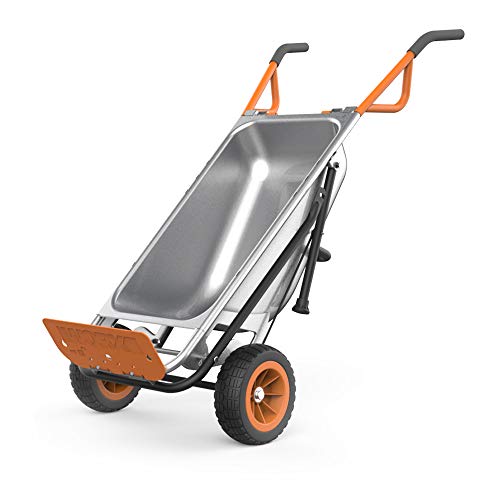
#1. WORX WG050 Aerocart 8-in-1 Wheelbarrow
Specifications
| Brand | WORX |
|---|---|
| Max Load Capacity | 300 lb |
| Number Of Wheels | 2 |
| Wheel Tire Type | Flat-Free |
| Product Weight | 40.8 lb |
Pros
- Sturdy tray, solid welds
- Stable, smooth dumping
- High load capacity
Cons
- Harsher ride
In a dual-wheel wheelbarrow field, the WORX WG050 stands out for how steady it feels when you dump. The 300 lb max load rating pairs with a sturdy tray and solid welds, so heavy mulch, gravel, or jobsite debris does not make it feel sketchy. When it is time to unload, the dumping action stays smooth and controlled instead of fighting the load.
The main trade-off is comfort. The ride can feel a bit harsher than you might expect from a two-wheel design, especially over rough ground. This is a good fit if you care more about carrying and dumping stability than about the softest ride for long pushes.
#2. Best Choice Products SKY10572 Dual-Wheel 500-lb Wheelbarrow

Specifications
| Brand | Best Choice Products |
|---|---|
| Max Load Capacity | 500 lb |
| Number Of Wheels | 2 |
| Wheel Diameter | 16 in |
| Wheel Tire Type | Pneumatic |
| Tray Material | Polyethylene |
| Product Weight | 33.5 lb |
Pros
- Great capacity for price
- More stable design
- Smoother ride
Cons
- Missing tray size data
- Unverified dumping efficiency
The Best Choice Products SKY10572 stands out among dual-wheel wheelbarrows for its stability under load. With a 500 lb max capacity and two 16 in pneumatic wheels, it stays more planted when hauling heavy mulch, gravel, or construction debris. The polyethylene tray also helps keep the load manageable when you need to tip out materials for a job site cleanup or yard work. In practice, the dual-wheel setup makes starts and turns feel less twitchy than single-wheel models.
The main trade-off is incomplete published info on usable tray size, so it is harder to judge how many loads fit without seeing it in person. Also, dumping efficiency is not clearly verified in reliable testing. This model fits best for homeowners and small crews who need steadier handling for heavier loads, but it may not be the top pick if you care most about maximizing tray volume or quick, effortless tipping on every swing.
#3. Best Choice Products SKY2705 Dual-Wheel Yard Wheelbarrow

Specifications
| Brand | Best Choice Products |
|---|---|
| Tray Capacity | 5 cu ft |
| Max Load Capacity | 330 lb |
| Number Of Wheels | 2 |
| Wheel Diameter | 14 in |
| Wheel Tire Type | Pneumatic |
| Tray Material | Polyethylene |
| Handle Style | Loop |
| Product Weight | 21 lb |
Pros
- High load capacity
- Rolls well on rough ground
- More stable design
Cons
- Small tray limitation
- Limited steep-terrain traction
- Nonadjustable handlebar fit
This dual-wheel yard wheelbarrow stands out for stability while hauling. With a 330 lb max load and pneumatic 14 in tires, it stays steady when moving mulch, gravel, or job-site debris across uneven spots. The two-wheel setup also helps it roll easier than many single-wheel models, especially when you are stopping and turning often.
The main trade-off is capacity in the tub. The tray is 5 cu ft, so bulky loads can feel cramped. It also has limited grip on steep, slick terrain, and the loop handle is not adjustable, which can affect comfort for taller or shorter users.
#4. Suncast 15-Gal Lawn Cart Wheelbarrow

Specifications
| Brand | Suncast |
|---|---|
| Tray Capacity | 15.5 cu ft |
| Number Of Wheels | 2 |
| Wheel Diameter | 7 in |
| Tray Material | Plastic |
Pros
- Great capacity for price
- More stable design
Cons
- Small wheel rollover
- Less durable tray material
- Missing load rating
This dual-wheel cart stands out for its stable feel when loaded. With a 15.5 cu ft plastic tray and two 7 in wheels, it handles bulk landscaping loads with less rocking than many single-wheel designs. It is a solid choice for moving mulch, garden debris, or light construction waste across typical yard surfaces.
The trade-off is comfort and durability under rough use. The smaller wheel size can cause a bit of bumpiness over ruts and yard bumps, and the plastic tray can be less forgiving if you regularly drag or bang materials. Also, the lack of a listed max load rating makes it harder to judge how far you can push it for heavier jobs, so this fits best for routine garden and cleanup work rather than constant heavy hauling.
#5. VEVOR EWB9800 Electric 4.5-cu ft Wheelbarrow

Specifications
| Brand | VEVOR |
|---|---|
| Tray Capacity | 4.5 cu ft |
| Max Load Capacity | 573 lb |
| Number Of Wheels | 2 |
| Wheel Diameter | 16 in |
| Product Weight | 114.6 lb |
Pros
- High load capacity
- More stable design
Cons
- Some wrist strain
- Terrain-dependent performance
The VEVOR EWB9800 stands out among dual-wheel wheelbarrows for its carry stability. With a 4.5 cu ft tray and a 573 lb max load rating, the two 16 in wheels help keep the tub balanced when you move heavy yard waste or jobsite debris. In practice, that steadier feel makes it easier to avoid the front end wobble you can get on single-wheel designs.
The trade-off is comfort and terrain. Some users may feel wrist strain because the lift and dump motion still demands good body mechanics, especially when the tray is full. Also, how well it rolls depends on ground conditions. Expect smoother pushing over firm dirt, gravel, and mulch than on rough, rutted areas where traction can vary.
What to Look For
Max Load Capacity: Pick the rating that fits how you actually load the tray. If you plan to haul bags of soil, pavers, or debris, prioritize higher capacity models and do not plan on running near the limit all the time.
Tray Capacity: Match tray size to your transport distance. Larger trays move more per trip, but they also feel heavier at the moment you lift the front to dump. Choose the smallest size that still saves you time.
Wheel Type and Tire Condition: For jobsite ground, pneumatic tires roll smoother over uneven spots but require more attention. Flat-free tires aim for easy maintenance. Solid rubber and similar options handle rough ground without flats, but they can feel firmer and slower on soft surfaces.
Build Quality at the Frame and Tray: Look for a rigid frame and a tray that does not flex when loaded. Welding and fasteners should feel tight. Rust resistance matters if you store outside or work in wet yards.
Ergonomics and Handle Control: Even with dual wheels, you still lift and dump. Prioritize a handle style that keeps your wrists neutral and lets you control the tipping angle without jerking.
How We Picked
Products were identified through broad research across review sites and buyer forums. We then filtered the list to only models that qualify as dual-wheel wheelbarrows, based on their wheel layout and real-world use reports.
We scored each option with the same pillar framework used in the main wheelbarrows guide. Performance, build quality, ergonomics, maneuverability, and value were weighted to reflect how dual-wheel models behave when loaded, pushed, turned, and dumped. That lets you compare the top picks directly within this sub-category.
Frequently Asked Questions
What makes dual-wheel wheelbarrows easier to use than a single-wheel model?
Dual wheels spread the weight across two contact points. This usually makes the load feel steadier. You also get better control on gravel, mulch, and uneven ground. The wheelbarrow is less likely to tip when you take a turn.
How do I choose between dual-wheel models with different load ratings?
Start with your heaviest typical job, like moving wet soil or compact debris. Then add a safety margin, especially if you often overfill the tray. Higher max load capacity helps the frame stay stable under strain. It also helps you avoid slow pushing when the load is near the limit.
Do dual-wheel wheelbarrows need special maintenance for the wheels and tires?
Yes, check both wheels regularly, not just the main one. If they use pneumatic tires, inspect pressure and look for leaks. For flat-free or solid tires, check for wear and make sure the wheels spin freely. Also tighten fasteners after the first few uses.
When should I skip a dual-wheel wheelbarrow and choose a different type?
Choose a single-wheel model if you work mostly on smooth surfaces and need the tightest turn radius. Choose a contractor style wheelbarrow if you move very heavy loads in short bursts. Dual-wheel models can feel wider in narrow paths. If your space is tight, measure the turning area before buying.
How do dual-wheel wheelbarrows compare to other wheelbarrows for maneuverability?
Dual-wheel wheelbarrows often roll more smoothly over rough ground. They also keep the tray level under heavier loads. Single-wheel models can be easier to steer in tight spots. Overall, dual-wheel models usually win on stability, while single-wheel models can win on compact handling.


