




The 9 Best Outdoor Generators for RV Ready in 2026

Transparency Note: This post contains affiliate links. As an Amazon Associate, we earn from qualifying purchases at no extra cost to you.

Outdoor Generators for RV Ready are the units that can run RV essentials without drama. Buyers in this sub-category usually power the fridge, lights, outlets, and HVAC, while also starting bigger loads like a microwave or air conditioner. The key is stable voltage and frequency under load, plus enough surge capacity for motor starts.

Picking the right generator is hard because RV needs collide with generator design. Inverter models tend to deliver steadier power for electronics, but their smaller watt ratings can struggle with heavy startup loads. Dual fuel models add flexibility for fuel availability, but real-world performance still depends on how the unit handles surges and how long it runs before you refill. Noise matters too, since “quiet” only helps if the output stays stable when the RV switches loads.

If you want to compare across all generator styles, see our Best Outdoor Generators. This RV-ready guide stays focused on the specs and trade-offs that matter for camping and travel days.

Quick Overview

DuroMax XP13000EH 13000W Dual Fuel Portable Generator
#1 DuroMax XP13000EH 13000W Dual Fuel Portable Generator
WEN DF480iX 4800W Inverter Generator
#2 WEN DF480iX 4800W Inverter Generator
DuroMax XP12000EH 12000W Dual Fuel Portable Generator
#3 DuroMax XP12000EH 12000W Dual Fuel Portable Generator
Aceup Energy AI4000s 4000W Inverter Generator
#4 Aceup Energy AI4000s 4000W Inverter Generator
WEN 56477i 4800W Inverter Generator
#5 WEN 56477i 4800W Inverter Generator
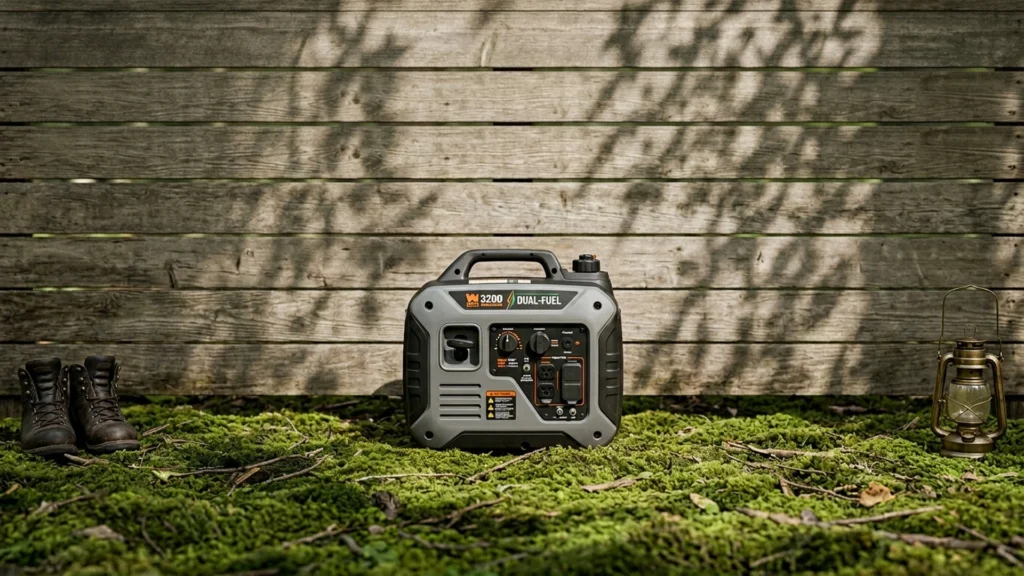
WEN DF360iX 3600W Inverter Generator
#6 WEN DF360iX 3600W Inverter Generator
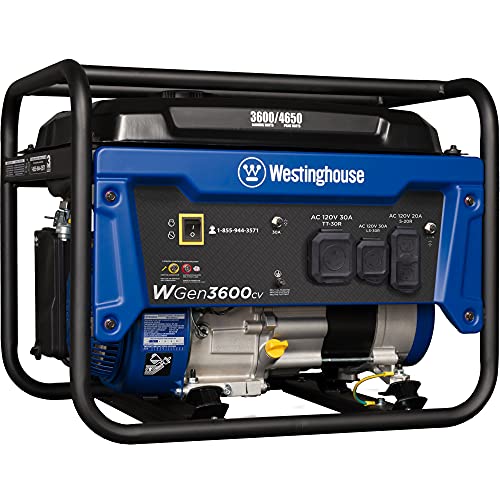
Westinghouse WGen3600cv 4650W Portable Generator
#7 Westinghouse WGen3600cv 4650W Portable Generator
Westinghouse WGen3600c 4650W Portable Generator
#8 Westinghouse WGen3600c 4650W Portable Generator
Generac 8944 3800W Inverter Generator
#9 Generac 8944 3800W Inverter Generator

Our Top Picks

#1. DuroMax XP13000EH 13000W Dual Fuel Portable Generator

DuroMax XP13000EH 13000W Dual Fuel Portable Generator
Our Score
7.8 / 10
hover for details
Performance
8.1
Build Quality
7.7
Usability
7.6
Noise
7.2
Value
7.9
BrandDuroMax
Generator TypeDual Fuel
Fuel TypeDual Fuel
Running Wattage13000 W
Starting Wattage13000 W
Noise Level74 dB
Weight234 lb
  • Strong surge, steady output
  • Inverter efficiency
  • Flexible fuel options
  • Weak starting surge
  • Loud in operation
  • Heavy and bulky

The DuroMax XP13000EH stands out for RV-ready use because it combines dual-fuel flexibility with strong, real-world power. You can run it on gasoline or propane, which helps when your RV setup favors one fuel over the other. In daily use, owners tend to like the steady voltage under load, and the surge is strong enough to handle typical RV startup items like air conditioners, battery chargers, and other high-draw electronics. The inverter-style efficiency also helps it stay more stable when loads change, instead of feeling like it is straining all day.

The main trade-off is comfort and handling. At about 234 lb and around 74 dB while running, it is not a quiet neighbor and it is not easy to move to a new spot each trip. Also, the starting surge is not as strong as its peak numbers suggest, so very demanding start-ups may need load management. This is best for RV owners who want a big, practical off-grid power source and can plan where and how it will run.

#2. WEN DF480iX 4800W Inverter Generator

WEN DF480iX 4800W Inverter Generator
Our Score
7.7 / 10
hover for details
Performance
7.8
Build Quality
7.3
Usability
7.7
Noise
7.6
Value
8.2
BrandWEN
Generator TypeInverter
Fuel TypeDual Fuel
Running Wattage4000 W
Starting Wattage4800 W
Runtime 50 Load7 h
Fuel Tank Capacity1.9 gal
Weight78.5 lb
  • High continuous output
  • Inverter efficiency
  • Reliable performance for price
  • Small fuel capacity
  • Propane power drop

This inverter generator stands out for RV-ready power stability at higher loads. With 4000 W running and 4800 W starting, it handles typical RV startup needs like a fridge plus other small appliances without the kind of voltage drama you feel in everyday use. Dual-fuel support also helps for different camping plans, since you can switch between gasoline and propane. The inverter design matters here because RV electronics tend to be picky, and this unit is built for cleaner, steadier output than many open-frame models.

The trade-off is runtime and propane behavior. The 1.9 gal tank limits total run time, and owners note a noticeable power drop on propane compared with gasoline. If you are mostly running on gas and you are comfortable refueling more often, this is a strong fit for weekend trips and dry camping. If you plan to rely heavily on propane or you need long stretches of steady output, you may want to look for a unit with a larger fuel supply or different propane performance.

#3. DuroMax XP12000EH 12000W Dual Fuel Portable Generator

DuroMax XP12000EH 12000W Dual Fuel Portable Generator
Our Score
7.7 / 10
hover for details
Performance
8.3
Build Quality
7.9
Usability
6.9
Noise
6.6
Value
7.9
BrandDuroMax
Generator TypeDual Fuel
Fuel TypeDual Fuel
Running Wattage9500 W
Weight224 lb
  • Strong surge, steady output
  • Inverter efficiency
  • Flexible fuel options
  • Fiddly refueling and access
  • Noticeable engine growl
  • Heavy and bulky

This DuroMax XP12000EH stands out for RV ready power because it blends high usable output with solid surge handling. Owners report steady voltage and strong startup for common RV loads, like air conditioners and battery chargers, without frequent trips. The dual fuel setup also matters for road trips: you can run on gasoline when propane is inconvenient, then switch when propane is the easier choice.

The trade-off is that it is not the most pleasant unit to live with. Refueling can feel fiddly, and the generator is heavy and bulky at 224 lb, so moving it at a campsite takes effort. Noise is also noticeable, with an engine growl you will hear from nearby, so it is best for RVers who park with space and do not expect near-silent operation.

#4. Aceup Energy AI4000s 4000W Inverter Generator

Aceup Energy AI4000s 4000W Inverter Generator
Our Score
7.6 / 10
hover for details
Performance
7.7
Build Quality
7.1
Usability
7.6
Noise
7.1
Value
8.4
BrandAceup Energy
Generator TypeInverter
Fuel TypeGasoline
Running Wattage3200 W
Runtime 50 Load5 h
Fuel Tank Capacity1.32 gal
Noise Level60 dB
Weight48 lb
  • Reliable performance for price
  • Inverter efficiency
  • Low noise level
  • Limited fuel flexibility
  • Short runtime
  • Small fuel capacity

For RV ready power, the Aceup Energy AI4000s stands out for its inverter setup and quiet operation. It runs at 3200 W and is rated around 60 dB, which helps keep generator noise down during campground evenings. Owners also tend to like how steady the output feels for common RV loads like outlets, lights, and charging gear, without the rough swings that some non-inverter units can have.

The trade-off is time in the field. With a 1.32 gal tank and about 5 h runtime at 50% load, longer days off grid mean more refueling stops. It is best for campers who run lighter loads most of the time and can plan around the tank size, rather than heavy use for many hours back to back.

#5. WEN 56477i 4800W Inverter Generator

WEN 56477i 4800W Inverter Generator
Our Score
7.5 / 10
hover for details
Performance
7.6
Build Quality
7.2
Usability
7.4
Noise
7.6
Value
8.1
BrandWEN
Generator TypeInverter
Running Wattage4000 W
Starting Wattage4800 W
Runtime 50 Load7 h
Fuel Tank Capacity1.9 gal
Noise Level62 dB
Weight72.7 lb
  • Reliable performance for price
  • High continuous output
  • Inverter efficiency
  • Small fuel capacity
  • Inaccurate fuel gauge
  • Mixed control feedback

This WEN 56477i stands out for RV-ready power stability. It is an inverter generator rated for 4000 W running and 4800 W starting, so it handles common RV loads without the rough power swings you can get from non-inverter units. At 62 dB, it stays in a tolerable range for camping setups, and the inverter design helps it run more efficiently when loads are moderate.

The trade-off is run time and day-to-day convenience. With a 1.9 gal tank, it lists about 7 h at 50 percent load, so longer trips may mean more fuel stops than you expect. The fuel gauge can feel off, and some users report mixed feedback from the controls, which can slow down quick troubleshooting when you are trying to get the RV settled.

#6. WEN DF360iX 3600W Inverter Generator

WEN DF360iX 3600W Inverter Generator
Our Score
7.5 / 10
hover for details
Performance
6.9
Build Quality
7.1
Usability
7.8
Noise
8.8
Value
8.3
BrandWEN
Generator TypeDual Fuel
Fuel TypeDual Fuel
Running Wattage2900 W
Starting Wattage3600 W
Noise Level65 dB
Weight49 lb
  • CO shutoff safety
  • Inverter efficiency
  • Flexible fuel options
  • Limited home-backup headroom
  • Adequate but fuel-hungry
  • Missing runtime transparency

The WEN DF360iX stands out for RV ready use because it mixes inverter-style fuel efficiency with dual-fuel flexibility. At 2900W running and 3600W starting, it has enough surge for many common RV loads like air conditioners and refrigerators, as long as you avoid running too many high-draw items at once. The CO shutoff safety is also a practical match for time spent parked, since it helps reduce risk if exhaust fumes build up. Its inverter design helps keep power steadier for electronics compared to many conventional units.

The main trade-off is headroom. If you want true home-backup style coverage, the 2900W running limit can feel tight, especially when multiple appliances kick on. Owners also report fuel use can be steady on moderate loads, and runtime transparency is not as clear as you would want for planning longer boondocking days. This is best for RVers who want quiet operation and stable power for typical camping essentials, and who manage load carefully.

#7. Westinghouse WGen3600cv 4650W Portable Generator

Westinghouse WGen3600cv 4650W Portable Generator
Our Score
7.5 / 10
hover for details
Performance
7.4
Build Quality
7.4
Usability
7.3
Noise
7
Value
8.4
BrandWestinghouse
Generator TypeConventional
Fuel TypeGasoline
Running Wattage3600 W
Starting Wattage4650 W
Runtime 50 Load14 h
Fuel Tank Capacity4 gal
Weight100.6 lb
  • Reliable performance for price
  • Long runtime
  • Large fuel capacity
  • Heavy and bulky
  • Less portable design
  • Recoil start hassle

The Westinghouse WGen3600cv stands out for RV ready use because it has enough surge capacity to handle tough start ups while still giving a long run time in the field. With 3600W running output and 4650W starting watts, it is a fit for powering common RV needs like outlets and the refrigerator cycle, plus other household-style loads during trips. The 4 gal tank supports about 14 hours at 50% load, which helps when you want steady power without refueling every few stops.

The main trade-off is mobility. At about 100.6 lb, it is heavy and bulky, so it is not the easiest unit to move around a campsite. Also, it uses recoil starting, which can feel like a hassle if you expect quick, button-style starts. This model works best for RV owners who park in one place for longer stretches and do not mind moving a larger generator by hand.

#8. Westinghouse WGen3600c 4650W Portable Generator

Westinghouse WGen3600c 4650W Portable Generator
Our Score
7.4 / 10
hover for details
Performance
7.1
Build Quality
7.1
Usability
7.6
Noise
7.1
Value
8.3
BrandWestinghouse
Generator TypeConventional
Fuel TypeGasoline
Running Wattage3600 W
Starting Wattage4650 W
Fuel Tank Capacity4 gal
Noise Level68 dBA
Weight106.1 lb
  • Reliable performance for price
  • Large fuel capacity
  • Covered outlets safety
  • Rattling under load
  • Remote-start limitation
  • Heavy and bulky

The Westinghouse WGen3600c stands out for RV-ready power needs because it brings solid running power for common campsite and rig loads while keeping the setup fairly straightforward for a conventional gas unit. With 3600 W running and 4650 W starting, it is sized to handle typical RV air conditioner startup better than smaller generators. The 4 gal fuel tank also helps you run longer between stops, which matters on road trips. Covered outlets add a layer of safety when you are dealing with wet or dusty outdoor conditions.

The trade-off is day-to-day comfort and noise behavior. Owners report rattling under load, and the generator is heavy at 106.1 lb, so it is not fun to move often. Remote start also has limits, so you may still end up at the unit to manage starts and adjustments. This model fits best for RVers who want reliable mid-size output and can handle moving and positioning a bulky, conventional generator.

#9. Generac 8944 3800W Inverter Generator

Generac 8944 3800W Inverter Generator
Our Score
7.3 / 10
hover for details
Performance
7
Build Quality
7.3
Usability
7.4
Noise
7.4
Value
7.9
BrandGenerac
Generator TypeInverter
Fuel TypeDual Fuel
Running Wattage3000 W
Starting Wattage3800 W
Runtime 50 Load13 h
Weight107 lb
  • Inverter efficiency
  • Flexible fuel options
  • Long runtime
  • Heavy and bulky

This Generac inverter is notable for RV-ready power choices. It runs as a dual fuel inverter, and it is rated for 3000 W running with 3800 W starting. That surge headroom helps when you start common RV loads like air conditioners or microwaves. Owners also benefit from inverter efficiency, which matters when you are trying to stretch fuel during longer camping trips.

The main trade-off is size and weight. At 107 lb, it is not a quick lift into the truck bed or an easy one-person carry to a quiet spot. If your RV setup stays in the same place often, like a driveway backup plan or a regular campsite routine, it can be a solid fit. If you move generators often or need something light, this model may feel like more work than the wattage suggests.

What to Look For

Surge for RV motor starts: Check starting wattage, not just running wattage. RV air conditioners and some appliances need a short spike to start. If the surge rating is too low, the generator can stall or trip when the compressor kicks on.

Stable power for sensitive electronics: Look for inverter generation when your RV includes chargers, laptops, or modern TV and Wi-Fi gear. Inverter units typically hold tighter voltage and frequency during load changes, which helps avoid nuisance shutdowns and keeps the power smoother when you switch appliances.

Runtime at a realistic 50% load: Use runtime at 50% load to estimate how long you can run a typical day of mixed usage. Many RV setups sit around half load when you run lights, outlets, and a couple of appliances. Longer runtime reduces refueling stops and helps you plan around campground rules.

Fuel flexibility that matches your route: For RV ready buyers, fuel choice affects convenience. Dual fuel models let you switch between gasoline and propane, which can matter when supplies are inconsistent along the way. Choose the fuel option that you can reliably source during travel.

Noise level you can live with: Campgrounds do not treat “close enough” noise lightly. Favor models with lower decibel output, especially if you plan to run the generator in the evening or early morning. A generator that stays quiet only at low load can still feel rough when the RV ramps up.

How We Picked

Products were identified through broad research across review sites and buyer forums, then filtered to only those that qualify as Outdoor Generators for RV Ready. The filter focused on models that fit common RV use cases: powering sensitive electronics, handling RV appliance startup spikes, and staying practical for campground use.

Scoring used the same objective pillar framework as the main Outdoor Generators post, allowing direct comparison of products within this sub-category. We weighted Performance for real usable power and surge handling, Build Quality for dependable starts and durability, Usability for electric start and day-to-day practicality, Noise for how intrusive the unit feels during normal operation, and Value to judge whether the power and runtime match the price for RV-ready needs.

Frequently Asked Questions

What generator wattage do I need for RV hookups?

Start by listing your RV basics and peak loads. Refrigerators, fans, and lights usually need less than air conditioners and microwaves. A generator in the 3000 to 5000 watt range often covers many RV setups, but starting surge matters. If you run an AC, plan for higher surge output than the running wattage.

Is dual fuel worth it for RV-ready outdoor use?

Dual fuel helps when you want flexibility at camp. You can run on gasoline when propane is not available, or switch to propane for longer storage. Propane can also support cleaner starts after sitting. Dual fuel generators may cost more and can be slightly heavier, so check that the output matches your RV needs.

How do I connect a generator safely to my RV?

Use a proper RV power inlet and a generator cord rated for outdoor use. Do not plug the generator into a wall outlet. Keep cords off damp ground and use a GFCI protected setup when possible. If your RV has a transfer switch, follow the RV manual for the correct sequence.

How loud will an RV-ready generator be at a campsite?

Noise depends on load and how far you place the generator from your RV. Inverter generators usually stay quieter at partial loads because they can run slower. If you use a conventional high-output unit, expect more engine sound and vibration. Always test your setup in a safe open area before using it at your site.

When should I choose a different type of outdoor generator instead?

Choose an inverter generator if you power sensitive electronics like TVs and chargers. Choose a dual fuel or higher-watt unit if you run larger appliances like AC and battery chargers at the same time. Choose a standby generator if you want automatic home backup and you are not moving it. If you carry the unit often, prioritize easier mobility and quick starts over maximum power.

See Also

Share:
On Key
You Might Also Like