





How to Pick the Perfect Luggage for Travel

We’ve all been there: standing at the baggage carousel, watching a sea of black suitcases roll by, and praying that the one with the cracked wheel isn’t ours. Or perhaps you’re that person at the boarding gate, desperately trying to shove an overstuffed carry-on into the sizer while a line of frustrated travelers watches on. Choosing the right luggage isn’t just about aesthetics; it’s about making your journey smoother, protecting your belongings, and avoiding those dreaded airline fees.
The market is flooded with options, from ultra-lightweight hardshells to rugged ballistic nylon bags. With prices ranging from fifty bucks to over a thousand, it’s easy to feel overwhelmed. But here’s the secret: the "best" luggage doesn’t exist in a vacuum. The right bag for a weekend in Paris is vastly different from the one you need for a month-long trek through Southeast Asia. In this deep dive, we’re going to break down everything you need to know to find your perfect travel companion.
Hardside vs. Softside: The Great Debate
This is usually the first fork in the road for any luggage buyer. Ten years ago, the choice was simple: softside for flexibility, hardside for protection (but they were heavy and prone to cracking). Today, material science has narrowed that gap significantly. Hardside luggage, often made from polycarbonate or aluminum, offers a sleek look and superior protection for fragile items. If you’re traveling with electronics, camera gear, or a bottle of fine wine, the rigid exterior acts as a literal shield against the rough handling of airport staff.
On the flip side, softside luggage remains the king of convenience. These bags are typically made from woven fabrics like Cordura or ballistic nylon. Their biggest advantage is flexibility. Because the fabric can stretch, you can usually squeeze in that one extra outfit or a few souvenirs. Additionally, softside bags almost always feature external pockets—a godsend for storing your passport, a light jacket, or charging cables while moving through the airport. Hardside bags generally lack these external compartments, meaning you have to unzip the entire suitcase to access anything inside.
When deciding, consider your packing style. If you are a chronic over-packer, a softside bag with an expansion joint will be your best friend. If you value security and weather resistance—hardside bags handle rain much better than fabric—then a modern polycarbonate shell is the way to go. Just remember that while hardside bags protect the contents from impact, they can also get scuffed and scratched quite easily, which might bother you if you like your gear looking pristine.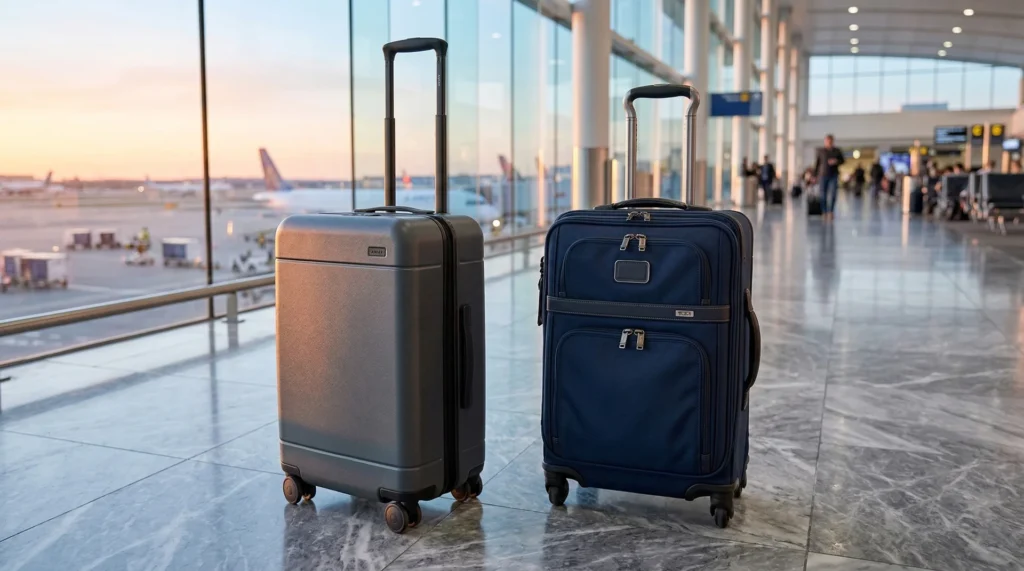
Size and Capacity: Navigating Airline Rules
Size is the most critical factor when it comes to avoiding headaches at the airport. For carry-ons, the standard domestic limit in the United States is generally 22 x 14 x 9 inches. However, international carriers, especially budget airlines in Europe and Asia, often have much stricter requirements (sometimes as small as 20 inches). If you buy a bag that’s exactly 22 inches, including the wheels and handles, you might find yourself forced to check it at the gate on a smaller plane.
Checked luggage is a bit more straightforward, but weight is the silent killer. Most airlines allow 50 pounds (23kg) for standard checked bags. The heavier your suitcase is when it’s empty, the less gear you can actually bring. A heavy-duty aluminum trunk might look incredibly cool, but if it weighs 12 pounds empty, you’ve already lost 25% of your weight allowance before you’ve packed a single sock. For most travelers, a large checked bag should fall between 25 and 29 inches. Anything larger becomes a nightmare to maneuver into taxis or through train stations.
Always check the internal capacity, measured in liters. A well-designed 40-liter carry-on can often hold more than a poorly organized 45-liter bag. Look for squared-off corners rather than rounded ones; those rounded edges might look aerodynamic, but they represent lost packing space where your shoes or toiletries could have tucked away perfectly.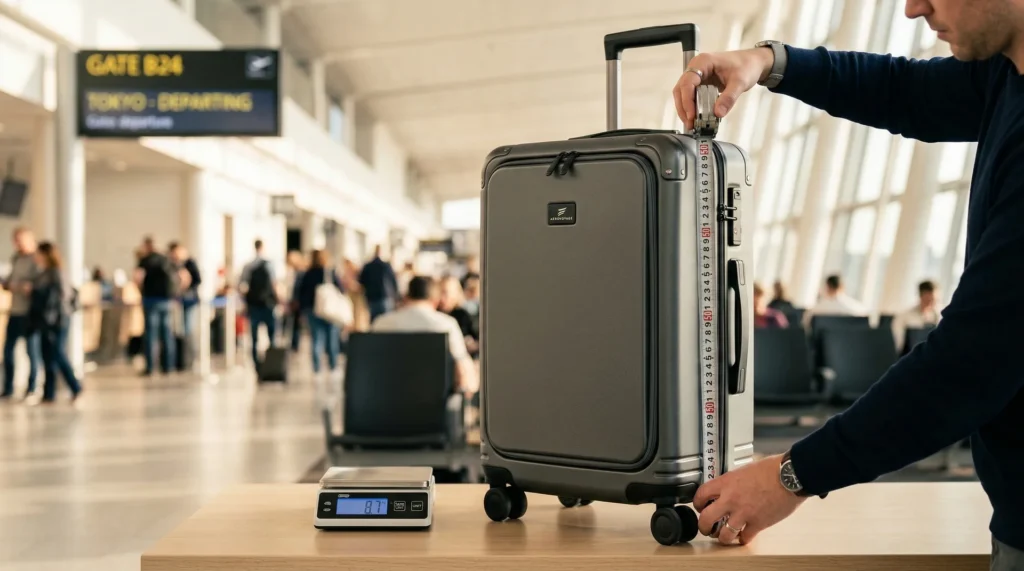
Two Wheels vs. Four Wheels: Maneuverability Matters
The wheel debate is often a matter of personal preference, but the terrain of your destination should play a huge role in your choice. Four-wheelers, also known as "spinners," are the modern standard. They allow 360-degree movement, meaning you can glide your bag alongside you rather than dragging it behind. This is a game-changer in crowded airport terminals or narrow airplane aisles. You can even navigate them sideways through the plane, which is much easier than pulling a wide bag behind you.
However, spinners have a weakness: uneven surfaces. If your travels involve cobblestone streets in Rome, cracked sidewalks in New York, or gravel paths, those four small wheels are going to struggle. They also tend to break more easily because they protrude from the bag's body. This is where two-wheel, or "inline," luggage shines. These wheels are recessed into the frame, making them much more durable. Because they are larger and made of polyurethane (similar to rollerblade wheels), they can roll over almost anything with ease.
Another thing to consider is that four-wheel bags don't stay put. If you’re on a bus or a train and you let go of your bag, it’s going to go for a ride of its own. Two-wheel bags stay exactly where you leave them. If you do go for a spinner, look for "double wheels" on each corner; they provide much better stability and weight distribution than single-wheel designs.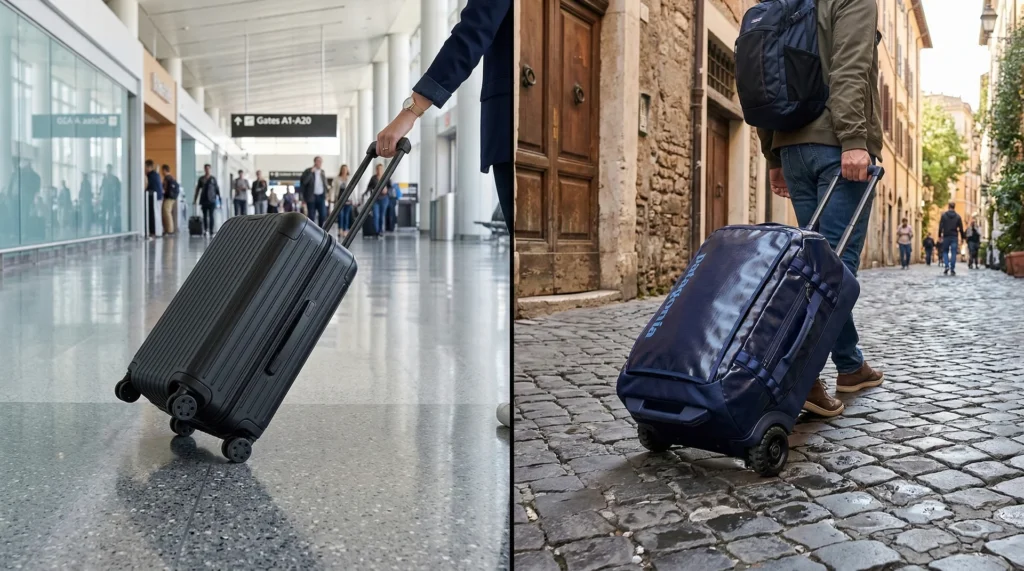
Material Science: What Is Your Bag Actually Made Of?
Not all plastics and fabrics are created equal. If you’re looking at hardside luggage, you’ll likely see three materials: ABS, Polycarbonate, and Aluminum. ABS is the cheapest; it’s lightweight but brittle and prone to cracking under pressure. Polycarbonate is the sweet spot. It’s highly impact-resistant because it’s designed to flex—when hit, it bows and then pops back into shape. Aluminum is the gold standard for durability and security, but it’s heavy, expensive, and will dent over time (which some travelers view as a badge of honor).
For softside luggage, keep an eye out for the "denier" rating, which measures the thickness of the fibers. You want a high denier count for the best durability. Polyester is the most common and affordable option, but it’s not particularly durable for frequent flyers. Nylon is a significant step up. Ballistic nylon is the toughest of the bunch—originally developed for military flak jackets, it is incredibly resistant to tears and abrasions. If you’re a road warrior who travels every week, ballistic nylon is worth the investment.
Don't forget the hardware. The zippers are often the first thing to fail on a bag. Look for YKK zippers, which are the industry standard for reliability. Check the teeth; larger, "burst-resistant" zippers are less likely to split open when the bag is stuffed to capacity. Also, inspect the telescoping handle. It should feel sturdy and lock firmly into place at multiple heights. If it feels wobbly or "jiggly" in the store, it’s only going to get worse after a few flights.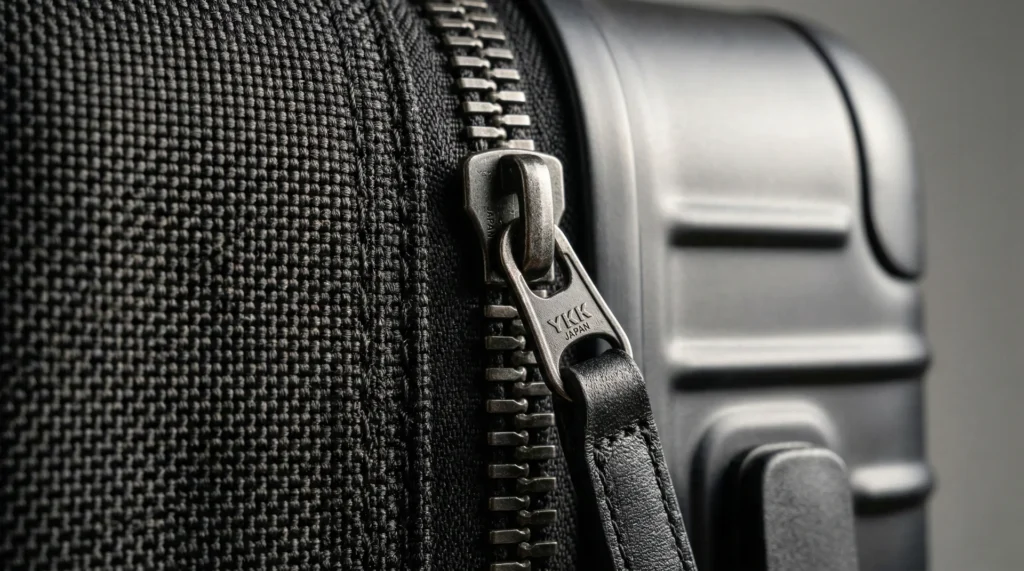
Smart Features and Internal Organization
Modern luggage comes with all sorts of bells and whistles, but some are more useful than others. Built-in TSA-approved locks are a must-have for checked bags, allowing security to inspect your bag without clipping your locks. USB charging ports are a popular addition, but be careful: many airlines now ban luggage with non-removable lithium-ion batteries. Always ensure the battery pack is easily accessible so you can take it into the cabin if you’re forced to check your carry-on.
Internal organization can save you from the "suitcase explosion" in your hotel room. Look for bags with internal compression straps that actually pull tight, helping to flatten your clothes and save space. Mesh pockets are great for separating dirty laundry or storing small items like socks and chargers. Some high-end bags even come with built-in suiter compartments to keep your formal wear wrinkle-free. However, don't let a lack of pockets deter you from a great bag; you can always supplement a simple interior with a good set of packing cubes, which many professional travelers prefer anyway.
Finally, consider the warranty. Brands like Briggs & Riley or Patagonia offer "lifetime" warranties that cover even airline damage. Other brands offer limited warranties that only cover manufacturing defects. Since luggage is an investment that’s literally designed to be thrown around by machines and humans, having a company that stands behind its product can save you hundreds of dollars in the long run.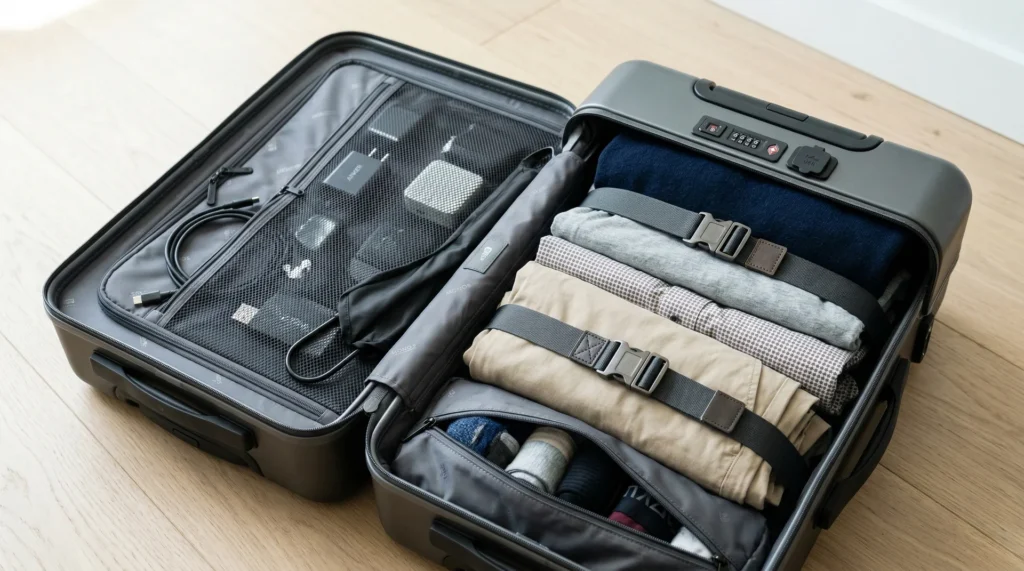
Making Your Final Decision
At the end of the day, picking the right luggage is about balance. You have to balance weight against durability, features against price, and size against airline restrictions. Before you buy, go to a store and give the bag a "test drive." Extend the handle, walk with it, and—most importantly—lift it. A bag might feel light when it’s empty on the showroom floor, but imagine it with twenty pounds of gear inside.
If you’re still unsure, start with a high-quality carry-on. It’s the piece of gear you’ll use the most and have the most control over. Once you find a brand and style that works for your travel habits, you can expand your set to include larger checked pieces. Happy travels, and may your zippers always glide smoothly and your wheels never wobble!