





Deep Dive: Electric Toothbrush Brush Heads
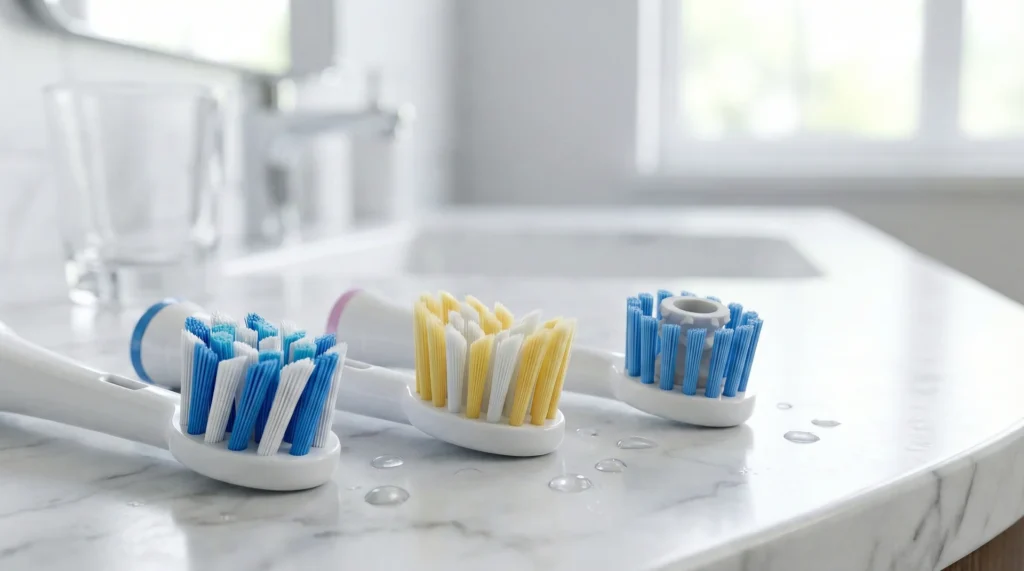
When you finally decide to upgrade your oral hygiene routine, you probably spend a lot of time researching motor speeds, battery life, and whether or not an app can actually help you brush better. However, most people overlook the most critical component of the entire setup: the brush head. While the handle provides the power, the brush head is the part actually doing the heavy lifting—scrubbing away plaque, polishing enamel, and gently massaging your gums.
Choosing the right brush head is often more important than the handle itself. If you use a head that is too abrasive, you could damage your enamel. If the bristles aren't shaped correctly for your mouth, you might miss those hard-to-reach spots behind your molars. In this guide, we will break down everything you need to know about electric toothbrush brush heads, from bristle materials to specialized shapes, so you can make an informed decision for your smile.
The Science Behind the Bristles
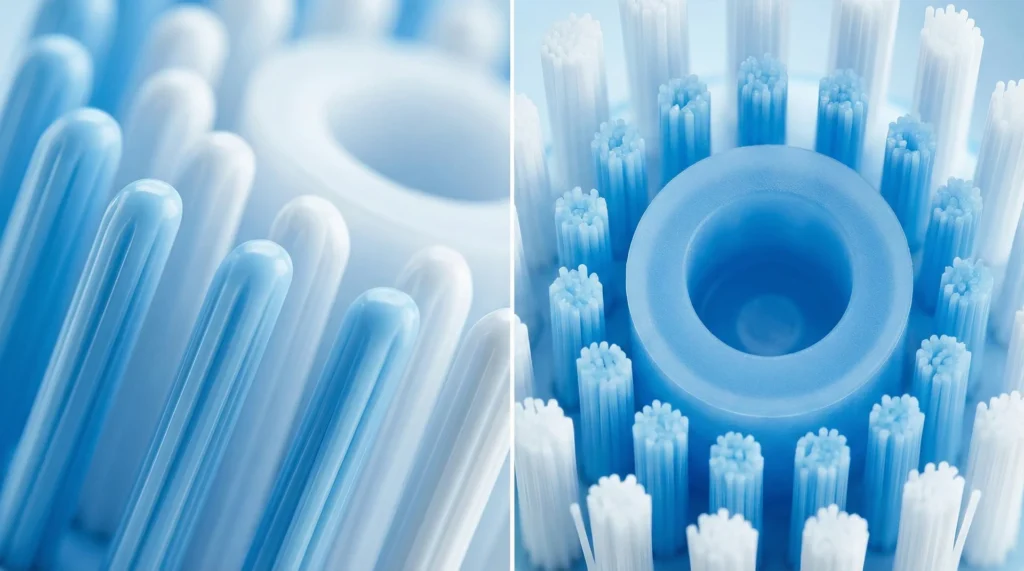
Not all bristles are created equal. In the world of oral care, the material and the cut of the bristle determine how effective a cleaning session will be. Most modern electric toothbrush heads use high-quality nylon filaments. These are chosen for their durability and flexibility. However, the 'end-rounding' process is what truly separates a premium brush head from a budget one. Under a microscope, cheap bristles often look like jagged spikes, which can cause micro-tears in your gums. High-quality brands ensure their bristles are rounded at the tips to be gentle on soft tissue.
Beyond traditional nylon, we are seeing a rise in silicone and rubberized elements integrated into brush heads. These are often positioned in the center of the head to act as polishing cups. They grip the surface of the tooth more effectively than bristles alone, helping to remove surface stains from coffee or tea. While these additions are great for aesthetics, the foundation of any good brush head remains the density and arrangement of its nylon bristles.
Stiffness is another crucial factor. You will notice labels for 'Soft,' 'Extra Soft,' and 'Medium.' Dental professionals almost universally recommend soft bristles for electric toothbrushes. Because the motor provides thousands of strokes per minute, a 'Medium' bristle can quickly become too aggressive, leading to gum recession. If you have sensitive teeth or are recovering from a dental procedure, extra-soft filaments provide a cloud-like experience without sacrificing plaque removal.
Matching the Head to Your Cleaning Goals
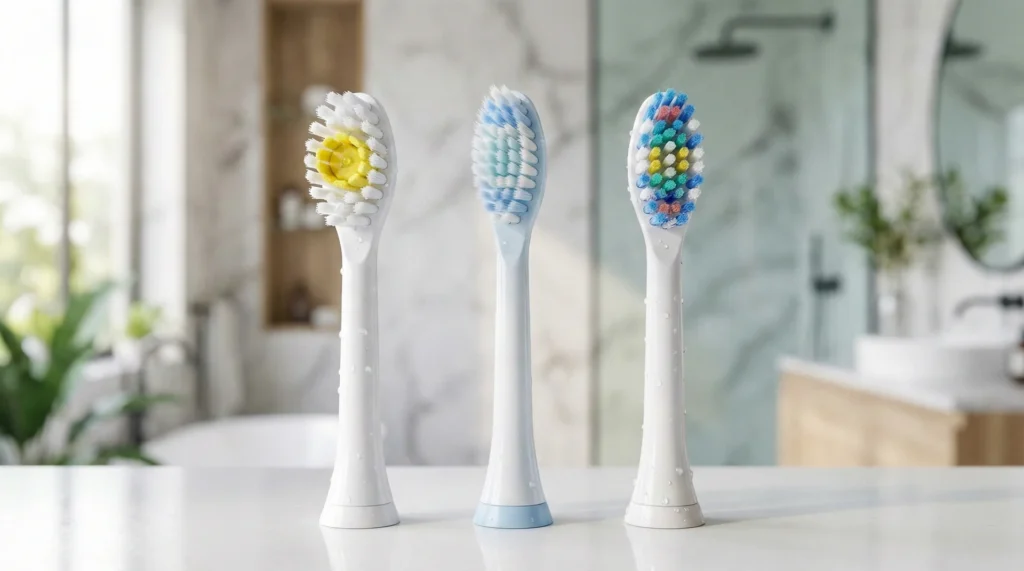
The beauty of modern electric toothbrushes is their versatility. Most major manufacturers offer a wide array of interchangeable heads designed for specific dental needs. Understanding these categories is the first step toward a healthier mouth. For instance, if your primary goal is bright white teeth, you should look for heads labeled 'Whitening' or '3D White.' These typically feature a central polishing cup surrounded by densely packed bristles to buff away discolorations.
For those struggling with gingivitis or sensitive gums, 'Sensitive' or 'Gum Care' heads are the gold standard. These usually feature longer, thinner bristles at the edges that can reach slightly below the gum line without causing irritation. The bristles are significantly softer, ensuring that the high-speed vibrations of the handle don't cause discomfort. It is worth noting that even with these specialized heads, finding one of the best electric toothbrushes for your specific needs is only half the battle; you must also ensure the head is replaced regularly to maintain its efficacy.
Lastly, we have 'Deep Clean' or 'FlossAction' heads. These are designed for people who tend to skip flossing or have crowded teeth where food easily gets trapped. These heads often incorporate specialized 'micro-pulse' bristles that pivot and reach deeper between the teeth. While they don't replace the need for flossing entirely, they provide a much more thorough mechanical cleaning in the interdental spaces compared to a standard flat-trimmed brush head.
Orthodontic and Specialized Heads
If you have braces, standard brush heads can be a nightmare. The brackets and wires quickly fray normal bristles, and the flat surface of a standard head can't effectively clean around the hardware. Orthodontic brush heads are designed with a specific 'well' in the center—a lower section of bristles that allows the head to fit over the brackets while the longer outer bristles clean the tooth surface and the gums. This prevents the 'shredding' effect and ensures your teeth stay cavity-free throughout your treatment.
There are also specialized heads for tongue cleaning and interproximal cleaning (single-tuft brushes). Single-tuft brushes are particularly useful for cleaning around dental implants, bridges, or the very back of wisdom teeth. These tools are often overlooked but can be life-changers for those with complex dental work. Integrating these into your routine can drastically reduce the risk of localized inflammation and decay in tricky spots.
Compatibility and Brand Ecosystems
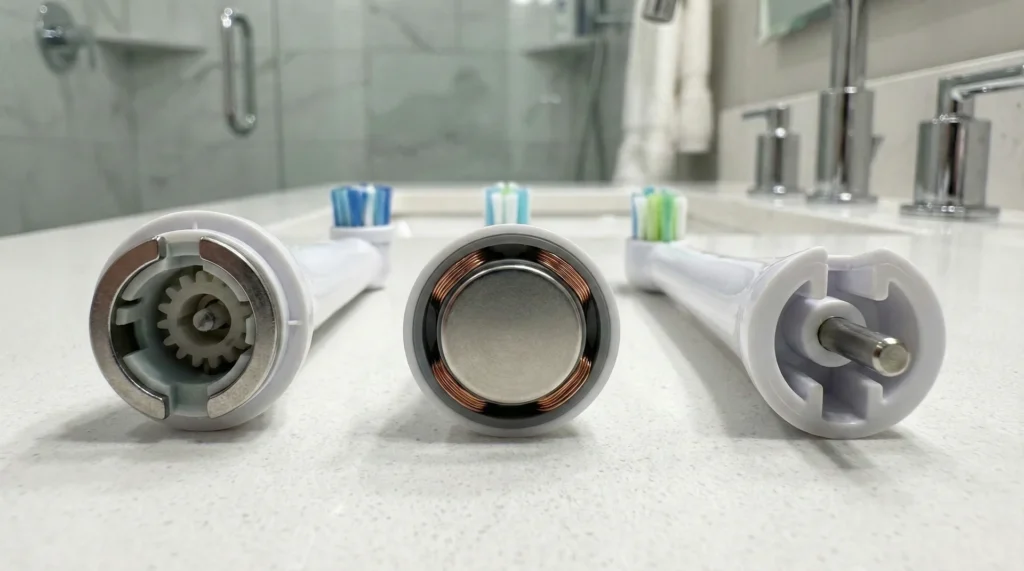
One of the most frustrating aspects of the electric toothbrush world is compatibility. Unfortunately, there is no 'universal' fit for brush heads. The two giants of the industry, Oral-B and Philips Sonicare, use completely different attachment mechanisms. Oral-B typically uses a metal shaft that the head clicks onto, facilitating an oscillating-rotating movement. Sonicare uses a snap-on system designed for high-frequency lateral vibrations.
When shopping, you must ensure the head matches your specific model series. For example, Oral-B’s newer 'iO' series uses a completely different magnetic drive system than their classic 'Pro' or 'Smart' series. Buying a pack of heads for the wrong series is a common mistake that can be avoided by checking the base of your toothbrush handle for a model number. Many people find that pairing these specialized heads with the best electric toothbrushes will yield the professional-grade results you're after, provided the compatibility is verified first.
What about third-party or generic brush heads? You will find dozens of 'compatible' heads on Amazon for a fraction of the price of the brand-name versions. While tempting, proceed with caution. Generic heads often skip the end-rounding process mentioned earlier, and the plastic fit might not be as precise. A loose-fitting head can vibrate loudly, reduce the power transferred to your teeth, or even damage the motor shaft of your expensive handle over time. If you do go the generic route, look for brands with high ratings and specific mentions of bristle quality.
When and How to Replace Your Heads
The American Dental Association (ADA) recommends replacing your toothbrush or brush head every three to four months. However, this isn't just a marketing ploy to get you to buy more products. Over time, bristles undergo mechanical fatigue. They lose their stiffness and begin to 'splay' or flare outward. Once bristles are splayed, they can no longer effectively reach into the crevices of your teeth or follow the contour of your gums. Instead of cleaning, they simply slide over the surface, leaving plaque behind.
Furthermore, brush heads are a breeding ground for bacteria. Even if you rinse your brush thoroughly, moisture trapped at the base of the bristles can lead to microbial growth. If you have been sick with a cold or flu, it is always a good idea to swap out your brush head immediately upon recovery to prevent reinfection.
Most premium brush heads now include 'indicator bristles.' These are usually dyed blue or green and will gradually fade to white as the head wears down. When the color is halfway gone, it’s time for a change. High-end smart toothbrushes take this a step further by tracking your actual brushing time and pressure via an RFID chip in the head, sending a notification to your phone when it is officially time to retire the current head.
Maintaining Your Brush Head
To get the most out of your brush head during its three-month lifespan, proper maintenance is key. After every use, remove the head from the handle and rinse both parts under warm water. Many people leave the head on the handle, which allows toothpaste residue and water to build up inside the attachment point, leading to mold and a nasty smell. Drying the head upright in an open-air holder is the best way to keep it hygienic. Avoid using closed travel caps for daily storage, as they trap moisture and encourage bacterial growth.
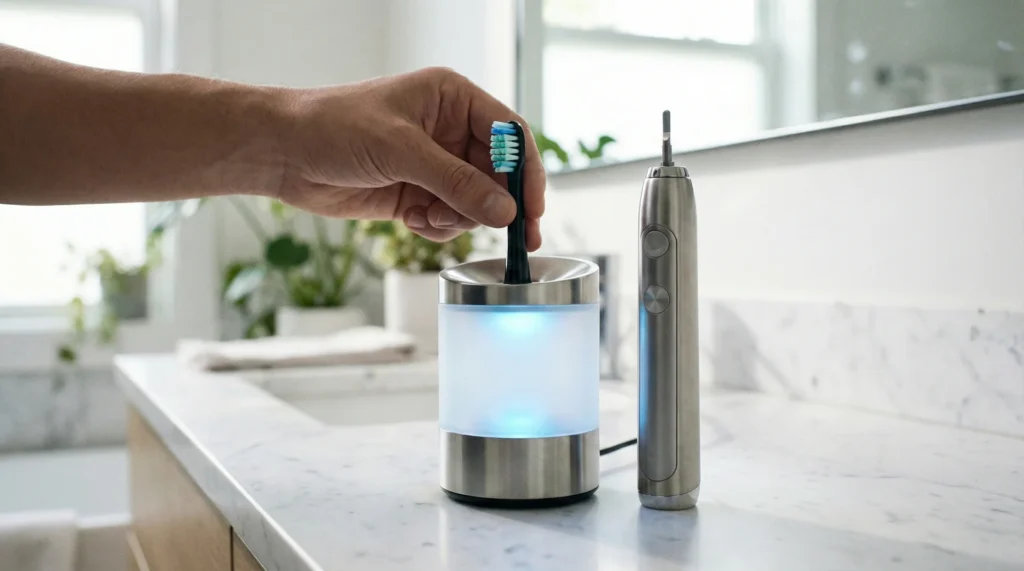
If you are particularly concerned about hygiene, you might consider a UV sanitizer. Some high-end electric toothbrush models come with a charging base that includes a UV light chamber. Placing your brush head inside for a few minutes can kill up to 99% of surface bacteria. While not strictly necessary for most healthy individuals, it offers extra peace of mind and keeps the brush feeling fresh.
Final Thoughts on Brush Heads
Ultimately, the brush head is the interface between technology and your anatomy. While it is easy to get caught up in the flashy features of a new electric toothbrush handle, your oral health outcomes are largely determined by the bristles you choose and how often you replace them. Whether you need the gentle touch of a sensitive head or the scrubbing power of a whitening model, there is a perfect match out there for your smile. By understanding the nuances of bristle shape, material, and compatibility, you can ensure that every second of your two-minute brushing routine is as effective as possible.