





Mastering Cast Iron Skillet Maintenance
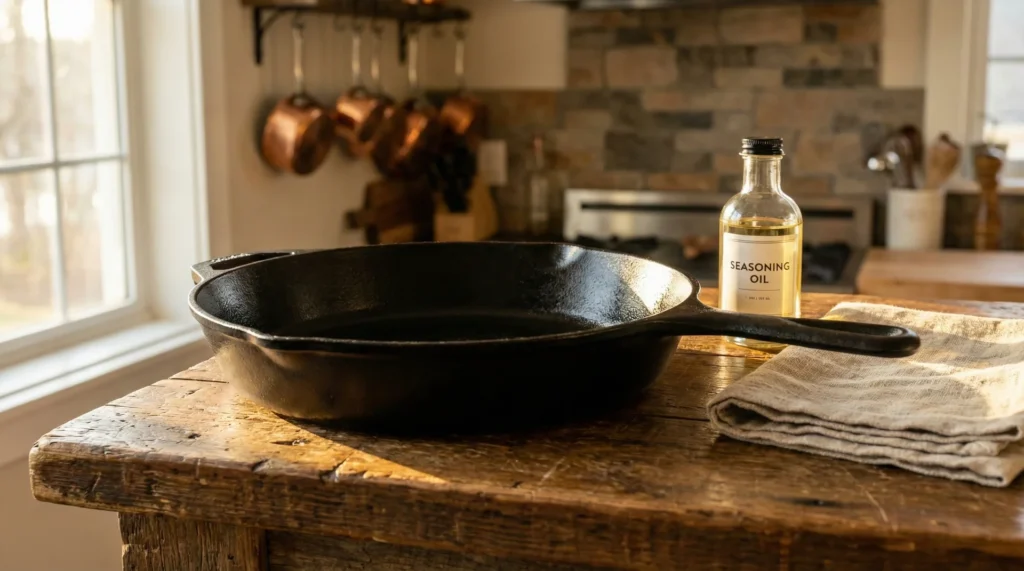
For a seasoned, bare cast-iron skillet, the everyday routine is short: wash it by hand, dry it completely, then wipe on a very thin layer of cooking oil. Store it dry. You do not need a full oven-seasoning cycle after every meal.
First identify the cooking surface. Enameled cast iron needs different care from bare iron. Follow the maker's instructions for your pan, especially if it has an enamel coating, wooden handle or other parts with different heat limits. If you are choosing a pan, see our cast-iron skillet comparison.
Bare iron and enamel need different care
Seasoning is the protective layer formed from oil on bare iron. It is not a guarantee that food will never stick, or that the pan cannot crack. Do not judge a pan's usefulness only by whether its surface looks perfectly even.
Enamel is a different coating. Do not apply the bare-iron rust-scouring routine to it. Lodge's enamel guidance recommends handwashing with warm, soapy water and a nylon brush to preserve the finish. It also advises allowing the cookware to cool before washing and avoiding sudden temperature changes.
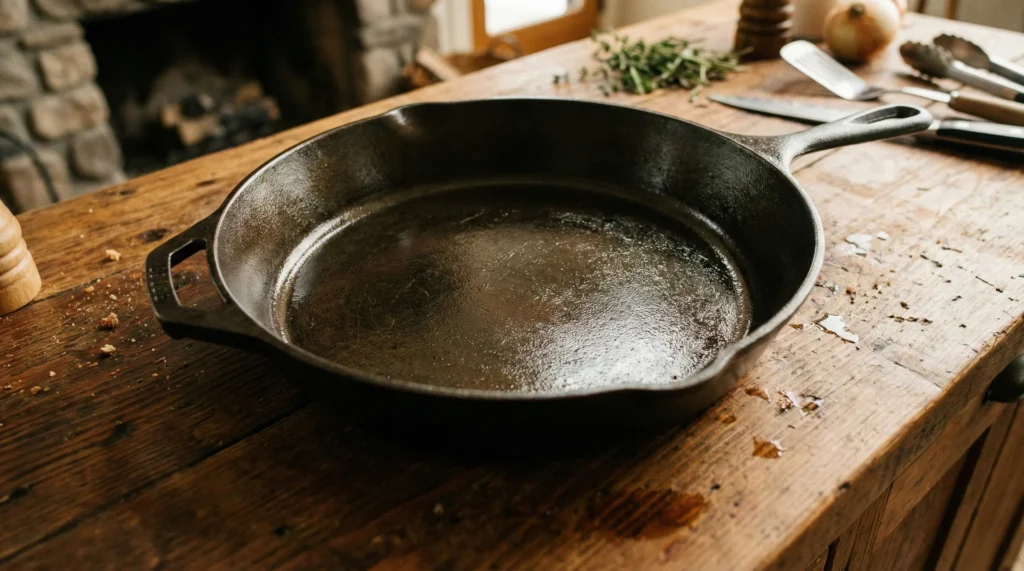
Clean after cooking
Soap is an option
Lodge's bare cast-iron instructions allow warm, soapy water. Wash by hand rather than putting the skillet in a dishwasher. There is no need to leave old food in the pan to protect its seasoning.
Remove stuck food without soaking
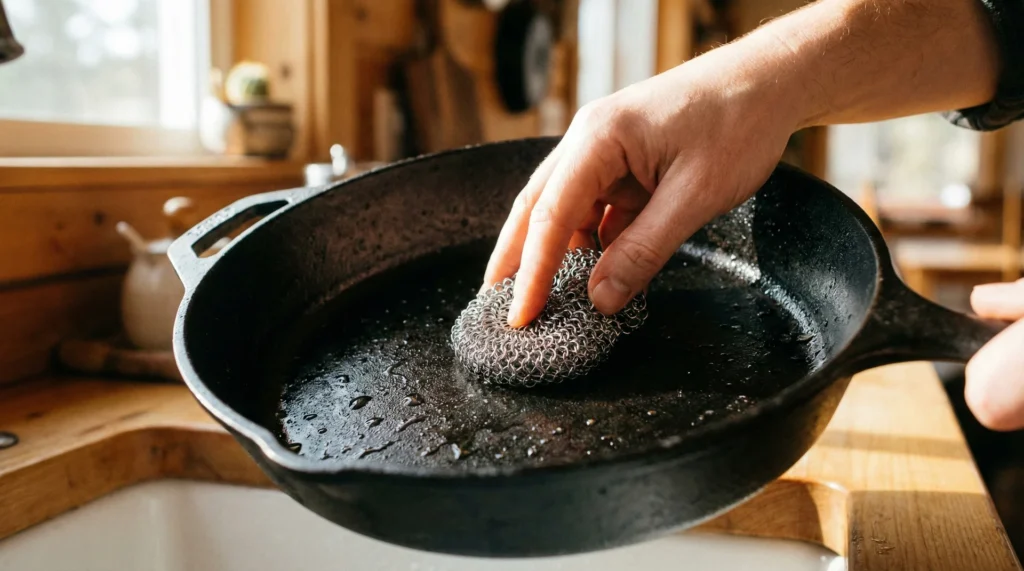
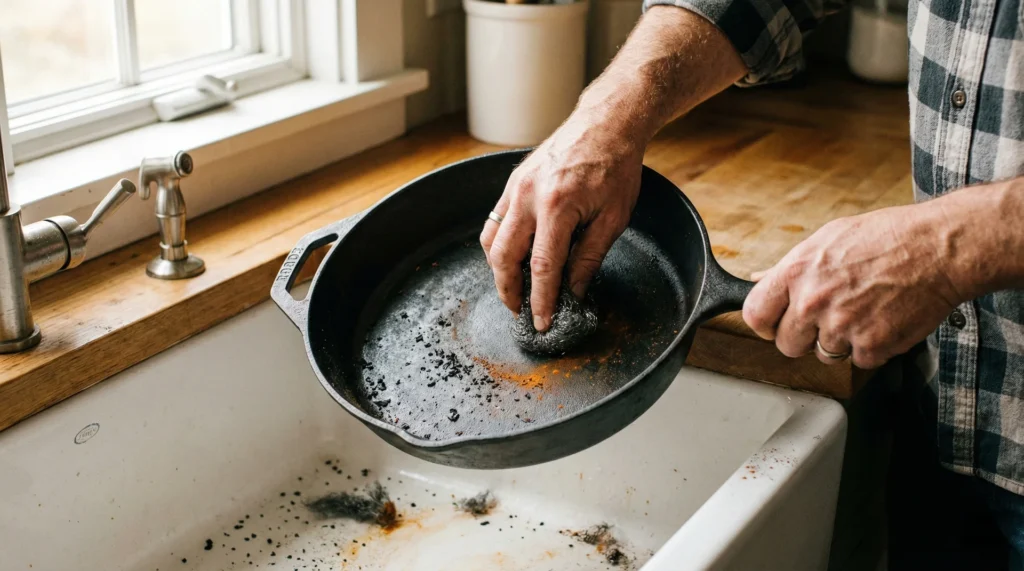
Use a suitable brush or pan scraper for ordinary cleanup. Lodge advises against soaking bare iron and reserves steel wool for rust removal rather than everyday washing. A pan that needs a little extra scraping does not automatically need to be stripped and rebuilt.
Dry, then oil lightly
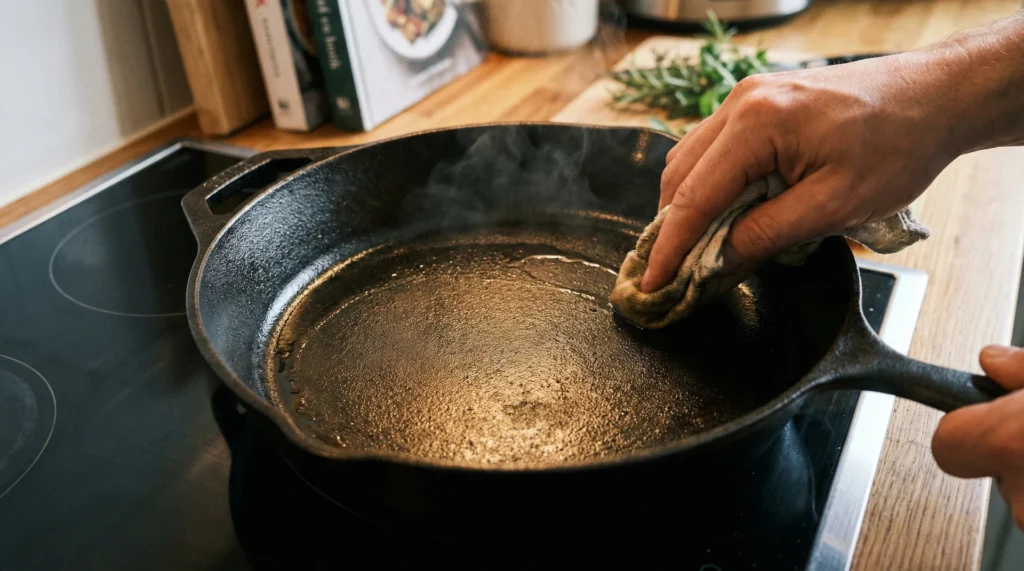
Dry bare iron completely with a cloth or paper towel. Wipe a thin layer of cooking oil over the surface, leaving no pools. Lodge's routine is wash, dry and oil; allowing a wet pan to air-dry can lead to rust.
Make drying part of washing, rather than a job to remember later. Keeping the cloth and oil beside your usual cleanup supplies makes the short routine easier to repeat.
Reseason when the surface needs repair
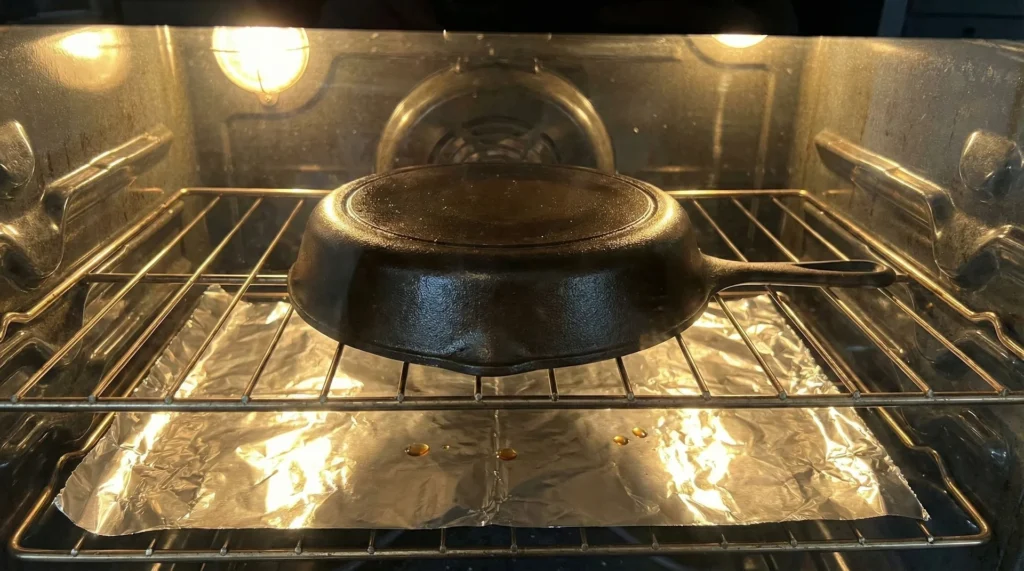
For rust on bare iron, Lodge describes scouring it away, washing and drying, then adding a very thin, even layer of oil. For more extensive rust, its oven method is one hour at 450–500°F, with the pan upside down, followed by cooling in the oven. Use this only where your pan and all its parts are suitable for the stated temperature.
Check the manufacturer's procedure before starting. A rust spot, a chipped enamel surface and a crack are different problems. Seasoning is not a repair for physical damage or broken enamel.
Store it dry
Put the pan away only when it is dry. Think about where moisture might remain, including beneath a lid or between stacked cookware. A small change to storage is more useful than repeatedly repairing the same rust patch.
Identify the problem before treating it
Sticky surface
Work out whether you are seeing food residue or an oily coating. Start with the ordinary cleaning routine. If the surface still feels sticky, consult the maker's seasoning guidance instead of adding more oil over it.
Flakes or a damaged surface
First distinguish bare iron from enamel. Cleaning or reseasoning instructions for bare iron cannot tell you whether a damaged enamel surface is suitable for further use. Ask the manufacturer about suspected coating damage rather than sanding it down.
Choose the smallest useful maintenance job
Example: A skillet left wet develops a small rust patch. The useful response is to follow the maker's rust procedure and change the drying routine. Repeating a long seasoning process after every meal would not solve the underlying storage habit.
For everyday cooking, keep the process simple and matched to the pan: clean, dry, protect the bare surface where appropriate, and store it without moisture.