Ever felt like you need a degree in organic chemistry just to buy a bottle of facial cleanser? You are certainly not alone. Between the long, unpronounceable Latin names, the flashy marketing claims on the front of the bottle, and the tiny font size on the back, deciphering skincare labels can feel like trying to crack an ancient code. But here is the secret: once you know the basic rules of the game, that confusing list of ingredients becomes a roadmap to better skin.
Understanding what goes into your skincare products isn’t just about being a savvy shopper; it is about skin health and safety. Whether you have sensitive skin that reacts to everything or you are looking for specific results like brightening or anti-aging, the power lies in the ingredient list. In this guide, we are going to strip away the jargon and show you exactly how to read a skincare label like a seasoned dermatologist.
What is the INCI List Anyway?
When you flip a product over, you will see a section titled "Ingredients." In the industry, this is known as the INCI list, which stands for International Nomenclature Cosmetic Ingredient. This is a standardized system of names for ingredients based on scientific nomenclature. It was created to ensure that no matter where you are in the world, a specific ingredient is called the same thing.
The reason it looks so intimidating is that companies are required to use these specific names. For example, you won’t see "Water" listed on many labels; you’ll see "Aqua." You won’t see "Vitamin E"; you will see "Tocopherol." While it might look like a list of chemicals, many of these are simply the scientific or botanical names for ingredients you already know and love. Knowing that 'Butyrospermum Parkii' is just the fancy name for Shea Butter can instantly lower your stress levels while browsing the aisles.
The Hierarchy of Ingredients: The Order Matters
One of the most important things to remember when reading a label is that the ingredients are not listed in a random order. In most regions, including the US and the EU, ingredients must be listed in descending order of concentration. This means the ingredient at the very top of the list makes up the largest percentage of the product, while the ones at the bottom are present in the smallest amounts.
Typically, the first five to ten ingredients make up about 80% to 90% of the formula. In many water-based products, like lotions or serums, "Aqua" (water) will be the first ingredient. If you are buying a product marketed as a "Vitamin C serum" but Vitamin C (Ascorbic Acid) is the 20th ingredient on the list, you are likely getting a very low concentration of that active ingredient. Understanding this hierarchy helps you determine if a product is actually worth the price tag or if you are just paying for fancy packaging and a drop of the good stuff.
Spotting the One Percent Line
There is a specific rule in the skincare world called the "1% Rule." Ingredients that are present at a concentration of less than 1% can be listed in any order after the ingredients that are present at more than 1%. This is usually where you will find things like preservatives, fragrances, and colorants. It is also where brands sometimes "fairy-dust" their products—adding a tiny, ineffective amount of a popular ingredient just so they can put it on the front of the label. If you see a star ingredient listed after the preservative Phenoxyethanol (which is usually capped at 1%), you know it’s there in a very low concentration.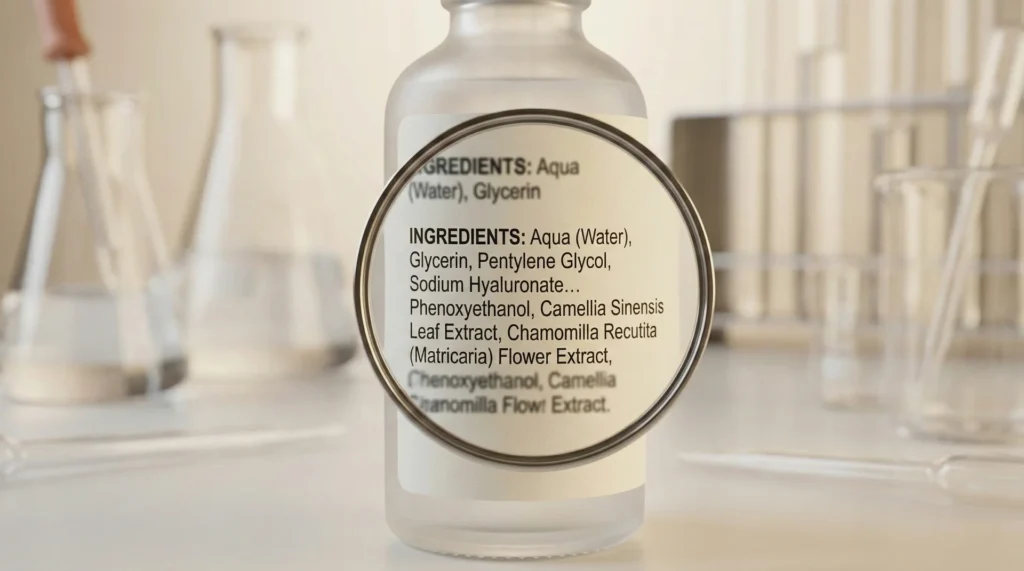
Identifying Key Ingredient Groups
To make sense of the long list, it helps to categorize ingredients into groups. Most skincare products are a combination of actives, humectants, emollients, and preservatives.
Actives: These are the ingredients that actually "do" the work to address your specific skin concerns. Common actives include Retinol (for aging), Salicylic Acid (for acne), and Niacinamide (for barrier repair and brightening). These are usually the ingredients the brand highlights in its marketing.
Humectants: These are moisture-magnets. They draw water into the skin. Look for Glycerin, Hyaluronic Acid (often listed as Sodium Hyaluronate), and Urea. These are essential for keeping skin hydrated and plump.
Emollients and Occlusives: These ingredients soften the skin and lock moisture in. Emollients like Ceramides and Plant Oils (like Jojoba or Rosehip) fill in the gaps between skin cells. Occlusives, such as Petrolatum or Dimethicone, create a physical barrier on top of the skin to prevent water loss. If you have dry skin, you want to see these higher up on the list.
Preservatives and Stabilizers
Many people are wary of preservatives, but they are absolutely necessary for any product containing water. Without them, your favorite cream would become a breeding ground for bacteria and mold within days. Common preservatives include Phenoxyethanol, Ethylhexylglycerin, and various Parabens (though many brands are moving away from these). Stabilizers and emulsifiers like Carbomer or Cetyl Alcohol are used to keep the oil and water from separating, giving the product its smooth, creamy texture.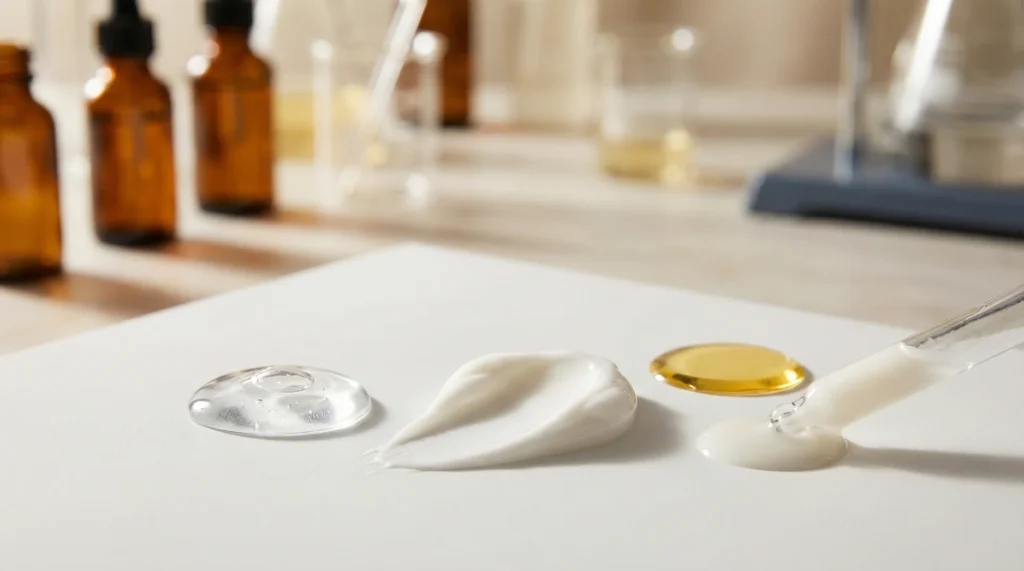
Marketing Jargon vs. Reality
The front of the bottle is for marketing; the back of the bottle is for the truth. Brands use a variety of terms that sound official but often have no legal definition. Understanding these can save you a lot of money and frustration.
"Natural" and "Clean": These terms are largely unregulated. A "natural" product can still contain synthetic ingredients, and a "synthetic" ingredient can be perfectly safe and effective. Instead of looking for these buzzwords, look at the actual INCI list to see what the product is made of.
"Fragrance-Free" vs. "Unscented": These are not the same! "Fragrance-free" means no fragrance chemicals were added. "Unscented" means a masking fragrance may have been added to cover up the smell of the raw ingredients, which can still irritate sensitive skin. If you have reactive skin, always aim for "Fragrance-Free."
"Dermatologist-Tested": This sounds impressive, but it usually just means that at least one dermatologist looked at the product or conducted a small trial. It doesn't mean the product is recommended by all dermatologists or that it is superior to a product without that label.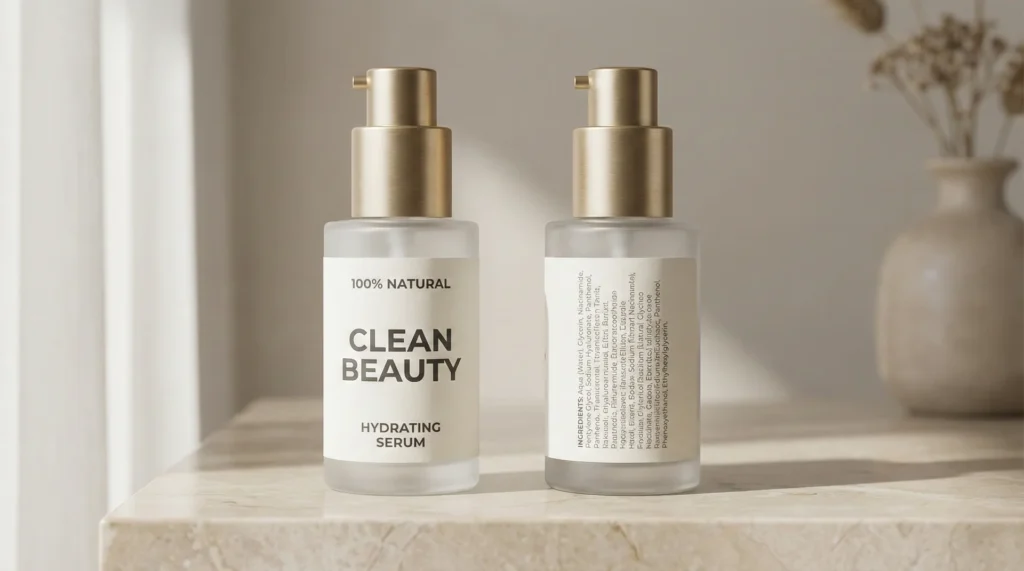
Decoding Symbols and Expiration Dates
Beyond the ingredient list, there are several small symbols on skincare packaging that provide vital information. The most important one is the PAO (Period After Opening) symbol. It looks like a little open jar with a number followed by an 'M' (e.g., 6M, 12M, 24M). This tells you how many months the product is safe to use after you have opened it. Using products past this date can lead to breakouts or irritation as the preservatives break down.
You might also see the Leaping Bunny symbol, which indicates the product is certified cruelty-free. The Mobius Loop (the triangle of arrows) indicates the packaging is recyclable, though you should always check your local guidelines. Paying attention to these symbols ensures you are using the product while it is still effective and aligning your purchase with your personal values.
Red Flags: Ingredients to Watch Out For
While most ingredients used in modern skincare are safe, some can be problematic depending on your skin type. If you have dry or sensitive skin, look out for Alcohol Denat or Isopropyl Alcohol near the top of the list; these are drying alcohols used to make products feel lightweight but can strip your moisture barrier over time.
Essential oils, like Lavender or Lemon oil, are often used for fragrance but can be highly irritating for sensitive individuals. Similarly, high concentrations of Sodium Lauryl Sulfate (SLS) in cleansers can be too harsh for many people, leading to that "squeaky clean" feeling that actually signifies a damaged skin barrier. Learning your own skin's triggers is the ultimate way to use the ingredient list to your advantage.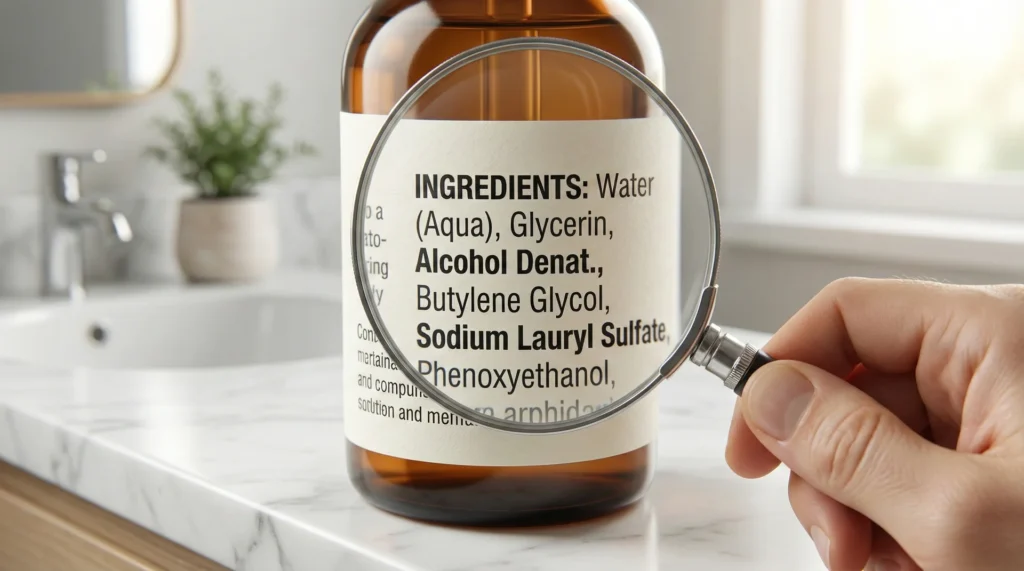
How to Do a Five-Second Label Scan
You don't have to spend twenty minutes in the aisle with a magnifying glass. Here is a quick way to scan a product: First, check the top five ingredients. Do they align with what the product claims to be (e.g., are there oils in a face oil)? Second, look for your "must-haves" (like Glycerin or Hyaluronic Acid). Third, look for your deal-breakers (like fragrance or drying alcohols). Finally, check the PAO symbol to make sure you will actually finish the product before it expires.
By taking just a moment to look past the pretty colors and bold claims, you become an empowered consumer. You stop buying based on hype and start buying based on science. Your skin—and your wallet—will thank you for it.
Your Skin, Your Knowledge
Decoding skincare labels is a skill that takes a little practice, but it is one of the most valuable tools you can have in your self-care arsenal. Remember that the best product for you isn't necessarily the most expensive one or the one with the trendiest packaging. It is the one with the right ingredients, in the right concentrations, for your unique skin needs. Next time you are out shopping, take a deep breath, flip that bottle over, and read the story the label is actually telling you.