The 7 Best Dash Cams in 2025

ON THIS PAGE
Best Dash Cams Spotlight
Transparency Note: This post contains affiliate links. As an Amazon Associate, we earn from qualifying purchases at no extra cost to you.

If you’re shopping for a dash cam, you probably want something that’s reliable, easy to use, and — most importantly — captures clear footage when it matters. We get that. Between fussy setups, confusing specs, and marketing claims that sound too good to be true, picking the right model can feel overwhelming. That’s why we made it our mission to cut through the noise and help you make a confident purchase that you’ll actually be happy with for years.

To build recommendations you can trust, we analyzed thousands of customer reviews and ran extensive feature comparisons across dozens of models. We looked beyond headline specs, focusing on real-world performance: video clarity in different lighting, night and motion detection quality, reliability over time, ease of installation and use, and useful add-ons like GPS, parking mode, and cloud backup. Rather than taking manufacturers’ claims at face value, we cross-referenced user experiences, return rates, and firmware updates to identify which cameras consistently deliver high-quality results. Our goal is simple — to point you toward dash cams that strike the best balance of performance, durability, and value so you don’t have to waste time testing duds. Read on and we’ll walk you through the top picks and why they stood out.

Our Top Picks

Best Overall

70mai Dash Cam 4K T800
Overall Rating
4.7
Brand
70mai
Dimensions
2.4 x 2.3 x 4.2 in
Weight
1.3 lb

Putting the 70mai T800 in the Best Overall slot makes sense because it balances coverage, image quality, and real-world usability better than most rivals. The triple-channel setup (true 4K front and rear with a 1080p interior) powered by Sony IMX678 STARVIS 2 sensors and 3-channel HDR delivers exceptionally detailed, low-light footage—license plates and road signs are consistently readable. MaiColor Vivid+ and 4K@60fps single-channel capture give a cinematic, glare-reduced look, while the Night Owl infrared cabin cams and Lumi Vision ensure reliable night performance for rideshare drivers or anyone who needs night-time evidence. Add-ons like 24/7 parking guard with AI alerts, built-in GPS, ultra-fast Wi‑Fi 6 transfers, OTA updates, a 512GB card, supercapacitor reliability and an 18-month warranty round out a package that’s feature-rich and dependable.

A couple of practical notes: full 24/7 monitoring and 4G functions require separate hardwire/4G kits, and the interior camera is 1080p rather than 4K. Still, for overall performance, coverage, and image clarity, the T800 is hard to beat.

Best Compact 4K

Vantrue E1 Pro
Overall Rating
4.6
Brand
Vantrue
Dimensions
1.8 x 1.7 x 2 in
Weight
3.4 oz

For a compact 4K dash cam, the Vantrue E1 Pro punches well above its weight. The Sony IMX678 sensor delivers true 4K/30fps detail through a wide 158° lens, and the tiny, one-coin-sized body makes it easy to tuck out of sight. In practice the PlatePix software paired with STARVIS 2 and an F1.8 7‑glass lens noticeably sharpens license plates and reduces motion blur—Vantrue even claims readable plates at night up to 31 mph. The included CPL filter, fast 5G Wi‑Fi (about 8MB/s), built‑in GPS and simple voice controls round out a very modern feature set that’s great for daily driving and evidence capture.

On the practical side, buffered parking mode, loop recording, a super capacitor for heat resilience, and 1TB support are reassuring, though those last features are common in this class and parking requires an optional hardwire kit. Overall, its exceptional image clarity and stealthy form factor are why it ranks highly among compact 4K options.

Best 360° Coverage

Vantrue N5S
Overall Rating
4.6
Brand
Vantrue
Dimensions
2.2 x 1.7 x 4.9 in
Weight
2.3 lb

The Vantrue N5S genuinely earns its spot for Best 360° Coverage thanks to a true four-channel setup that leaves no blind spots. The combination of 2.7K front, 2.5K rear (IMX675) and two cabin cameras (one with IMX662) gives crisp, usable footage day or night, and STARVIS 2 plus infrared lights mean license plates and interior details remain readable even in very low light. The flexible 1–4 channel recording modes make it easy to balance detail and storage for different trips.

Beyond the camera hardware, practical features reinforce its value: 5GHz Wi‑Fi and dual GPS speed up transfers and improve location logging, while 24/7 buffered parking mode with 10‑second pre-record captures incidents around a parked car. Voice control, 1TB card support, durable supercapacitor and wide temperature tolerance add reliability. Loop recording and a G‑sensor are standard fare, but the N5S packages them with high-end imaging and thoughtful usability, making it a solid choice for full-coverage protection.

Best Triple-Channel Coverage

Vantrue N4S
Overall Rating
4.4
Brand
Vantrue
Dimensions
1.8 x 2.2 x 4.6 in
Weight
2.3 lb

What puts the Vantrue N4S at the top for triple-channel coverage is how thoughtfully each camera is tuned for its job. The front 2.7K sensor plus 1440P interior and rear lenses give clear, wide views (158°/165°/160°), while STARVIS 2, HDR and Vantrue’s PlatePix boost low-light clarity and license-plate legibility — a real advantage for night-time incidents. The cabin’s four IR lights mean interior footage is actually usable after dark, which matters for taxis and family cars.

The rear 2.5K IP67 camera is another strong point: higher detail than 1080P and weatherproof mounts make it genuinely reliable outdoors. Practical extras — 5GHz Wi‑Fi for quick downloads, dual-mode GPS for route/speed logging, 24/7 buffered parking mode with power-saving, and voice control — round out a polished package. On the average side, it requires hardwiring for full parking features and doesn’t support PD fast charging, but the extendable 18‑month warranty and 1TB SD support help make it a very compelling triple-camera choice.

Best Ultra-Compact

Garmin Dash Cam Mini 2
Overall Rating
4.3
Brand
Garmin
Dimensions
1.1 x 2.1 x 1.2 in
Weight
0.1 lb

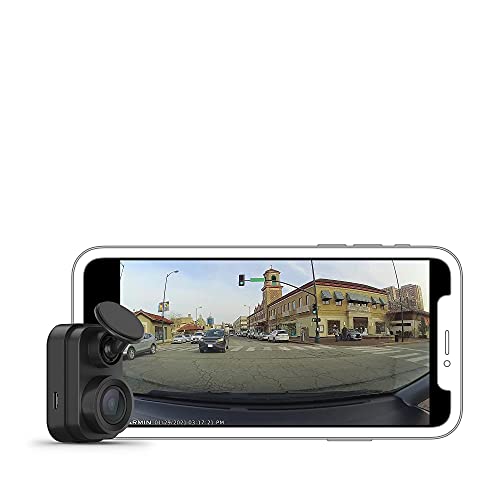
Garmin’s Dash Cam Mini 2 earns its spot in the Best Ultra-Compact category by packing the essentials into a truly discreet package. In daily use it delivers smooth 1080p footage with a wide 140° field of view, so you still capture lanes of traffic and key details despite the tiny size. The incident-detection sensor automatically saves events, and voice control makes it simple to record or save clips without taking your hands off the wheel. Pairing with the Garmin Drive app adds convenience—Live View, connected alerts and remote footage management give you real flexibility without fiddling with the camera itself.

Where it shines is practicality: loop recording, microSD support and a low-profile adhesive mount keep installation and storage painless. It’s worth noting this model focuses on compactness over championship specs—no 4K or extra onboard bells—so it’s an excellent choice if you want unobtrusive, reliable protection for everyday driving and insurance documentation.

Best Mirror-Style Display

Wolfbox G840S Mirror Dash Cam
Overall Rating
4.2
Brand
Wolfbox
Dimensions
0.7 x 11.9 x 2.8 in
Weight
0.8 lb

The Wolfbox G840S stands out in the mirror-style display category mostly because of its huge 12-inch screen and genuine 4K front camera. In daily use that extra viewing area and the 170° front/140° rear lenses make lane changes and reversing feel safer — the split-screen option is handy for keeping both views visible at once. I also liked the 5.8GHz Wi‑Fi and external GPS antenna: pairing to the Wolfbox app is straightforward, and seeing real-time location and playback on your phone is a real convenience.

Image quality holds up well thanks to WDR/HDR, a 6-glass lens and a low-reflectivity LCD that cuts glare. Night performance and tough lighting situations were solid. The 24-hour parking monitor is useful, though it does need a hardwire kit to work continuously (pretty standard). The rear 1080p cam is competent but not top-tier. Overall, reliable after-sales support and a one-year warranty make this a strong, practical choice for drivers wanting a larger mirror display.

Best for Hardwire-Free Parking

Baseus PrimeTrip VD1 Pro
Overall Rating
4.2
Brand
Baseus
Dimensions
1.5 x 2.5 x 2.5 in
Weight
5.9 oz

If you want reliable parking protection without wrestling with a hardwire kit, the Baseus PrimeTrip VD1 Pro is a smart pick. Its Solar Sync System plus built-in lithium battery can keep the camera on standby for up to 14 days and automatically saves a 30-second clip when a collision is detected — that combination of solar topping-up and event-triggered recording is exactly why it shines in the hardwire-free parking category. The 4K front and 1080p rear footage, STARVIS-enhanced IMX335 sensor, and f/1.6 aperture mean you’re not sacrificing image quality for convenience; license plates and low-light details are far more readable than with many budget dash cams.

It’s also user-friendly: quick 5GHz Wi-Fi transfers, an intuitive app for in-car streaming and GPS playback, and English voice control make everyday use easy. A few practical limitations are worth noting — continuous driving recording still needs the car’s power cable and the rear camera requires a wired connection, and the app only pairs with the camera while you’re in the vehicle. Overall, for hands-off parking surveillance without complex wiring, it hits the mark.

What To Look For

Choosing a dash cam is about more than resolution numbers; it’s picking the combination of features that fits your driving habits, climate and budget so the device reliably captures what matters.

  • Video resolution and frame rate: Higher resolution (1080p or 4K) and a stable frame rate deliver clearer evidence, smoother playback and better detail for license plates and faces.
  • Night vision and low-light performance: Good low-light sensors and wide aperture lenses ensure usable footage after dark or in poorly lit areas, where many incidents occur.
  • Field of view and lens quality: A wide field of view captures more of the road and surroundings, but avoid extreme fisheye distortion; optical quality affects clarity across the frame.
  • Loop recording and storage management: Automatic loop recording and smart overwrite protect continuous capture without manual file deletion, while large capacity or expandable storage prevents gaps.
  • G-sensor and incident detection: A reliable G-sensor locks footage when sudden braking or impact is detected so critical clips aren’t overwritten and can be easily retrieved.
  • GPS and timestamping: Built-in GPS and accurate timestamps add location and speed data to video, making reports and insurance claims more persuasive and verifiable.
  • Connectivity and app support: Wi-Fi or Bluetooth and a clear mobile app simplify file transfer, firmware updates and camera settings without removing the storage card.
  • Power options and installation: Hardwiring, cigarette adapter use and parking mode power management affect continuous recording and ease of installation; choose what suits your vehicle.
  • Build quality and warranty: Durable construction and a solid warranty matter for long-term reliability, especially in extreme temperatures or after accidental damage.

Prioritize image clarity, reliable incident capture and practical power/storage options to find a dash cam that consistently protects you on the road.

How We Select Our Products

We take selecting dash cams seriously because we know readers rely on these picks to protect their cars and capture what really happens on the road. Our process begins with broad data gathering: we read hundreds of customer reviews across retailers and forums, scan expert write-ups and lab test results, and compile manufacturer specifications. From there we look for recurring patterns — praise or complaints that show up again and again — rather than trusting any single glowing or scathing opinion.

When comparing candidates, several concrete criteria guide our decisions. Video quality (day and night), reliability of recordings, and consistency of loop recording are non-negotiable. We also weigh features such as parking mode, GPS logging, ADAS alerts, app usability, and storage options. Ease of installation, build quality, firmware update history, warranty terms, and the responsiveness of customer support all influence the recommendation. Value-for-money is assessed by matching performance and features against price, ensuring we include solid budget choices as well as higher-end options for users needing advanced capabilities.

Finally, we validate what users say with hands-on checks where possible and by cross-referencing independent test results. Anything that suggests a chronic fault, poor support, or misleading specs gets discounted. Our goal is to present a shortlist that balances real-world performance, long-term reliability, and sensible pricing — and to give you confidence that each featured dash cam earned its spot through careful, human-driven research rather than hype.

Final Thoughts

Picking the right dash cam does more than just capture a few shaky minutes of video — it solves real problems you’ll encounter on the road. The biggest, most immediate benefit is peace of mind: clear footage from a reliable camera can be the deciding evidence in an accident or hit-and-run, streamlining insurance claims and protecting you from false allegations. If you park on the street or in busy lots, features like parking mode and motion-triggered recording act as an always-on witness, deterring thieves and documenting vandalism when you’re not around.

Choosing a model that matches your driving habits also improves safety and convenience. For regular night or highway driving, prioritize good low-light performance and image stabilization; for long-distance or fleet use, look for GPS logging, speed overlay, and cloud access so you can track routes and driver behavior. Dual-lens systems are particularly useful if you want both road and cabin coverage — helpful for rideshare drivers or parents wanting an extra layer of accountability.

Practical factors matter too. A simple, well-made unit with easy setup and reliable loop recording is often more useful than a feature-packed camera with a buggy app. Consider storage options, warranty, and how the camera handles power interruptions. Don’t forget legal and privacy implications in your area — some locations have rules about recording audio or interior footage.

In short, the “right” dash cam depends on what you actually need. Start by listing your top priorities — evidence gathering, theft protection, driver monitoring, or fleet tracking — then match those needs to key features. Making an informed choice will save time, reduce stress, and give you a device that truly improves your driving experience.

Share:
On Key
You Might Also Like