




Golf irons are the clubs you use for controlled shots from the fairway and the rough, plus approach shots from tight lies. They live in a set with short and mid irons, usually from 4-PW, where distance and spin need to stay predictable from club to club.
Picking the right set is hard because the specs can mislead. Loft and distance claims vary by manufacturer, and some models feel different even with similar numbers. Head design also changes launch and forgiveness in ways that marketing names do not explain, like cavity back help on mishits versus blade-like workability. Finally, shaft material and flex can make the same iron wildly easier or much harder to control.
This guide explains what matters in golf irons and how to compare sets without guesswork. You will get clear buying criteria, plus a consistent scoring process used to separate strong options from demanding ones.
Quick Overview
Top Picks
Best Overall

Specifications
| Brand | TaylorMade |
|---|---|
| Set Makeup | 4-PW |
| Head Design | Blade |
| Shaft Material | Steel |
| Shaft Flex | Stiff |
| Hand Orientation | Right Hand |
| Lie Angle | 62.5° |
Pros
- Reliable launch and carry
- Toe/heel penalty reduced
- Clean sound and feedback
Cons
- Steel lower launch
- Blade-like workability
- Limited set coverage
These irons fit the Best Overall spot because they balance distance and consistency without getting overly demanding. The big standout is their reliable launch and carry, even when contact is not perfect. That makes the set easier to trust across a full range of swings.
You feel the quality in the numbers and at impact. Ball speed stays strong, and the toe and heel penalty is reduced, so off-center shots lose less distance and stay more playable. The sound is clean, and the feedback helps you understand strike quality. Feel lands right in the pocket, smooth rather than harsh.
Still, they are not for everyone. The steel design can launch a bit lower, and they keep a blade-like workability that may demand more skill than some game-improvement options. The set also has limited coverage at the top end. If you want a classic player-shaped look with strong, steady carry, and you can handle a slightly lower launch, this is the one to get.
Best with Cavity Back

Specifications
| Brand | PXG |
|---|---|
| Set Makeup | 5-PW |
| Head Design | Cavity Back |
| Shaft Material | Steel |
| Shaft Flex | Stiff |
| Hand Orientation | Right Hand |
Pros
- Reliable launch and carry
- Toe/heel penalty reduced
- Cavity-back forgiveness
Cons
- Limited set coverage
- Cavity affects softness
- gapping consistency uncertain
This is a strong fit for the Best with Cavity Back slot because the 0311P uses a cavity-back head to help you get the ball up and moving when contact is not perfect. You see the main benefit on off-center strikes, where the design helps limit the drop in speed and launch.
In play, it delivers reliable launch and strong carry, which makes it easier to trust your distances. The cavity-back shape reduces the toe and heel penalty, so slight misses stay in play more often. Feel is also a standout, with impact feedback that feels smooth and gives useful information about strike quality.
The main downside is limited set coverage, since it is a 5-PW build, so you may need another club to cover gaps. There is also concern about cavity impact on softness, and gapping consistency across the set is not guaranteed. If you want a cavity-back iron that launches easily and stays forgiving on common misses, this is the one to get.
Best Build Quality

Specifications
| Brand | Mizuno |
|---|---|
| Set Makeup | 3-PW |
| Shaft Material | Steel |
| Shaft Flex | Stiff |
| Hand Orientation | Right Hand |
Pros
- Reliable launch and carry
- Toe/heel penalty reduced
- Durable finish and alignment
Cons
- Limited model-specific data
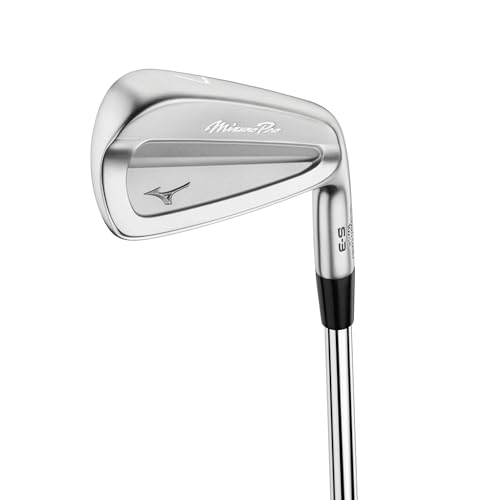
These Mizuno irons earn the Best Build Quality slot because they feel solid all the way through the set. The standout trait is the attention to durable finishing and dependable alignment. That matters when you want the same look and setup from one iron to the next.
On the course, they deliver reliable launch and carry, helping you keep your distance on track. The penalty on toe and heel strikes is also reduced, so off-center hits do not fall apart as quickly as they do with less forgiving designs. Add in the set's consistent gapping feel, and your yardages tend to stay more repeatable.
The main drawback is limited model-specific data, so it is harder to compare this set against alternatives with a deeper public record. If you want irons that feel well made, look clean at address, and stay consistent across 3-PW, this is a strong choice for players who prize build quality and steady ball flight.
Best for Utility

Specifications
| Brand | Srixon |
|---|---|
| Iron Type | Utility |
| Set Makeup | #4 |
| Head Design | Hollow Body |
| Shaft Material | Graphite |
| Shaft Flex | Regular |
| Hand Orientation | Right Hand |
Pros
- Reliable launch and carry
- Clean sound and feedback
- Cavity-back forgiveness
Cons
- Limited set coverage
- Hollow feel
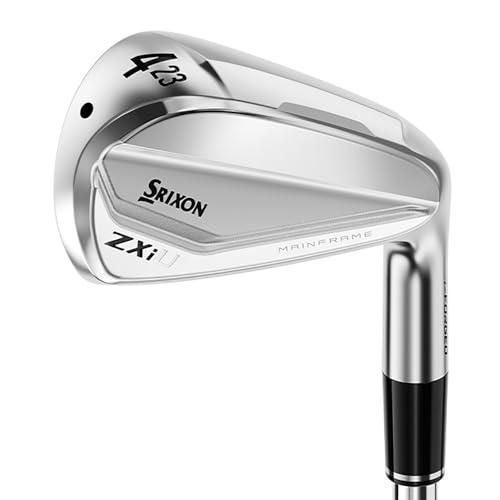
This utility iron fits the Best for Utility role because it is built to give a dependable ball flight when you need one club to do more jobs. The hollow-body design helps it launch easily, so you can use it for tough lies or when you want a smoother, controlled carry.
On performance, you get reliable launch and strong carry, with yardage that stays fairly steady. Forgiveness shows up as cavity-back confidence, especially when contact is not perfect. Feel also lands well, with a clean sound at impact and solid feedback that helps you repeat swings.
The main drawback is limited set coverage, since it is not meant to replace a full iron lineup. Some golfers may also find the feel a bit hollow. If you want one utility club that is easy to get airborne and consistent on carry, this is a smart choice, especially for players who do not want a harsh iron when the strike is off.
Also ranked #1 in: Golf Irons with Hollow Body · Golf Irons with Graphite Shaft
Best Muscle Back

Specifications
| Brand | Srixon |
|---|---|
| Iron Type | Players |
| Set Makeup | 4-PW |
| Head Design | Muscle Back |
| Shaft Material | Steel |
| Shaft Flex | Stiff |
| Hand Orientation | Right Hand |
Pros
- Reliable launch and carry
- Durable finish and alignment
- Stable turf interaction
Cons
- Some dispersion on misses
- Forgiveness not standout
These Srixon ZXi7 Black Chrome muscle back irons fit the Best Muscle Back slot because they stay focused on workability and strike feel, not added help. The compact, players-style head rewards better contact. If you like shaping shots and controlling trajectory, this set is built for that.
You get reliable launch and carry with stable turf interaction, which helps keep distance more predictable from swing to swing. Feel is another strong point, with impact sensation that stays smooth and gives clear feedback. Build quality also stands out, with a durable black chrome finish and consistent alignment across the set.
The trade-off is forgiveness. Off-center hits can show some dispersion, and forgiveness is not a standout versus other irons in this class. If you play often and want a muscle back that stays responsive while still launching consistently, this is the one to get.
Best for Players Distance

Specifications
| Brand | WILSON |
|---|---|
| Iron Type | Players Distance |
| Set Makeup | 4-PW |
| Head Design | Cavity Back |
| Shaft Material | Steel |
| Shaft Flex | Stiff |
| Hand Orientation | Right Hand |
Pros
- Toe/heel penalty reduced
- Clean sound and feedback
- Durable finish and alignment
Cons
- Softer sound
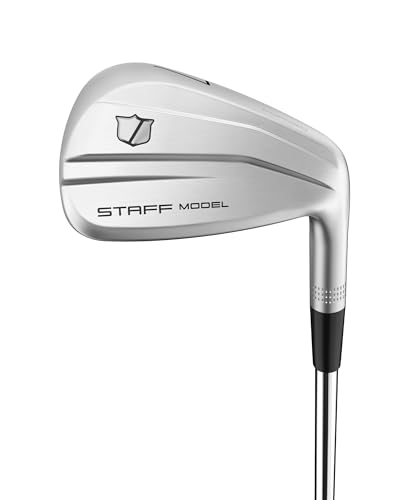
This Wilson Staff Model XB iron set fits the Best for Players Distance role because it aims for faster, more consistent shots while still feeling workable at address. The standout trait is the reduced toe and heel penalty, so your bad strikes tend to lose less distance and still fly with a predictable flight.
Across the set, you get strong performance and forgiveness, reflected in stable ball speed and easier gapping from 4-PW. The feel also holds up, with a clean sound and clear feedback on impact. Build quality is another plus, with a durable finish and solid alignment that helps you aim the face consistently.
The main downside is softer sound than some players prefer, especially on solid contact. If you want distance help without going full game-improvement, and you like a confident, player-friendly cavity back with better mishit protection, this is a strong match.
Best for Left Handed

Specifications
| Brand | Titleist |
|---|---|
| Iron Type | Players Distance |
| Set Makeup | 4-PW |
| Head Design | Hollow Body |
| Shaft Material | Steel |
| Shaft Flex | Stiff |
| Hand Orientation | Left Hand |
Pros
- Reliable launch and carry
- Durable finish and alignment
Cons
- Thin strike dropoff
- Premium price mismatch
Left-handed golfers who want a players-distance iron with a more stable strike feel will like the Titleist T200 3G. The hollow-body build helps the face get the ball up and moving fast, even when you are not perfectly centered. That combination makes it a strong fit for the Best for Left Handed role.
On-course results lean toward predictable distance and an easy start. You get reliable launch and carry, and the set stays consistent club to club, which helps with gapping from 4 through PW. Build quality is also a highlight, with a durable finish and alignment that makes setup easier.
The main drawback is a thin dropoff on less-than-clean contact, so mishits do not save much distance. It also comes with a premium price mismatch for some buyers. If you want dependable launch and tight look-and-spec consistency but can accept a bigger penalty on thin strikes, this is the one to get.
Best Grain Flow Forged

Specifications
| Brand | Mizuno |
|---|---|
| Set Makeup | 4-GW |
| Shaft Material | Steel |
| Shaft Flex | Stiff |
| Hand Orientation | Right Hand |
| Seven Iron Loft | 29° |
Pros
- Reliable launch and carry
- Durable finish and alignment
- Clean sound and feedback
Cons
- Limited model evidence
- Player-profile forgiveness
These irons fit the Best Grain Flow Forged role because they lean into Mizuno’s forged feel with strong consistency across the set. The Grain Flow Forged focus shows up in how the heads work through impact, helping shots start on time and hold their shape from 4-iron through GW.
Expect reliable launch and carry, with dependable yardage gapping from club to club. The feel stays clean and responsive at impact, helped by a solid sound and useful feedback on strike quality. Build quality also comes through, with a durable finish and alignment that looks crisp at address.
The main drawback is limited model evidence, so you may have less real-world comparison to lean on than with more widely tested sets. There is also player-profile forgiveness to consider, since misses can cost more than you want. If you want forged feedback with steady launch and gapping, and you do not need maximum help on mishits, this is the one to get.
Best Value

Specifications
| Brand | Cleveland Golf |
|---|---|
| Iron Type | Utility |
| Head Design | Hollow Body |
| Hand Orientation | Right Hand |
Pros
- Reliable launch and carry
- Durable finish and alignment
- Worth the price tag
Cons
- Short-iron fliers
- Limited model evidence
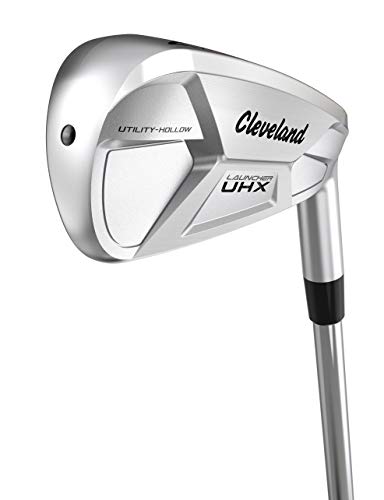
If you want a utility-style iron that gives help without feeling like a niche tool, this Cleveland Golf 11191956 fits the Best Value role. The standout trait is its reliable launch and carry, so it is easier to get up in the air and keep moving forward.
On full swings, the ball flight stays consistent, which matches the strong performance score. It also keeps solid gapping across the set, a big deal for repeatable distance. Build quality holds up well too, with a durable finish and alignment that stays true.
The main downside is that the short irons can be a bit flighty, leading to occasional flyers. If you need a dependable utility option for easier launch and steadier overall yardage, this is a strong pick, especially if you are not trying to hit tight, low-control shots from the wedges.
What to Look For
Iron Type: Start by matching the model to your goal. Game Improvement and Super Game Improvement irons usually launch easier and tolerate off-center contact. Players Distance and Players irons typically trade some forgiveness for a more controlled feel and shape.
Set Makeup: Confirm the exact clubs included, like 4-PW or 5-AW. A set that stops at PW can force you to cover more shots with wedges or utilities. If you struggle with long irons, a setup like 5-AW can reduce the shots that punish you most.
Head Design: Choose the head style that fits your strike. Cavity Back irons tend to help with launch and stability on toe and heel strikes. Blade and Muscle Back designs usually demand better contact but can reward players who consistently hit the center.
Shaft Material: Use material to guide feel and swing weight. Steel shafts often feel stable and give a crisp response. Graphite shafts usually help reduce harshness and can make it easier to launch, especially for slower swing speeds.
Shaft Flex: Pick flex based on how your swing loads the shaft, not just who you play like. Regular, Stiff, and X-Stiff can feel very different from club to club within a brand. If your shots launch too low or balloon, flex is often the first lever to check.
Lie Angle: Lie angle affects direction, especially on irons. A small mismatch can push shots left or right. Make sure the set is built for your posture and swing, and consider fitting if you regularly miss in one pattern.
7-Iron Loft: Use 7-iron loft as a check on how high the set will fly, but compare within similar iron types. Higher loft usually helps players who need more carry. Lower loft can suit golfers who already launch high and want more penetrating shots, as long as contact stays solid.
How We Selected These Products
We found iron sets through broad web searches across review sites, buyer forums, and best-of lists, then cross-checked details to avoid one-source bias. For each model, we read a large volume of real customer reviews to identify common problems, like poor gapping, inconsistent launch, or harsh feel on thin strikes, plus what buyers consistently liked.
Next, we verified availability and the key specs directly against Amazon listings, including iron type, set makeup, head design, shaft material, shaft flex, hand orientation, lie angle, and 7-iron loft when provided. Each product then received scores across the pillar names used in this guide, with an objective framework focused on real-world performance, not just written specs.
Final curation focused on role clarity. We kept models that genuinely fit distinct needs, like easier launch, better stability on mishits, stronger build quality, or a specific category like utility irons, instead of simply listing the highest score overall.
Frequently Asked Questions
Which golf irons are best if I play a lot of utility or long-iron shots?
Look for a utility iron that helps launch and keep the ball speed up from the rough or on off-center strikes. In this set, Srixon ZXiU Utility (2025) Utility Iron stands out for long-iron forgiveness and added launch. If you want maximum stopping power, test a players-distance iron too, since utility designs can feel hollow even when they perform well.
What is the main difference between players distance irons and muscle back irons?
Players distance irons trade some workability for easier launch and more help on mishits. Muscle back irons give you tighter, more blade-like feedback, but forgiveness drops. That means you need more consistent strike quality to keep distance and direction stable.
How do I choose the right shaft flex for golf irons?
Use your swing speed as the starting point. If you tend to swing smoothly and need help getting the ball up, you may benefit from Regular or even Senior. If you generate a lot of speed and the ball flight feels too high, Stiff or X-Stiff can feel more controlled. When possible, get fitted to confirm lie angle and shaft fit together.
Is a higher price always better for golf irons?
Not always. In this list, the top performers often show strong feel and stable distance, but price alone does not guarantee better forgiveness. For example, TaylorMade P790 (2025) Iron Set scores highest overall, while Cleveland Golf 11191956 Utility Iron offers much stronger value pricing without matching the very top feel and forgiveness scores.
Why do many golf irons lose forgiveness on mishits?
Many players-distance and muscle back designs use smaller sweet spots than true game-improvement heads. That makes toe and heel strikes more sensitive, especially in the short irons. Some premium irons still forgive well, but they often depend more on correct fitting and swing speed.
What is the best way to keep golf irons in good shape over time?
Wipe the grooves after every round to remove debris, and store clubs dry to help prevent rust. Check grips for wear and replace them before the hold slips. If you notice bag chatter or heavy finish wear, rotate the clubs in your bag so the same faces do not take constant impact.

